
Hardscape.com CertifiedThe ONLYCertified Porcelain Paver Installer in Sarasota, Manatee, Hillsborough, Orange, Lee & Pasco Counties
(941) 250-4635
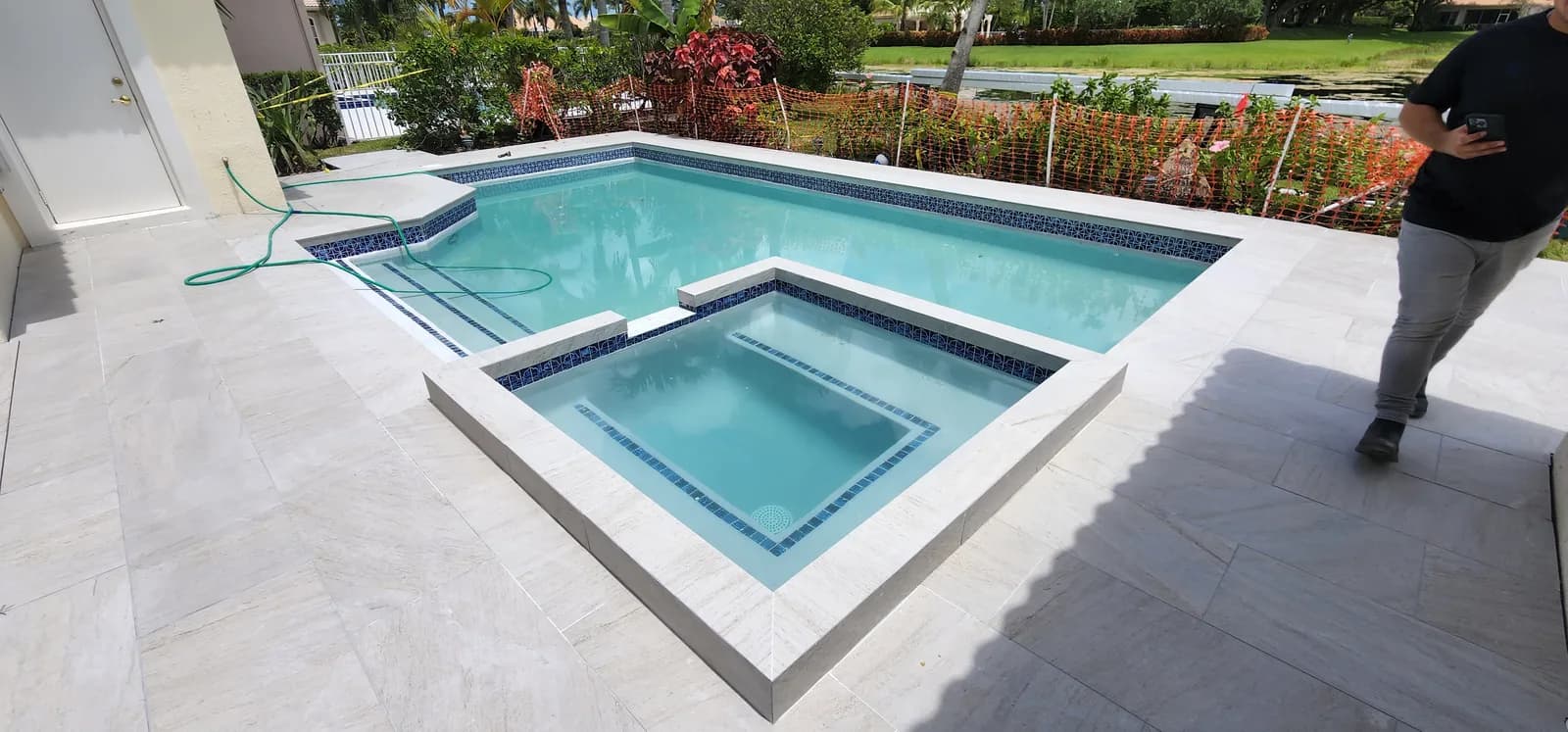
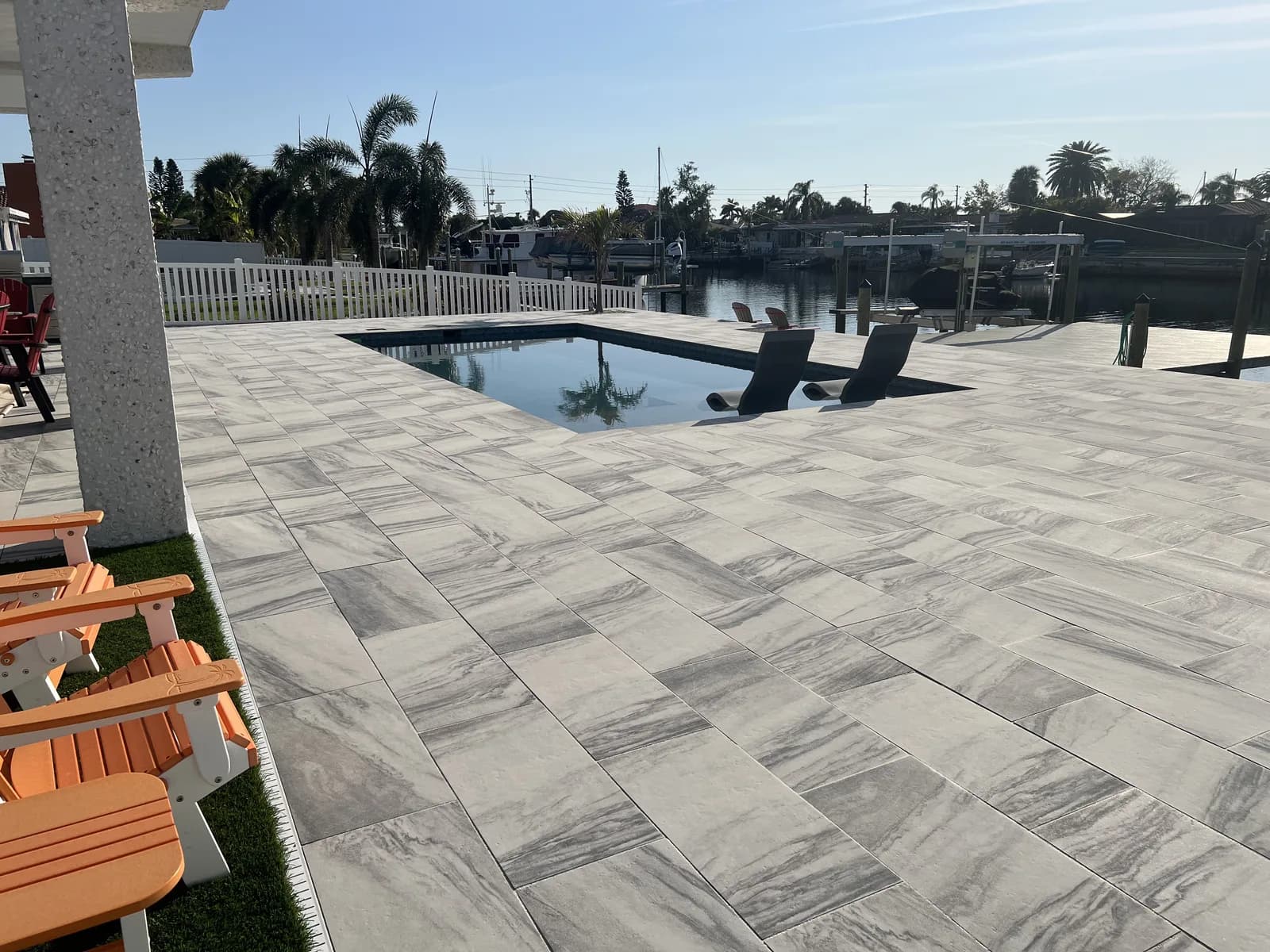
Geometric pool and spa with porcelain paver surround and turf border

Ideas & Inspiration

Walkway ideas that survive a Florida summer

6 approaches we have actually built, each with what the installation required.

A walkway is the first surface anyone touches on your property and the one most often built worst. It is narrow, it carries almost no load, and that combination tempts crews into treating it as decoration — a thin bed, no edge restraint, and whatever material was left over from the driveway.

Then the wet season arrives. Narrow surfaces lose their edges first, because there is less mass holding the field together and more perimeter per square foot for water to attack. Every idea below is one we have actually built, with the detail that keeps it flat.

Geometric pool and spa with porcelain paver surround and turf border
Idea 01

Plank pavers with turf ribbons

Long plank-format pavers set with open joints and artificial turf between them. The green line does the work of a border without adding a second material, and the eye follows the direction of travel rather than stopping at each seam. It reads modern without being cold, which is why it has become the default on new coastal builds.

What it takes to build

The joints are the whole detail. Turf strips need a defined channel and a compacted base that continues underneath them — not turf laid on soil between floating pavers. Get that wrong and the strips sink a season later, leaving each paver standing proud.
See this finish in the catalog
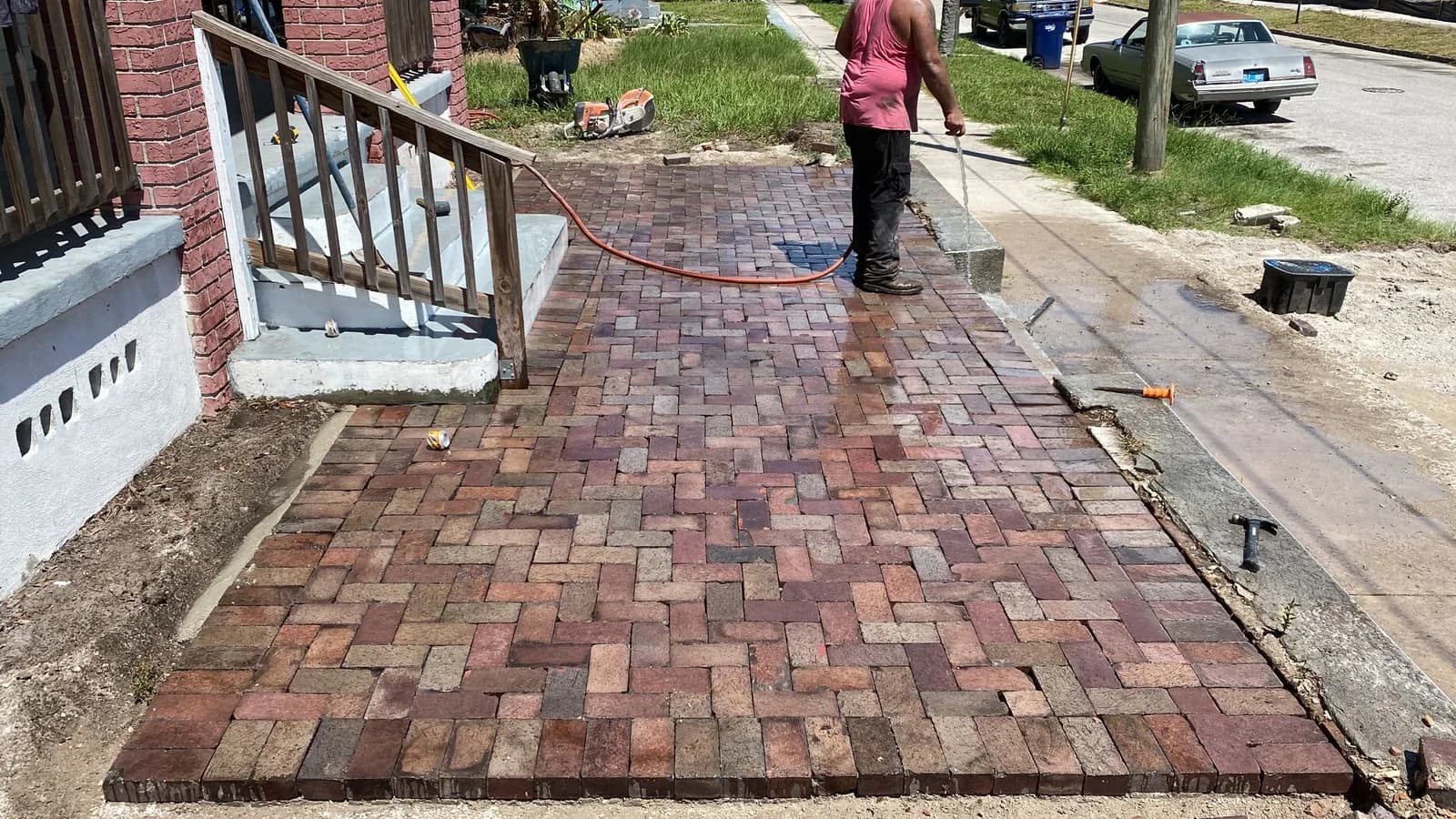
Installer sealing a newly laid brick paver walkway in Florida
Idea 02

Classic brick, properly sealed

Brick still wins on older Florida homes and in neighbourhoods with an established look. It forgives curves that large-format material fights, and it ages into the landscape instead of against it. The difference between a brick path that looks intentional and one that looks tired is entirely maintenance.

What it takes to build

Brick is porous, so it takes sealing — unlike porcelain. Plan on resealing, and insist on polymeric jointing sand rather than plain sand, which washes out of a narrow field faster than anywhere else on the property.

Herringbone travertine paver deck with Adirondack chairs on a waterfront lot
Idea 03

Travertine through planting

Travertine stays cooler underfoot than almost anything else, which matters on a path people walk barefoot between a pool and a door. Its natural variation also sits comfortably against planting, where a uniform manufactured surface can look imposed.

What it takes to build

Travertine is a natural stone and it drinks. It needs sealing every two to three years in this climate, and it needs a base that drains — standing water at the edge of a travertine path is what produces the dark staining you see on neglected installations.

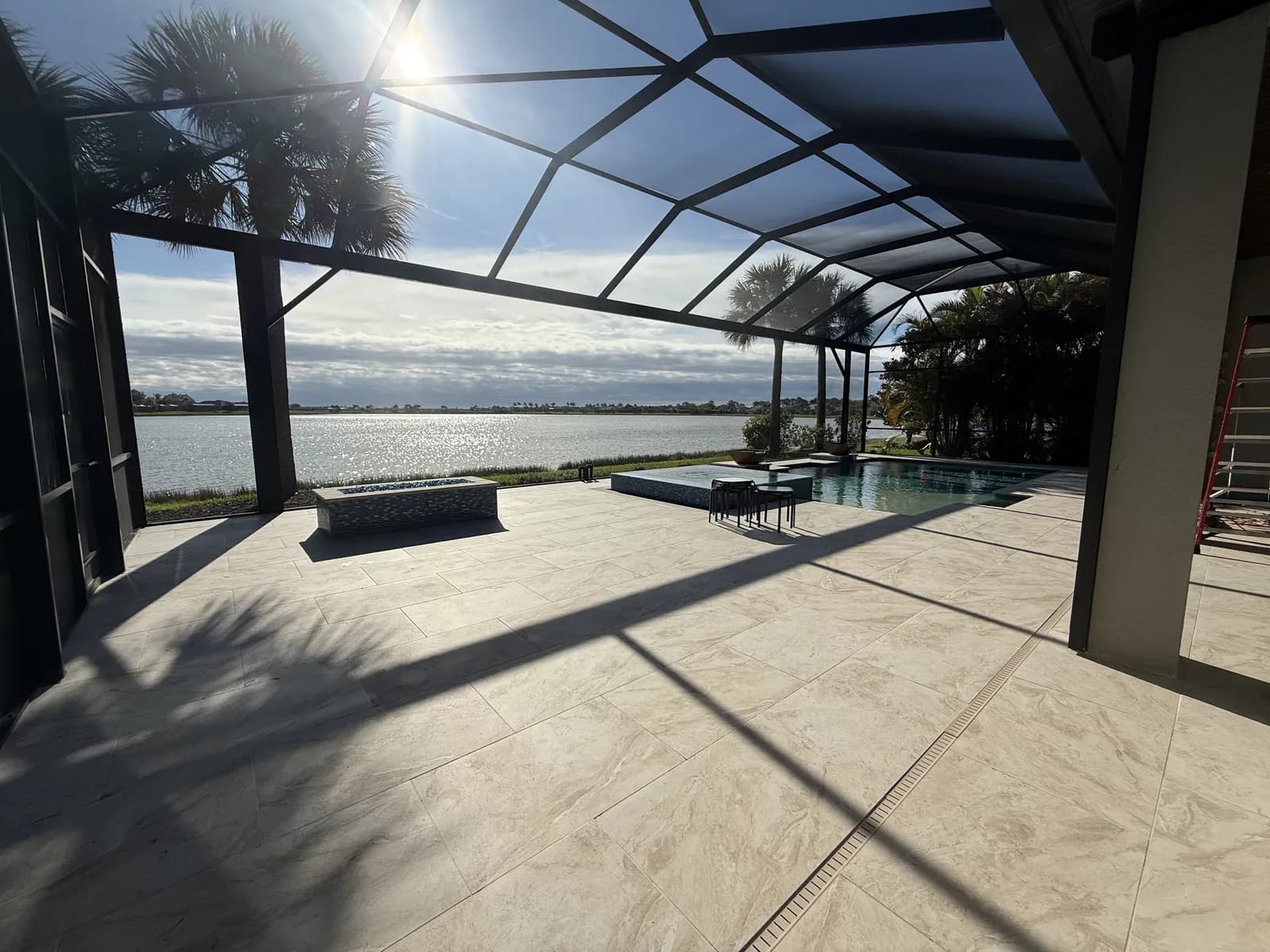
Covered lanai with large-format paver flooring facing the water
Idea 04

Large format to the front door

Fewer, bigger pieces on an entry walk read as architecture rather than paving. Large-format porcelain at 24x48 gives a front approach the same visual calm as an interior floor, and it pairs cleanly with modern and Mediterranean elevations alike.

What it takes to build

Large format is the least forgiving of a bad base. A big piece bridges dips and then cracks across the void, so the substrate has to be right before anything is set. The TCNA recommends no more than about a 33 percent offset on large tile — a half-brick pattern here will produce lippage you can feel with a bare foot.

See this finish in the catalog
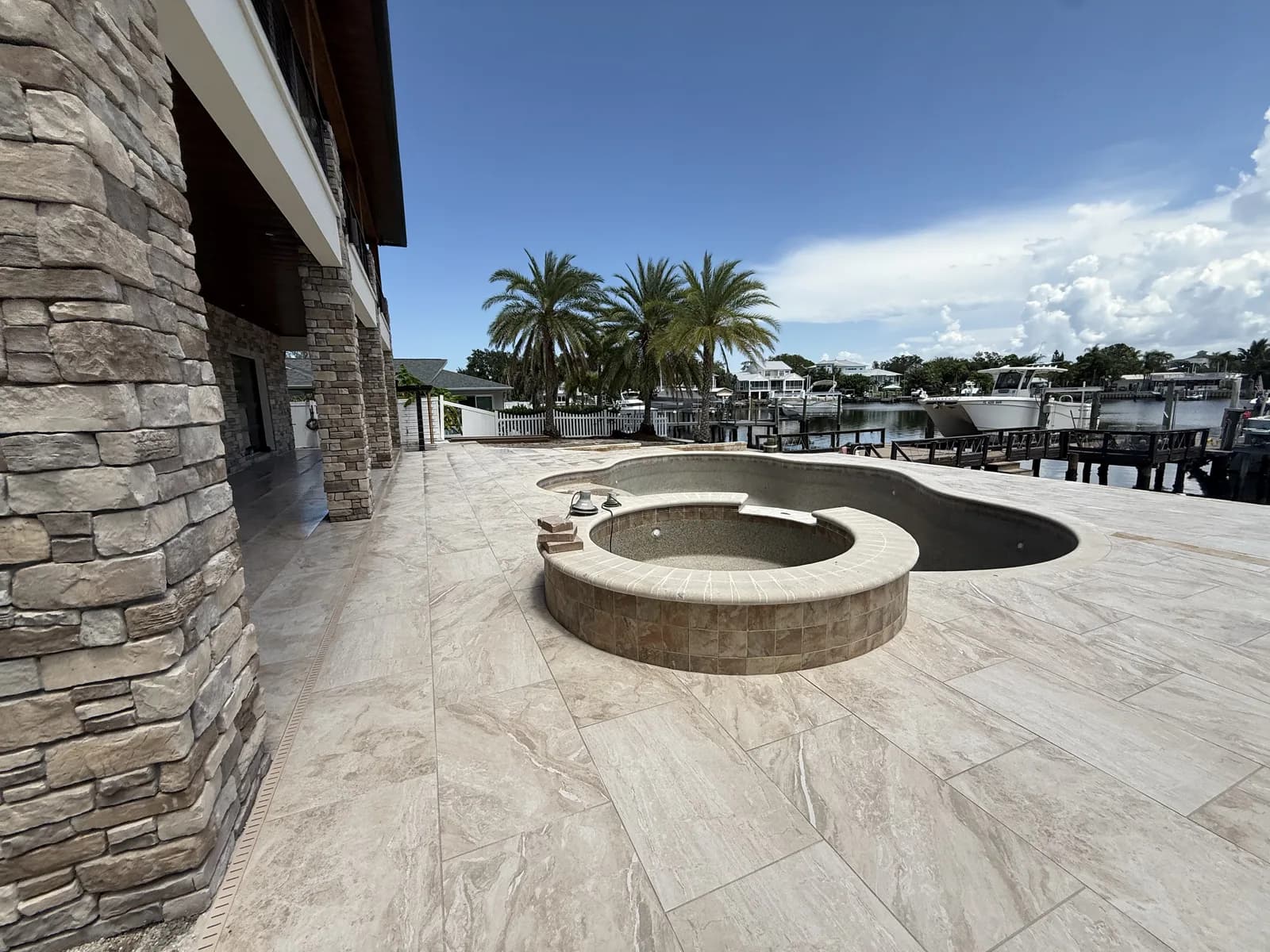
Travertine pool deck with circular fire pit beside a private boat dock
Idea 05

Stepping stones in lawn or gravel

Individual pavers set with space between them, with lawn, gravel or shell filling the gaps. It is the most casual of these ideas and the cheapest to build, and it suits a side yard or a route to a dock better than a formal continuous path.

What it takes to build

Each stone still needs its own compacted bed. Set directly on soil they tilt within months, and a tilted stepping stone on the route to a pool is a trip hazard rather than a design choice.

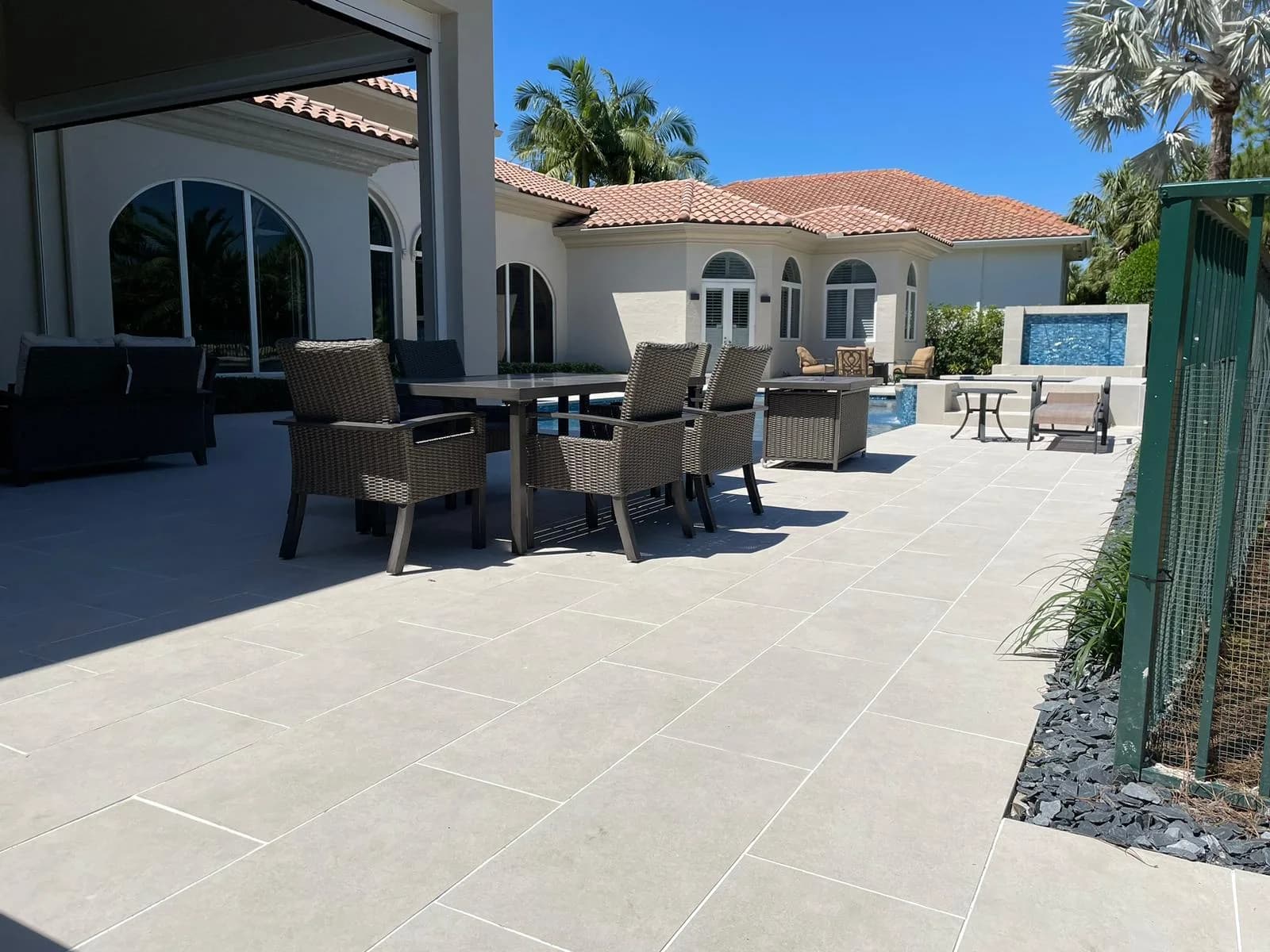
Paver patio with outdoor dining set at a Mediterranean-style Florida home
Idea 06

A banded border in a second colour

A soldier course in a contrasting tone frames the field and makes a narrow walk read as wider than it is. It also hides the place where cuts land, which on a curved path is where most walkways look unfinished.

What it takes to build

The border is structural as much as visual — it acts with the edge restraint to hold the field. It is also the line where the base most often stops short. Ask where the base extends to, not just where the paver does.

Walkway questions

For a surface that gets sun and sprinkler water every day, porcelain is the lowest-maintenance answer: non-porous, no sealing, and the colour does not fade. Travertine is cooler underfoot and looks more natural against planting, at the cost of sealing every two to three years. Brick suits older homes and curves. There is no single best — the honest question is how much maintenance you want to sign up for.

A main entry walk generally wants to be wide enough for two people side by side; a secondary garden path can be considerably narrower. What matters more than the number is that the width is set before the material is ordered, because the paver format determines where cuts land. Choosing a width that lands on a full piece is the difference between a clean edge and a row of slivers.

No — a walkway carries foot traffic, not vehicles, so the base depth is less than a driveway requires. But less is not none, and this is exactly where cheap installations cut. A narrow surface has more perimeter relative to its area, so edge failure shows up faster here than anywhere else on the property. Ask for the base depth and the edge restraint in writing.

Like one of these?

Tell us which idea and where it goes. Free on-site consultation across Sarasota, Manatee, Hillsborough, Orange, Lee & Pasco Counties, with full-size samples brought to you.

No obligation. We respond within 24 hours.