



Certified Installer
Only in 5 Florida Counties
Driveway Paver
Installation in Florida
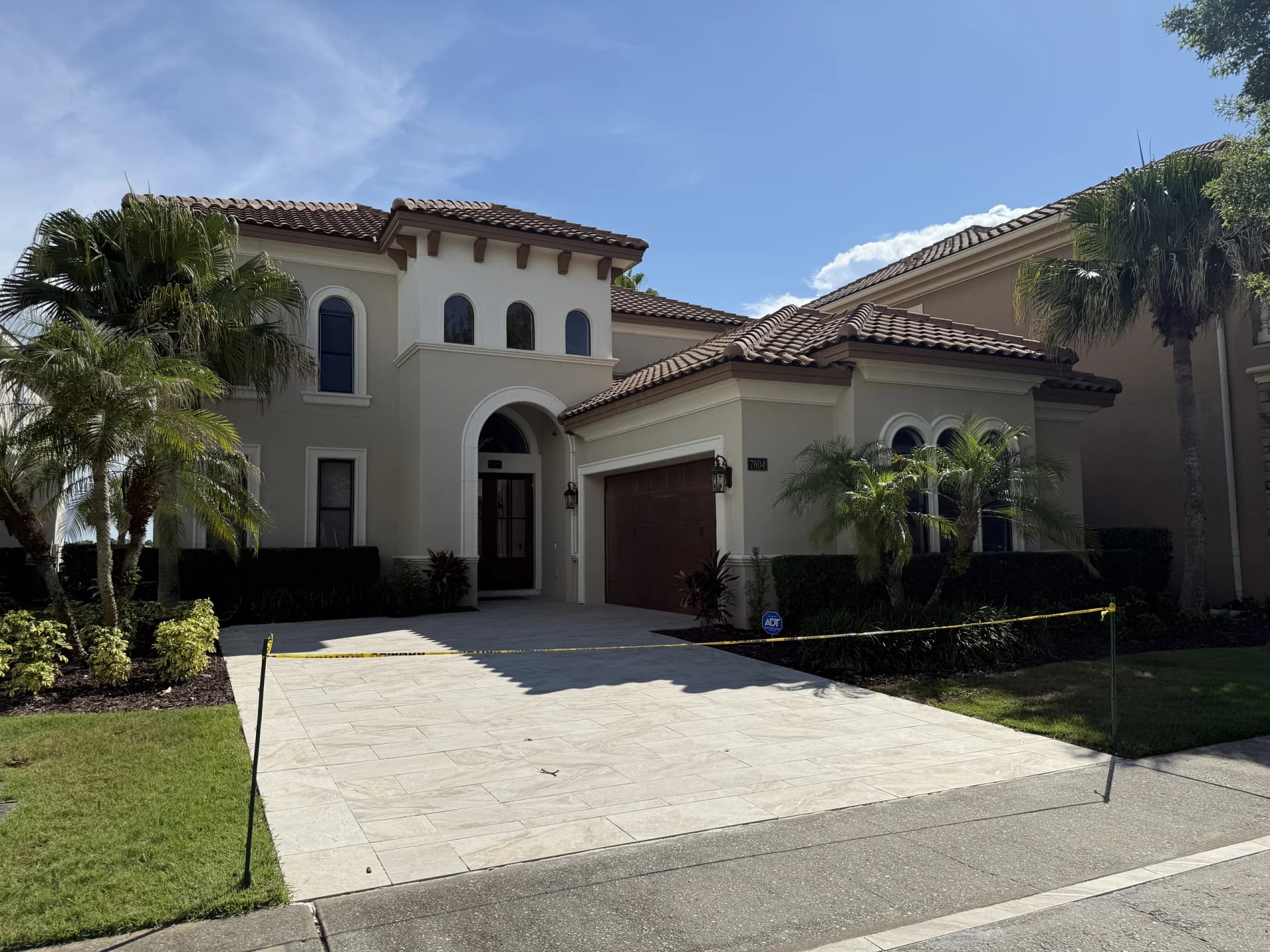
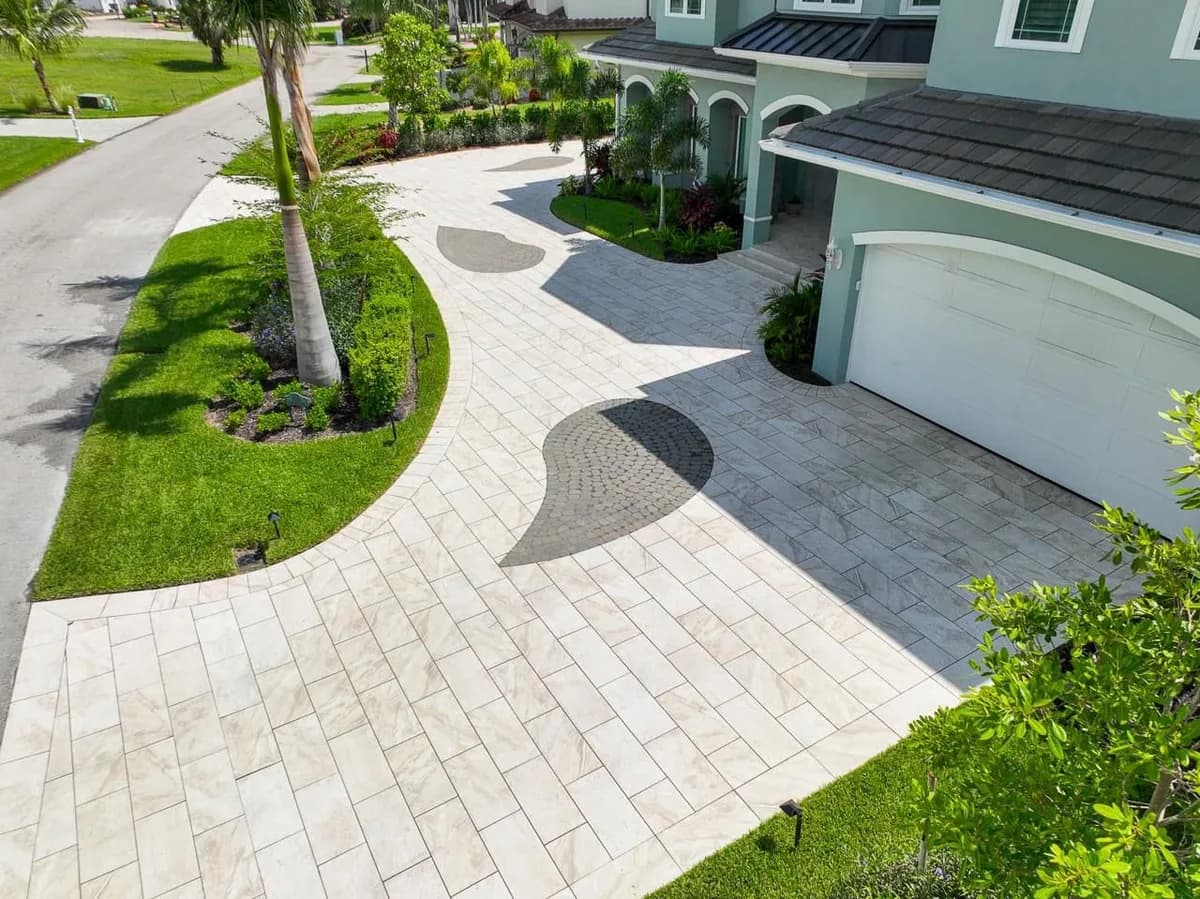
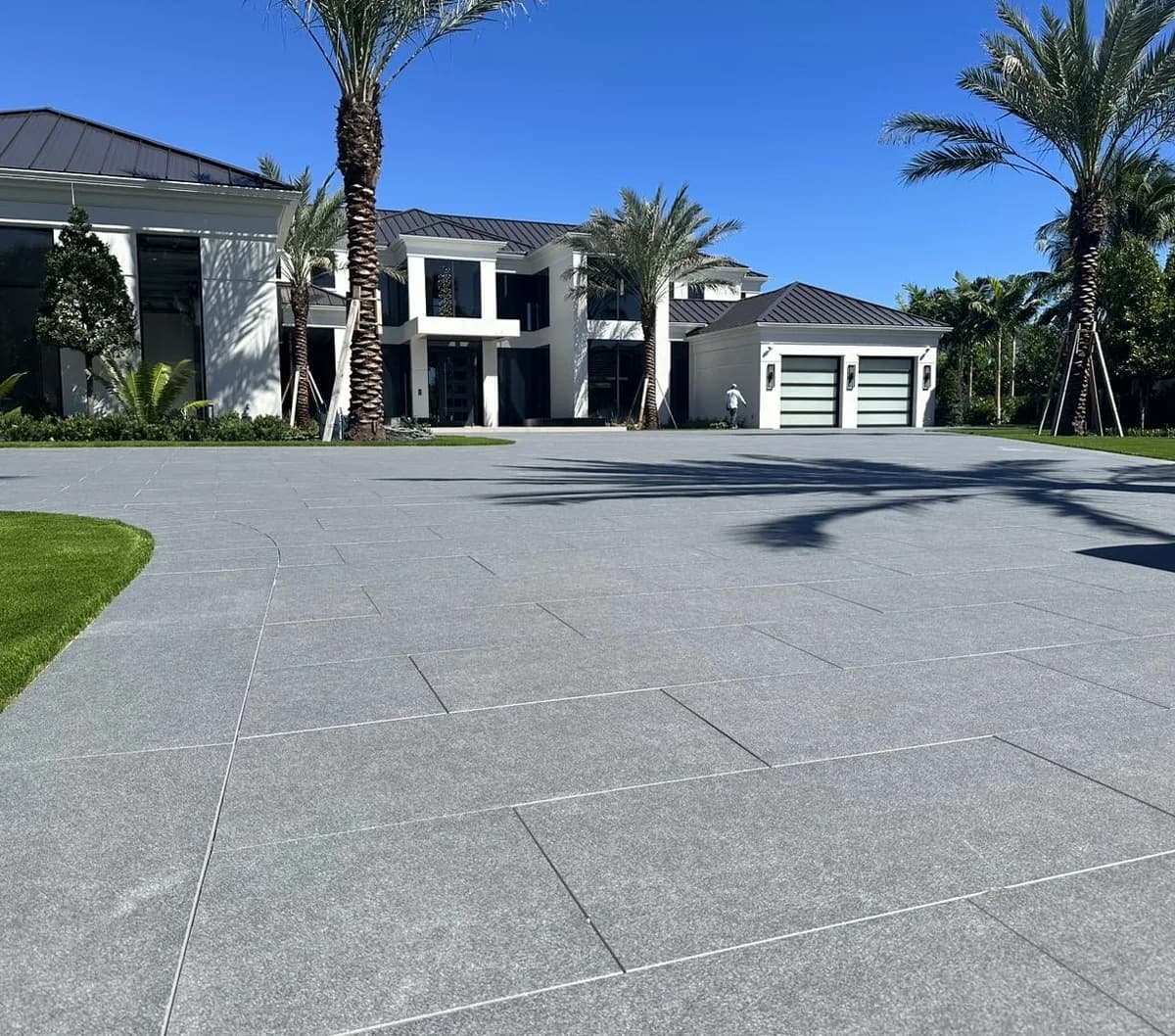
The first thing visitors see. Porcelain 3CM, clay brick, or concrete — installed with the correct base, the correct pattern, and the correct thickness. By the only Hardscape.com Certified installer in your county.
First Impressions Last
A Paver Driveway Done Right Lasts 25-70 Years. Done Wrong, 2-5 Years.
Your driveway handles more load, more weather cycles, and more daily abuse than any other outdoor surface. It's also the first thing every visitor, neighbor, and potential buyer sees. Getting it right matters — and getting it wrong is expensive.
In Sarasota, Bradenton, and Lakewood Ranch, we've seen every failure mode: 2CM porcelain cracking under vehicle load, running bond patterns shifting from tire shear, insufficient base depth settling in Florida's sandy soil, missing edge restraints letting perimeter pavers migrate outward. We've re-installed many of them.
As the only Hardscape.com Certified installer in your county, we specify everything in writing — paver product, thickness, base depth, pattern, edge restraint, jointing material. Every item. No surprises.
Correct thickness
3CM porcelain or 2 3/8" brick — never less for vehicles
Herringbone pattern
Load distribution engineering, not just aesthetics
8" compacted base
FL sandy soil requires deeper base than other states
Edge restraints
Anchored every 12" — prevents perimeter migration
Polymeric sand
Locks joints, prevents weeds, resists FL rain washout
Written specs
Every product, every measurement on your quote
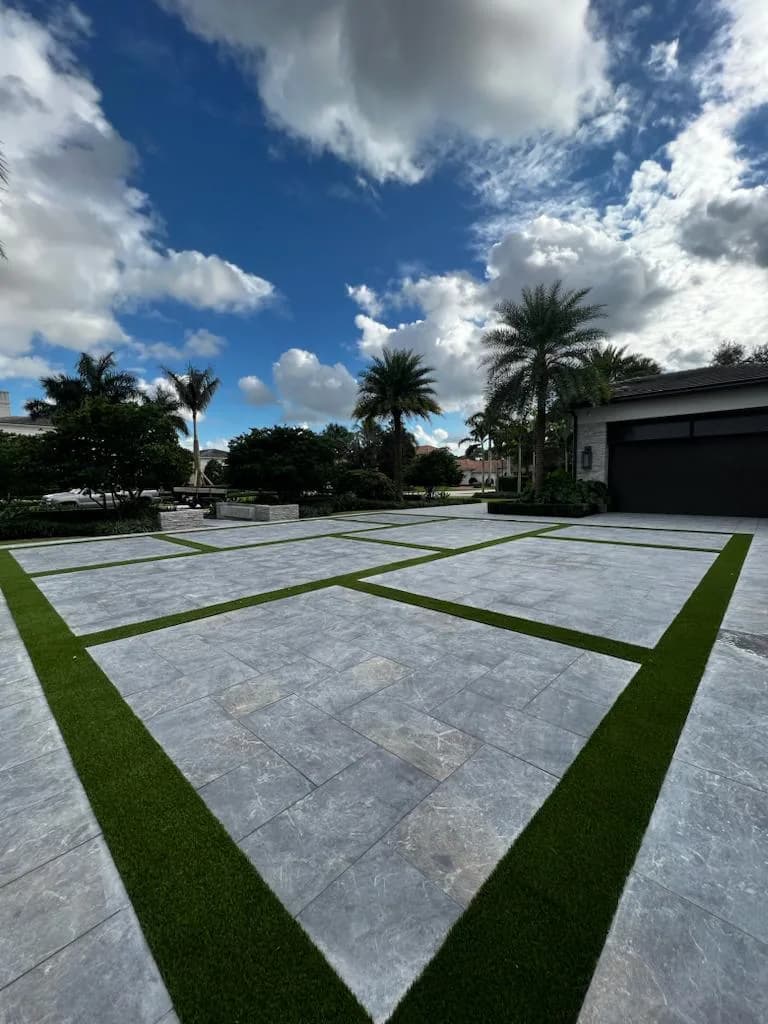
Choose Your Material
Which Paver Material is Right for Your Driveway?
We install all of them. Here's the honest breakdown — including what we don't recommend for driveways and why.
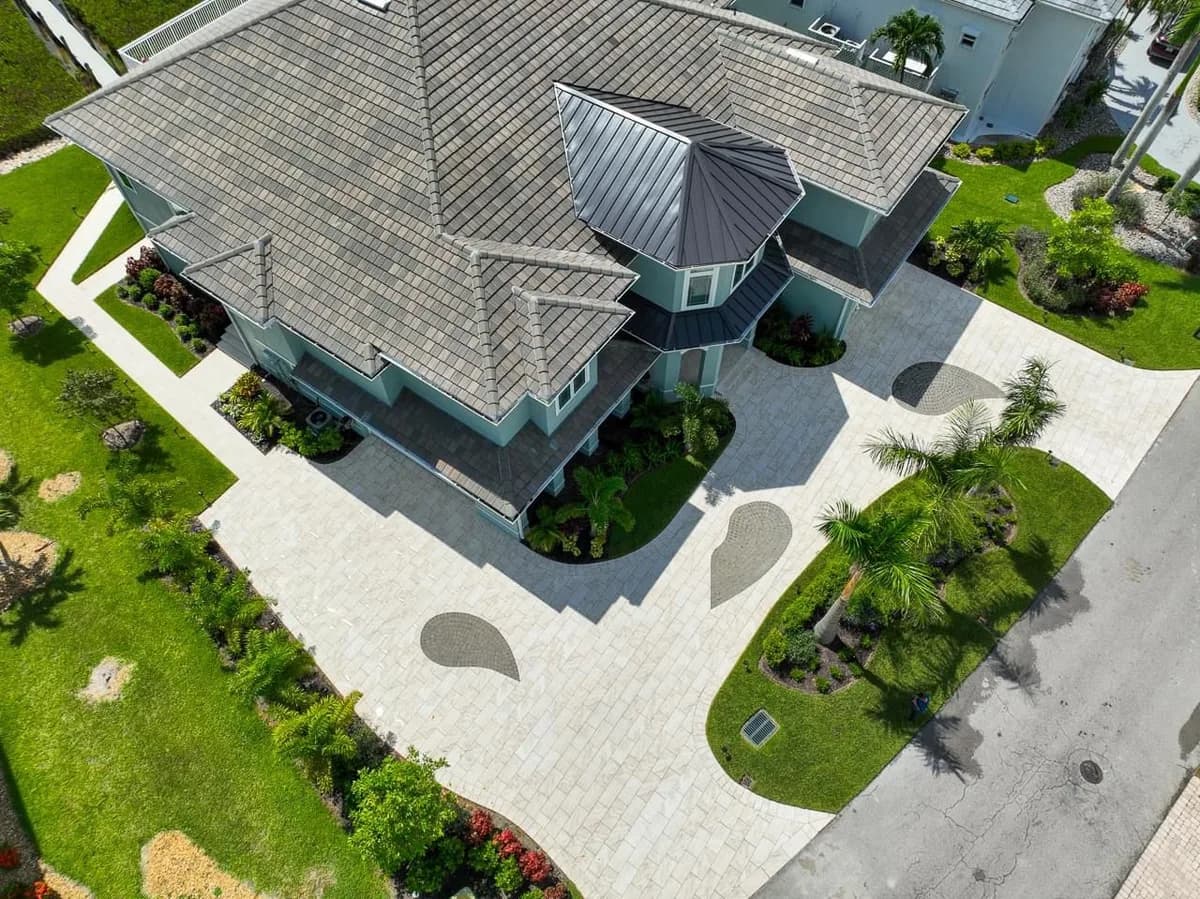
Porcelain Pavers (3CM)
Lifespan
30–50+ years
Maintenance
None — rinse when dirty
Advantages
Zero tire marks — non-porous surface
No sealing ever required
Color never fades in Florida UV
Considerations
✗ Higher upfront cost
✗ Requires 3CM — never 2CM for vehicles
✗ Mortar-set for most applications
Luxury driveways, premium curb appeal
Learn more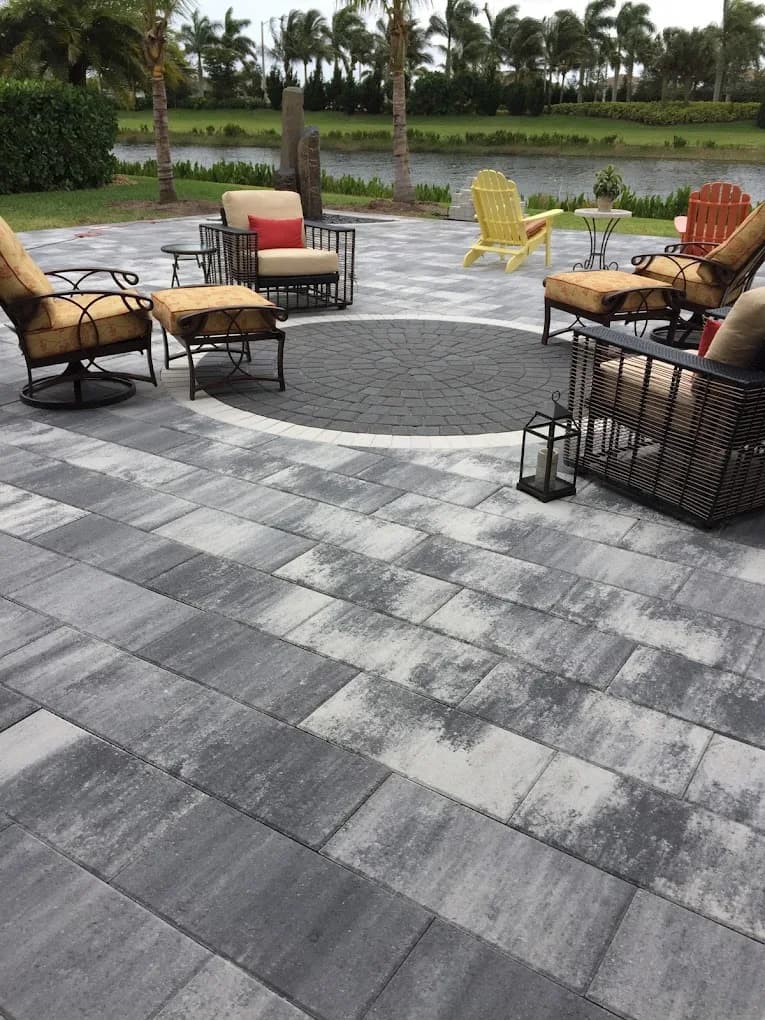
Clay Brick Pavers
Lifespan
70+ years
Maintenance
Seal every 5-7 years
Advantages
70+ year lifespan
Color is part of the clay — never fades
Gets harder with age
Considerations
✗ Higher upfront cost than concrete
✗ Less color variety than concrete
✗ Heavier — requires stronger base
Traditional homes, maximum longevity
Learn moreConcrete Pavers
Lifespan
25-40 years with maintenance
Maintenance
Seal every 3-5 years
Advantages
Most cost-effective option
Widest color and size range
Florida-made brands (Tremron, Cambridge)
Considerations
✗ Color can fade without sealing
✗ Requires sealing every 3-5 years
✗ Can show tire marks if unsealed
Most homes — best value/longevity ratio
Learn more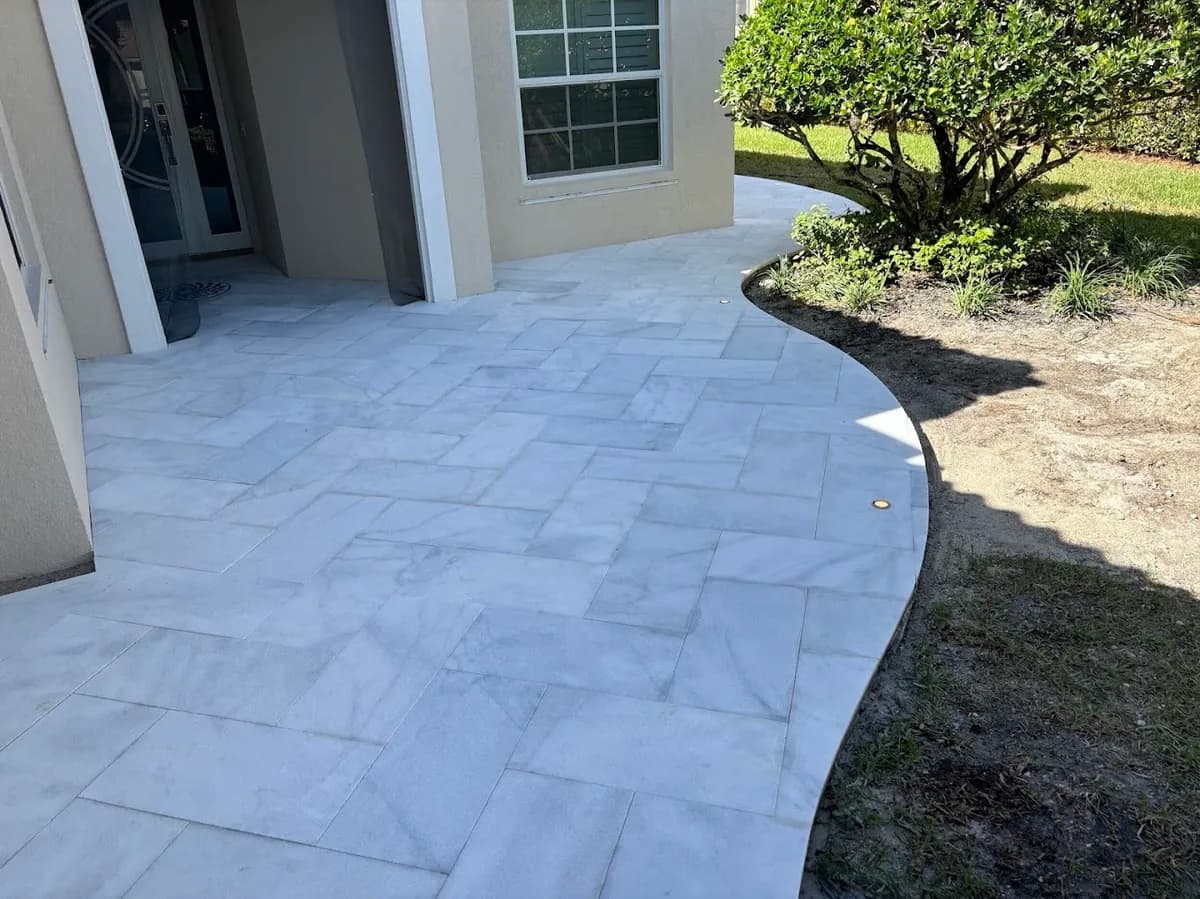
Natural Stone / Travertine
Lifespan
5-10 years under vehicles (failure)
Maintenance
Frequent sealing required
Advantages
Unique natural variation
Beautiful for decorative accent areas
Considerations
✗ Too soft for vehicle loads in Florida heat
✗ Chips and spalls under repeated tire pressure
✗ Porous — absorbs oil permanently
Pool decks and patios ONLY — not driveways
Learn moreThe Thickness Rule You Must Know Before Getting Quotes
✗ Wrong — and we see this regularly
- • 2CM porcelain on a driveway → cracks within 12-18 months under vehicle load
- • Standard 1 3/8" brick paver on heavy-traffic driveway → fails faster than 2 3/8"
- • Travertine on any driveway → soft stone chips and spalls under Florida heat + vehicle cycles
✓ Correct specification
- • Porcelain driveways: 3CM (1.25 inch) minimum — always
- • Concrete/brick driveways: 2 3/8 inch (60mm) minimum
- • Any vehicle traffic: 6-8 inch compacted base
→ When comparing quotes: ask every contractor to specify paver thickness in writing. A cheaper quote that specifies 2CM porcelain will cost you a full reinstallation within 2 years.
Pattern Engineering
Pattern Isn't Just Aesthetics — It's Structural Engineering for Driveways
When a tire rolls across pavers, it creates shear force pushing adjacent pavers apart. Pattern determines how that force is distributed — or concentrated — across the installation. Getting this wrong means watching your driveway shift and settle within a few years.
Herringbone 45°
✓ RecommendedThe engineering standard for driveways worldwide. V-shaped interlocking pattern distributes vehicle load across multiple pavers simultaneously. No joint runs parallel to traffic direction — preventing the shear movement that causes shifting over time. Used in European streets for centuries under heavy traffic.
Best for: All driveways — especially high-traffic and heavy vehicles
Herringbone 90°
✓ Good optionSame interlocking geometry as 45° herringbone, different orientation. Slightly easier to install with less cutting waste. Some contractors prefer for certain site conditions. Acceptable for vehicle traffic.
Best for: Driveways where 45° creates excessive cutting waste
Running Bond
⚠ Use with cautionClean modern look. When laid parallel to traffic direction, creates joints that concentrate shear force — can lead to shifting over years. If specified, must run perpendicular to primary traffic direction and requires tighter edge restraint protocol.
Best for: Pedestrian areas and patios — not ideal for driveways
Basketweave / Other
✗ Not for drivewaysDecorative patterns that lack the load-distribution engineering of herringbone. Acceptable for accent borders and pedestrian areas, not for primary vehicle traffic zones.
Best for: Decorative borders and walkways only
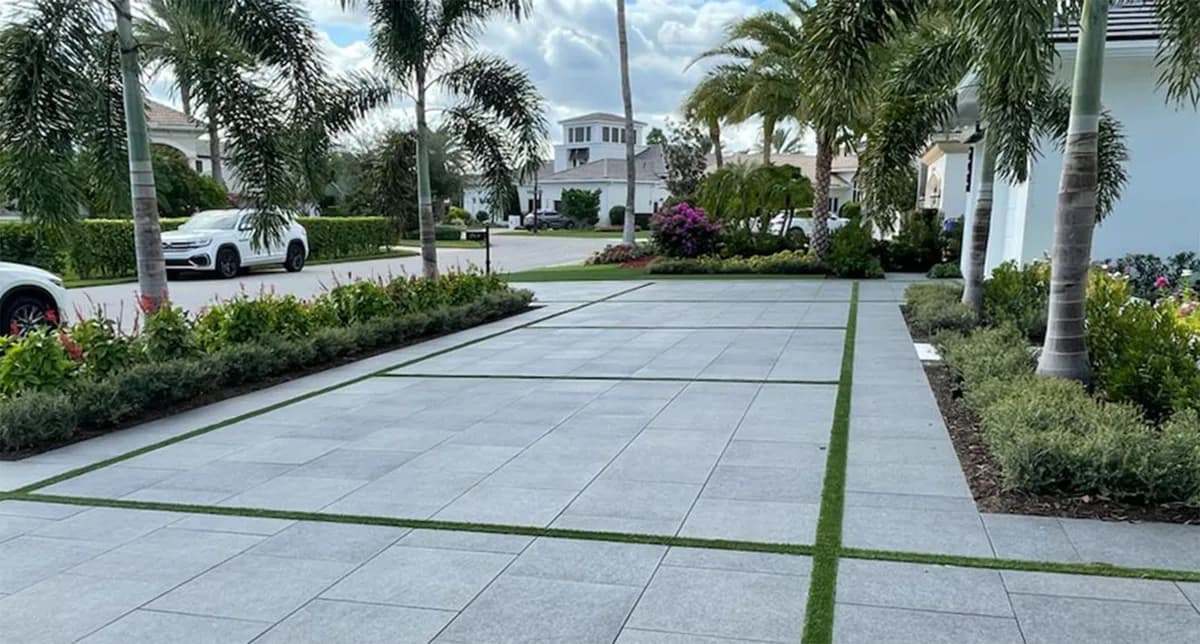
Herringbone 45°
The engineering standard for vehicle driveways
Driveway ROI in Florida
How We Do It
Our 8-Step Driveway Installation Process
Every step matters. Skipping any one of them creates the failure modes we get called to fix.
Site Assessment & Quote
We visit, measure, assess existing surface (concrete, asphalt, or soil), check drainage slope, and evaluate any grade changes needed. Written quote with every specification itemized.
Demolition & Excavation
Remove existing surface. Excavate to correct depth — 8 inches minimum for vehicle driveways (6" base + 1" bedding + paver thickness). Proper excavation depth is where most budget contractors cut corners.
Base Preparation
Geotextile fabric to prevent soil migration. Compacted crushed limestone base in 2-3 inch lifts with plate compactor. Every lift tested for compaction. The most critical step — a poorly compacted base fails no matter how good the pavers are.
Edge Restraints
Concrete edge restraints or Snap-Edge spikes anchored every 12 inches on all perimeters and curves. No edge restraints = pavers migrate outward under vehicle pressure within 2-3 years. Non-negotiable.
Bedding Layer
Precisely graded 1 inch of coarse bedding sand or mortar bed (for mortar-set). Set to exact grade with correct drainage slope — 1/8" per foot minimum away from structure. Screeded perfectly flat.
Paver Installation
Pavers placed in specified pattern (herringbone 45° for vehicles), checked for level continuously. Precision cuts with diamond blade wet saw at all edges. No chipped cuts, no gaps, no lippage.
Joint Sand & Sealing
Polymeric joint sand swept and compacted — activates with water to lock joints and prevent weed growth. Sealer applied (concrete/brick — not porcelain). Two-pass application for maximum penetration.
Final Walkthrough
Walk the project with you. Explain maintenance schedule. Provide written care instructions. Confirm drainage and slope. You don't take delivery until you're completely satisfied.
Pricing
Every Project Is Custom-Quoted
Material selection, project size, site conditions, and specification all affect the final cost. We provide written itemized quotes — material, base depth, pattern, and labor — at no charge.
Our Work
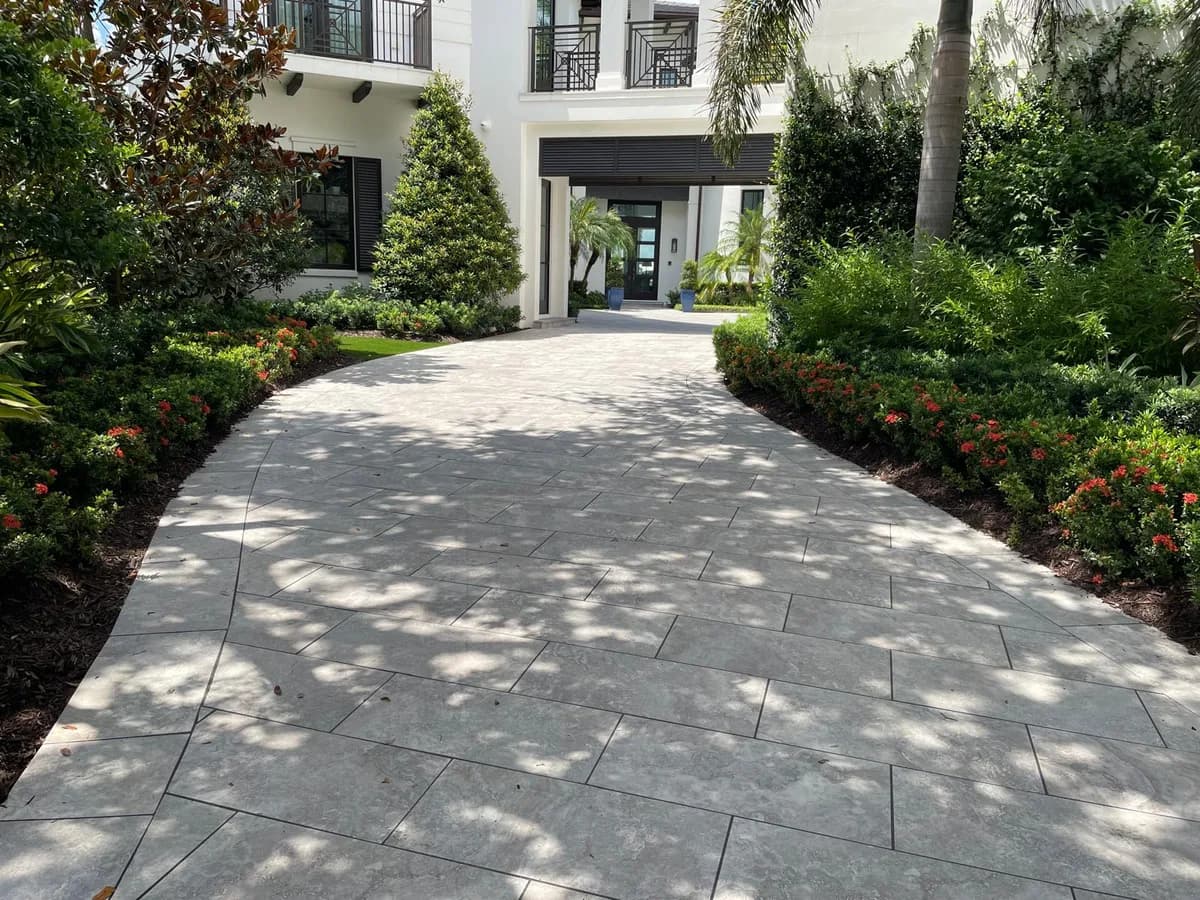
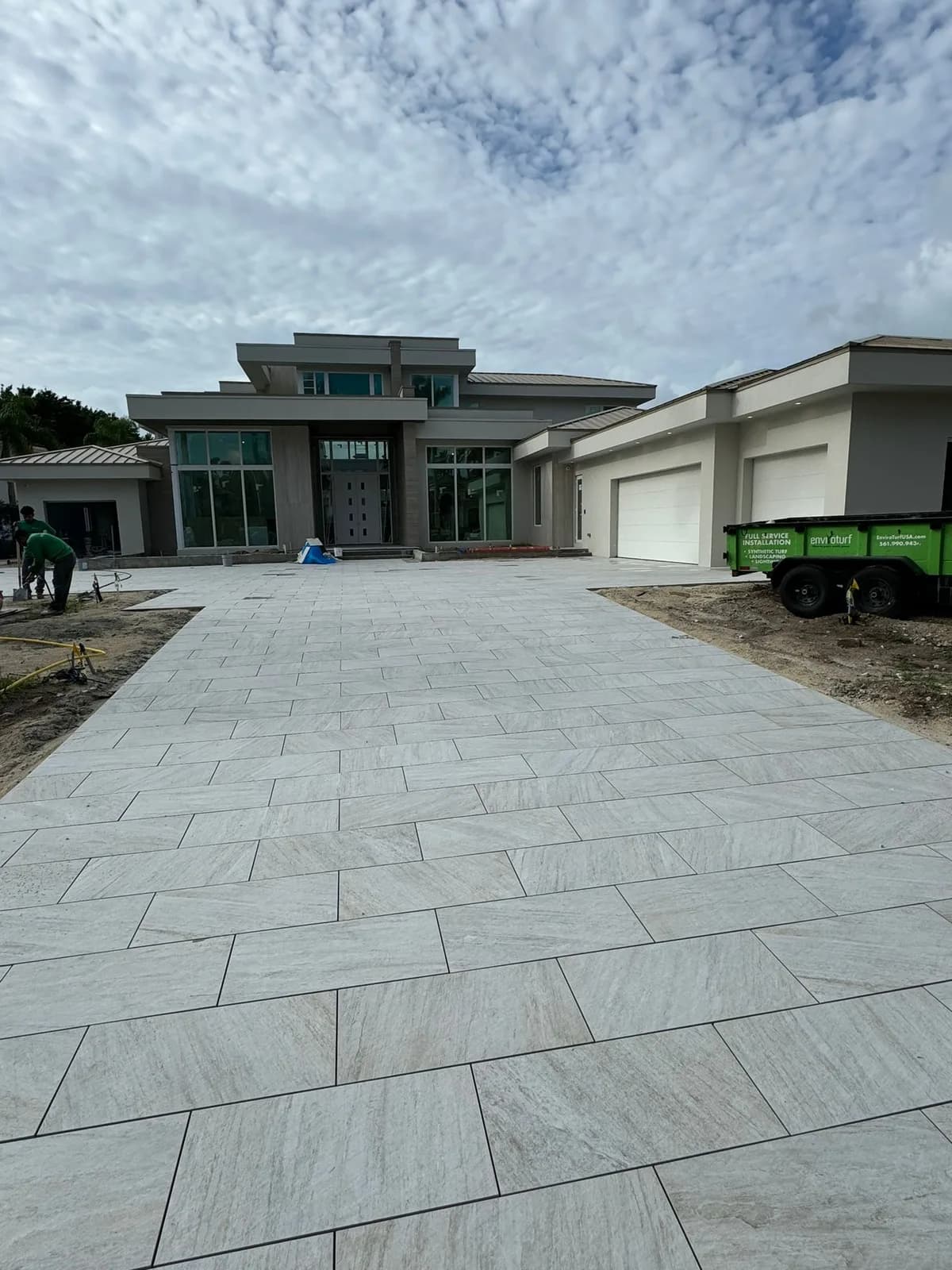
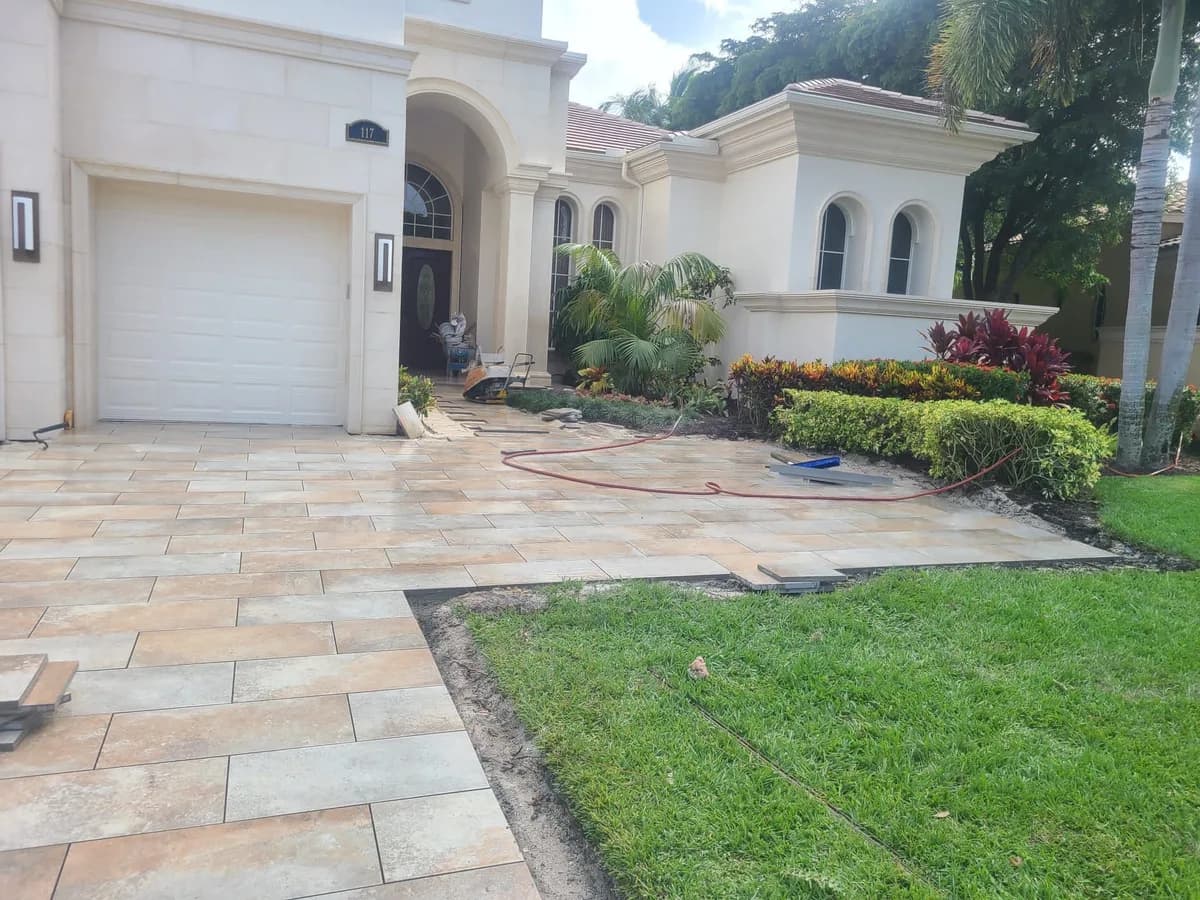
Recent Driveway Projects
Sarasota · Bradenton · Lakewood Ranch · Tampa · Fort Myers
Where We Work
Driveway Paver Installation Across Florida
Sarasota & Manatee Counties
Our home market. Palmer Ranch, Lakewood Ranch, Longboat Key, Osprey, Siesta Key. HOA-compliant color selections available. Coastal salt-air protocol on sealers.
Hillsborough County (Tampa)
South Tampa, Westchase, Carrollwood, Riverview. Growing luxury residential market with increasing demand for porcelain driveways in planned communities.
Orange County (Orlando)
Dr. Phillips, Windermere, Winter Garden, Lake Nona. Florida's fastest-growing luxury residential market. Porcelain 3CM driveways increasingly common in new construction.
Lee County (Fort Myers)
Fort Myers, Cape Coral, Naples, Estero. Gulf Coast salt-air environment — porcelain's non-porous surface particularly valued here for rust and stain resistance.
Why EC Paver for Your Driveway
Only Hardscape.com Certified installer in Sarasota, Manatee, Hillsborough, Orange, Lee & Pasco Counties
Written quote specifying: paver product, thickness, base depth, pattern, edge restraint, sealing — every item
3CM porcelain is our standard for any vehicle application — we don't cut corners on thickness
Herringbone 45° is our standard pattern for driveways — the engineering choice, not just aesthetic
We've re-installed failed driveways from contractors who cut corners — we won't be that contractor
Free estimate with on-site visit — we measure accurately, not from satellite
Only Certified in Your County
Sarasota · Manatee · Hillsborough · Orange · Lee
Often Combined With
Common Questions
Driveway Paver FAQ
How much does driveway paver installation cost in Sarasota, FL?+
What is the best paver material for driveways in Florida?+
Why is 3CM required for porcelain driveways?+
Why does herringbone pattern matter for driveways?+
Do driveway pavers need to be sealed in Florida?+
Can I install pavers over my existing concrete driveway?+
How long does paver driveway installation take?+
Do porcelain paver driveways get tire marks?+
Google Reviews
What Our Customers Say
5.0Rated 5.0 out of 5· 18 Google reviews
Anthony
2 months ago
Rated 5 out of 5Highly recommend! EC Paver was able to get me scheduled quickly at a fair price. They did a great job on my pavers and offered to return if we had any issues.
Read on Google →Eva Pokorny
a year ago
Rated 5 out of 5I just have installed the "Da Vinci" Italian Porcelain tiles by EC Paver Solutions in my driveway, and I could not be happier with the results. Diego and his team did fantastic job. They finished the project on time we agreed on and they clean after the work was done. Great job done!
Read on Google →Mike Crosby
5 months ago
Rated 5 out of 5We found EC Paver Solutions via our porcelain paver manufacturer and hired them to do a repair of our porcelain paver driveway that was installed in July of 2024. It was installed by a crew that I was told were trained in installing this product. They were not. For the better part of 2 years we struggled with several other supposed paver sub-contractors who could never get it right. Today we’ve finally got the driveway we wanted. Thank you Diogo and crew for your expertise, attention to detail and for listening to us. If you’re in need of a unique paver solution aside from the brick pavers almost everyone uses, call Diogo. You will be glad you did!
Read on Google →Rob Cushen
2 months ago
Rated 5 out of 5Diogo and his crew did great work. They showed up on time and got the job done quickly. Price was fair, I’m having them back for some more work. 👍🏻
Read on Google →Marcio DaCosta
3 years ago
Rated 5 out of 5Highly recommend EC Pavers. Diogo is great to work with and his crew is fast and very detailed. They completed a large project around our pool using 3cm ceramic pavers and mosaic tiles wrapping the spa and waterline of the pool. A few months later, they came back to do the driveway also in the same ceramic pavers. The work was done promptly and everything was handled in a professional and efficient manner. Diogo has come back a few times to take care of minor items and is always available to address any concerns. I’m very happy with the work and highly recommend them to anyone.
Read on Google →


Ready for a Driveway That Lasts 25-50 Years?
Get a free on-site estimate from the only Hardscape.com certified installer in your county. We visit, measure, specify — and give you a written quote with every item itemized. No surprises.
 (941) 250-4635