
Hardscape.com CertifiedThe ONLYCertified Porcelain Paver Installer in Sarasota, Manatee, Hillsborough, Orange, Lee & Pasco Counties
(941) 250-4635
Porcelain Driveway Pavers 3cm Florida — EC Paver Solutions Florida

Ideas & Inspiration

Driveway ideas, and what each one demands underneath

5 approaches we have actually built, each with what the installation required.

A driveway is the largest hardscape most homes will ever buy and the one with the least room for error. A car turning its wheels while stopped applies a twisting point load, not a parked weight, and that single fact rules out most of what looks good on a patio.

Every idea here is buildable. What separates them is thickness and base — and any of them will fail on the wrong one.

Porcelain Driveway Pavers 3cm Florida — EC Paver Solutions Florida
Idea 01

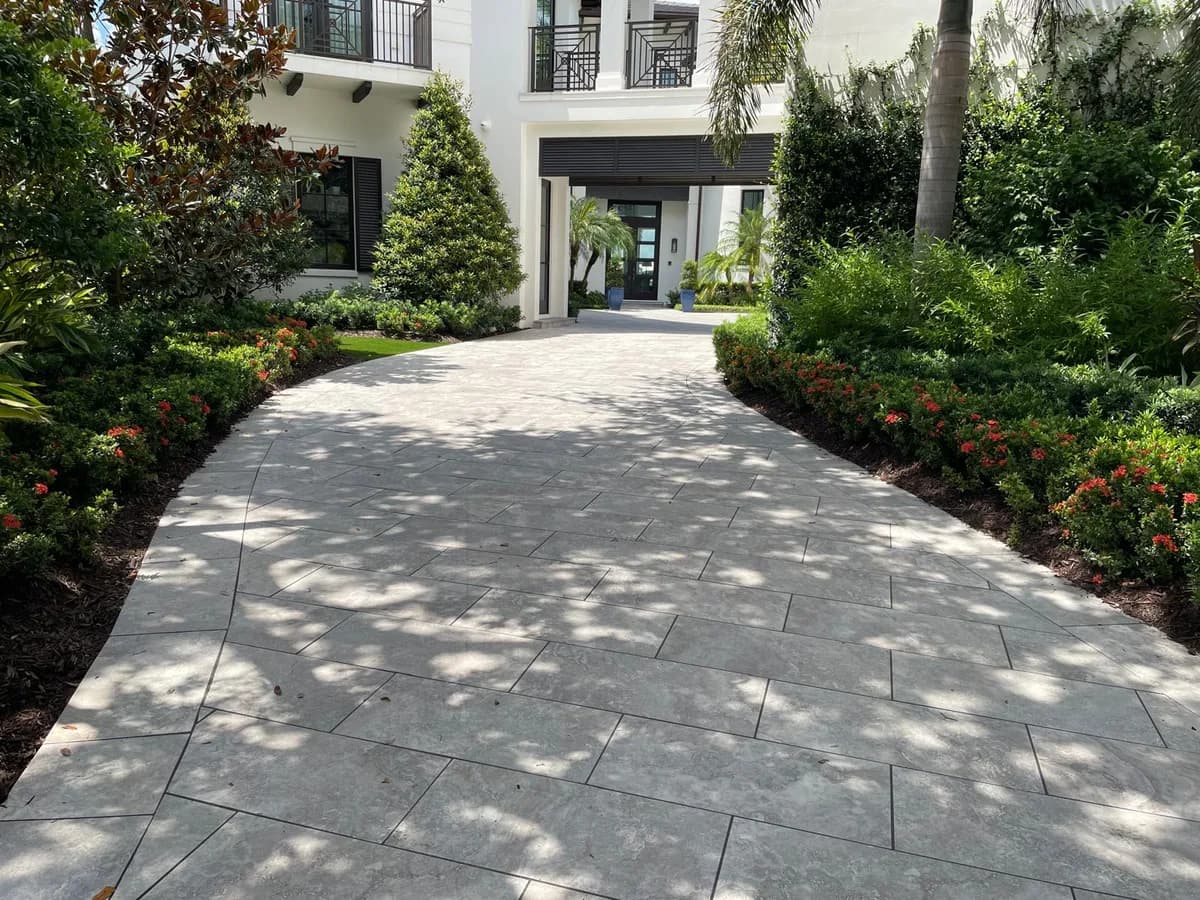
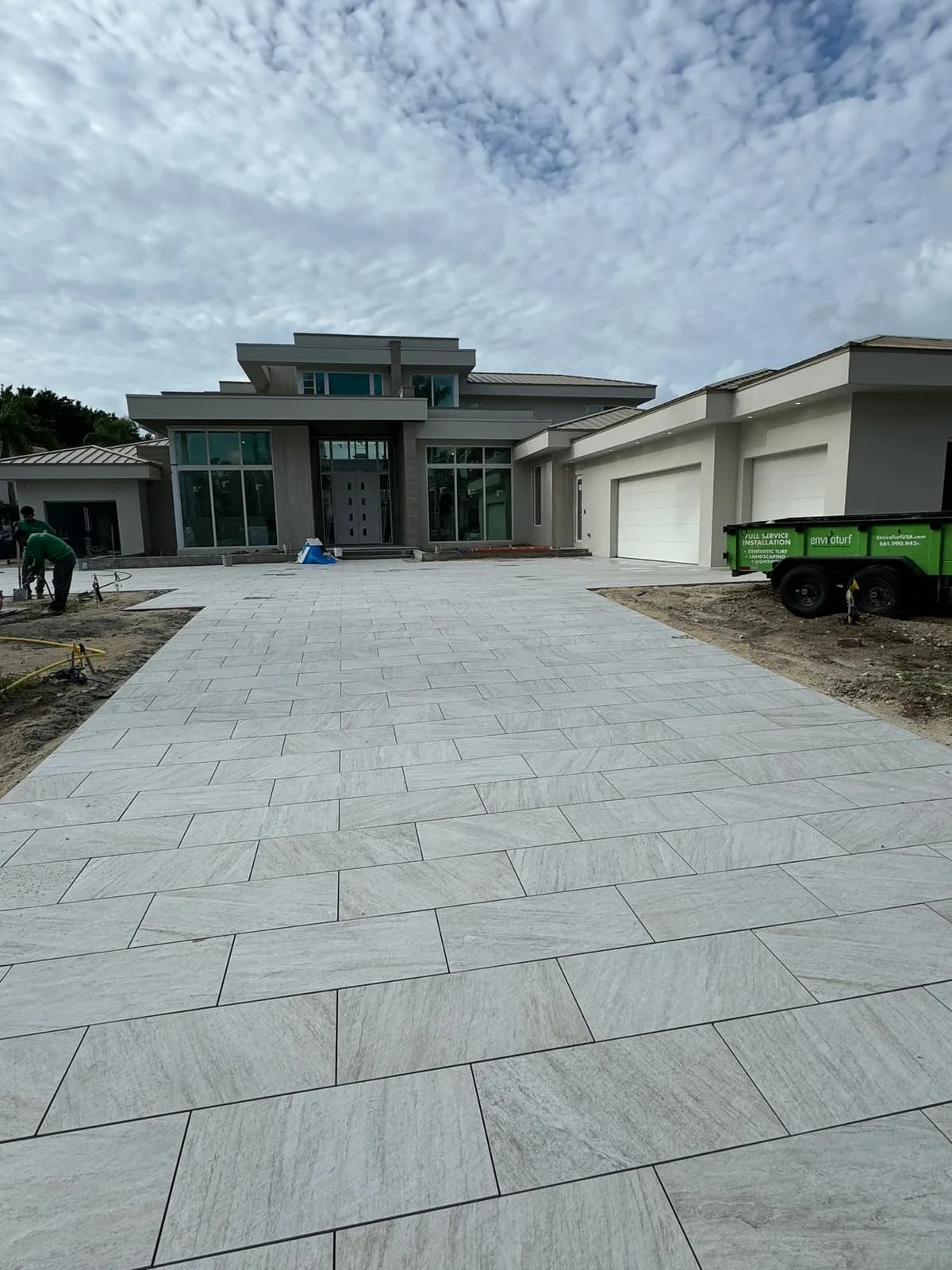
Modern large format in 3CM

Big, clean pieces in a light neutral, running with the direction of the drive. It is the look that makes a contemporary elevation read as finished rather than merely paved, and it is the single most requested driveway on new coastal builds right now.

What it takes to build

Large format on a driveway is 3CM, not 2CM, and that is not a preference. A 2CM paver tests around 13,000 newtons of breaking strength; 3CM tests as high as 29,672. Underneath, a residential driveway in this soil still wants eight to ten inches of compacted base. Get the thickness right and the base wrong and you have simply moved where it breaks.
See this finish in the catalog
Porcelain Driveway Pavers 3cm Florida — EC Paver Solutions Florida
Idea 02

Cobblestone setts for a European entry

Small 6x12 setts laid in a running or fan pattern give a drive the texture of an old European courtyard. The scale breaks up a large expanse that large-format material can make feel like a parking apron, and it handles curves and circular drives without awkward cuts.

What it takes to build

Setts come in 3CM with space bars for a reason — the format is only viable at that thickness under vehicle load. The trade-off is joint count: far more linear joint per square foot, which means jointing material choice and maintenance matter more here than on any other driveway type.

See this finish in the catalog
Multi-tone brick paver patio in a residential courtyard
Idea 03

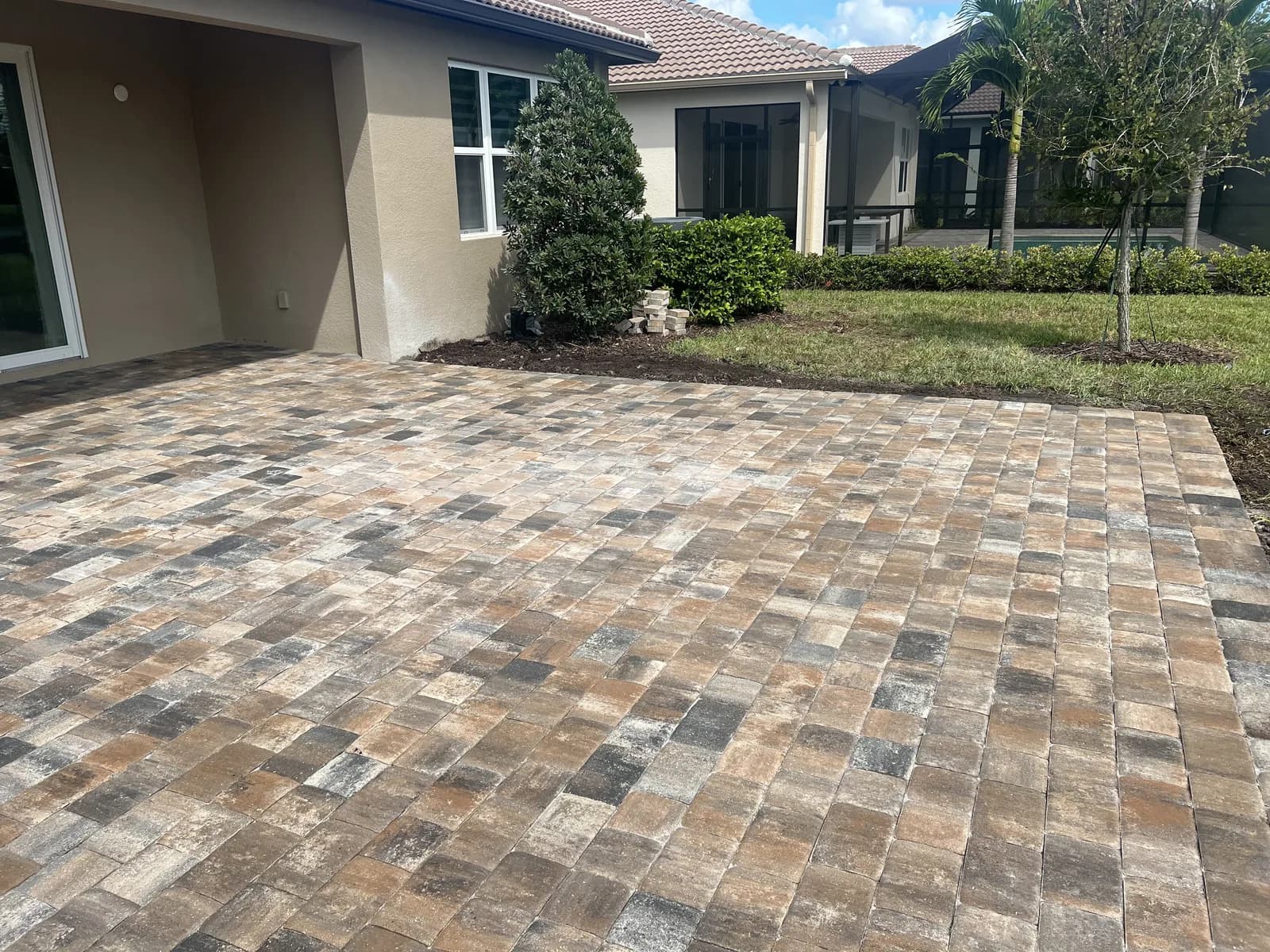
Classic brick with a soldier border

Brick remains the default on traditional Florida homes and for good reason: it suits the architecture, it is forgiving of settlement, and a soldier course border gives the drive a finished edge that also does structural work.

What it takes to build

Brick driveways live or die on edge restraint. The border is what stops the field creeping outward under turning tires, and a drive built without a proper restraint spreads at the edges within a couple of seasons — the fan-shaped gap you see at the street end of a tired driveway.

Porcelain Driveway Pavers 3cm Florida — EC Paver Solutions Florida
Idea 04

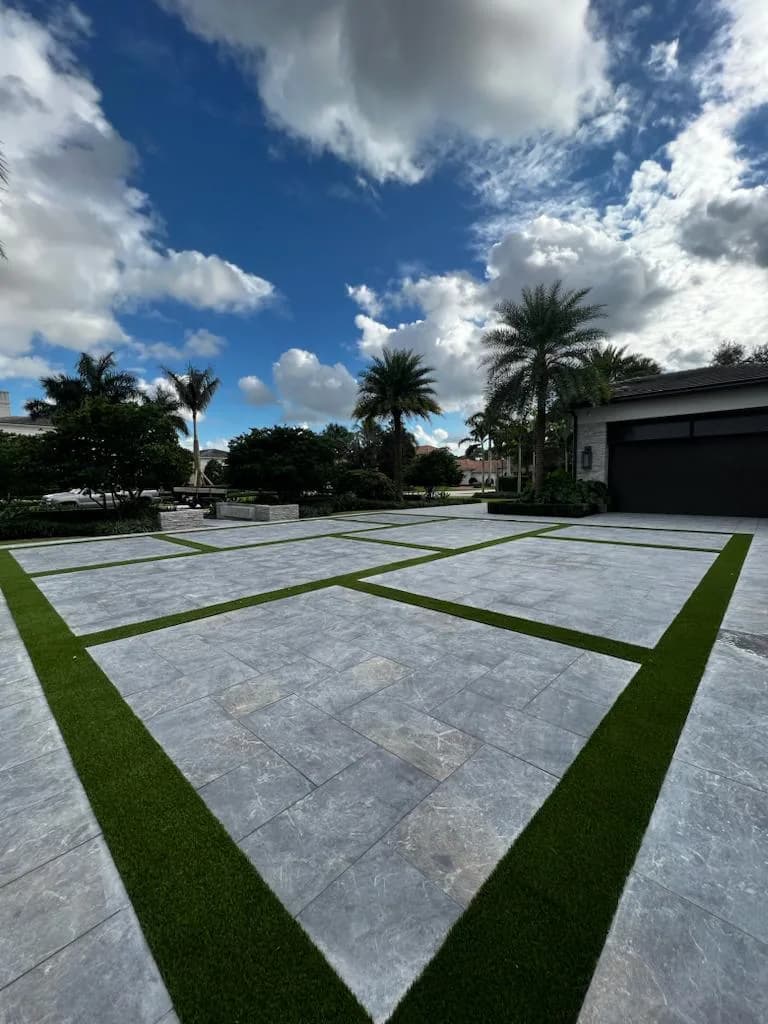
Ribbon drive with turf between the tracks

Two paved tracks where the wheels run, with turf or gravel between them. It cuts the paved area substantially, reads as landscape rather than pavement, and handles drainage better than a solid field because most of the surface still absorbs water.

What it takes to build

The catch is that the tracks are narrow and carry the entire load, so the base under them is more critical, not less. The tracks also have to be set where the wheels actually go — measured against the vehicles that live there, not assumed.

Porcelain Driveway Pavers 3cm Florida — EC Paver Solutions Florida
Idea 05

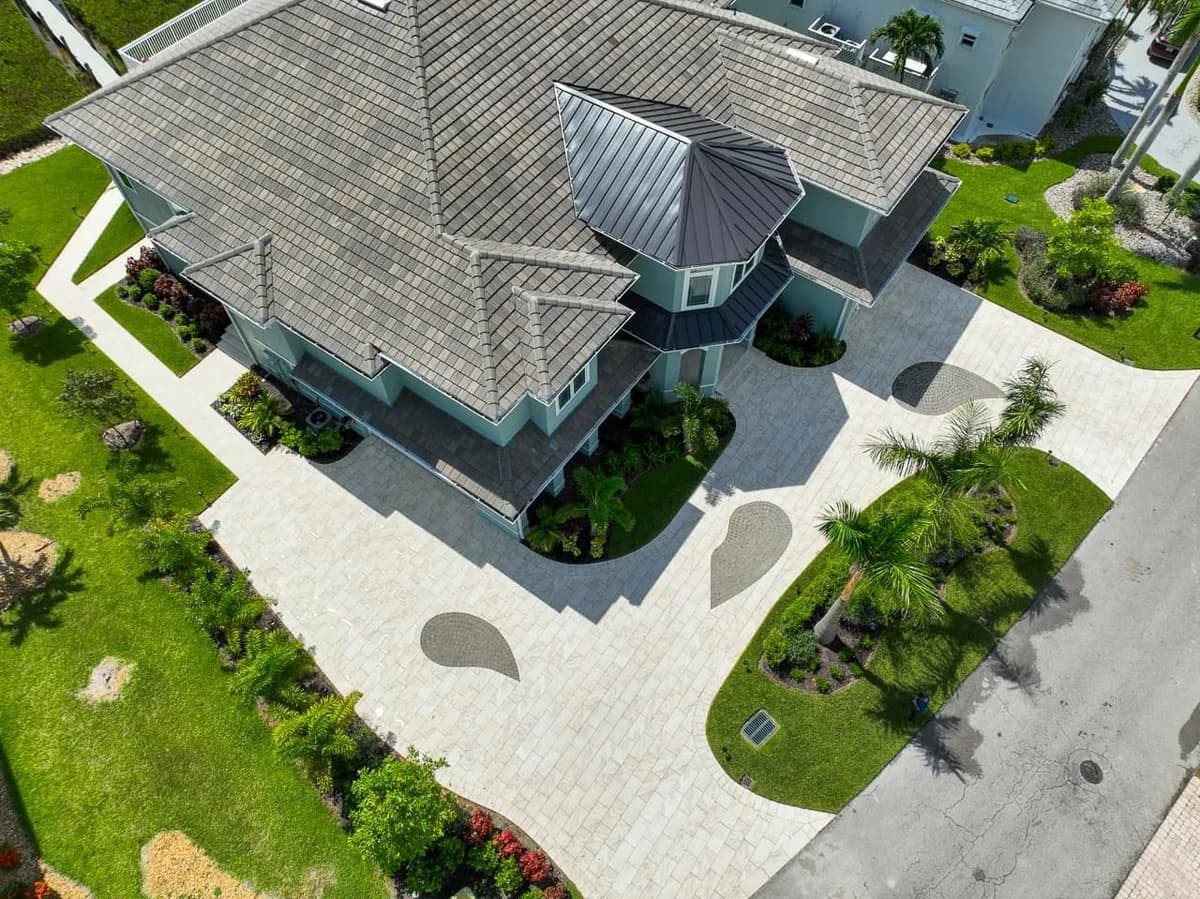
A contrasting apron at the street

Changing material or pattern at the street end gives the drive a defined entry and, practically, puts the most visible and most abused section in the piece that hides wear best. It is a small move that makes an otherwise plain drive look designed.

What it takes to build

The apron is also where the municipality often has a say, because it touches the right-of-way and affects drainage. Permitting for a driveway is usually required in these counties for exactly that reason — it is worth confirming before the design is fixed rather than after.

Driveway questions

For residential vehicle traffic, 3CM at minimum — not 2CM. 3CM is the thickness manufacturers rate for vehicles, testing as high as 29,672 newtons of breaking strength against roughly 13,000 for 2CM. The reason is the kind of load rather than only the amount: a car turning its wheels while stopped applies a twisting point load that thin porcelain does not tolerate. If delivery trucks or constant commercial turning are involved, 5CM is the honest answer.

A residential driveway generally wants eight to ten inches of compacted base, and in soils that hold water it wants an open-graded layer or an edge drain as well. Thickness of the paver and depth of the base are not alternatives — a 3CM driveway on four inches of base fails the same way a 2CM one does, just more slowly. Ask for the base scope in writing alongside the paver specification.

Yes, at 3CM and on a correctly built base. What it cannot survive is being installed the way concrete pavers are installed. At 2CM and 3CM porcelain is classified as tile: no interlocking geometry, no load transfer to neighbouring pieces, and not enough mass to hold its own position. Set dry on sand it is not a system. That is the distinction behind most failed porcelain driveways in this state.

Like one of these?

Tell us which idea and where it goes. Free on-site consultation across Sarasota, Manatee, Hillsborough, Orange, Lee & Pasco Counties, with full-size samples brought to you.

No obligation. We respond within 24 hours.