

7 Signs of a Real Porcelain Paver Expert in Florida
Almost every paver crew in Sarasota and Bradenton will tell you they install porcelain, and most of them mean it honestly — they just install it with concrete-paver habits. Here are the seven things a genuine porcelain specialist brings up before you ask, what a great answer sounds like, and how to verify every word of it in ten minutes.
What a Real Expert Brings Up in the First Ten Minutes
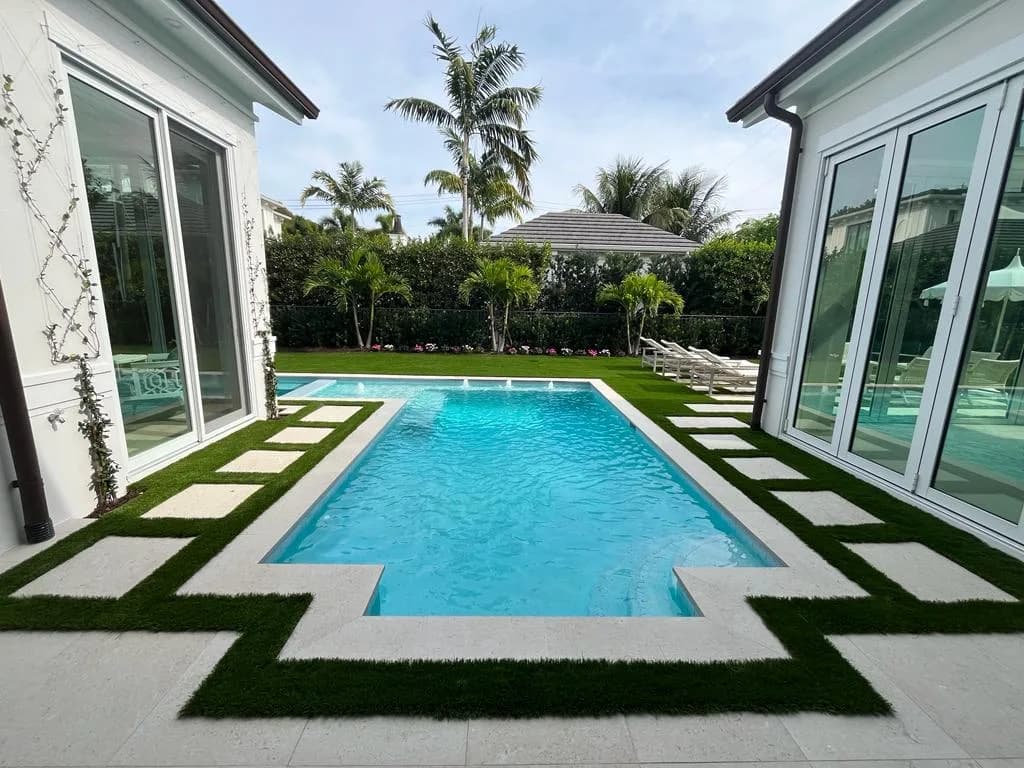
Here is the fastest test there is, and it takes ten minutes on your own patio. Bring up porcelain and listen to what the contractor talks about first. A real porcelain installer will barely mention the tile — he wants to know what is under it. Is there an existing slab, and is it sound? How old is it, where were the control joints cut, how much does the surface fall from the house toward the pool coping? On a full excavation, how deep is the sandy fill and where does the water table sit after a week of August afternoon storms? That is sign number one, and most homeowners miss it because they came to talk about colors. Porcelain is rigid, vitrified, and essentially non-flexing. It does not settle gracefully the way a concrete paver or a piece of travertine does. It either sits on something dead flat and stable, or it telegraphs every flaw underneath it straight up to your bare feet.
Sign number two is what a real expert will not do: hand you a firm number over the phone. We get that call constantly, and the honest answer is that nobody can price a porcelain deck sight unseen, because the price lives in the substrate. A sound, flat lanai slab in Lakewood Ranch means we bond-set directly over it and the job lands near the bottom of the range. The same square footage over a cracked 1980s deck in Bradenton with two inches of fall in ten feet means demolition, a mud bed, or a full rebuild — a different project at a different price. A contractor who names a per-square-foot figure before walking your site is either padding it to protect himself or planning to raise it once the demo starts. Ask instead for a written, itemized scope after a site visit. That document, not the phone call, is where real expertise first becomes visible.
The Three Details That Decide Whether Porcelain Cracks
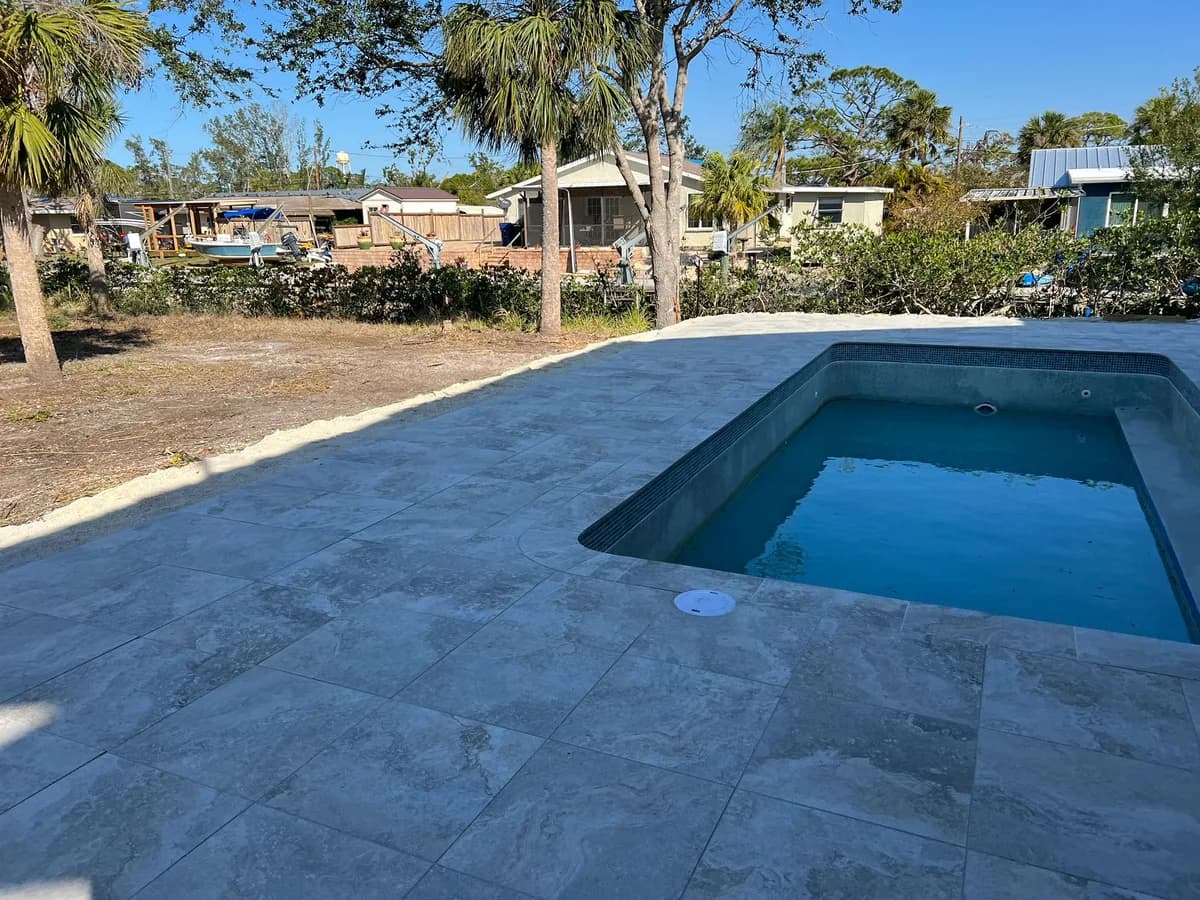
Signs three, four and five come up naturally when a specialist describes the install, and if you have to drag them out of him, you already have your answer. Three is movement joints. Every concrete slab in Florida has control joints cut into it, and every slab moves — an unshaded deck in Palmer Ranch can swing close to 40 degrees at the surface between a 3 p.m. August high and a 6 a.m. low, and that expansion has to go somewhere. A porcelain expert will tell you, unprompted, that each control joint is carried straight up through the bond coat and the tile as a soft, flexible movement joint, and that the field needs perimeter joints where the deck meets the house wall, the pool coping, and every column. A crew that grouts straight across a control joint is building a crack into your deck on day one. It shows up in the second or third summer, always in the same straight line.
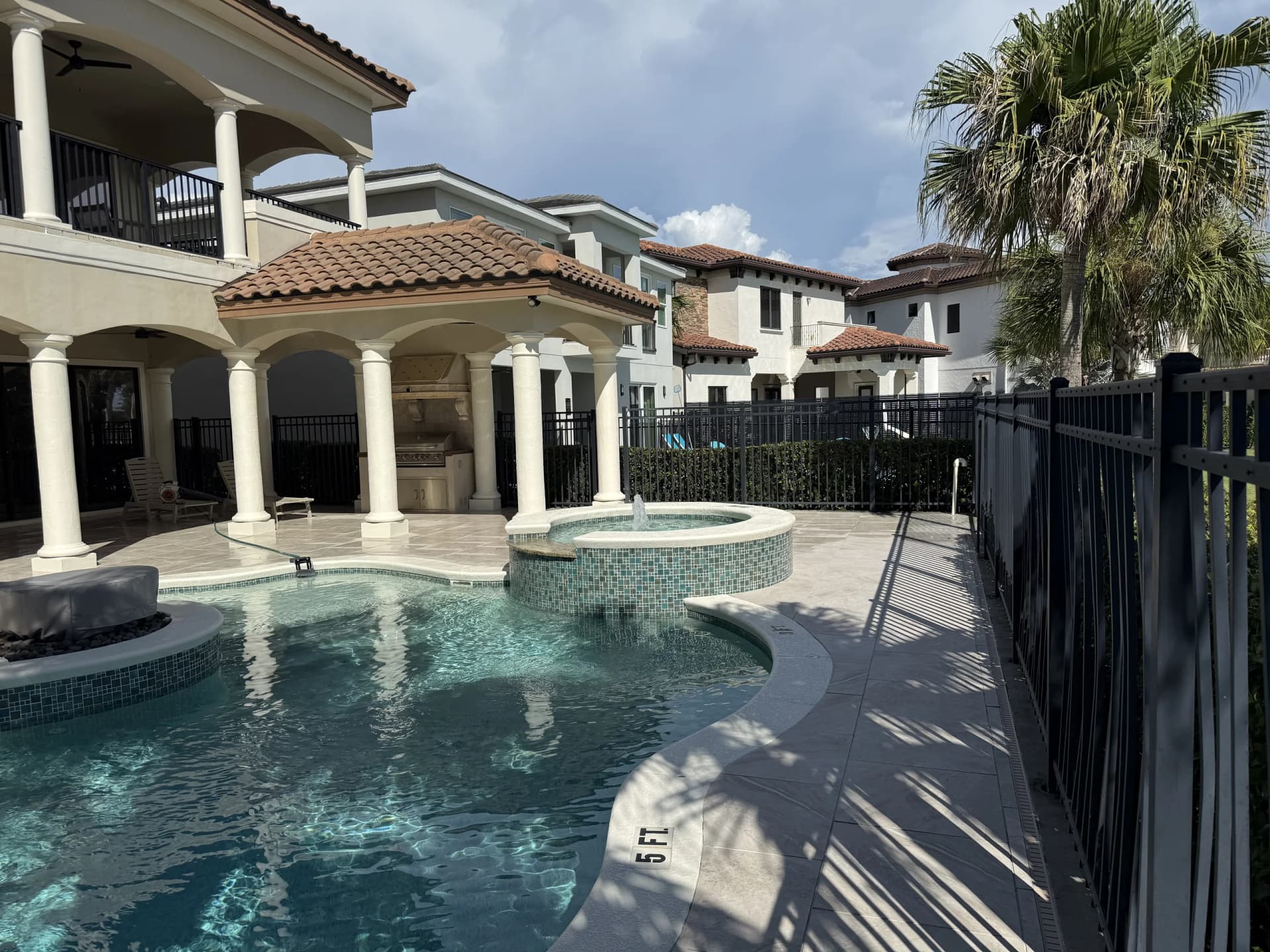
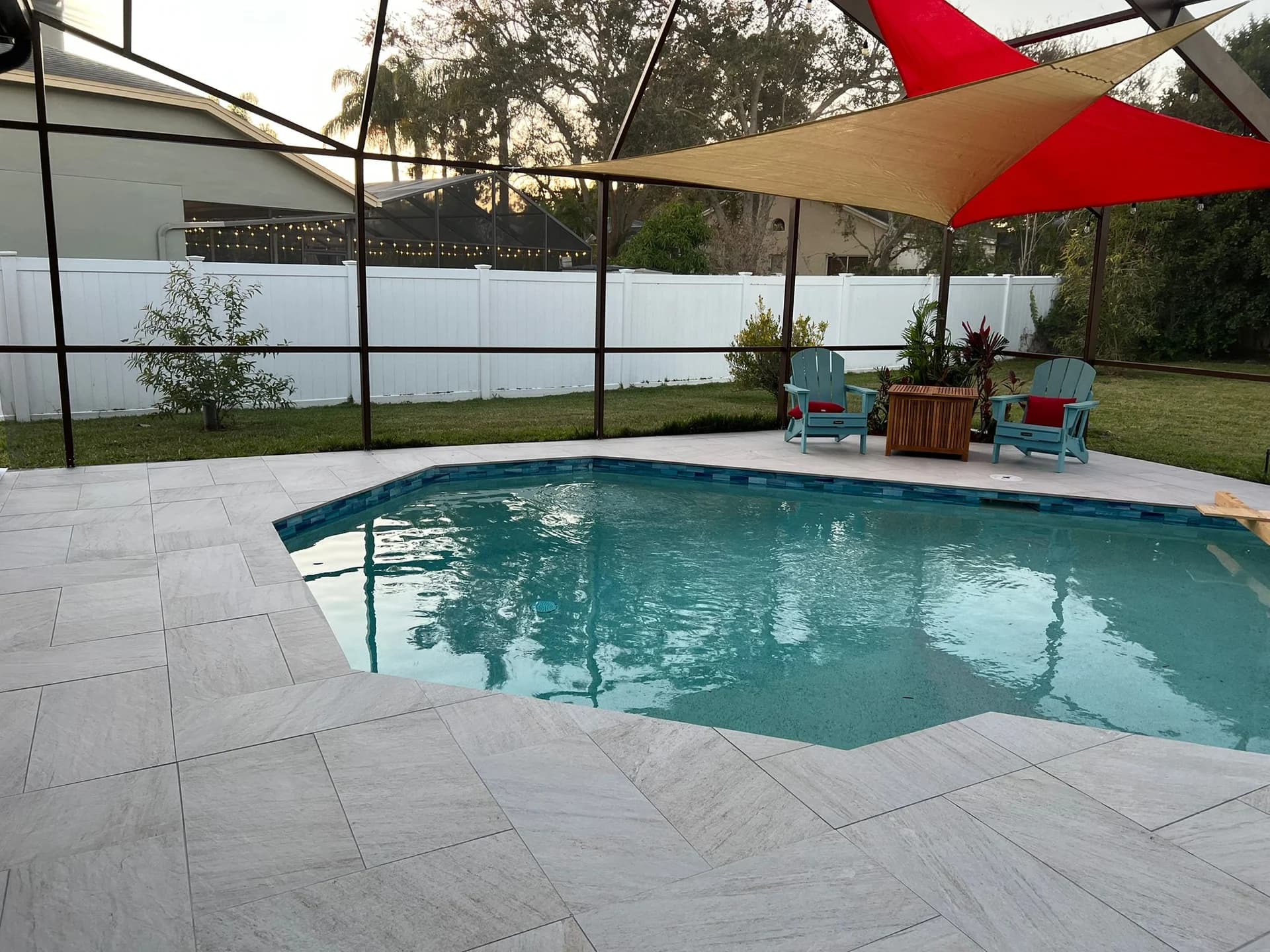
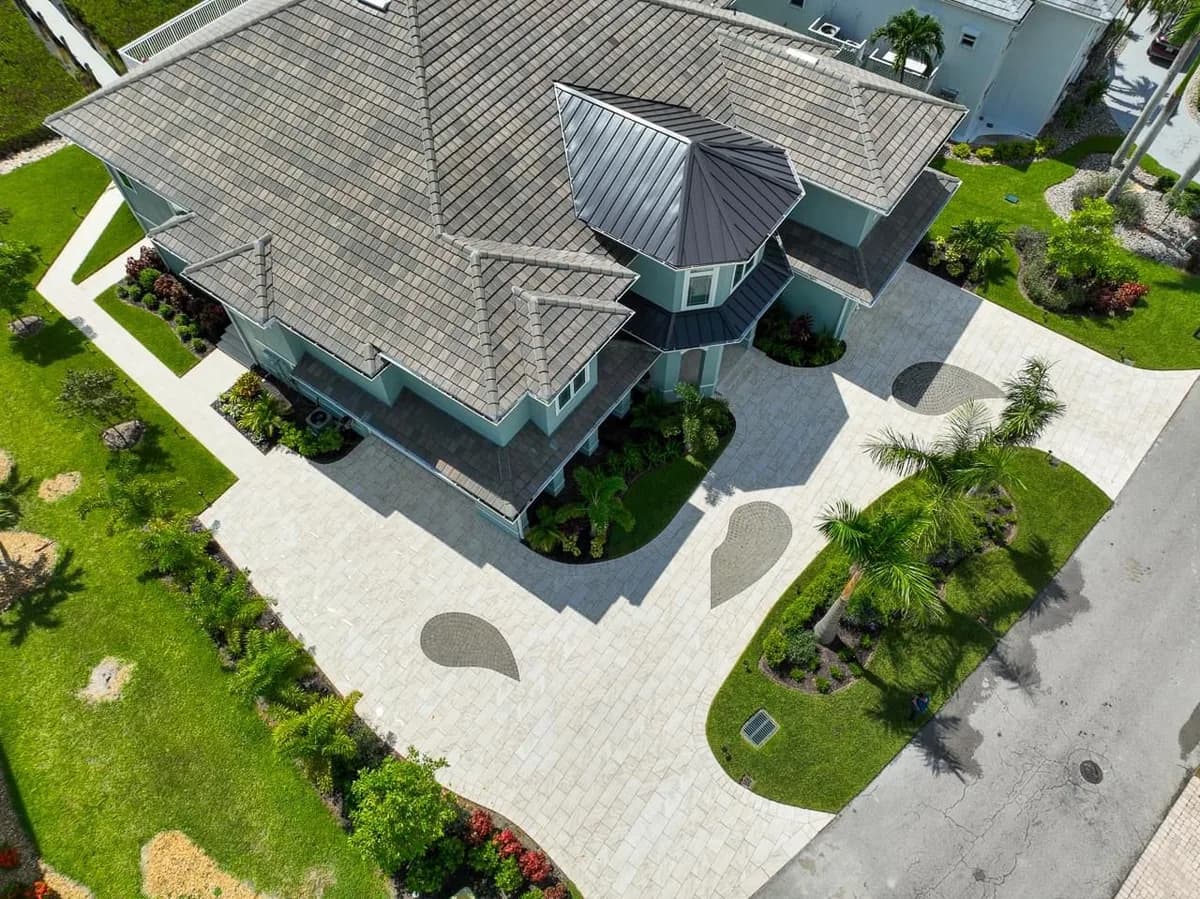
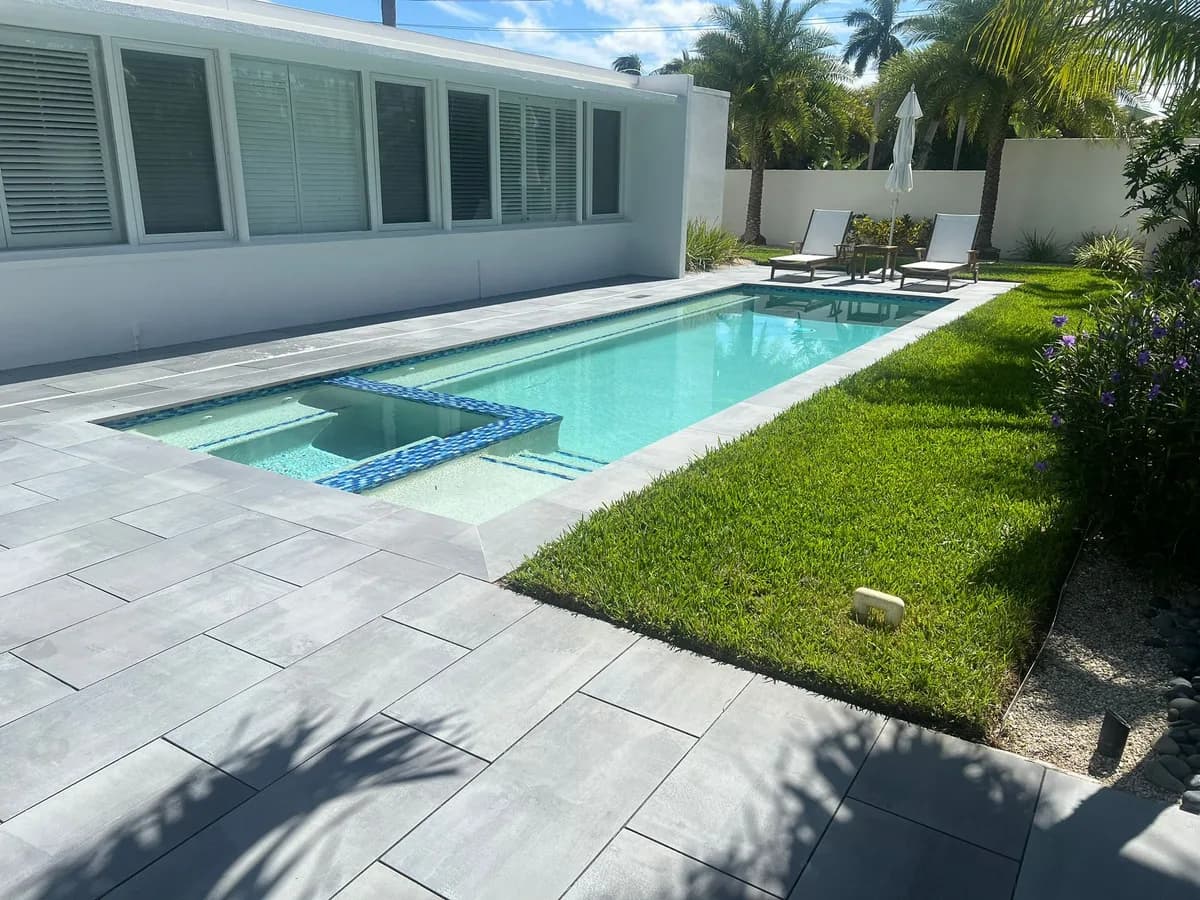
Four is thickness stated by use, without hedging. Porcelain pavers are sold in 2CM, 3CM and 5CM for a reason: 2CM is the right call bond-set over a sound slab or laid on a compacted base for pool decks, patios and lanais, while 3CM is what belongs anywhere a vehicle turns, including a driveway apron. An installer who says thickness does not really matter, or who quotes 2CM for a driveway because it prices better per square foot, has just told you how much porcelain he has actually installed. Five is slip rating. In the wet band beside the coping — the strip that stays damp from noon to sunset — you want a textured R11 surface, and a real expert says that letter and number out loud before you ask. A softly textured or polished face is lovely on an interior floor and genuinely dangerous three feet from the water with a wet eight-year-old running on it.
Large-Format Handling and the Coastal Grout Question
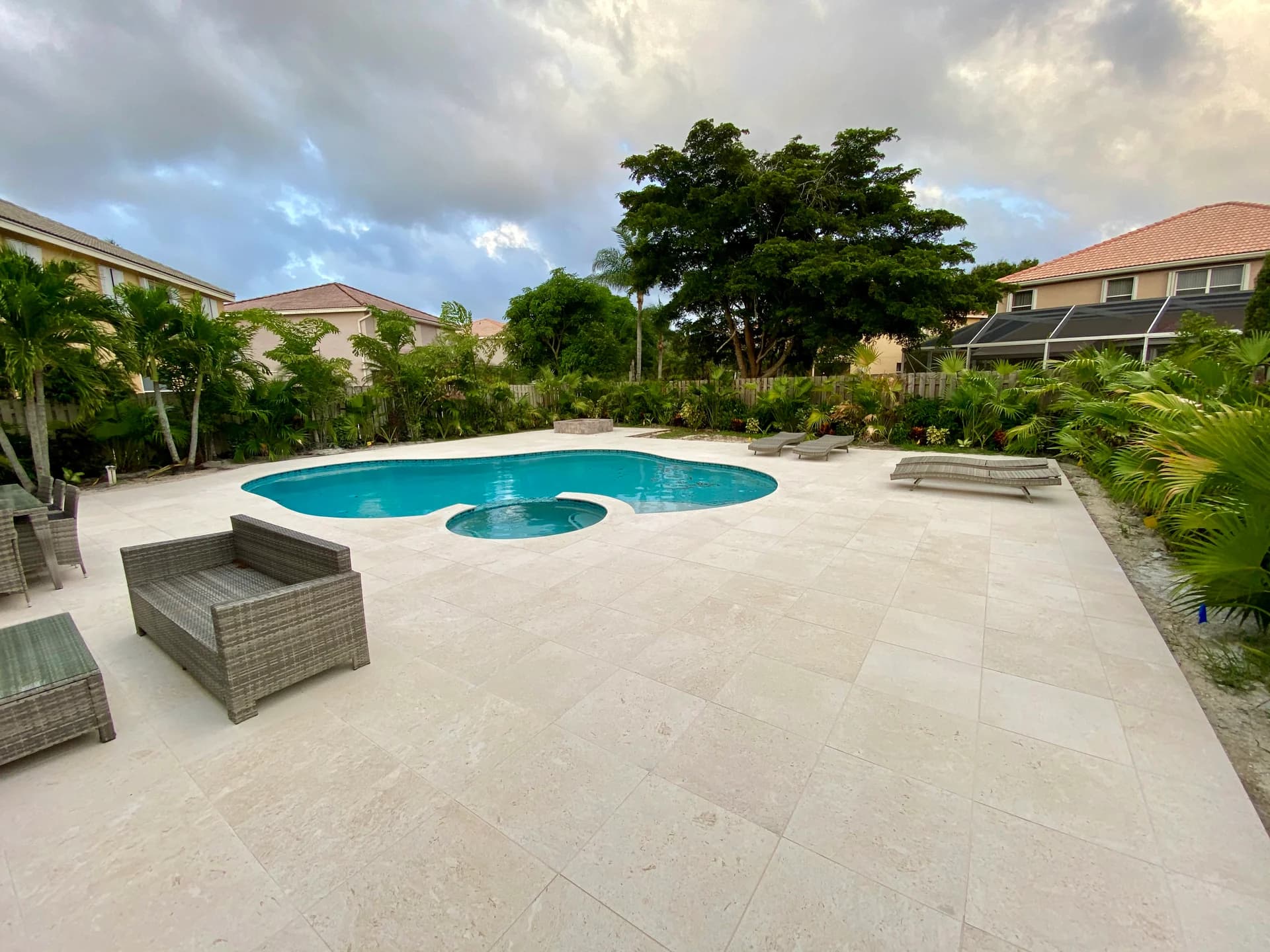
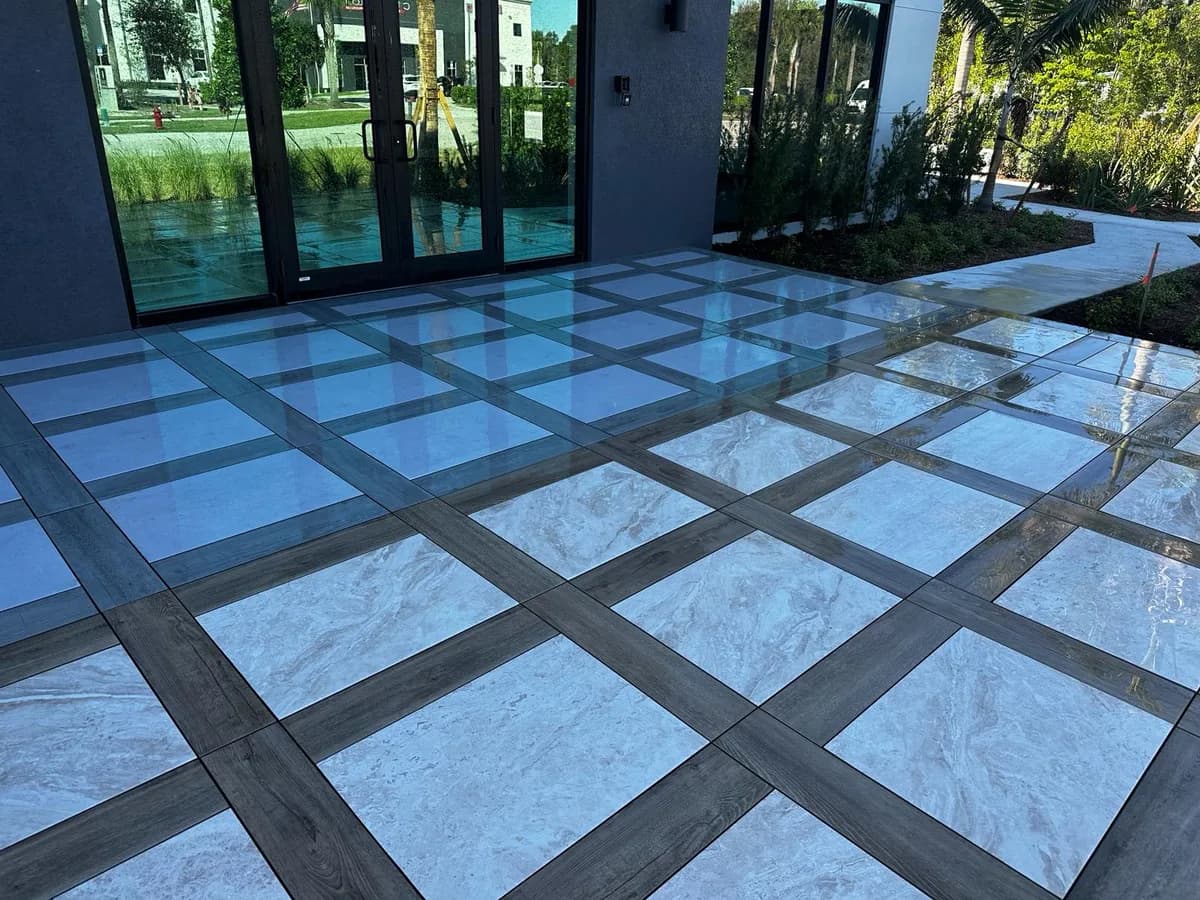
Six is how a contractor talks about large format. The look almost everyone wants in 2026 is oversized — 24 by 24 and up, sometimes 24 by 48 planks — because fewer joint lines make a deck read calmer and feel considerably larger. That look is also the least forgiving thing we install. On a 24-inch slab, an eighth of an inch of substrate deviation across the diagonal becomes a lifted edge you catch with a toe, and porcelain shows that lippage immediately because its rectified edges are cut dead straight. Listen for the vocabulary: full mortar coverage with the back of the tile buttered rather than five dabs of thinset, a leveling clip and wedge system, a lippage tolerance given as an actual number, a six-foot straightedge run across the slab before anything is set. A crew that tells you large format is no different from a 6 by 9 paver has never had to answer for a deck that ripples in low afternoon light.
Seven is what changes in the spec when you mention the water. Within roughly five miles of the Gulf — Siesta Key, Longboat Key, Anna Maria Island, most of west Bradenton — salt-laden air and saltwater-chlorinator splash attack the joint long before they touch the porcelain itself. The tile does not care: it absorbs under half a percent of water and offers salt nothing to crystallize inside. The grout cares a great deal. A real coastal installer specifies an epoxy or high-performance joint compound instead of a standard cement grout, because cement grout in that zone chalks, crumbles at the edges, and opens a path for water to sit underneath the tile. If a contractor hears Anna Maria Island and does not change a single line of his spec, he is quoting an inland Sarasota deck and hoping the Gulf will not notice. Ask what he would do differently four miles inland and listen for specifics.
Red Flags, and How to Verify Every Claim in Ten Minutes
None of the seven signs matter if the company behind them cannot be verified, and in Florida that takes about ten minutes at your kitchen table. Go to myfloridalicense.com, choose Verify a License, and search the company name; the state shows status, license type, and any disciplinary history. Note whether the license is certified, meaning issued by DBPR and valid statewide, or registered, meaning valid only in the county that issued it — a registered contractor from a neighboring county cannot legally pull a permit in Manatee. DBPR shows licensing, not coverage, so separately request a Certificate of Insurance issued in your name at your address, covering general liability and workers compensation. Having it issued to you proves the policy was live the day it was written instead of being a PDF from two renewals ago. If anyone grows uncomfortable during that request, the conversation has already answered your question for you.
The red flags are remarkably consistent. A deposit larger than about a third of the contract, or a cash-only arrangement. A price that expires tonight. A portfolio with no addresses, no street names, nothing you can drive past on a Saturday. A bid meaningfully below every other bid, which nearly always means a thinner base, fewer inches of compacted limerock over that sandy fill, or a step skipped that you will not discover until the third rainy season. And the most common one in our market: a genuinely good, busy concrete-paver crew that says yes, we do porcelain too, then installs it with concrete-paver habits. That is exactly the gap the Hardscape.com certification exists to close, because it is product-specific training in substrate prep, movement detailing, large-format handling and cutting rather than a general hardscape credential. Ask the seven questions, verify the license, and hire whoever answers you in numbers instead of reassurance.
Financing Available
See your monthly payment before you decide
Compare real offers from more than twenty lenders through Acorn Finance, our financing partner. It takes about a minute, and checking does not affect your credit score.
Pay the way that suits you: credit and debit cards, bank transfer or check — or finance the project over monthly payments through our partner.
- Offers from 20+ lenders
- Pre-qualify in about 60 seconds
- No impact on your credit score

Financing is provided through Acorn Finance, an independent lending marketplace. EC Paver Solutions is not a lender and does not set rates or terms. Pre-qualification uses a soft credit inquiry and does not affect your credit score; final rates and terms come from the lender and are subject to approval.
Frequently Asked Questions
How do I know if a paver contractor is qualified?+
What questions should I ask a paver contractor before hiring?+
Are porcelain pavers difficult to install?+
Why do porcelain pavers crack after installation?+
Is a certified porcelain paver installer worth it?+
Put Us Through the Seven Questions
Do not take our word for any of this — use it on us. Call and ask about your slab, your control joints, your thickness, your slip rating, your distance from the Gulf, and see whether the answers arrive in numbers. We will walk your deck in Sarasota, Bradenton, Lakewood Ranch, Tampa, Orlando or Fort Myers, lay real samples down in your own afternoon light, and leave you a written, itemized spec covering base, thickness, joints and grout — yours to compare against every other bid on the table. Call (941) 250-4635.

Written by
EC Paver Solutions
EC Paver Solutions delivers premium paver installation across Sarasota, Bradenton, Lakewood Ranch, Tampa, Orlando, and Fort Myers. Hardscape.com Certified — the only certified hardscape contractor across five Florida counties.