

What Hardscape.com Certification Means for Your Project
A certification on a contractor's truck is easy to ignore, but with porcelain pavers the right one decides whether your deck is still flat and solid in year five. Here is what a porcelain-specific credential covers, how it differs from "licensed and insured" or ICPI, and the five questions that reveal real expertise.
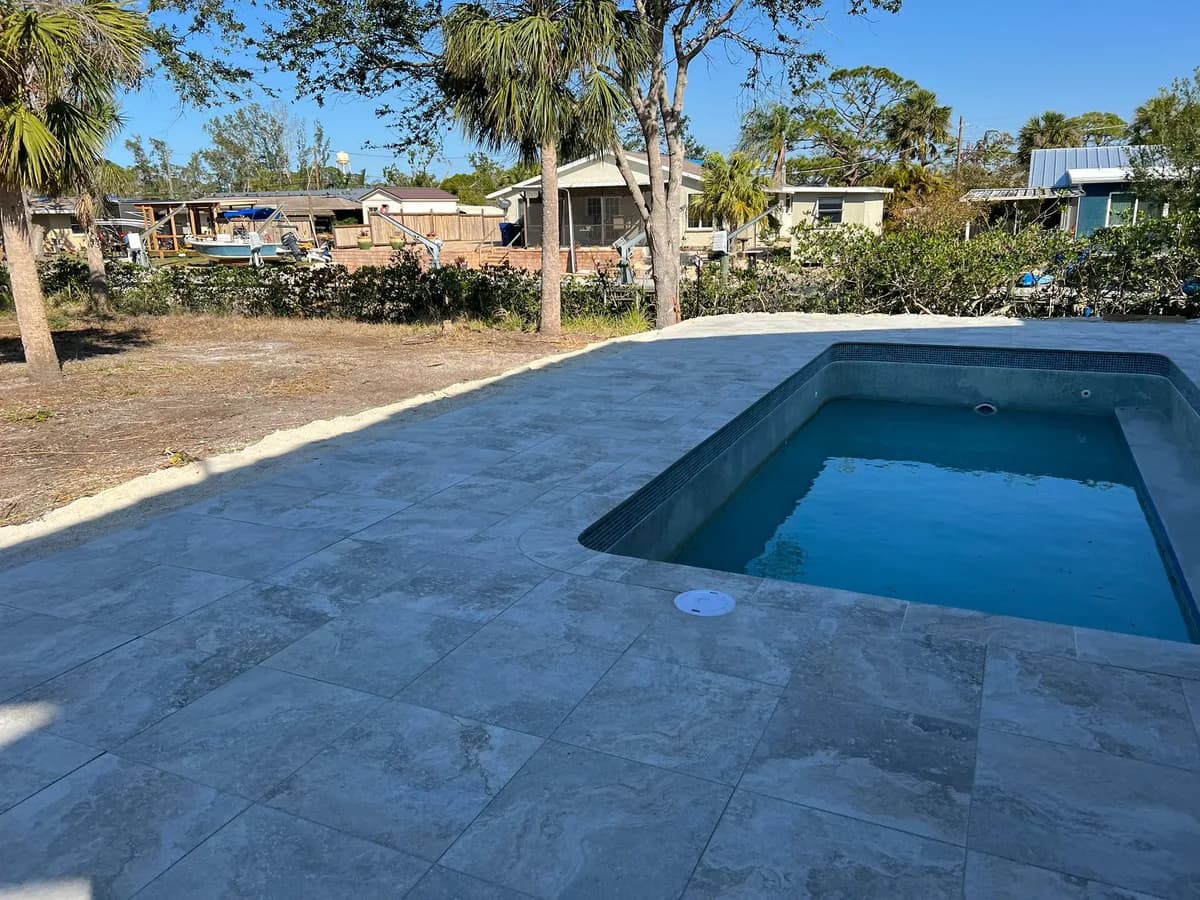
Why Porcelain Needs Its Own Credential
Most paver crews in Florida learned the trade on concrete pavers, and concrete pavers are forgiving. A 60mm or 80mm interlocking paver sits in a sand bed, gets locked together by joint sand, and is run over with a plate compactor until the whole field settles into one flexible mat. If a piece sits a hair high, the compactor knocks it down. If the base moves a little after a wet August, the pavers move with it and someone re-sands the joints. That system has served Bradenton driveways for decades, and an ICPI certification proves a crew knows it well. Porcelain plays by different rules. A 2cm porcelain paver is vitrified, fired until it absorbs less than half a percent of water, which is why it never needs sealing and keeps its color for decades. That same density makes it rigid. It does not flex with a shifting base, it does not hide a high edge, and it does not forgive a habit carried over from concrete work.
Here is what those habits look like on a real job. A plate compactor run across a finished porcelain field cracks pavers, so the bedding sand has to be pre-compacted at the right moisture, around 5 to 6 percent, before a single piece goes down. Pavers butted tight against each other chip at the edges as an unshaded pool deck swings roughly 40 degrees between dawn and 3 p.m., so manufacturers call for a consistent joint of about 4mm and never porcelain-to-porcelain contact. A dry masonry blade chips the face, so every cut is made wet with a porcelain-rated blade. Over a concrete slab, a paver set on dabs of mortar instead of a full bed leaves hollow spots that crack under a dropped cooler or a chair leg. None of these mistakes show on day one. They show in the second rainy season, as a hairline crack or a hollow sound under your heel. A porcelain-specific credential exists because porcelain's failure points are specific.
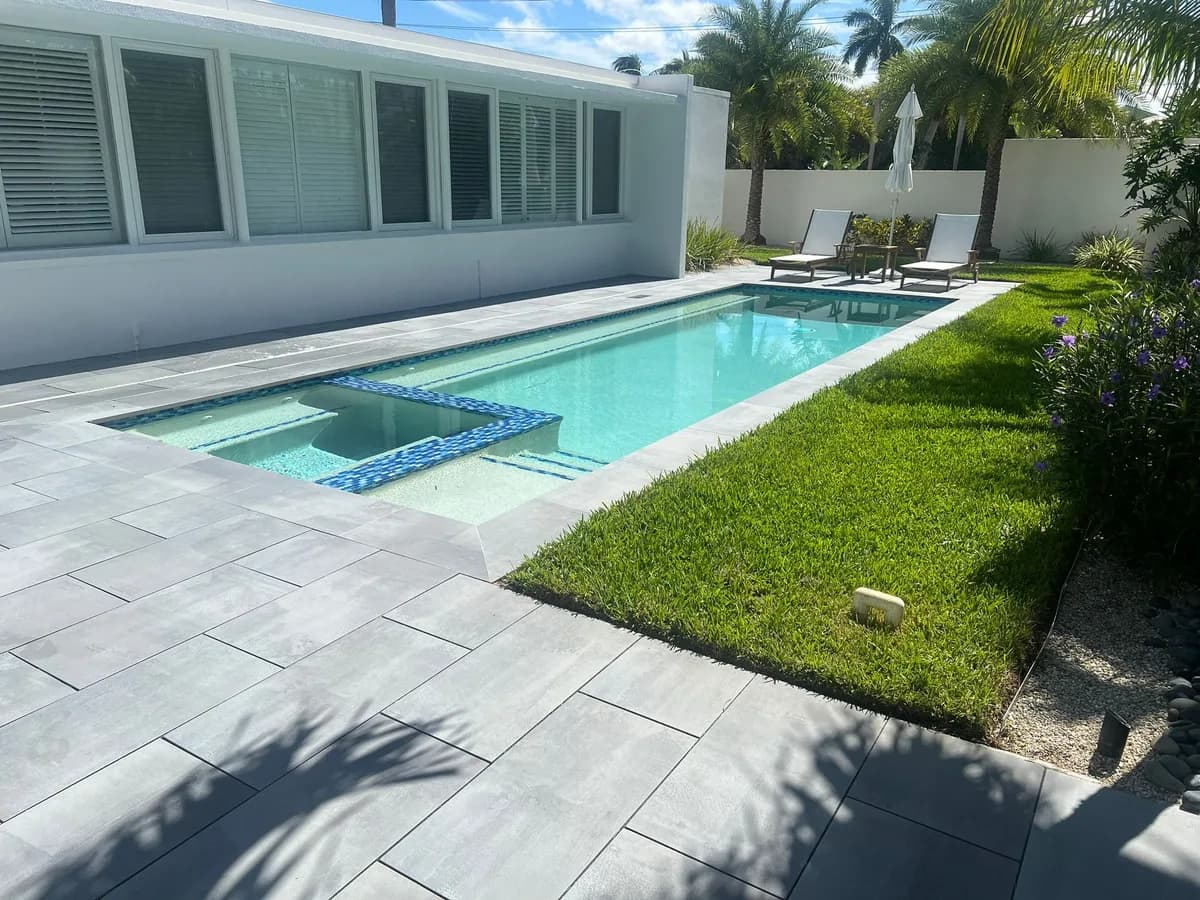
What the Certification Actually Covers on a Florida Job
Our Hardscape.com certification is product-specific: it means we are trained in, and held to, the installation method behind the porcelain we install, not a general paving course. On a Florida job that method touches every layer. It starts with reading the substrate. Is this a sand-set install over a new base of compacted crushed limerock on geotextile fabric, which in our sandy, high-water-table soil means 6 to 7 inches under a patio, or a bond-set over an existing lanai slab that must be sound, flat and sloped away from the house? It covers thickness by use: 2cm for pool decks and patios, 3cm where vehicles roll, with breaking strength jumping from roughly 13,000 to nearly 30,000 newtons. It covers movement joints, so every control joint in the slab below is carried straight up through the porcelain. And it covers large-format handling, back-buttering 24-by-48 pieces for full mortar contact and controlling lippage so no edge stands proud enough to catch a bare heel.
Compare that with the credentials you usually see on a truck or a yard sign. "Licensed and insured" is the floor, not the ceiling. It tells you the company can legally pull a permit and that someone pays if a crew member drops a pallet on your pool coping, but it says nothing about how they set porcelain. ICPI certification is a genuinely good credential: the Certified Concrete Paver Installer program asks for real field experience, a training course, a written exam and continuing education every two years. Its subject, though, is concrete pavers, the interlocking, sand-swept, plate-compacted system described above. For porcelain, the credential that matters is the one written around porcelain. It also protects you in a less obvious way. When an installation follows the manufacturer's published method, the product warranty has solid ground to stand on. When a crew improvises, the first question in any claim is how the material was installed, and that is a hard argument to win after the fact.
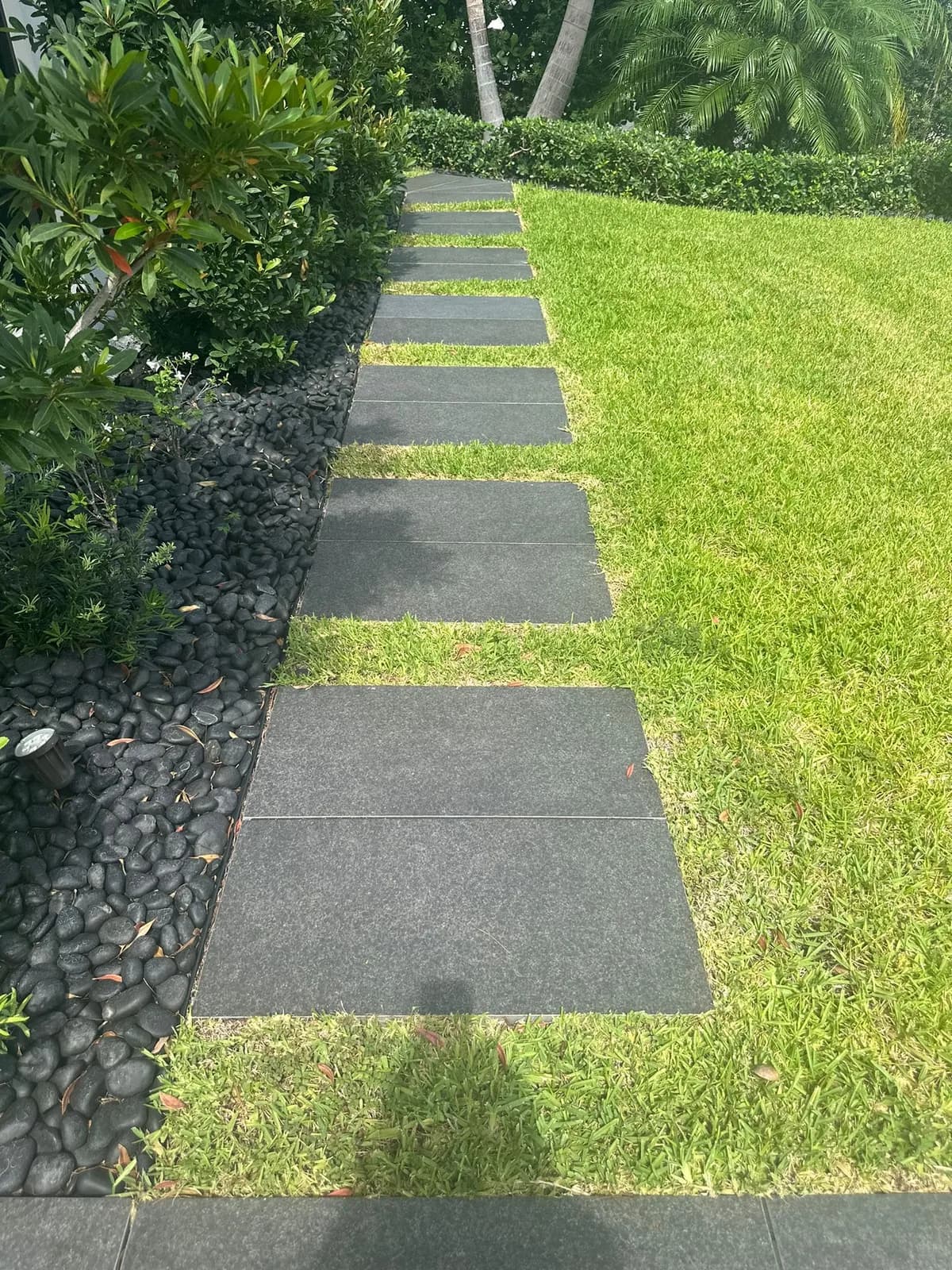
Five Questions That Separate a Porcelain Expert From a Paver Crew
You do not need to become an installer to hire a great one; you just need questions whose answers reveal how someone actually works. Start with the slab: ask how they will set porcelain over your existing concrete lanai. A great answer mentions checking the slab for soundness and flatness with a long straightedge, profiling the surface, setting each paver in a full bed of polymer-modified mortar, and carrying every control joint and crack up as a flexible movement joint. A red-flag answer is a shrug and some version of "we just mortar them down," or worse, a plan to spread sand on the slab and lay the pavers loose. Next, ask which thickness they would use on your driveway and which around the pool. A real porcelain installer explains that 3cm, or a fully mortar-set 2cm over concrete where the manufacturer allows it, belongs under cars, and that 2cm is ideal for decks and patios. If you hear "they're all the same," keep interviewing.
Third, ask what slip rating they specify near the water. Listen for R11 or an equivalent textured outdoor finish, and for an offer to let you test a sample wet and barefoot; a crew willing to put polished interior tile outside is telling you everything you need to know. Fourth, if you live near the Gulf, on Siesta Key, Anna Maria Island or Longboat Key, ask what goes in the joints. Within a few miles of salt water, a great answer is epoxy grout, because salt air slowly breaks down cement-based joints; "regular grout is fine" is a red flag. Fifth, ask to see a porcelain job, not a concrete paver job, that has been through at least two Florida summers, ideally one you can drive past in Lakewood Ranch or Palmer Ranch. Watch, too, how the quote arrives. An expert wants to see the slab, the drainage and the door thresholds before writing anything down; a number given over the phone means nobody has looked at what will sit under your porcelain.
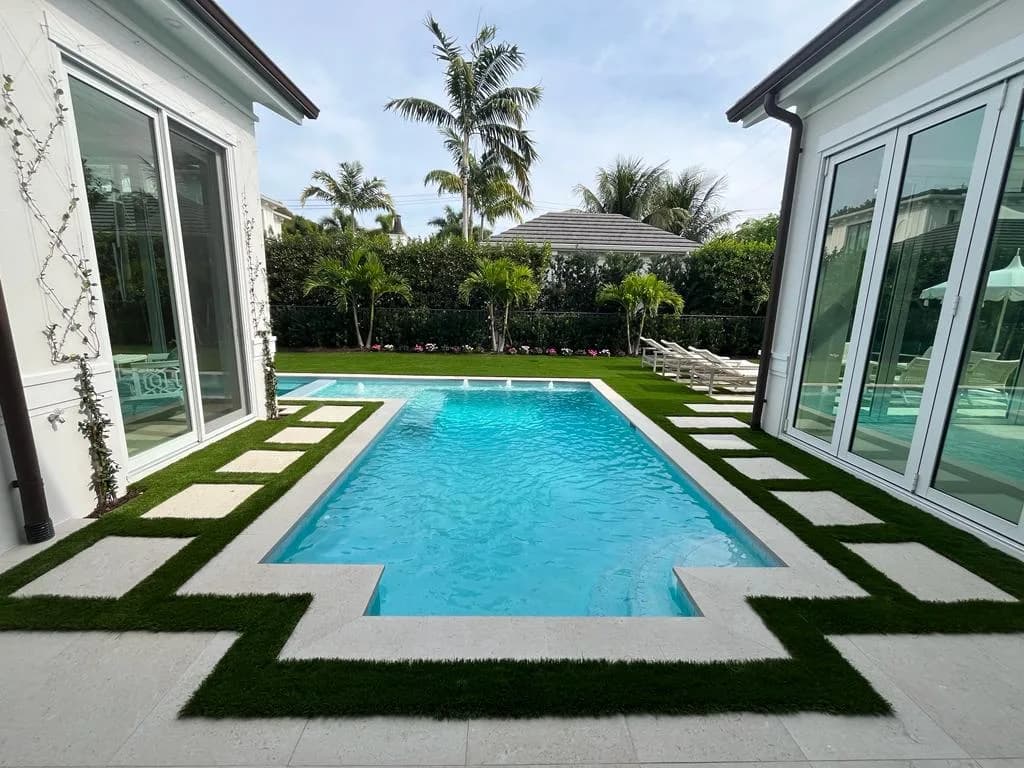
What It Means for You in Year Five, Not Just on Day One
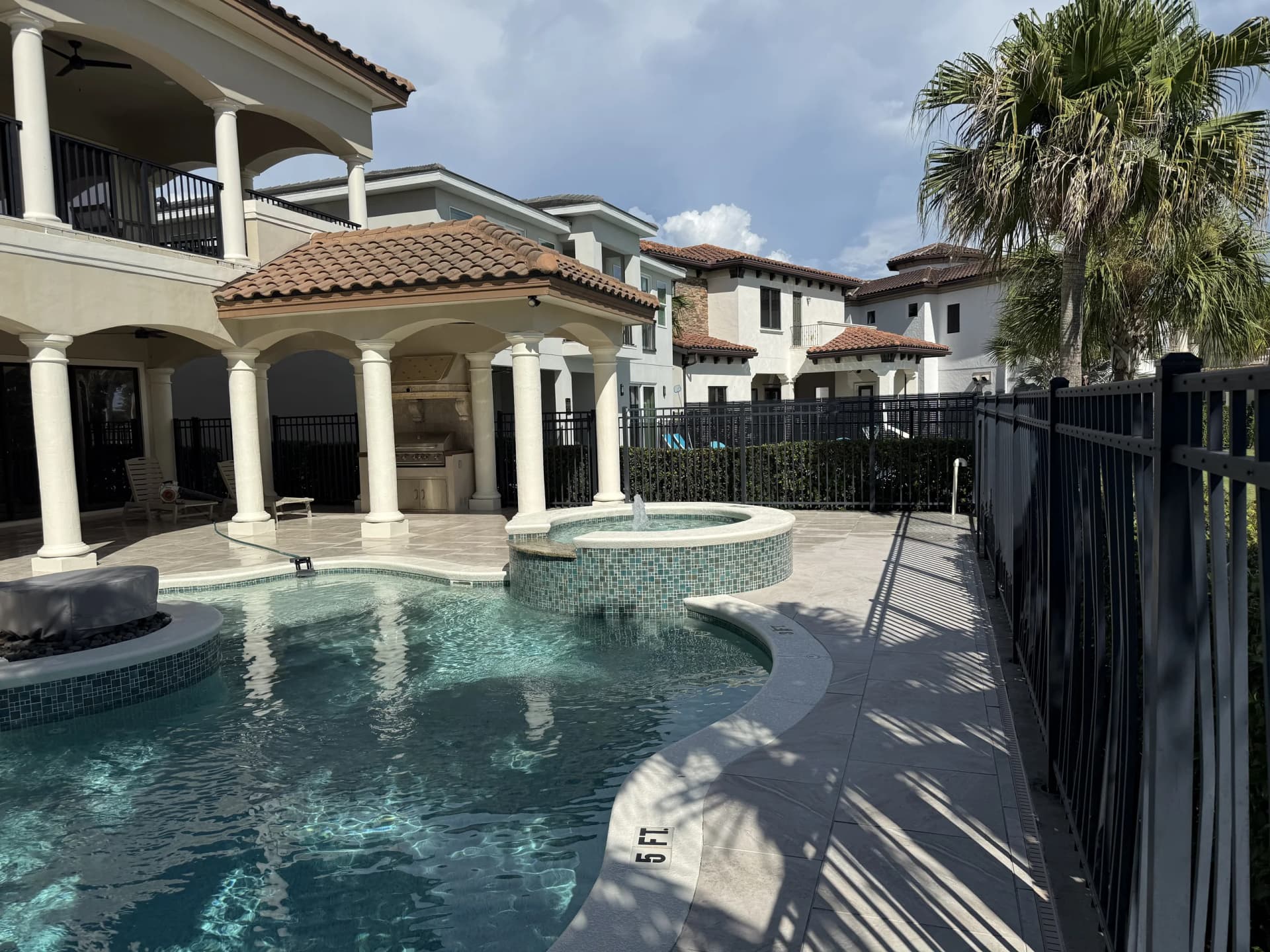
The real payoff of a product-specific installer shows up long after the crew leaves. Picture a Palmer Ranch pool deck five summers in: it has baked through hundreds of afternoons above 95 degrees, absorbed a 40-degree swing between dawn and mid-afternoon, and drained the sideways storms of every July. A correctly installed deck still sounds solid when you tap it with a knuckle, its joints still run straight from the sliders to the coping, and its pale stone color still matches the sample you once held in your hand. There are no hollow pavers waiting to crack under a dropped cooler, no edges proud enough to catch a toddler's toe, and no hairline fracture tracing an old slab joint nobody carried up. That is what fewer callbacks really means. Your weekends go to the pool, the grill and the people you invited, not to waiting for a contractor to come back and fix what should have been done right the first time.
We are the only Hardscape.com Certified porcelain paver installer in Sarasota, Manatee, Hillsborough, Orange and Lee Counties, and we would rather you treat that as a claim to verify than a badge to trust. Ask us the same five questions above and hold us to the answers. A certification is not magic; it is a commitment to a method, and a method is only as good as the crew applying it on your particular site. That is why every project starts with a visit. We check your slab or soil, measure the fall toward your drains, note the thresholds at every door and talk through how you actually use the space. What drives the final number is the site itself: whether we can bond-set over a sound slab or need a new base, how much demolition is involved, the format and pattern you choose, curves and borders, and how easy access is. You get all of it in writing, itemized, before anything is ordered.
Financing Available
See your monthly payment before you decide
Compare real offers from more than twenty lenders through Acorn Finance, our financing partner. It takes about a minute, and checking does not affect your credit score.
Pay the way that suits you: credit and debit cards, bank transfer or check — or finance the project over monthly payments through our partner.
- Offers from 20+ lenders
- Pre-qualify in about 60 seconds
- No impact on your credit score

Financing is provided through Acorn Finance, an independent lending marketplace. EC Paver Solutions is not a lender and does not set rates or terms. Pre-qualification uses a soft credit inquiry and does not affect your credit score; final rates and terms come from the lender and are subject to approval.
Frequently Asked Questions
What does it mean to be a certified porcelain paver installer?+
Is ICPI certification enough for porcelain pavers?+
Do porcelain pavers need a special installer?+
How much does it cost to hire a certified porcelain paver installer?+
How do I verify a paver contractor in Florida?+
Ask Us the Hard Questions in Person
Book a site visit anywhere in Sarasota, Bradenton, Lakewood Ranch, Tampa, Orlando or Fort Myers. We will check your slab or soil, measure your drainage, answer every question on this list and leave you a written, itemized quote. Call (941) 250-4635 or book online.

Written by
EC Paver Solutions
EC Paver Solutions delivers premium paver installation across Sarasota, Bradenton, Lakewood Ranch, Tampa, Orlando, and Fort Myers. Hardscape.com Certified — the only certified hardscape contractor across five Florida counties.