

Why a Certified Paver Installer Costs Less Than a Cheap Bid
Porcelain is the most forgiving paver material sold and the least forgiving to install. Water absorption under 0.5%, a fifty-year surface, zero sealing — and a base tolerance of three-eighths of an inch over ten feet. Here is what certification actually requires, what improper installation does to your warranty under Florida law, and how we tell a contained repair from a rebuild before anyone talks about scope.
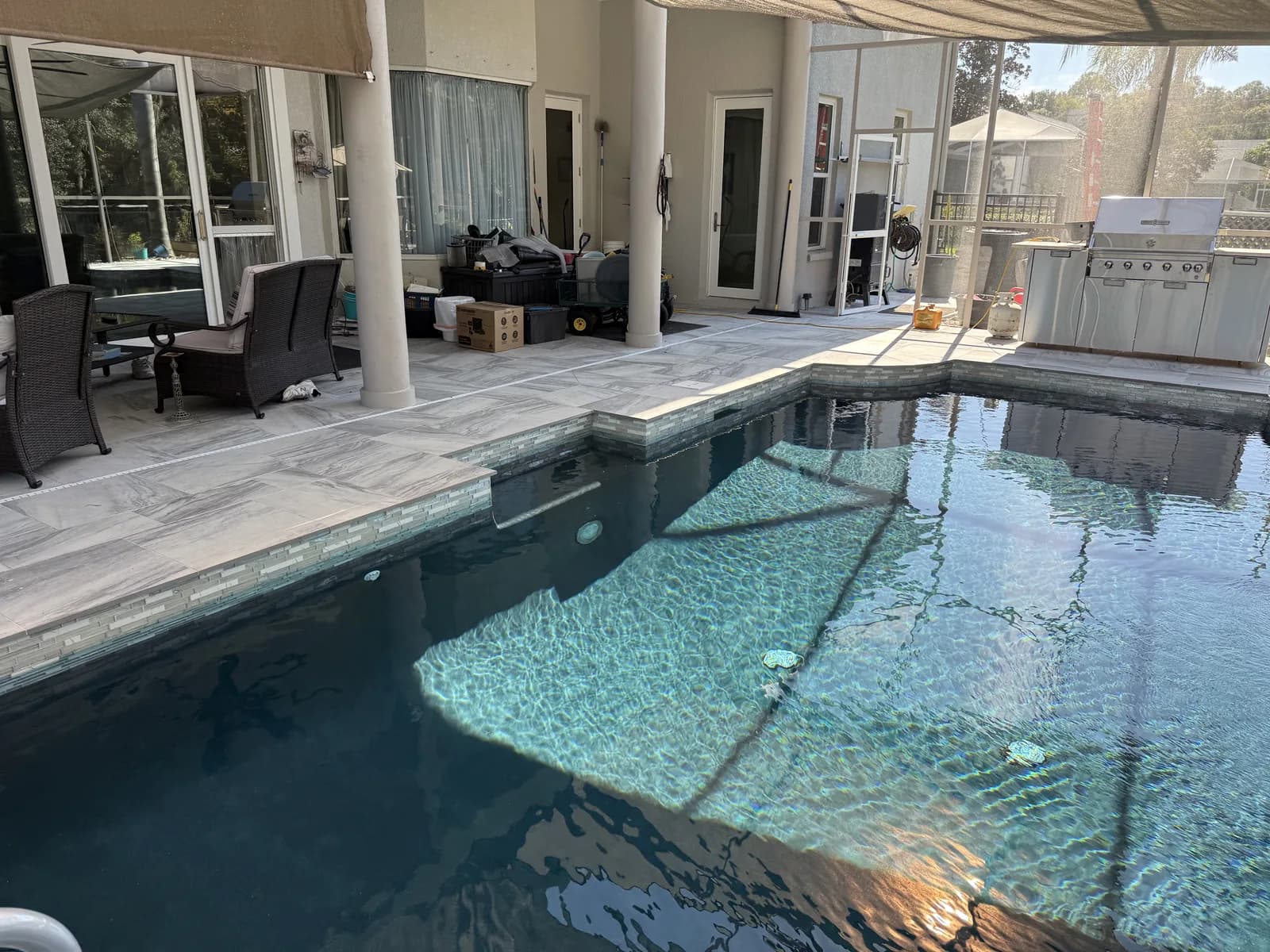
The Material Is Nearly Indestructible. The Installation Is Not.
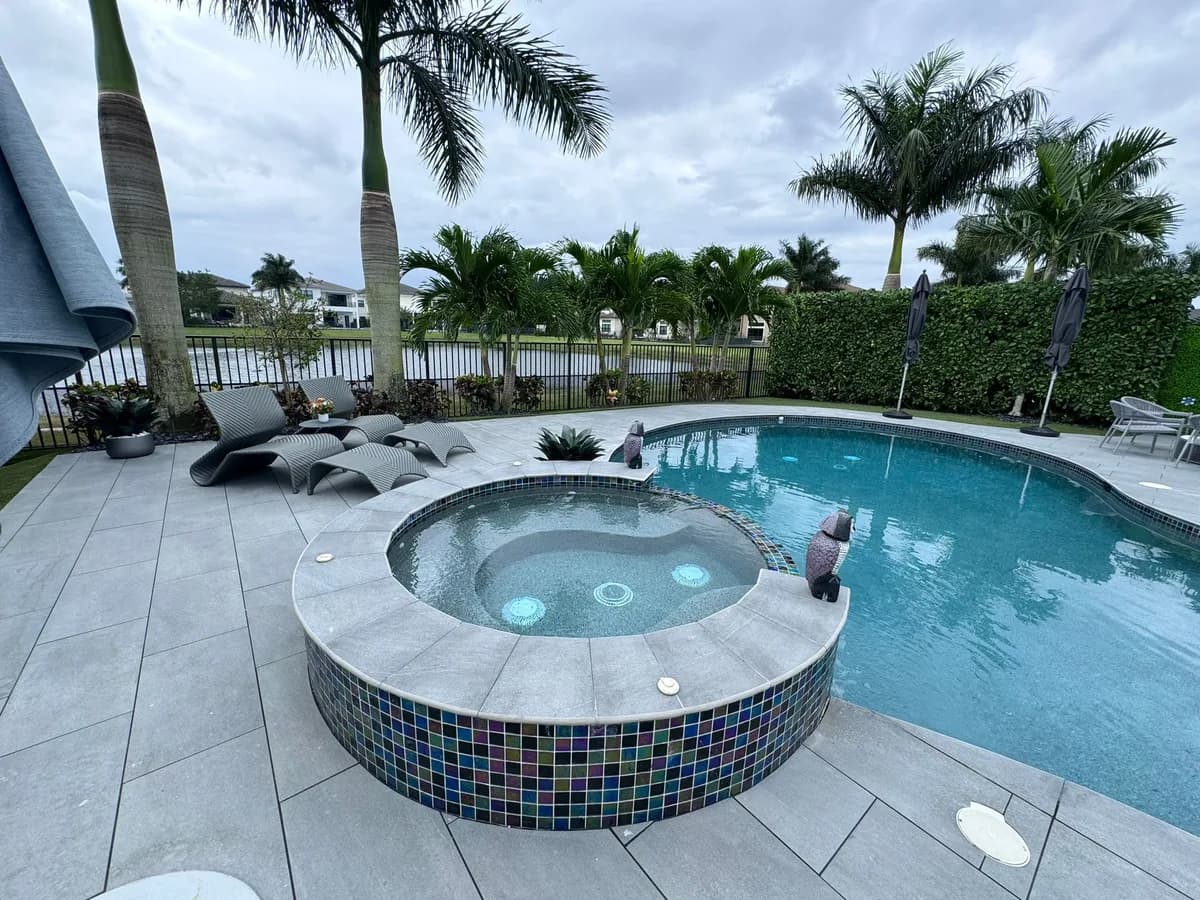
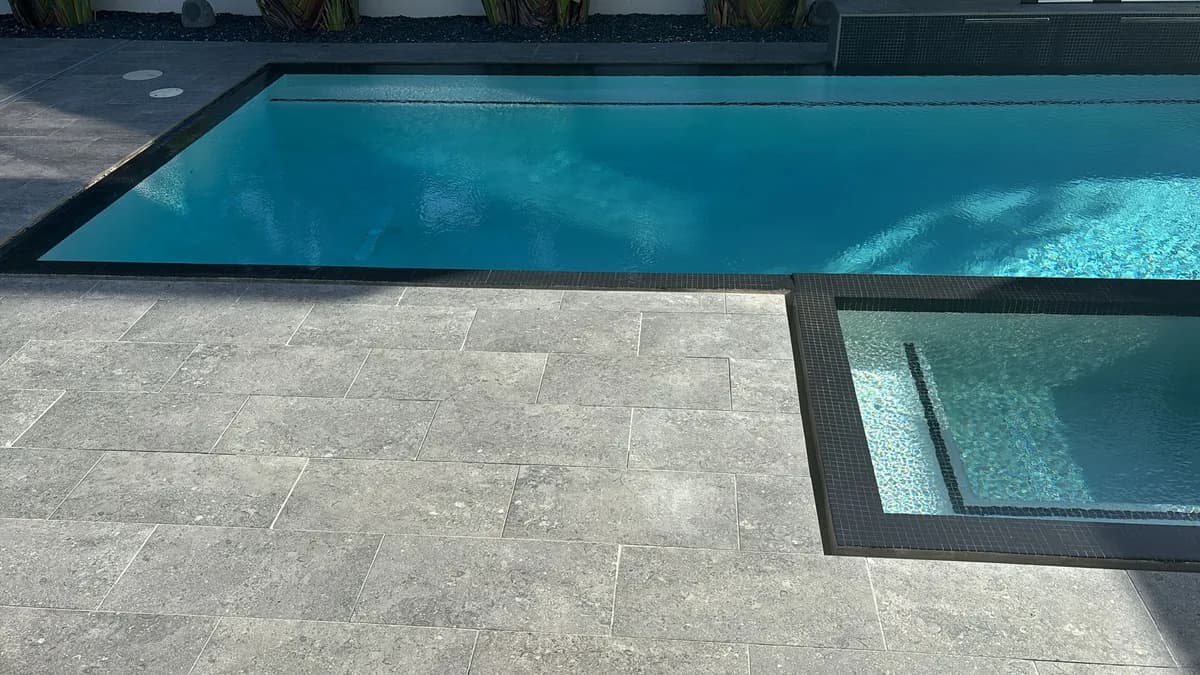
There is a strange asymmetry in porcelain pavers that almost nobody explains to a homeowner before they sign. The material itself is close to bulletproof. Porcelain stoneware slabs carry a water absorption rate under 0.5%, and many run at or below 0.1% — which is why chlorine, saltwater, sunscreen and pool chemistry never penetrate the surface, and why the product needs no sealing, ever. It is manufactured frost- and thermal-shock resistant. For a residential deck you want a PEI rating of 4 or 5 and a slip rating of R11 or better under DIN 51130, or a DCOF of 0.42 or above under ANSI A326.3, which is the wet-traction threshold that matters within three feet of a pool.
Put plainly: the surface is not the risk. Left alone on a correct bed, a porcelain deck will look the same in year twenty as it did on handover, with a garden hose as its entire maintenance program.
And that is exactly what makes the installation unforgiving. When the material never degrades, every failure you will ever see is a failure of what is underneath it. There is no gradual wearing-out to blame, no "that's just how it ages." A porcelain deck that has gone bad went bad because of a decision made during construction, and it will usually announce that decision somewhere between year two and year four — long after the final payment cleared.
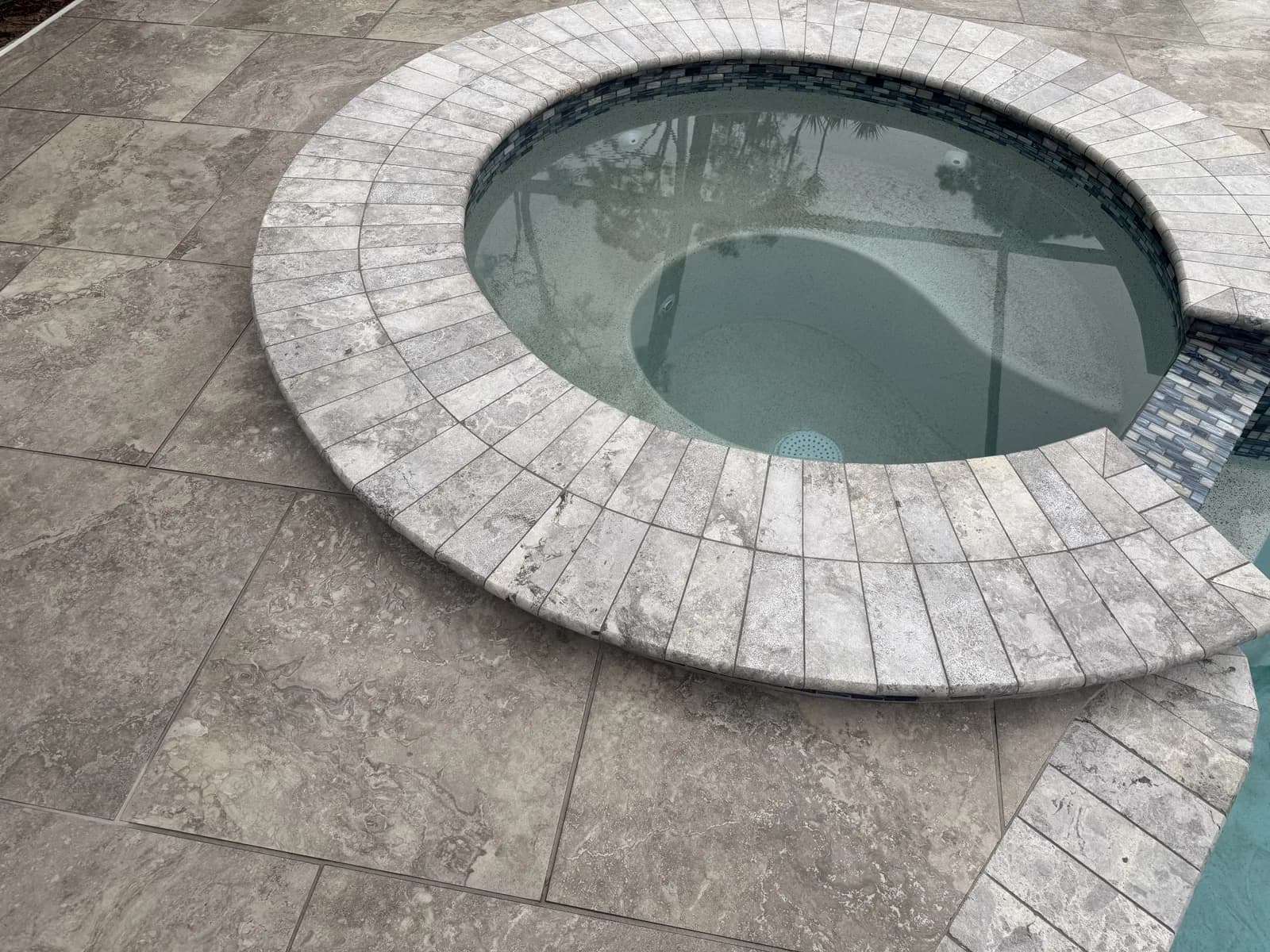
What "Certified" Actually Requires
The word "certified" gets used loosely in this trade, so it is worth knowing what the real credential involves. The Interlocking Concrete Pavement Institute and the National Concrete Masonry Association merged into the Concrete Masonry & Hardscapes Association, and the CMHA Certified Concrete Paver Installer credential is the industry benchmark. Earning it means completing a two-day intensive course on installation best practices, passing an exam, and filing an application that documents a minimum of five completed projects and 10,000 square feet of installed work. The certification lasts two years, and renewing it requires eight hours of continuing education inside each term.
Read that requirement list again from the perspective of the person writing the check. It is not a logo you buy. It is a documented body of prior work, an examined body of knowledge, and a standing obligation to keep learning. A contractor who lets it lapse loses it.
Porcelain adds a second layer on top of that, because large-format porcelain is not concrete paver work with a different-looking unit. It is a different set of tolerances, a different cutting discipline, and different bedding behavior. Hardscape.com runs porcelain-specific installation training for professionals, and we hold that certification — which is the reason our name appears on their certified installer roster for Sarasota, Manatee, Hillsborough, Orange, Lee and Pasco Counties rather than on a self-declared badge in a website footer.
The practical value of a certified installer is not that they are more careful people. It is that adherence to published guidelines is what keeps your manufacturer warranty alive, and that adherence is a learned, examined thing rather than a matter of temperament.
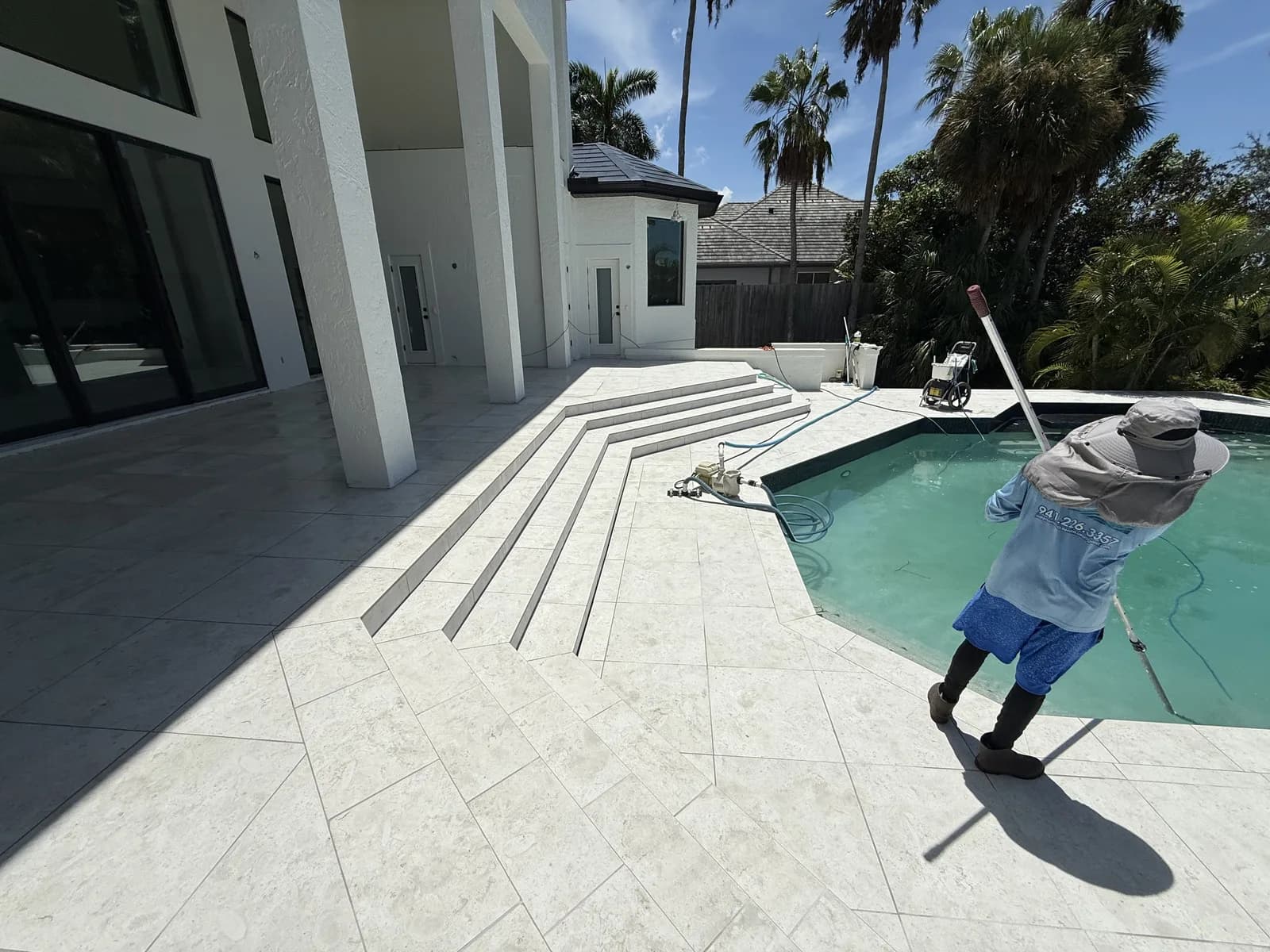
The Numbers a Correct Install Is Held To
Here is what "built to spec" means in numbers, so you can ask about them by name. Subgrade and aggregate base both get compacted to a minimum of 95% standard Proctor density per ASTM D698. That is a measured value, verified in the field with a nuclear density gauge or an equivalent test method — not a judgement call made from the seat of a plate compactor. Base surface tolerance before the bedding layer goes down is plus or minus three-eighths of an inch across a ten-foot straight edge. Base depth runs about four inches of compacted aggregate for pedestrian areas and six to ten inches for driveways and residential parking, and 2cm is the minimum porcelain thickness for outdoor residential use.
None of those numbers are exotic. All of them are published, and every one of them costs money to hit. A crew that compacts in one pass instead of in lifts saves hours. A crew that skips the density check saves the test. A crew that runs four inches of base under a driveway instead of eight saves half the aggregate and half the excavation. Each of those decisions produces a deck that looks identical on the day of handover and behaves completely differently in year three.
This is the mechanism behind the phrase we keep repeating: the low bid is not cheaper work. It is the same work with the invisible half left out, and the invisible half is the half that decides the outcome.
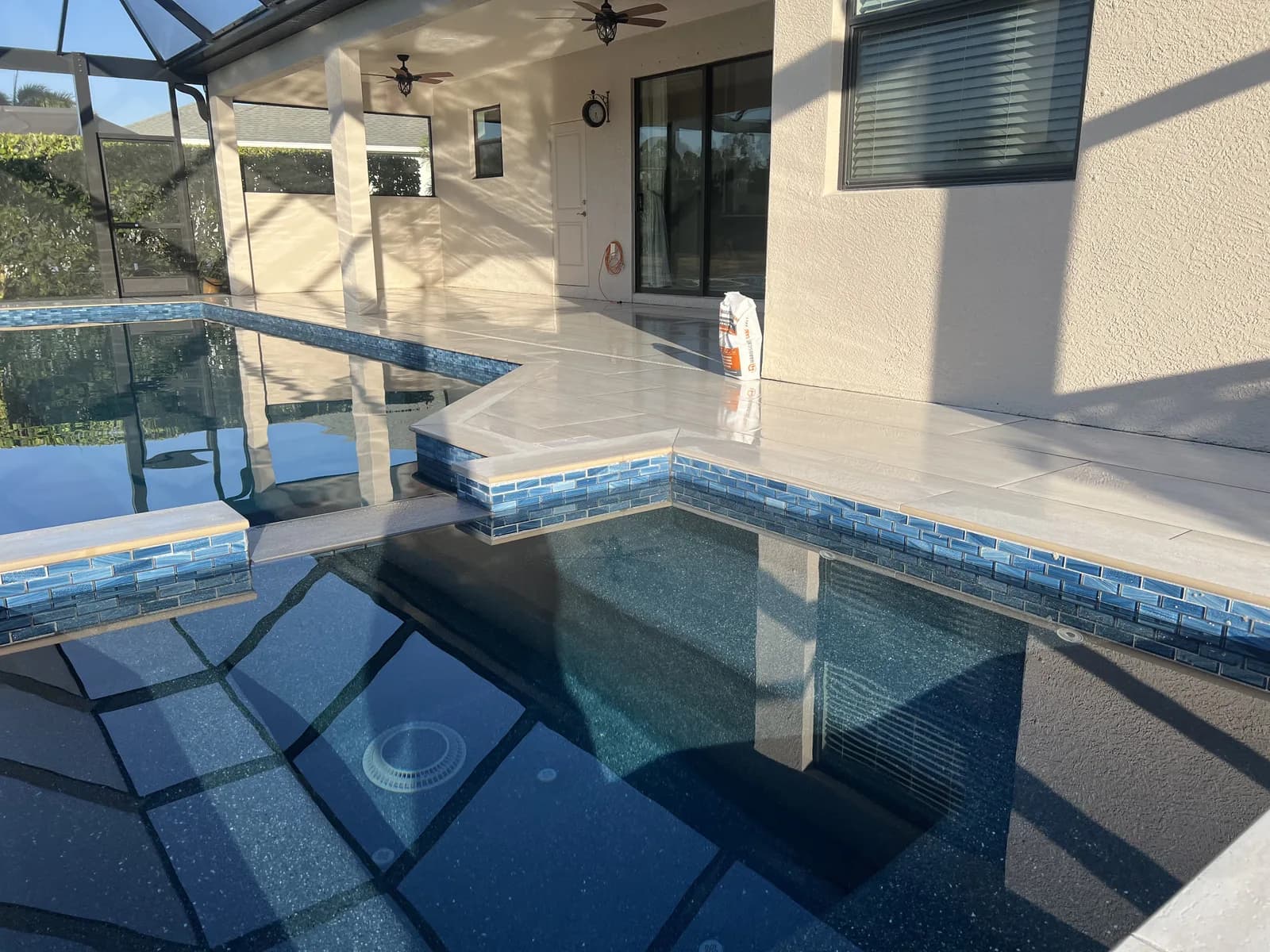
Where Porcelain Installations Actually Fail
Industry reporting on porcelain paver problems puts drainage at the top of the list by a wide margin — as much as 40% of issues trace back to water that had nowhere to go, pooling under the units and eroding the base from below. Ignoring expansion joints shows up in over 25% of reported stress-crack cases, because while porcelain itself barely moves, the sub-base moves plenty and something has to absorb it. Inadequate jointing accounts for roughly another 12%.
Those three causes have something in common: not one of them is a material defect, and not one of them is visible at handover. They are all decisions about water, movement and joints, made below the surface, by whoever was holding the screed.
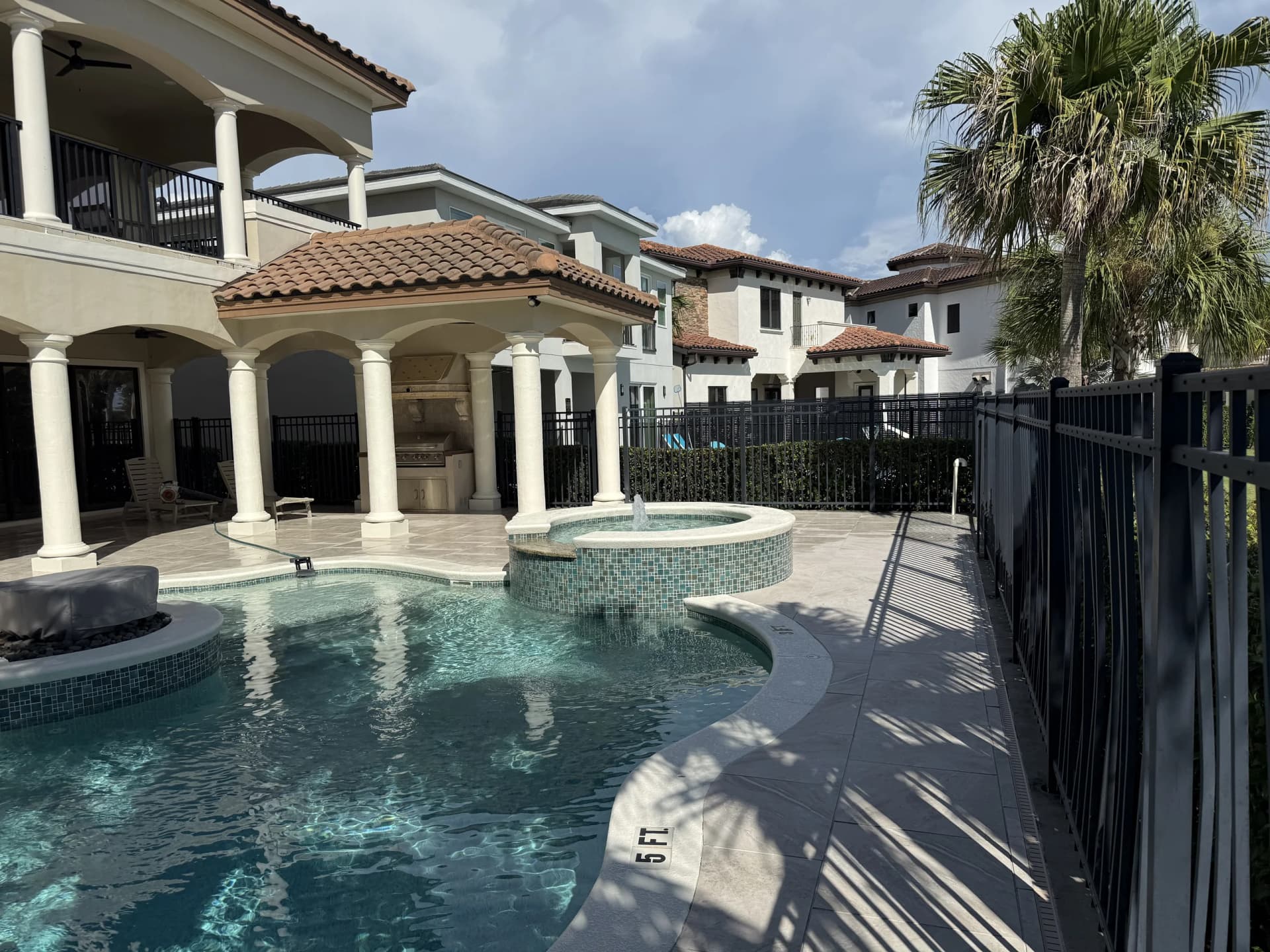
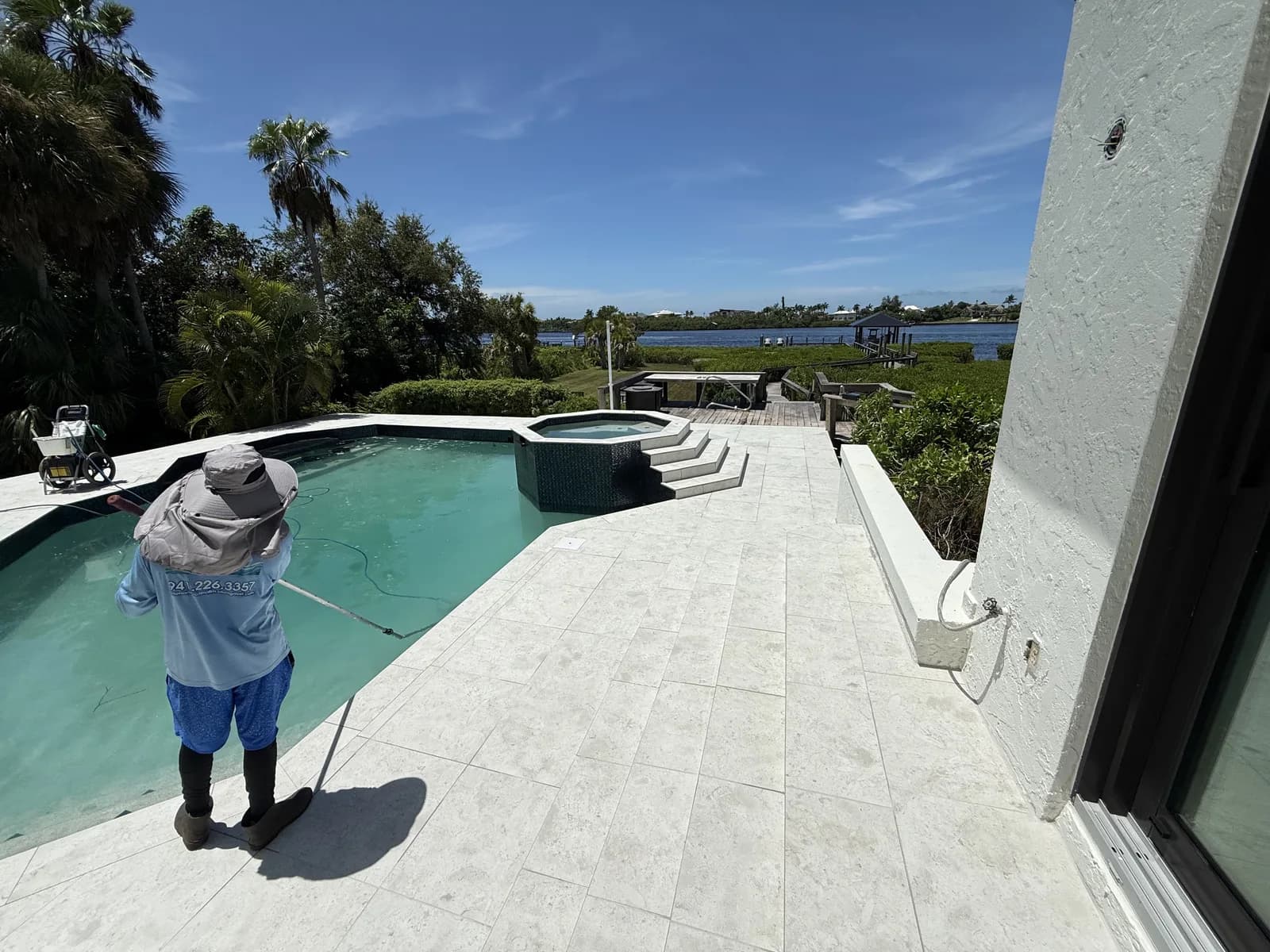
In Florida the stakes are higher than the national numbers suggest, because the water table works against you. Across the coastal plain the wet-season table sits close enough to grade that a deck built without a real drainage plan does not merely drain slowly — it stays saturated for days at a time, every summer, for the life of the installation. That is the environment in which a skipped edge drain stops being a shortcut and becomes a countdown.
What Improper Installation Does to Your Warranty
This is the part that surprises homeowners most, and it is worth reading twice.
Manufacturer warranties on paver products are conditional on the product having been installed according to published industry guidelines — CMHA specifications, or the manufacturer's own installation manual. Installation that departs from those guidelines voids the warranty. That much most people expect.
What they do not expect is the scope of the warranty even when it is intact. A typical manufacturer warranty covers the cost of the product and nothing else. It does not cover the labor to tear out the failed field, it does not cover the base rebuild, and it does not cover the labor to reinstall. So when a deck fails from bad installation, the homeowner is usually holding a warranty that was voided by the installer's own work — and even a valid one would have paid for a pallet of pavers while the actual expense sat in the excavation, the aggregate and the crew.
The person who protects you from that outcome is the person who installed it to spec in the first place. There is no product, no sealer and no warranty document that substitutes for that.
Florida Adds a Legal Layer
Beyond the craft, Florida attaches consequences to who you hire. Contractors performing pool deck work must hold a valid license issued by the Florida Department of Business and Professional Regulation, with contractor classifications defined under Florida Statute §489. Pool decks generally require a permit, and that permit gets reviewed alongside pool barrier and safety code — not merely as a paving question.
The risk of going around that is asymmetric and lands entirely on the homeowner. If the work turns out substandard, the DBPR cannot process a complaint against an unlicensed person on your behalf. And in the eyes of the law, hiring an unlicensed worker makes you the general contractor on your own property: responsible for permits, for compliance, and for injuries that occur during the work.
So the cheap bid can carry a second cost that never appears on the estimate. You are not only buying a thinner base — you may be buying the legal position of the contractor as well.
When It Has Already Failed: Repair or Rebuild
If you are reading this because something already sank, here is the part most contractors skip past on the way to a number.
There is a crossover point in this work that decides everything, and it has nothing to do with how bad the surface looks. A localized failure over a sound base is a contained job. A field-wide base problem is a rebuild. Between those two sits a zone where an extensive repair converges on the cost of doing it properly — and buys a shorter lifespan and a visibly patched result for the trouble. As a rule of thumb, once roughly a quarter of the field is affected, patching stops being the economical answer and starts being the expensive one.
The uncomfortable part is that you cannot tell from above which side of that line you are on. A deck with two sunken units and a deck with a failing base look identical from a standing position.
That overlap is precisely why the diagnosis is the valuable part of the visit. A surface inspection cannot tell you whether you have a localized problem or a field-wide one. We lift units in the affected area and examine the base — depth, material, compaction, drainage path — before quoting anything, because that answer moves the price by a factor of several and it is not guessable from above. If the original base was under-built across the whole field, repairing one corner only relocates the problem, and we will tell you that before you spend, not after.
And when the honest answer is that a repair will not hold, we say so. That conversation costs us the small job. Having it is the entire reason the large ones come back.
Planning Is Part of the Install, Not a Sales Step
Everything above argues for the same conclusion: the ecosystem is the product. The material specification, the layout, the drainage plan, the base build, the cutting discipline and the repair capability are not separate services that happen to be sold by the same company. They are one system, and a weakness in any of them shows up in all of them.
Layout is where it starts. Control lines set before the first cut decide where cuts land — and cuts planned to fall at the least visible edge is the difference between a field that reads as designed and one that reads as improvised. Fall and drainage are designed at the same table, because a deck's slope is not something you discover halfway through. Material thickness follows the application: 2cm minimum for a residential deck, more where vehicles are involved. Slip rating follows the use: R11 or DCOF 0.42-plus anywhere feet will be wet.
We build all of it, and we repair all of it — including work we did not install. That second half matters more than it sounds. A contractor who never gets called back to fix failures never learns what failure looks like from the inside. Opening someone else's under-built base is the most direct education available in this trade, and it is why our own installs get built the way they do.
What the symptom usually means before we open it
| What you are seeing | What it usually indicates | What we check first |
|---|---|---|
| One or two units dipped, rest of the field flat | Localized void or a soft pocket in the subgrade | Base depth and material at the dip, then the same reading ten feet away for comparison |
| Perimeter settling inward from the edges | Edge restraint failure, or fines washing out from the base | Restraint condition and whether a separation layer was ever installed |
| Water standing after rain, dark staining that returns | Insufficient fall, or a base with no drainage path | Slope across the field and where water is expected to exit |
| Units rocking or sounding hollow underfoot | Spot-set bedding instead of full support | Bedding coverage under lifted units, and whether any have already cracked |
| Lipped edges you catch a toe on | Inconsistent screed depth, or settlement after the fact | Whether the plane drifts gradually or steps at one line |
This is the reasoning we bring to the assessment, not a diagnosis you can make from a photo. Two decks with identical symptoms can need completely different scopes depending on what the base turns out to be — which is exactly why we lift units and look before we put a number on anything.
Financing Available
See your monthly payment before you decide
Compare real offers from more than twenty lenders through Acorn Finance, our financing partner. It takes about a minute, and checking does not affect your credit score.
Pay the way that suits you: credit and debit cards, bank transfer or check — or finance the project over monthly payments through our partner.
- Offers from 20+ lenders
- Pre-qualify in about 60 seconds
- No impact on your credit score

Financing is provided through Acorn Finance, an independent lending marketplace. EC Paver Solutions is not a lender and does not set rates or terms. Pre-qualification uses a soft credit inquiry and does not affect your credit score; final rates and terms come from the lender and are subject to approval.
Frequently Asked Questions
What does a certified paver installer certification actually require?+
Does improper installation void my paver warranty?+
Do porcelain pavers need to be sealed?+
What slip rating do I need for a pool deck?+
Do I need a permit and a licensed contractor for a pool deck in Florida?+
Is it worth repairing sinking pavers or should I replace them?+
Have it looked at before it spreads
A free assessment tells you whether you have a localized repair or a field-wide problem — and what a correct rebuild would take. We diagnose the base before quoting, on our installs and on anyone else’s.

Written by
EC Paver Solutions
EC Paver Solutions delivers premium paver installation across Sarasota, Bradenton, Lakewood Ranch, Tampa, Orlando, and Fort Myers. Hardscape.com Certified — the only certified hardscape contractor across five Florida counties.