

Large-Format Porcelain: The 2026 Look for Florida
Oversized porcelain slabs cut the joint lines on a Florida pool deck in half and make the whole space read calmer, wider and more like the inside of your home. Here is why the 24-by-48 look is defining 2026, which collections suit it, and what the ground underneath has to get right for it to last.
Why Fewer Joint Lines Make a Deck Feel Bigger
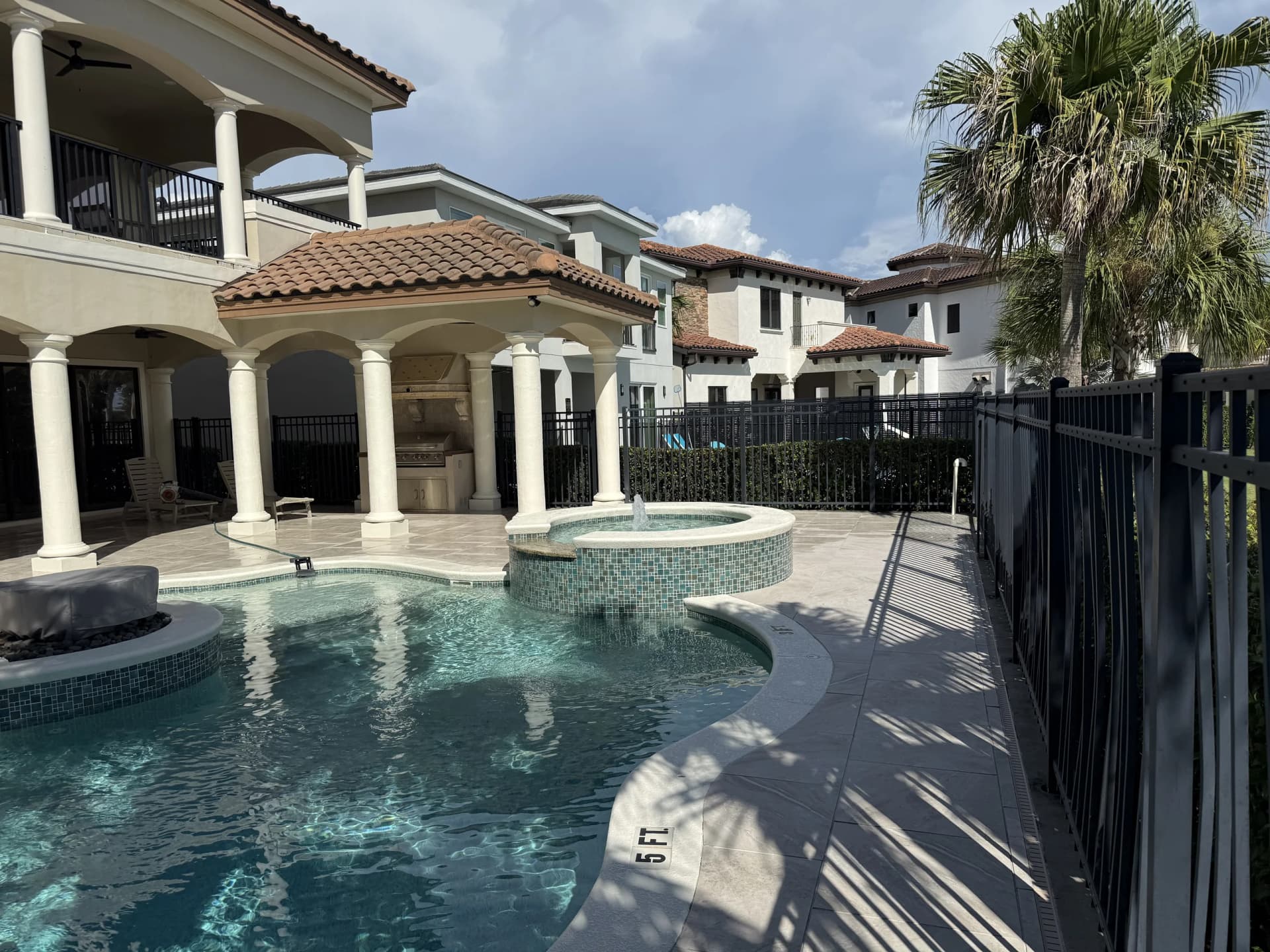
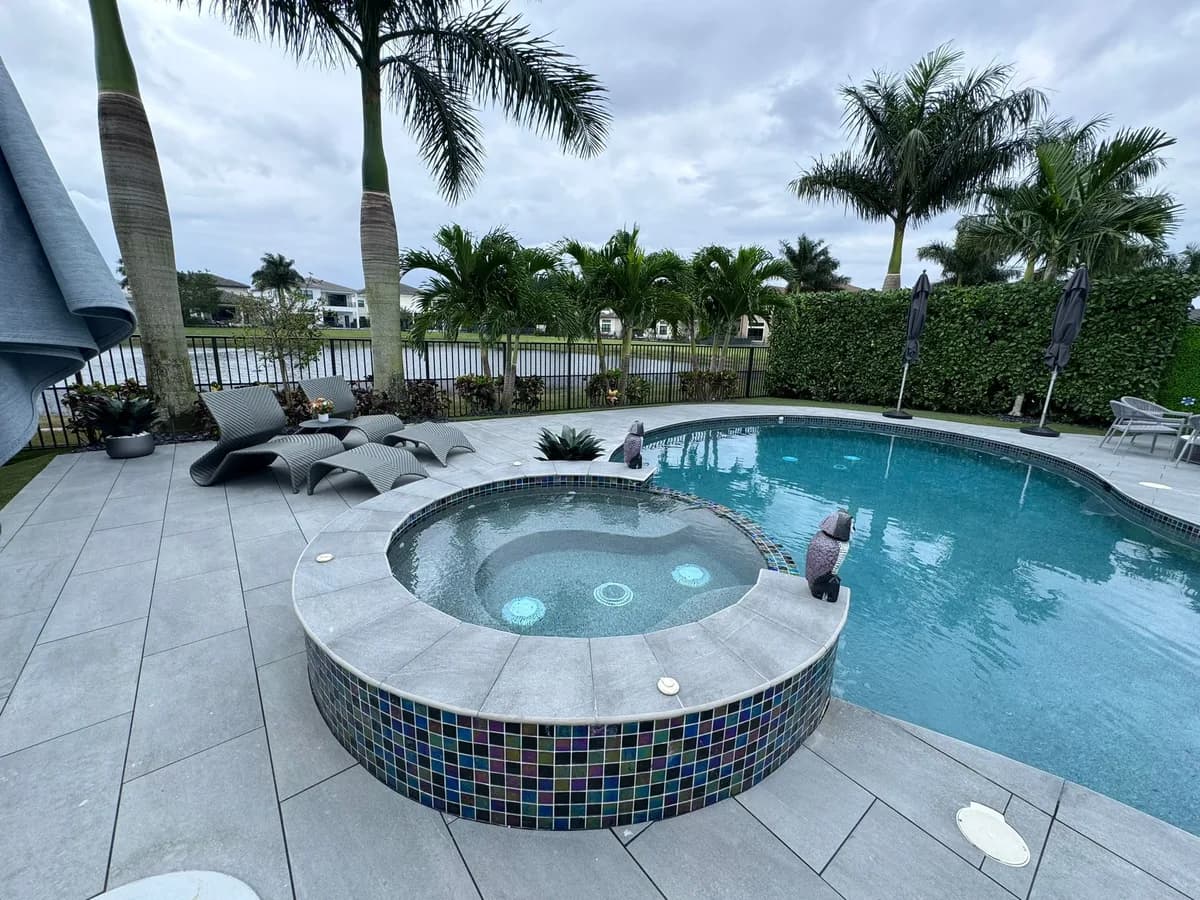
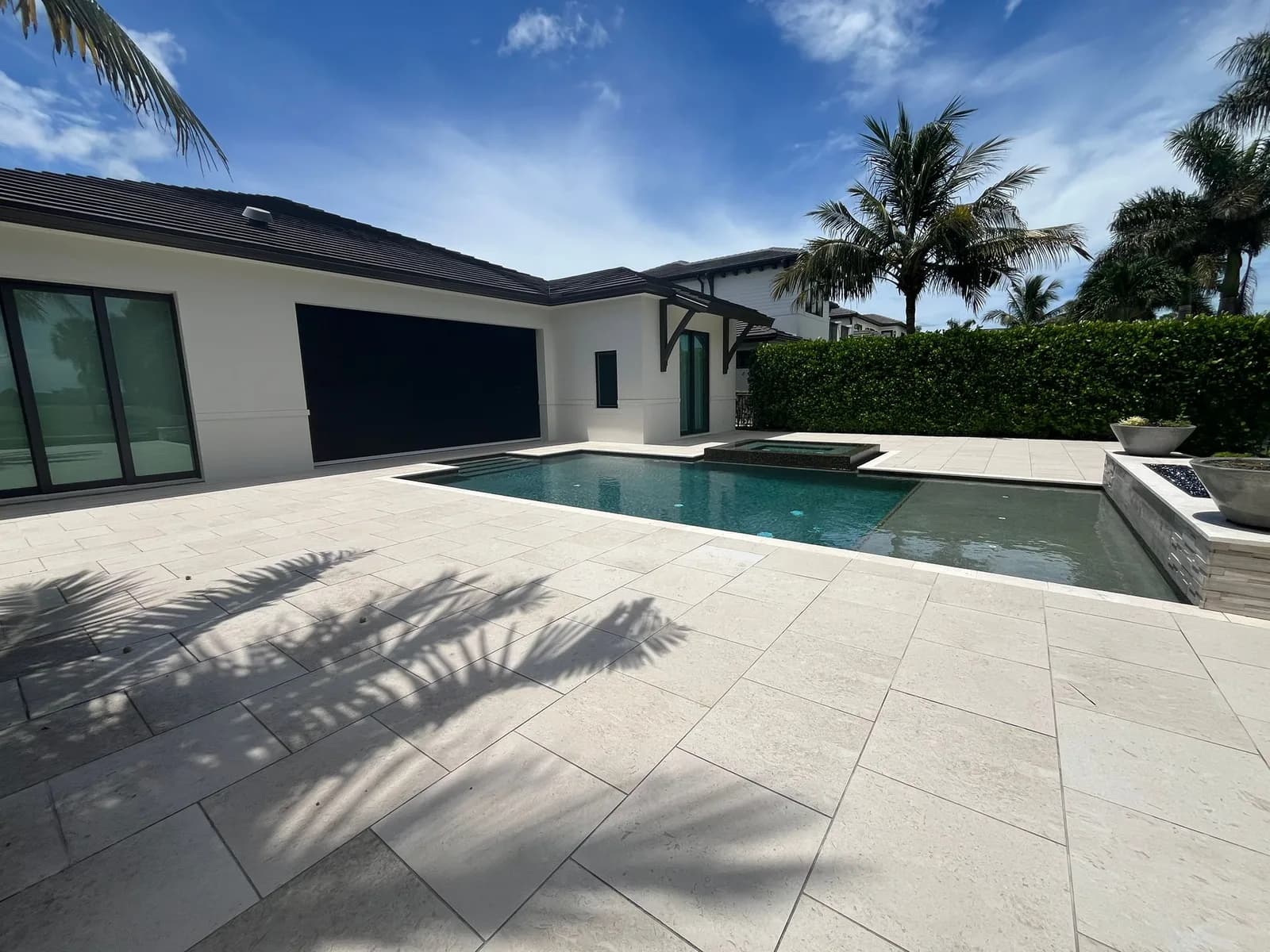
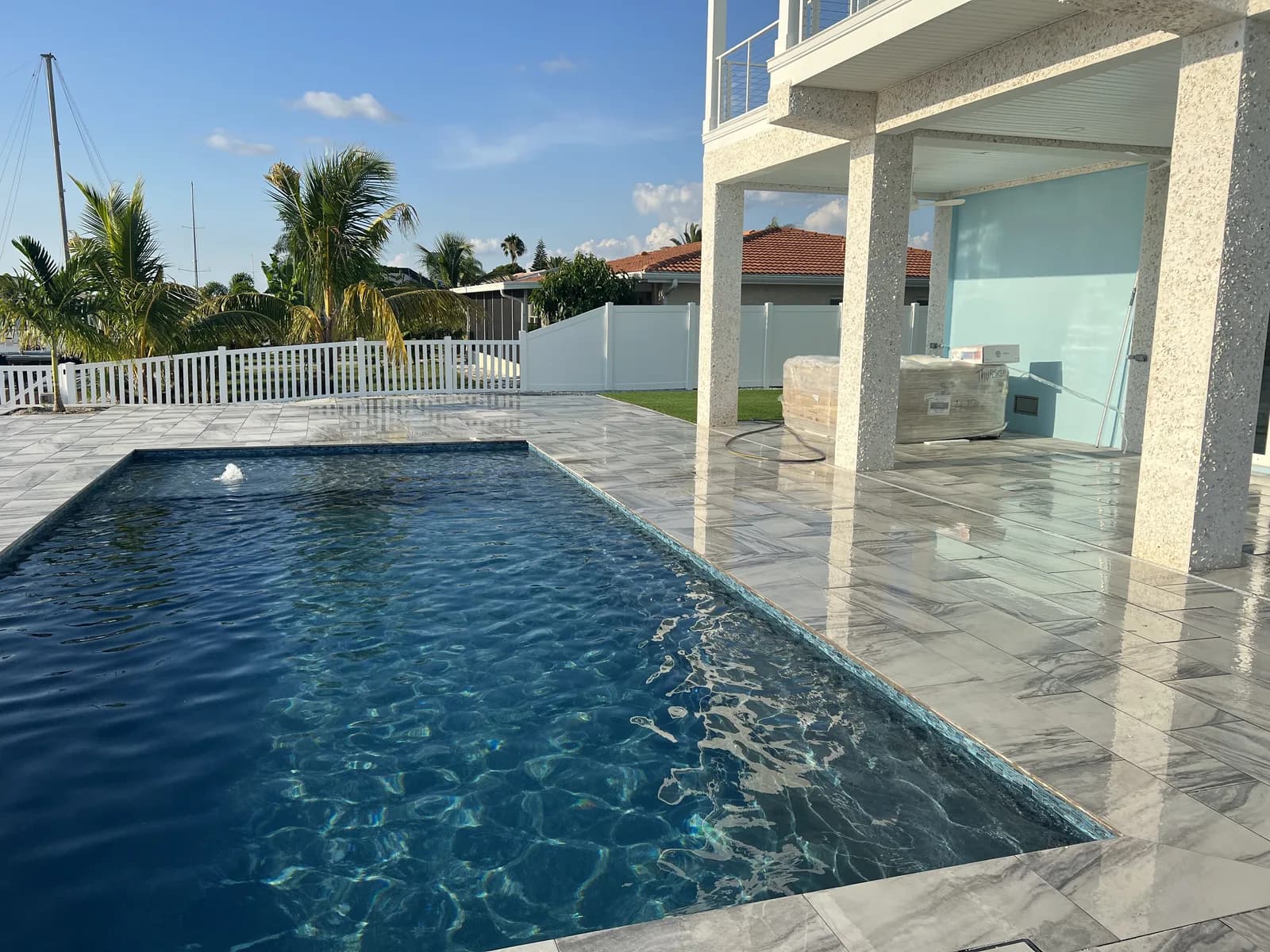
Step through the sliders at 6 p.m. in September and look across a deck paved in 24-by-48 porcelain. The first thing you notice is what is missing: the busy checkerboard of joints that a field of small pavers draws across every square foot. The numbers explain the feeling. A 600-square-foot pool deck in classic 12-by-24 pavers carries roughly 900 linear feet of joint line and about 300 individual pieces. The same deck in 24-by-48 carries about 450 feet of joint and only 75 pieces. Go to 48-by-48 slabs and the joint length halves again. Every line you remove is one less visual interruption between your feet and the water, the lanai screen or the palms along the canal. The space has not grown an inch, but it reads wider, quieter and more finished, the way a gallery floor feels bigger than a kitchen with busy tile.
That calm is why large format has become the defining outdoor look of 2026, and why it suits the way Florida actually lives. In Lakewood Ranch and Palmer Ranch, many homes are built around pocket sliders that disappear into the wall from October to May, turning the great room and the lanai into one long room. Small pavers outside a large-format living-room floor break that illusion at the threshold. Matching the scale outside, with a 2cm paver in a tone close to your interior tile, lets the floor appear to continue straight through the open wall and out to the pool. Designers describe the effect as minimalist, but it feels less like a style choice and more like relief: fewer edges for the eye to count, a surface that recedes and lets the people, the water and the evening light become the point of the space.
The Looks Worth Going Big On in 2026
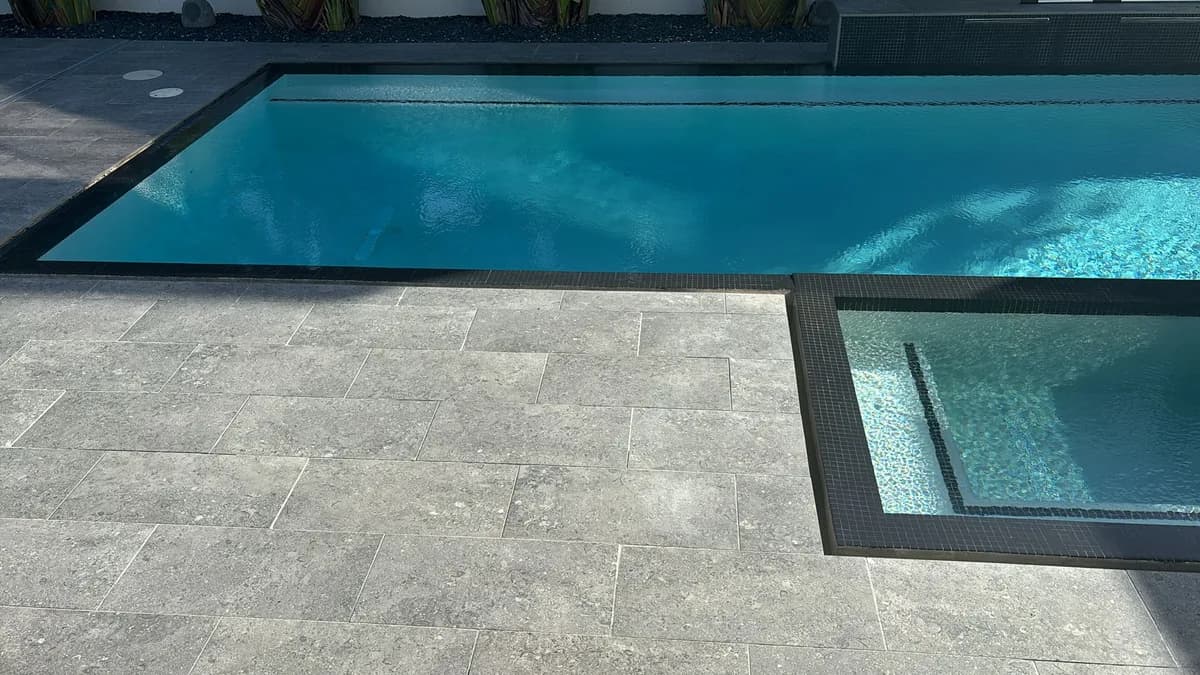
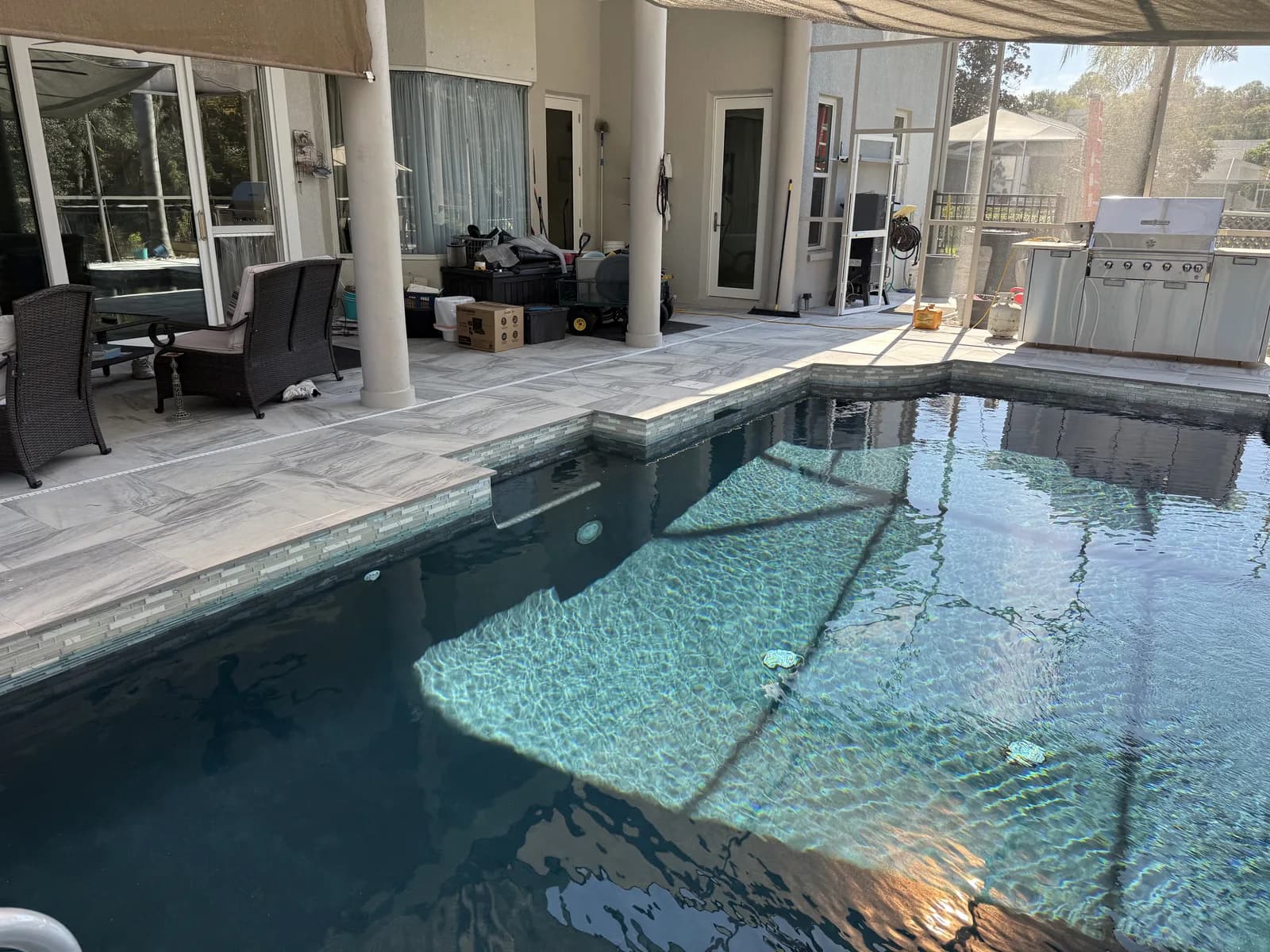
Large format rewards looks that need room to breathe. Marble-look porcelain is the clearest example. A line like the Da Vinci marble look carried by Hardscape.com, a soft white body with grey veining, loses its drama when the veins are chopped into small squares; at 24 by 48 a single vein can sweep across an entire piece, and the deck starts to look like a resort pool terrace rather than a tiled patio. Limestone and stone looks behave the same way, their gentle cloud and fossil detail reading as one quiet slab instead of a repeating print. Because porcelain is fired until it absorbs less than half a percent of water, that marble stays white through salt-system splash, sunscreen and summer storms without the sealing schedule real marble demands. And because the color runs through the body rather than sitting on top, a chipped corner in year eight does not reveal a different material underneath.
Travertine looks have moved firmly into large format too. Belgard's Travertini line, a porcelain that mimics travertine, shows how far the category has come: the soft pitting and warm cream-and-walnut banding of real stone, with none of the open voids that hold water and chloride on a Florida pool deck. Long wood-look planks finish the 2026 palette, and they work beautifully under a covered lanai or around an outdoor kitchen where you want the warmth of teak with no splinters, rot or graying. Across all of these looks, the trend is warm and natural: sand, ivory, light limestone, pale oak, soft greige. That is good news in our climate, because lighter tones stay noticeably cooler underfoot on an unshaded deck than charcoal does. Whatever look you choose, insist on a textured outdoor finish rated around R11 near the water, so the slab feels smooth to the eye but grips a wet bare foot.
What Large Format Demands From the Ground Up
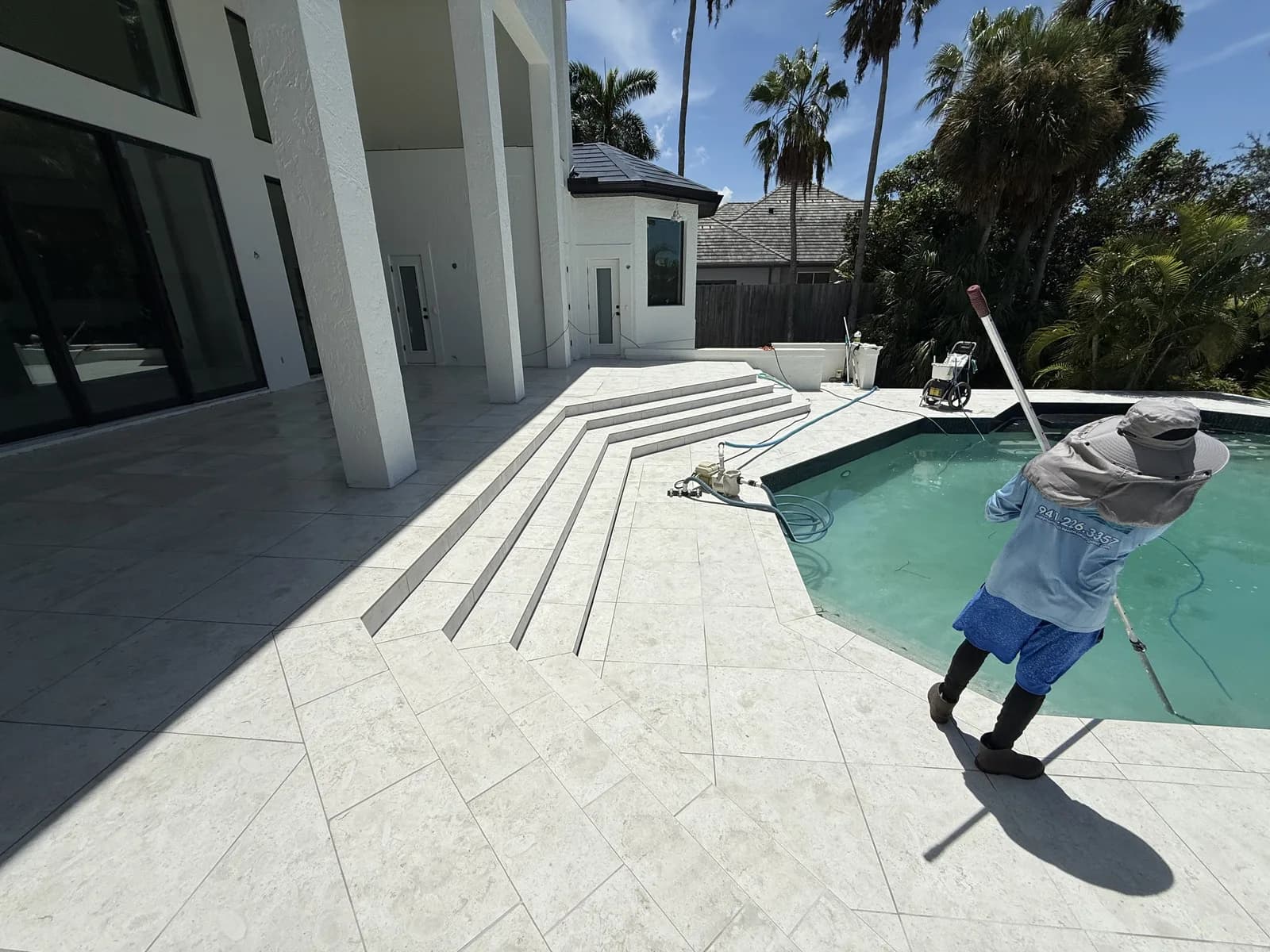
Here is the honest part: the same size that makes large format beautiful makes it unforgiving. A 2cm 24-by-48 paver weighs roughly 70 to 80 pounds and cannot flex to follow a dip or hump below it. Industry setting standards for tiles with an edge of 15 inches or more call for a substrate that varies no more than about 1/8 inch over 10 feet and 1/16 inch over 24 inches. A typical lanai slab poured years ago rarely meets that without grinding or a leveling layer, and a sand-set base in our sandy, high-water-table soil has to be built in compacted lifts of crushed limerock over geotextile, then screeded and pre-compacted with real precision before a single piece goes down. Over concrete, every paver gets a full bed of polymer-modified mortar, with the back of each slab buttered as well, so there are no hollow pockets for a dropped cooler or a patio chair leg to crack.
Layout has rules of its own. Large porcelain can carry a slight bow from the kiln, so we keep offsets at a third of the length or less rather than a half-bond, which would put the high middle of one piece against the low end of the next and create lippage, the raised edge you feel under a bare heel. Leveling clips hold neighboring edges flush while the mortar cures, and joints stay a consistent 4mm or so, never butted tight, so each slab has room to move through a roughly 40-degree swing between dawn and mid-afternoon on an unshaded deck. Drainage needs planning too. A big slab cannot bend across the valley between two deck drains, so we plan cuts along every slope break and keep a fall of about 1/8 to 1/4 inch per foot away from the house. Movement joints go every 8 to 12 feet on exposed fields and over every control joint in the slab below.
Living With It, From the First Summer to Year Ten
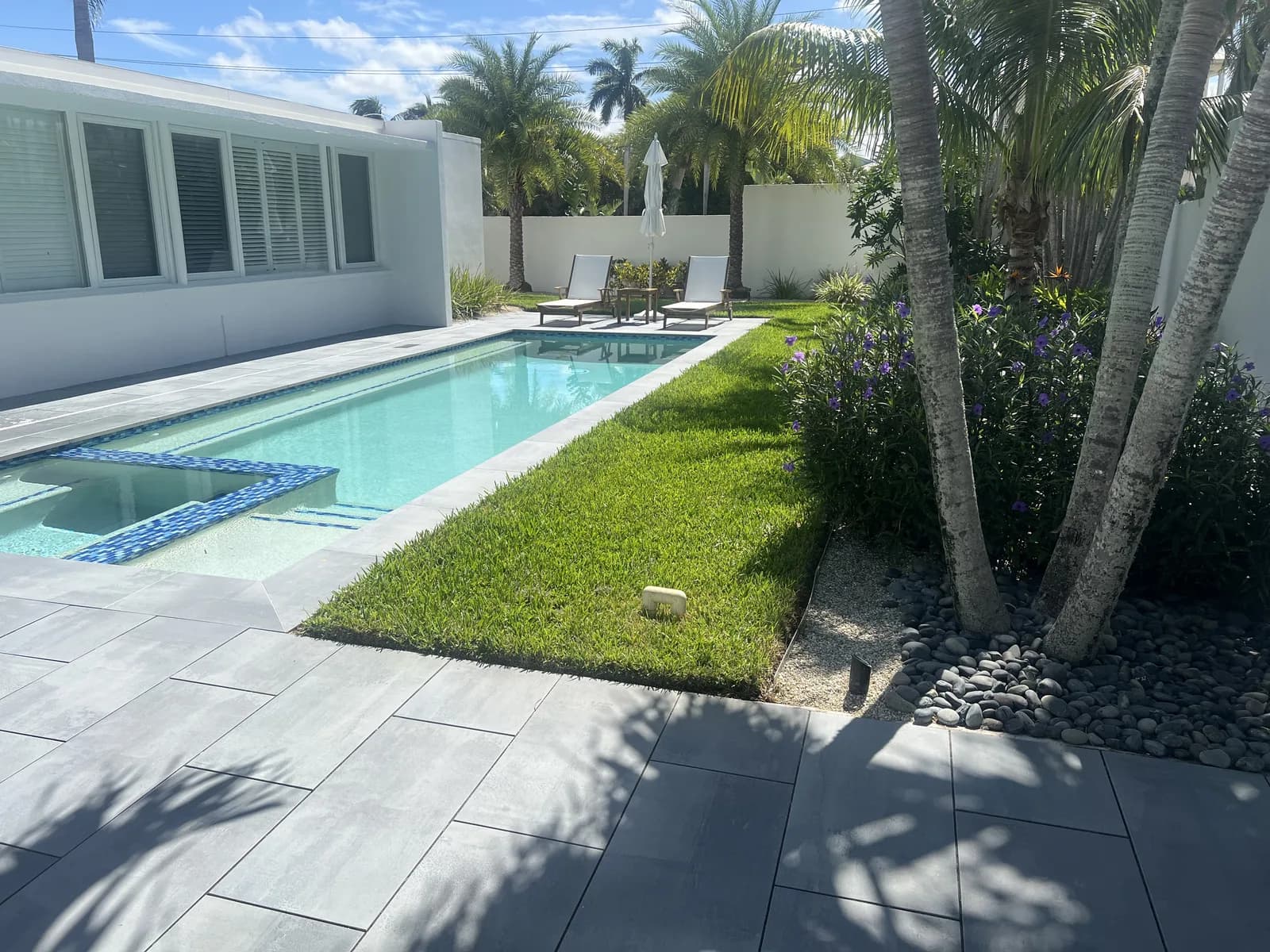
Picture that deck five summers in, behind a home on Siesta Key or in Palmer Ranch. It has baked through hundreds of afternoons above 95 degrees and shed the sideways rain of every July. Because there are half as many joints, there is half as much joint to keep clean: fewer places for sand, pollen and mildew to settle, fewer lines for weeds to find. The routine stays almost embarrassingly simple, a soft broom, a hose and warm water with a mild soap for the occasional spill, and never a sealer. Tap a slab with your knuckle and it sounds solid. Run your bare foot from the sliders to the coping and you feel no edges. The pale limestone or marble tone still matches the sample you held in the showroom, because vitrified, color-through-body porcelain does not fade under Gulf sun. Your weekends go to the pool and the people in it, not to maintenance.
That outcome depends almost entirely on the work nobody sees, which is where a certified installer earns the job. We are the only Hardscape.com Certified porcelain paver installer in Sarasota, Manatee, Hillsborough, Orange and Lee Counties, and large format is exactly the kind of work that certification is built around: flatness checks with a long straightedge, full mortar coverage, offset rules, lippage control and movement joints carried up from the slab. Every project starts with a site visit, because the site sets the scope and the price. The biggest factors are whether your existing slab is sound and flat enough to bond-set over or needs grinding or a new base, how much demolition is involved, the format and pattern you choose, how many drains and slope breaks the deck has, curves, borders and coping, and how easy access is for 80-pound slabs. You get all of it written and itemized before anything is ordered.
Financing Available
See your monthly payment before you decide
Compare real offers from more than twenty lenders through Acorn Finance, our financing partner. It takes about a minute, and checking does not affect your credit score.
Pay the way that suits you: credit and debit cards, bank transfer or check — or finance the project over monthly payments through our partner.
- Offers from 20+ lenders
- Pre-qualify in about 60 seconds
- No impact on your credit score

Financing is provided through Acorn Finance, an independent lending marketplace. EC Paver Solutions is not a lender and does not set rates or terms. Pre-qualification uses a soft credit inquiry and does not affect your credit score; final rates and terms come from the lender and are subject to approval.
Frequently Asked Questions
What size is considered large format porcelain paver?+
Do large tiles make an outdoor space look bigger?+
Can large format porcelain pavers be installed over concrete?+
Are large porcelain pavers good for pool decks?+
How much do large format porcelain pavers cost to install?+
See Large Format on Your Own Deck
Book a site visit anywhere in Sarasota, Bradenton, Lakewood Ranch, Tampa, Orlando or Fort Myers. We will check your slab or soil with a straightedge, map your drains and slope, bring large-format samples to lay out in your own light and leave you a written, itemized quote. Call (941) 250-4635 or book online.

Written by
EC Paver Solutions
EC Paver Solutions delivers premium paver installation across Sarasota, Bradenton, Lakewood Ranch, Tampa, Orlando, and Fort Myers. Hardscape.com Certified — the only certified hardscape contractor across five Florida counties.