

Porcelain Pavers Over Concrete: A Florida Installer's Guide
Yes, you can usually install porcelain pavers over existing concrete — if your slab passes three tests. Here is exactly how we do it in Sarasota and Bradenton, when we say no, and what it costs.
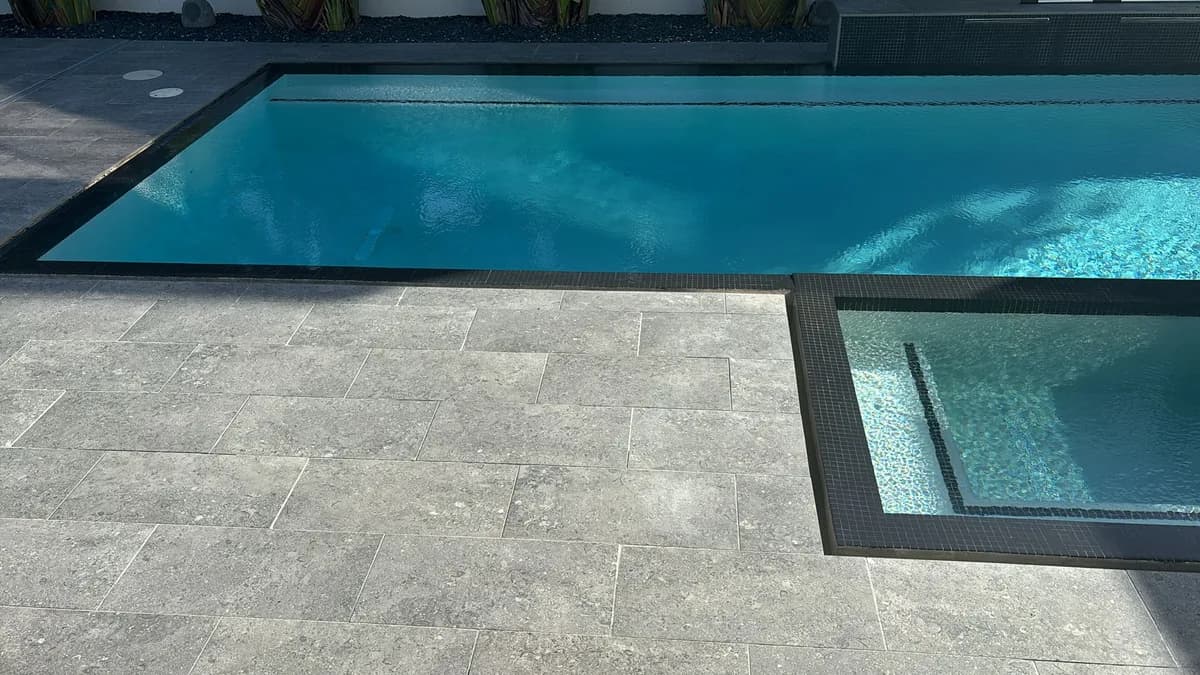
The Short Answer: Yes, If Your Slab Passes Three Tests
If you have an old concrete pool deck, a cracked patio, or a bare screened lanai, you have probably already had the thought: do I really have to tear all of this out to get the porcelain look I want? Most of the time, the answer is no. Porcelain pavers can be installed directly over existing concrete, and for the right slab it is the fastest, cleanest, and cheapest way to get a modern surface — especially on Sarasota and Lakewood Ranch lanais where demolition is a nightmare. But "most of the time" is doing a lot of work in that sentence. The single most valuable thing we do on these projects happens before a paver is ever laid: we tell you honestly whether your slab is a candidate.
Porcelain over concrete works when the existing slab can do one job — stay still. Porcelain is rigid and non-porous, so whatever it sits on has to be stable, or that movement telegraphs straight up into the joints. We run every slab through three checks. First, is it structurally sound? Hairline surface cracks are fine, but wide, active cracks where one side sits higher than the other mean the slab is still moving, and in Florida's sandy, high-water-table soil it will keep moving. Second, does it drain? Your concrete needs to shed water away from the house at about a quarter inch per foot, because adding porcelain raises the surface an inch or more and you do not want to trap water against a slab-on-grade foundation. Third, is there room for the height change? On a lanai that affects the slider threshold and the step down to the pool, and it is the detail that surprises homeowners most.
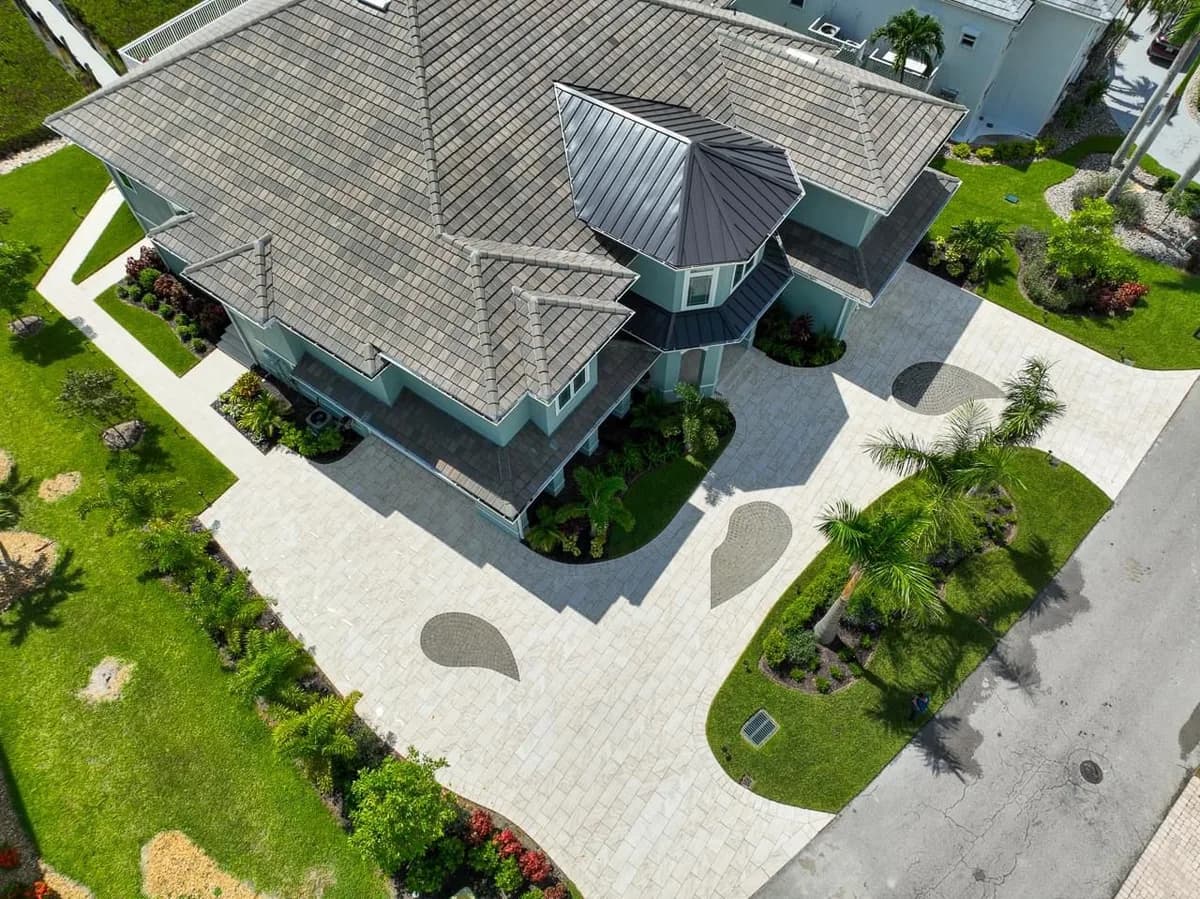
Two Ways We Install Porcelain Over Concrete in Florida
There are two real methods for going over an existing slab, and the right one depends on your slab, your drainage, and whether the area is screened. The first is bond-set, our Florida default. Bond-set means the porcelain is adhered directly to the concrete with an exterior-rated, polymer-modified thin-set mortar. It is the most permanent and most stable option, and it is what we specify for the majority of pool decks and open patios. The work that matters is invisible once it is done: the slab gets cleaned, degreased, and mechanically profiled so the mortar actually bonds instead of sitting on a slick, sealed surface, and we honor the slab's existing control joints with matching movement joints in the porcelain. Skip that step and Florida's daily thermal expansion cracks the field — an unshaded porcelain surface in Sarasota can swing 40 degrees between a 7 a.m. and a 2 p.m. August reading, and that movement has to go somewhere.
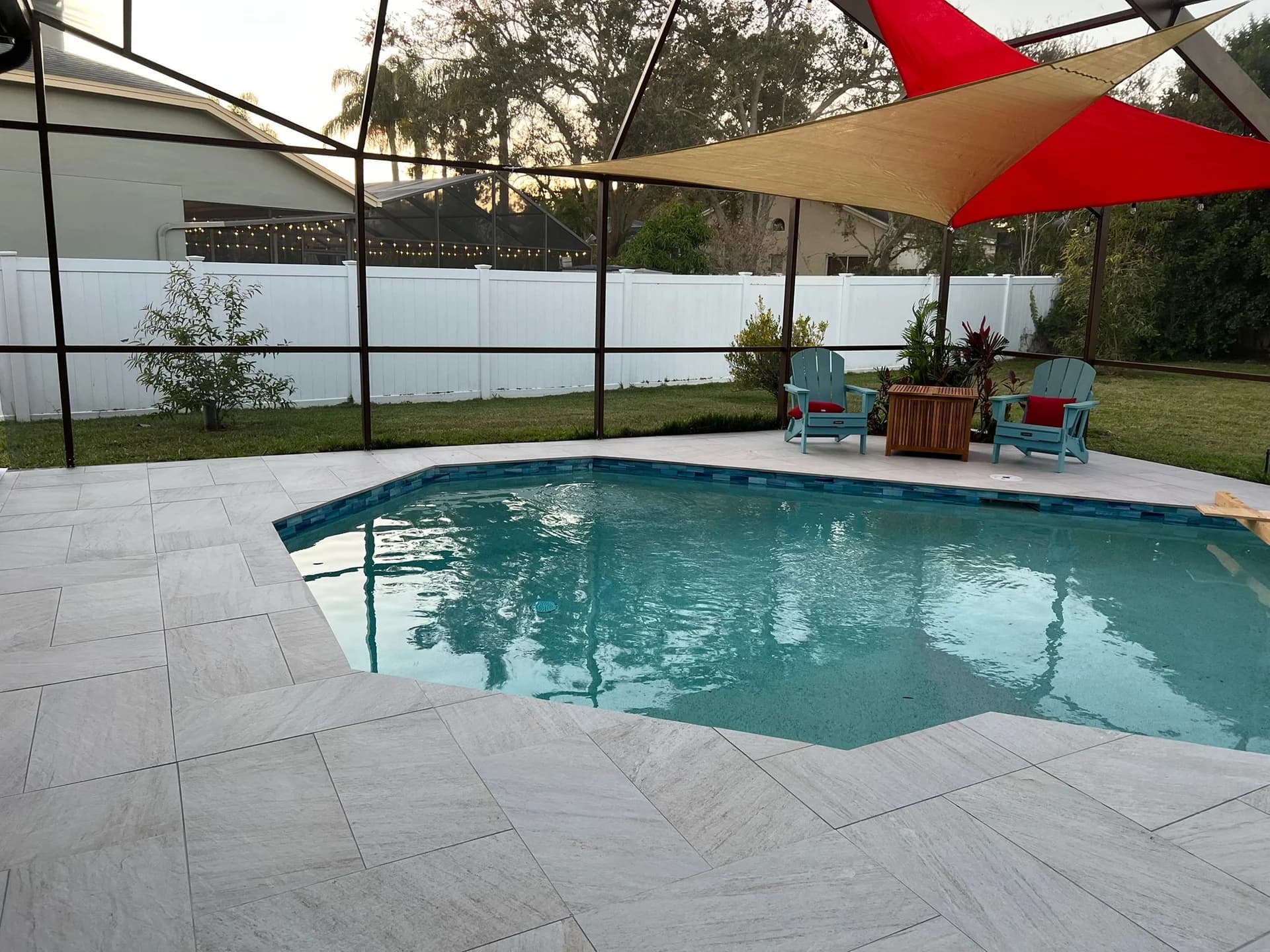
The second method is a pedestal system, which floats the pavers on adjustable supports above the slab and leaves an air gap underneath. Water drains through the joints, runs across the old concrete, and exits — which makes this our go-to for screened lanais and any slab with marginal drainage. The pedestal gap also swallows the height change gracefully and lets us dial a dead-level surface out of a slab that was poured with a slope, and because nothing is glued down, a single paver can be lifted to reach plumbing or electrical under a lanai without demolishing the floor. The trade-off is that pedestal systems want a large-format paver, 24 by 24 inches and up, plus a proper perimeter detail — so they are a deliberate specification, not a default.
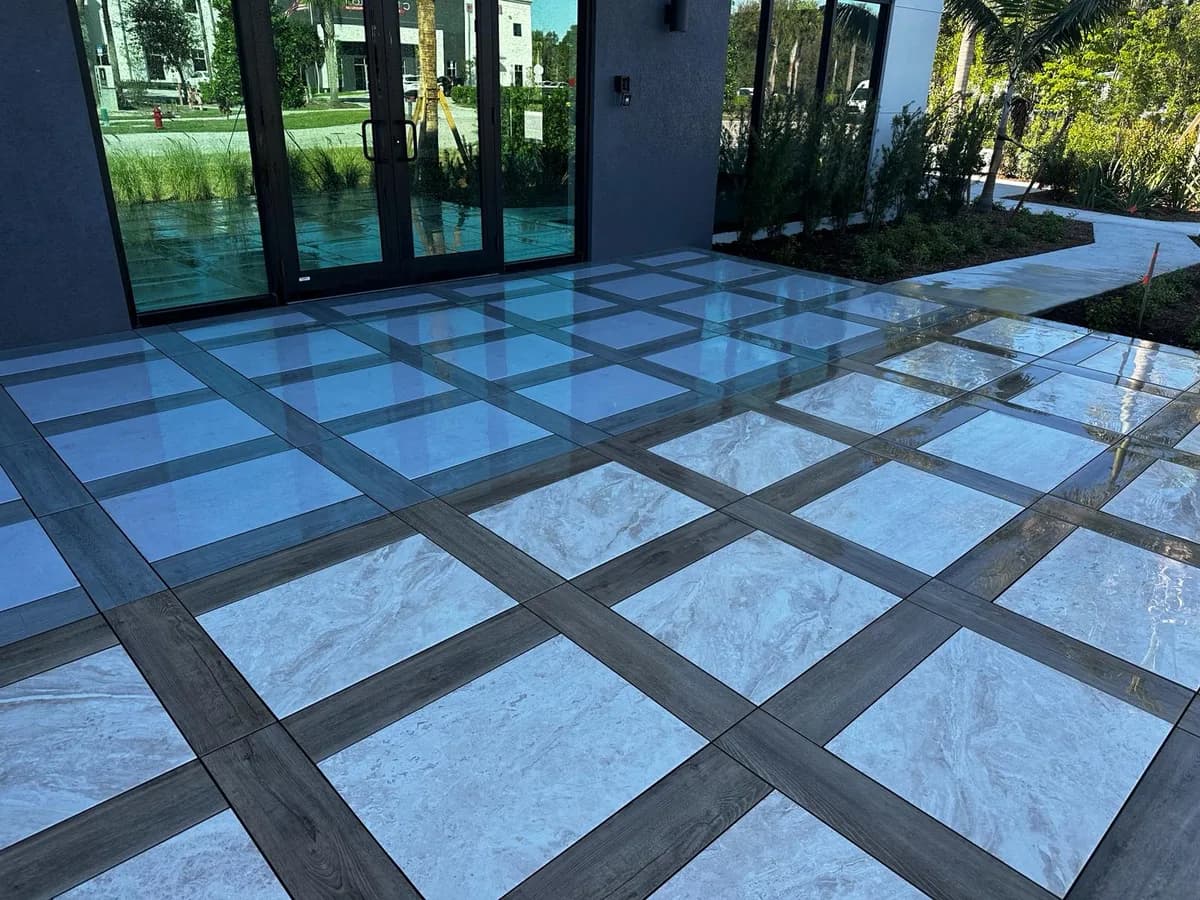
When We Say No: Four Concrete Slabs That Fail
We turn down overlay projects more often than you would expect, because putting a permanent porcelain floor over a failing slab just buys you a more expensive problem. Four conditions get a no from us. The first is active, differential cracking — if one side of a crack is proud of the other, the slab is still moving and porcelain bonded over it will crack in the same line within a season or two. The second is standing water that will not drain; no slope plus a screened enclosure trapping humidity is a mold and delamination recipe, so we fix drainage first or we do not overlay. The third is a floating or hollow slab: tap it, and if sections sound hollow the concrete has lost contact with its base underneath — common on older Bradenton and Anna Maria Island homes where sandy fill has washed out, and that void will collapse under load. The fourth is heavy previous coatings, like thick peeling paint or a failing acrylic sealer, which act as a bond-breaker.
None of this is meant to scare you off — the majority of slabs we look at pass all three tests and make excellent overlay candidates. But the assessment is the product. It is the reason a written scope from a certified installer is worth more than the cheapest number you will get over the phone, because the cheap number rarely includes the honest conversation about whether your specific slab should be overlaid at all. When a slab does fail, we will tell you which fix comes first, or whether a clean tear-out is genuinely the smarter money — and we would rather lose the overlay job than sell you one that cracks.
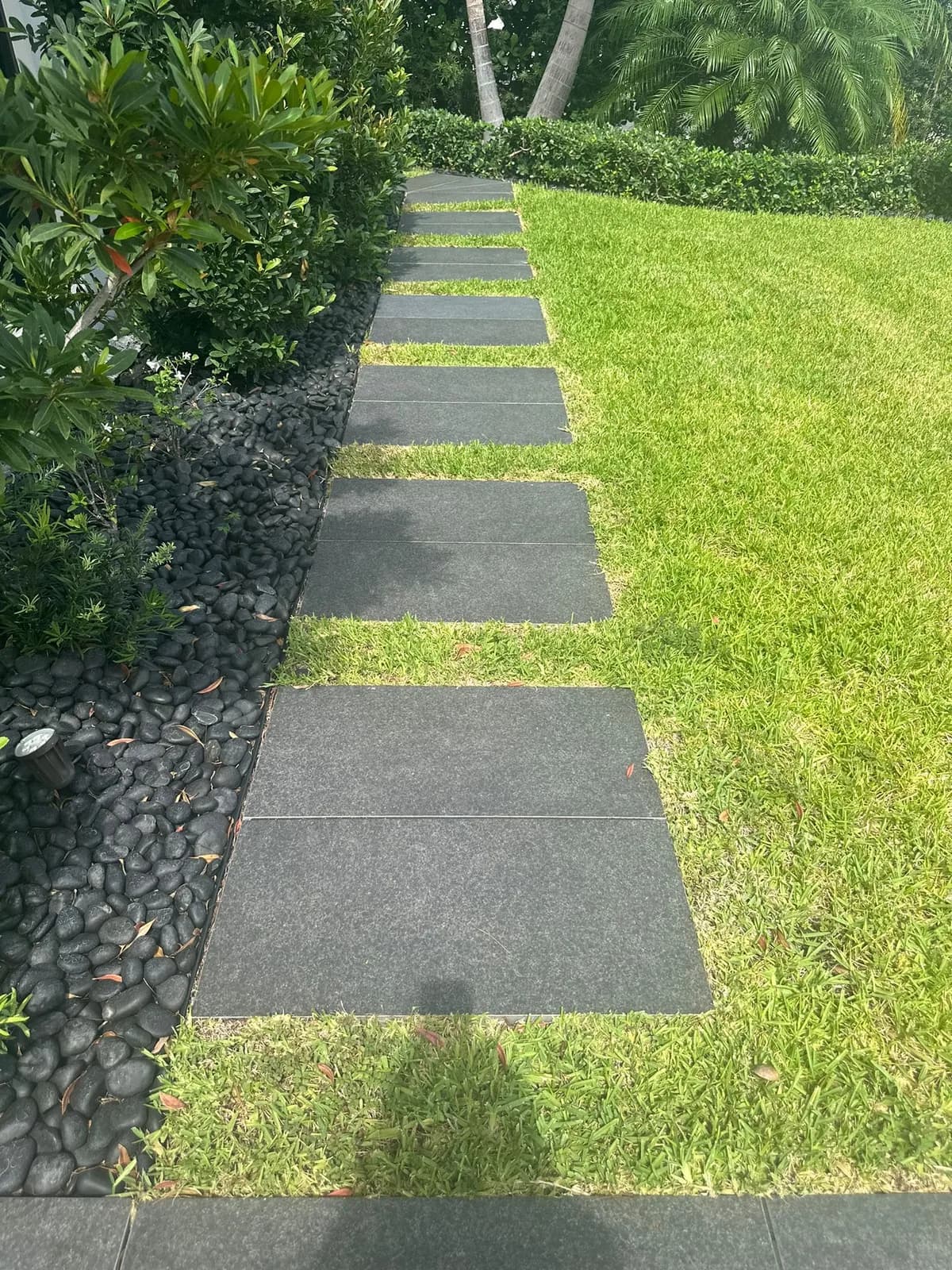
What Hardscape.com Says vs. What We See in Florida
Hardscape.com — the manufacturer whose certification we hold — publishes clean, correct specs for bond-set porcelain over concrete: a structurally sound, clean, profiled substrate with an exterior polymer-modified thin-set. That is exactly right, and we follow it. What a national spec cannot tell you is what "structurally sound" means on a 1980s slab-on-grade home in Bradenton with forty years of Florida rain under it. That is the local knowledge you are actually paying for.
Two examples. The spec says honor the slab's control joints, which is true everywhere — but in our market we also widen the movement joints slightly on west- and south-facing decks, because unshaded porcelain here absorbs enough afternoon heat to expand more than a shaded slab in a milder climate ever would. And where the spec says "clean substrate," we read that as grind off every trace of the acrylic sealer the previous owner rolled on, because Florida homeowners seal concrete constantly to fight our humidity — and that sealer is the number-one bond failure we find when we lift someone else's cracked overlay. Translating a correct national spec into what actually survives a Sarasota summer is the whole reason a certified installer exists.
Porcelain Over Concrete vs. Full Install — Sarasota & Bradenton
| Approach | Excavation + base included? |
|---|---|
| Overlay — bond-set over sound concrete | No — uses your existing slab |
| Full install — over new engineered base | Yes — excavation + compacted limestone |
Coastal projects near Siesta Key or Anna Maria Island add a marine-grade joint compound. Slab crack repair, sealer grinding, or drainage correction reduce the overlay savings — sometimes enough that a full tear-out is the better 15-year value. Every number goes in writing after we see the slab in person.
Financing Available
See your monthly payment before you decide
Compare real offers from more than twenty lenders through Acorn Finance, our financing partner. It takes about a minute, and checking does not affect your credit score.
Pay the way that suits you: credit and debit cards, bank transfer or check — or finance the project over monthly payments through our partner.
- Offers from 20+ lenders
- Pre-qualify in about 60 seconds
- No impact on your credit score

Financing is provided through Acorn Finance, an independent lending marketplace. EC Paver Solutions is not a lender and does not set rates or terms. Pre-qualification uses a soft credit inquiry and does not affect your credit score; final rates and terms come from the lender and are subject to approval.
Frequently Asked Questions
Can you lay porcelain pavers over concrete?+
Do porcelain pavers need a concrete base?+
Will porcelain pavers crack if installed over concrete?+
How much does it cost to install porcelain pavers over concrete in Florida?+
What goes between porcelain pavers and the concrete slab?+
Bring Us Your Existing Concrete
EC Paver Solutions holds the only Hardscape.com Certified Contractor credential in Sarasota, Manatee, Hillsborough, Orange, Lee and Pasco Counties. We will assess your slab honestly and put a real number in writing before you spend a dollar — overlay or full install.

Written by
EC Paver Solutions
EC Paver Solutions delivers premium paver installation across Sarasota, Bradenton, Lakewood Ranch, Tampa, Orlando, and Fort Myers. Hardscape.com Certified — the only certified hardscape contractor across five Florida counties.