



Do You Need a Permit for Pavers in Sarasota & Manatee?
Most at-grade paver patios in Sarasota and Manatee County never see a building inspector, but the moment your pavers touch the street, a swale, a pool barrier or a coastal setback line, the answer changes. Here is how the rules actually break down by project and by jurisdiction, and the five questions to settle before anyone breaks ground.

The Short Answer: It Depends on Where the Pavers Touch
Homeowners usually ask this question as if there were one rule for all pavers, and that is where the confusion starts. In practice, the permit question in Sarasota and Manatee County comes down to what the pavers touch. A patio, garden path or lanai floor laid at grade on your own lot is treated as flatwork, and under the Florida Building Code, uncovered flatwork that sits on the ground and does not support a structure is commonly exempt from a building permit. Building departments across the state publish nearly identical exemption lists: open patios, walks and driveways not more than 30 inches above grade. Change any of those conditions, by raising the surface, covering it with a roof or extending it into the public right-of-way, and you are no longer in exempt territory.
There is a second layer people miss: who your building department actually is. Unincorporated Sarasota County, the City of Sarasota, Venice, North Port and Longboat Key each run their own permitting, and in Manatee County the same is true for unincorporated areas versus Bradenton, Palmetto, Holmes Beach, Anna Maria and Bradenton Beach. A home in Lakewood Ranch on the Manatee side follows Manatee County rules, while a Palmer Ranch home answers to Sarasota County. Rules on aprons, landscaping permits and impervious coverage differ between those offices. So before anyone quotes you a timeline, the first honest step is to confirm the jurisdiction from your property record, not from your mailing address.

Driveways: Where Your Pavers Meet the Street
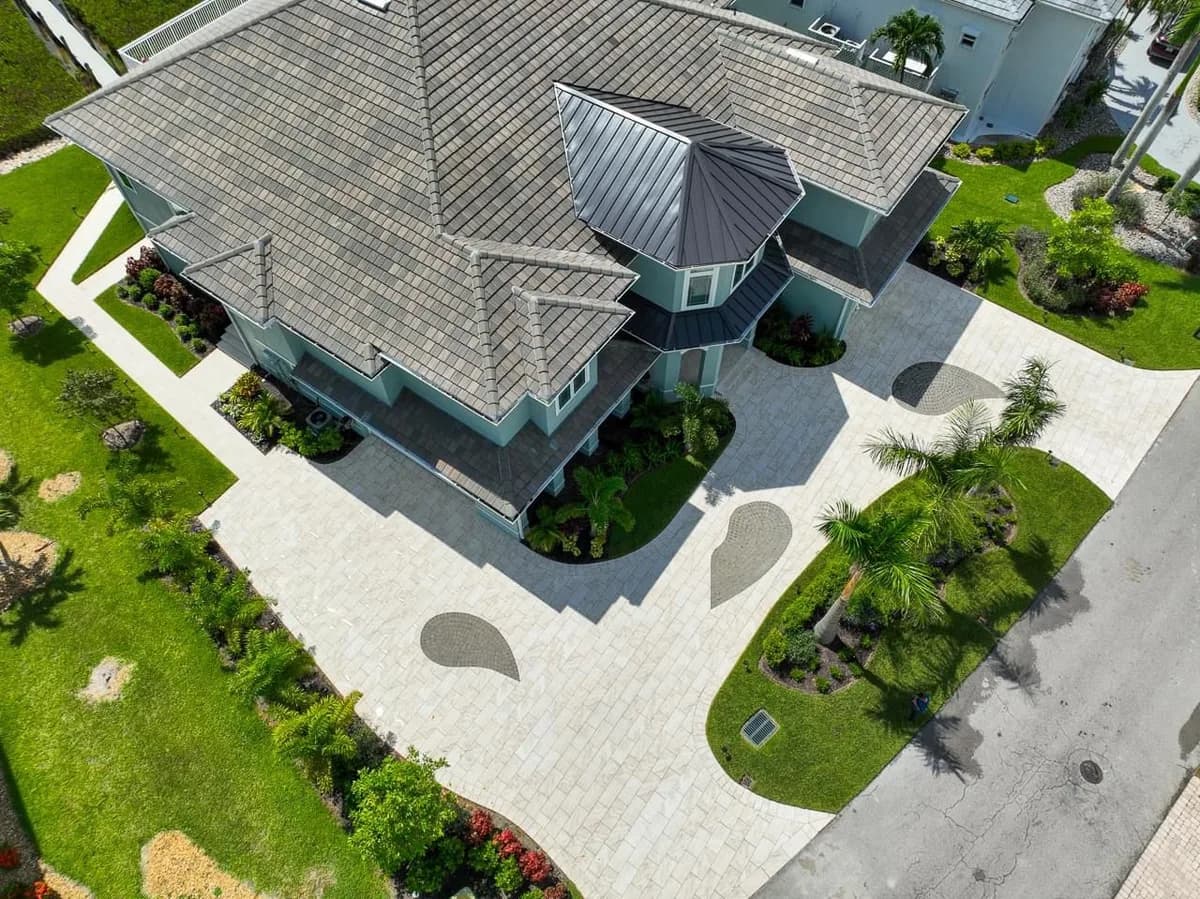
Driveways are where most paver projects in our area pick up paperwork, and the reason is the apron. That strip between your property line and the edge of the road usually belongs to the county or city, not to you. Sarasota County requires a Right-of-Way Use Permit for all work within county right-of-way, and a separate culvert permit if a driveway pipe sits under the apron in a roadside swale. Manatee County handles residential driveway and culvert permits through Public Works for unincorporated addresses, applied for online through the county portal. Its residential standard calls for a driveway between 12 and 24 feet wide where it meets the road, built to a 6-inch-equivalent section from the edge of pavement to the right-of-way line, and a paver apron that includes a sidewalk crossing has its own inspection before the work is covered.
What this means for you is simple. Replacing pavers entirely inside your lot, from the garage to the property line, is generally private flatwork. Rebuilding or widening the apron, changing where the driveway meets the street, touching the public sidewalk or altering a culvert is right-of-way work and needs the permit and inspection before the first paver goes down. Some Florida counties forbid pavers in the right-of-way altogether, and others allow them only if the owner accepts responsibility for repairs after utility work, so always confirm the local policy rather than assuming. Pull the permit in the property owner's name through your contractor, keep the approved sketch on site, and expect the inspector to check width, base depth and how the apron sheds water toward the street.

Pool Decks, Lanais and the Coast: The Exceptions That Bite
Pool decks follow the same flatwork logic, with important conditions. A deck poured or paved as part of a new pool is covered by the pool permit, including the barrier and safety requirements under Florida's Residential Swimming Pool Safety Act. Resurfacing an existing deck, such as setting 2cm porcelain over a sound concrete slab, is typically finish work and often needs no separate building permit. The catch is everything around the deck. If the job moves a screen enclosure footing, relocates a door that serves as part of the pool barrier, adds a deck drain tied into a storm system or lifts the surface more than about 30 inches above grade, you are back in permit territory. On a raised lanai, check the door threshold too: adding the paver and mortar thickness can change step heights at the slider.
Coastal properties add a third layer. On Siesta Key, Casey Key, Longboat Key and Anna Maria Island, hardscape seaward of the state's Coastal Construction Control Line can require review by the Florida Department of Environmental Protection, and Sarasota County applies its own Gulf beach setback line. Flood zone and stormwater rules matter inland as well. Pavers generally count as impervious surface in local codes unless a permeable system is designed and approved for that purpose, so a large new patio can push a lot over its coverage limit even when the patio itself is exempt. Heavy summer rain on sandy, high-water-table soil is exactly why these limits exist: every square foot of hard surface sends more water to your neighbor or the street, so we grade every project to fall at least 1/8 inch per foot away from the house.
Five Questions to Settle Before Anyone Breaks Ground
Before you sign anything, get clear answers to five questions. First, which office has jurisdiction: county, city or town? Second, does any part of the work touch the right-of-way, a culvert, a public sidewalk or a coastal setback line? Third, will the project change impervious coverage or drainage enough to trigger zoning or stormwater review? Fourth, does the work touch a pool barrier, screen enclosure or anything raised above grade? Fifth, what does your HOA require? In communities like Lakewood Ranch, River Club and Palmer Ranch, architectural review is often the longest wait in the whole process, with color samples, a site plan and paver specifications due weeks before work can start. Treat that approval like a permit, because a covenant violation can force you to tear out a finished deck.
A good installer handles this conversation for you instead of hoping no one asks. At EC Paver Solutions, the permit and HOA review is part of the site visit: we check your survey for the property line and right-of-way, note culverts and swales, look at coastal and flood information, measure how the new surface changes drainage and tell you in writing which approvals your project needs. As the only Hardscape.com Certified porcelain paver installer in Sarasota, Manatee, Hillsborough, Orange and Lee Counties, we build to manufacturer specification, which is exactly what an inspector or HOA reviewer wants to see on paper. Permits and reviews also shape the schedule and the quote, so we list them as separate line items. You will know what is required before anything is ordered.
Financing Available
See your monthly payment before you decide
Compare real offers from more than twenty lenders through Acorn Finance, our financing partner. It takes about a minute, and checking does not affect your credit score.
Pay the way that suits you: credit and debit cards, bank transfer or check — or finance the project over monthly payments through our partner.
- Offers from 20+ lenders
- Pre-qualify in about 60 seconds
- No impact on your credit score

Financing is provided through Acorn Finance, an independent lending marketplace. EC Paver Solutions is not a lender and does not set rates or terms. Pre-qualification uses a soft credit inquiry and does not affect your credit score; final rates and terms come from the lender and are subject to approval.
Frequently Asked Questions
Do I need a permit to install pavers in Florida?+
Do I need a permit for a paver driveway in Manatee County?+
Do you need a permit for a paver patio in Sarasota County?+
Do I need a permit to replace my pool deck with pavers?+
How much does a paver permit cost in Sarasota or Manatee County?+
Get a Clear Answer for Your Property
Book a site visit anywhere in Sarasota, Bradenton, Lakewood Ranch, Tampa, Orlando or Fort Myers. We will check your survey, right-of-way, drainage and HOA requirements, tell you exactly which approvals your paver project needs and leave you a written, itemized quote. Call (941) 250-4635 or book online.

Written by
EC Paver Solutions
EC Paver Solutions delivers premium paver installation across Sarasota, Bradenton, Lakewood Ranch, Tampa, Orlando, and Fort Myers. Hardscape.com Certified — the only certified hardscape contractor across five Florida counties.


