

How to Keep Porcelain Pavers Looking New in Florida
Two doors down, your neighbor loses another weekend to stripping and resealing a travertine deck he will have to strip and reseal again in eighteen months. Here is the entire care routine for a porcelain deck in Florida — a soft broom, a hose, and mild soap on spills — plus the short list of cleaners that can genuinely hurt it and why sealing porcelain is the one upsell to turn down.
The Weekend You Get Back
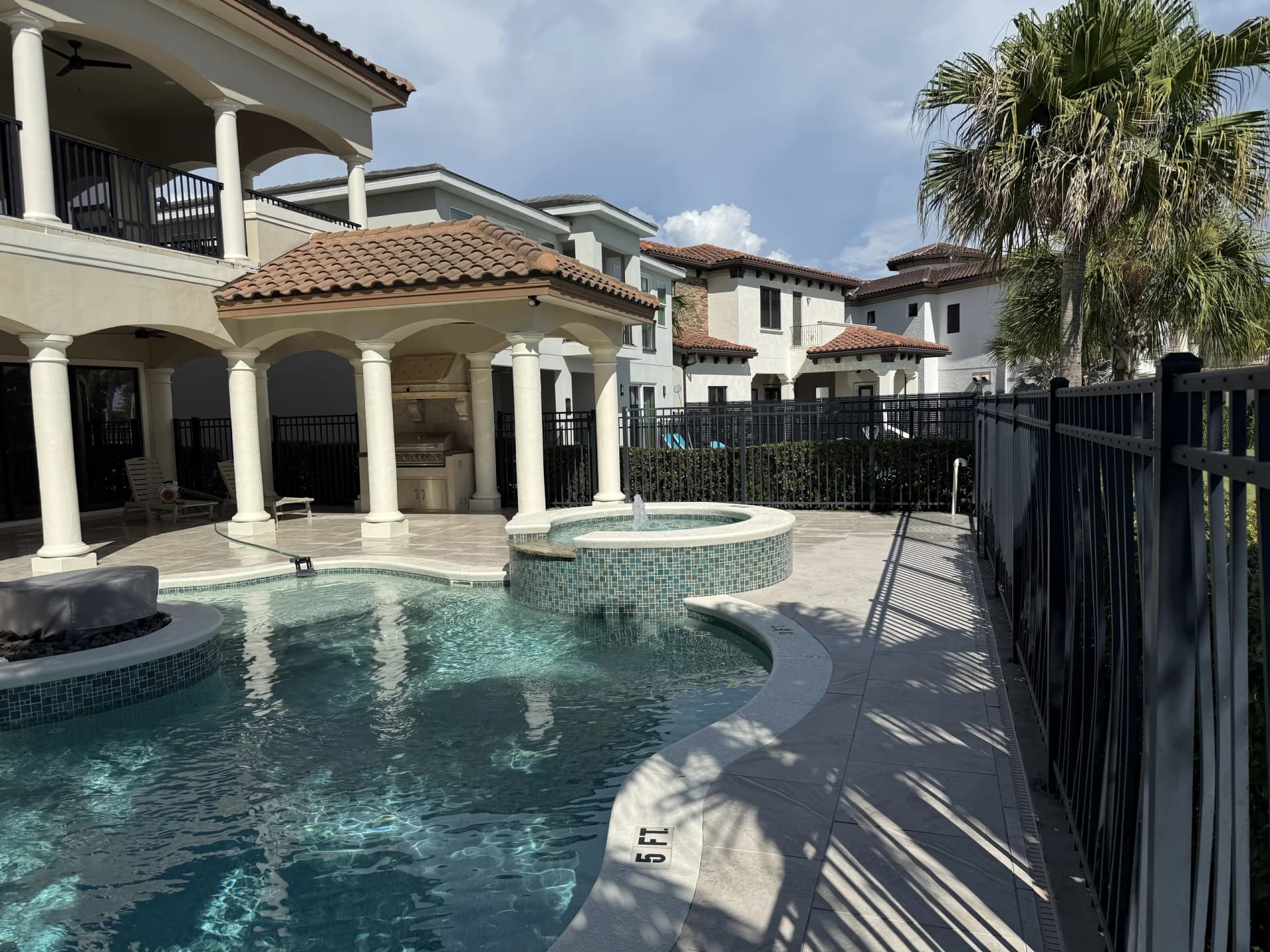
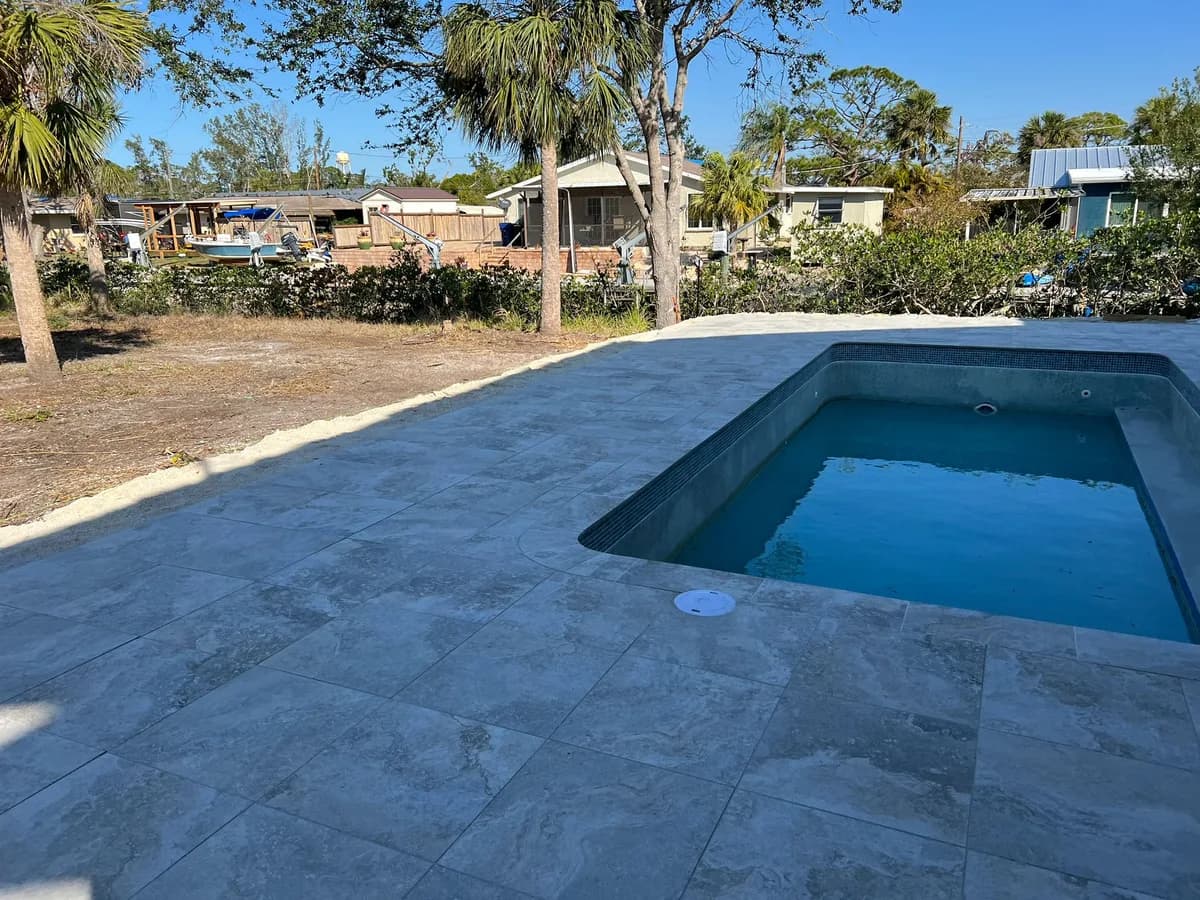
It is nine on a Saturday morning in October in Lakewood Ranch, and two doors down your neighbor is on his knees with a garden sprayer, laying sealer onto a travertine deck he stripped and scrubbed the weekend before. He will lose today and most of tomorrow to it, and he will do the whole thing again in eighteen months. You are going to spend twenty minutes with a soft broom and a hose, and then you are going to Anna Maria Island. That is not a sales line, it is just the actual difference in how the two surfaces spend your weekends, and it is why so many Sarasota and Bradenton homeowners land on porcelain even when they walked into the showroom in love with something else. The deck still looks like the week it was laid. The maintenance that was supposed to protect that look never arrives, because there is nothing to protect.
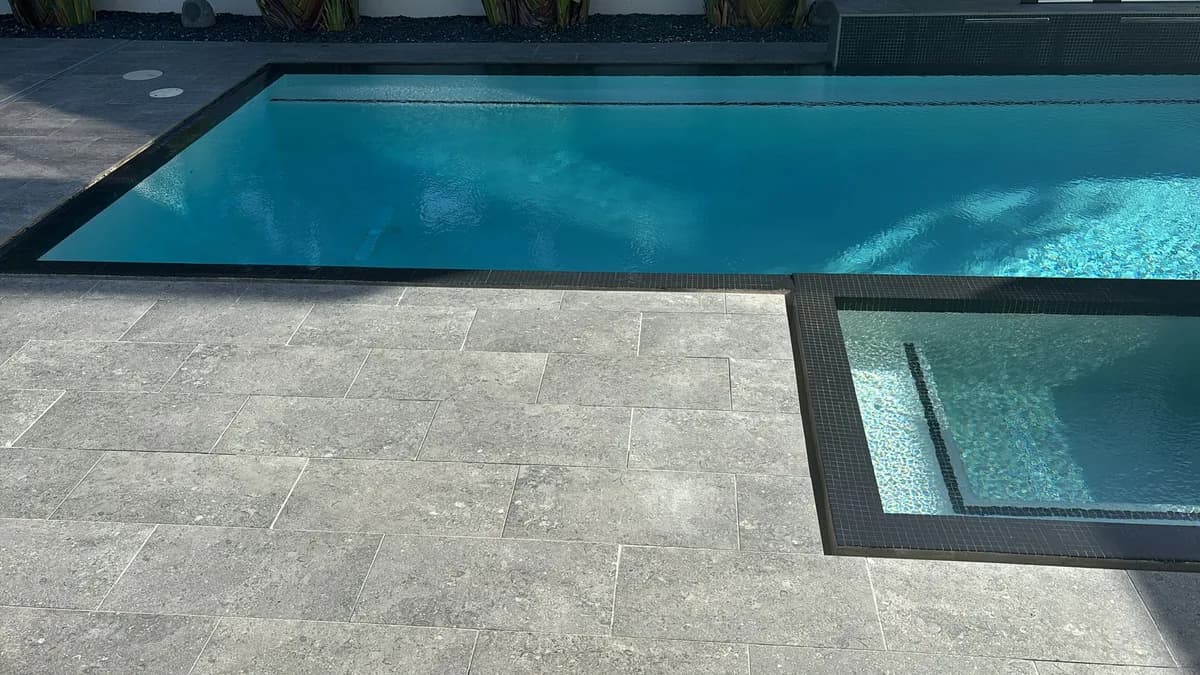
The reason sits in the kiln. A porcelain paver is fired past 2,000 degrees until the clay body vitrifies, meaning the particles fuse into something closer to glass than to stone, and the finished slab absorbs less than half a percent of its weight in water. Natural travertine runs around five percent, roughly ten times as thirsty. Absorption is the entire story here, because everything you scrub off an outdoor surface in Florida is something that got in first: chlorinated splash-out, iron from well irrigation, tannin from live oak leaves that sat wet through a week of afternoon storms, sunscreen ground in by wet feet. Porcelain has nowhere to put any of it. The color is not a coating either. It is fired through the body of the paver, which is why a ten-year-old deck in Palmer Ranch still reads the same tone as the sample box left in the garage, and why there is no sealer film to chalk, cloud, or yellow. There was never a sealer.
The Whole Routine, Start to Finish
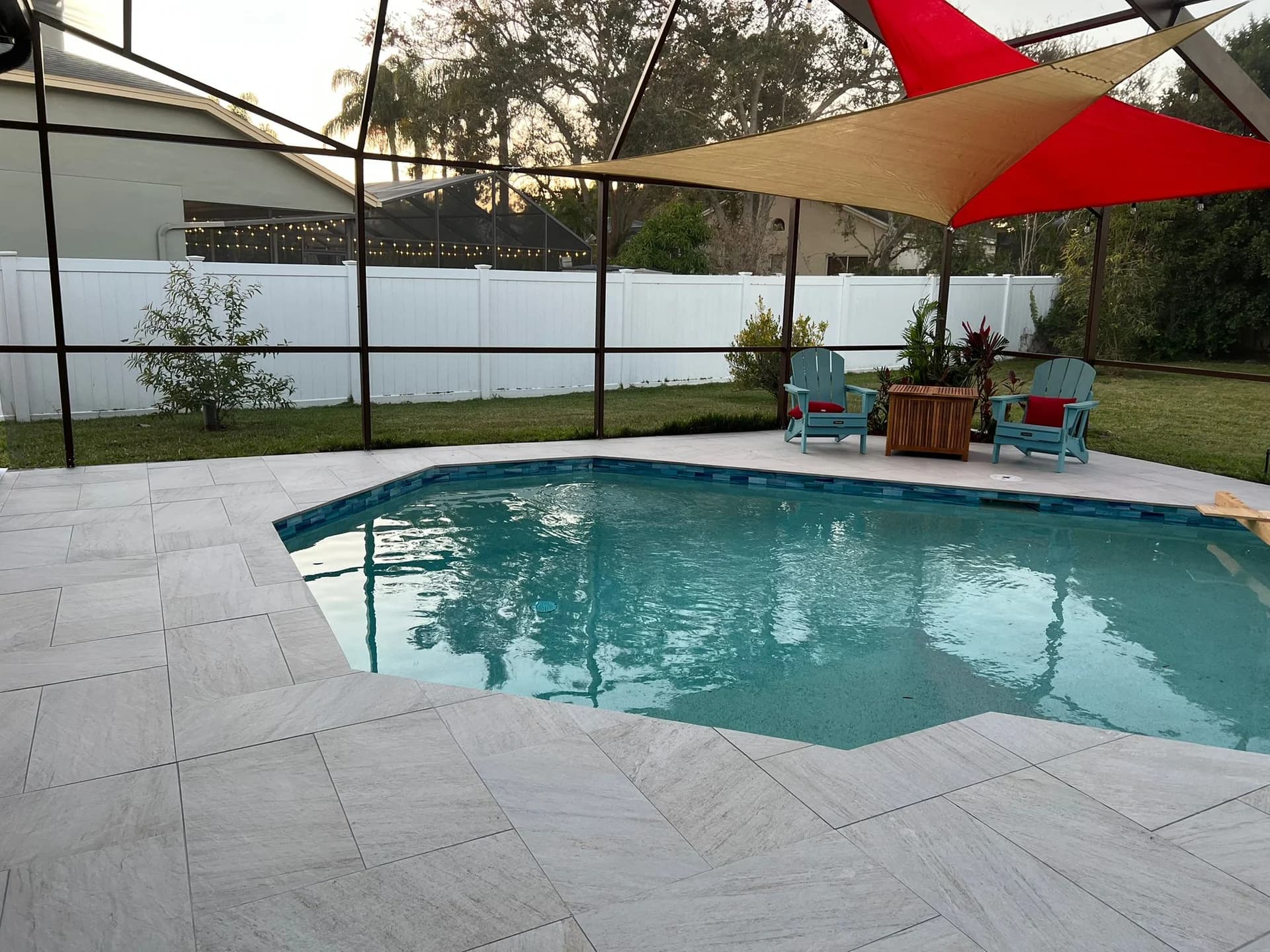
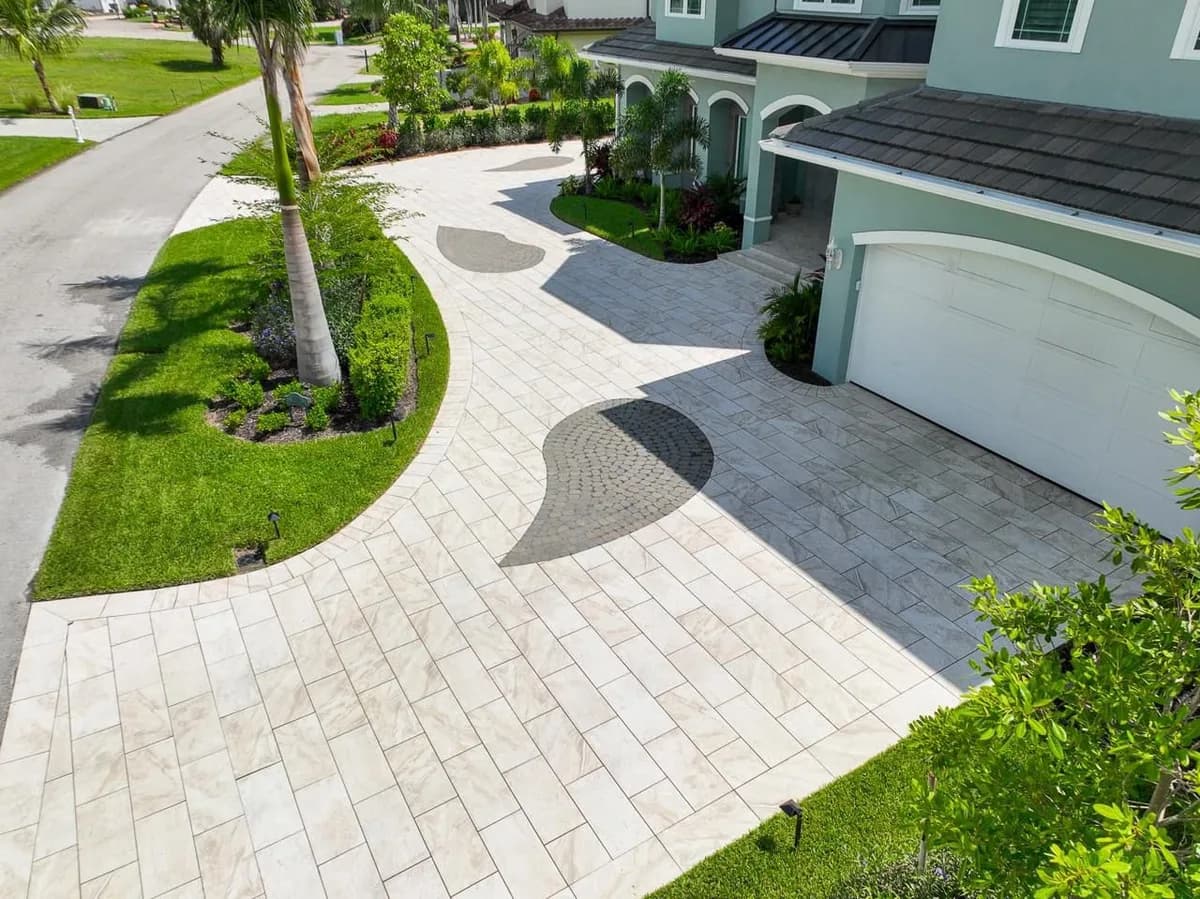
Here is the entire program, and it really is this short. Once a week, run a soft-bristle push broom across the deck and move the debris off. In March and April that means live oak pollen; after a summer cell it means the leaf litter and yard sand the rain drove across the slab. Once a month, or whenever it looks tired, give it a pass with a garden hose and a spray nozzle. That is roughly ninety percent of everything a porcelain deck will ever ask of you. Spills get handled as they happen: warm water, a little pH-neutral dish soap, a soft brush, rinse. Grill grease from a Saturday cookout, spilled wine, sunscreen, bird waste, a dropped popsicle — all of it lifts with mild soap and water because none of it ever penetrated anything. The one chore worth doing promptly is clearing wet leaves rather than letting them sit, since a fresh tannin shadow rinses off in a day and a month-old one earns you a scrub.
Twice a year, once before the holidays and once after the summer rains have finished, do a deeper pass and look at the joints instead of the field. If you own a pressure washer you can use it, with rules. Keep it at 1,600 PSI or less, fit a wide fan tip, hold the lance at a low angle so the spray sweeps across the surface instead of drilling into it, and never aim straight down into a joint. The porcelain body does not care what you point at it; the jointing material cares a great deal, and a zero-degree tip at 3,000 PSI will excavate a sand joint in about four seconds. On a sand-set porcelain deck, check whether our downpours have washed the joint level down and sweep dry sand back in where it has. On a bond-set deck over an existing concrete slab, which is the common install for lanais and older pool decks around here, you are looking for hairline separation along the grout lines and especially at the movement joints. That one is a phone call, not a Saturday project.
The Short List of Things That Can Actually Hurt It
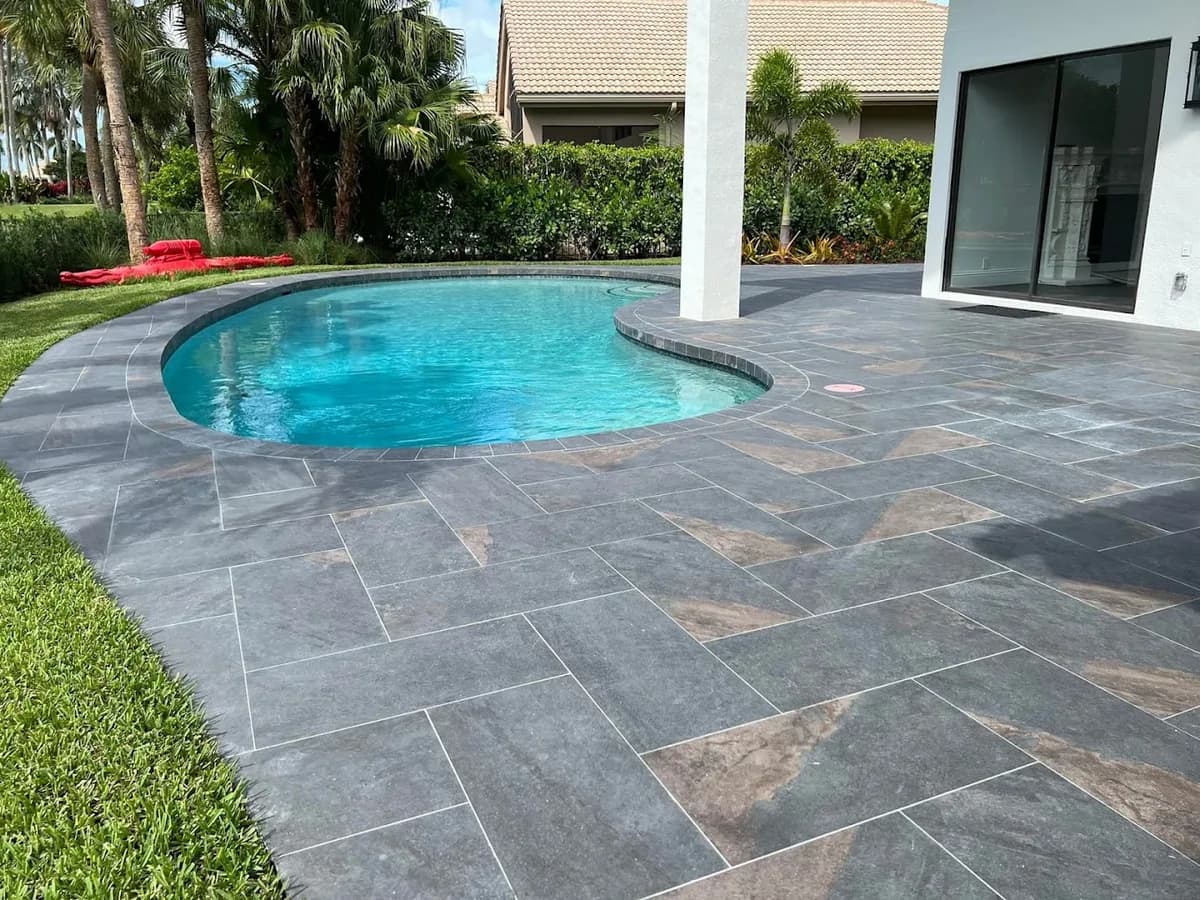
The list of things that can genuinely damage a porcelain deck is short, and nearly all of it arrives in a bottle. Skip bleach and ammonia. They do nothing useful to a non-porous surface, and repeated use will discolor grout and shorten the life of the joints. Skip anything acidic, and be firm about muriatic acid in particular, because it is the reflex of every pool crew and pressure-washing outfit trained on travertine and concrete. Acid etches cement-based grout, pulls the color out of the joint lines, and can leave a dull haze across the field that then takes a specialty cleaner to undo. Skip steel wool, wire brushes, and scouring pads: the paver body will win that fight, but you will leave fine metal particles behind that bloom orange rust within a week of Florida humidity. And skip wax-based or oil-based cleaners entirely. Porcelain cannot absorb them, so they simply sit on top, hold dirt, go cloudy, and turn a slip-rated surface slick.
Then there is the big one, the thing most homeowners get talked into: do not seal it. A contractor offering to seal your new porcelain pool deck is either unfamiliar with the material or selling a recurring service, because a slab that absorbs under half a percent water gives a penetrating sealer nowhere to go. What you actually get is a topical film that clouds, yellows under Florida UV, peels in sheets at the pool edge where it never fully dries, and quietly buries the R11 texture you specifically paid for so the deck would not be slippery wet. Now you own a stripping-and-recoating cycle on a surface engineered to never need one. The only real coastal chore is the free one. If you are on Anna Maria Island or Siesta Key and salt spray reaches your deck, rinse it with fresh water every few weeks — not because porcelain minds salt, but because dried salt crystals are abrasive underfoot and dull the joints over time.
Why the Easy Routine Depends on the Install
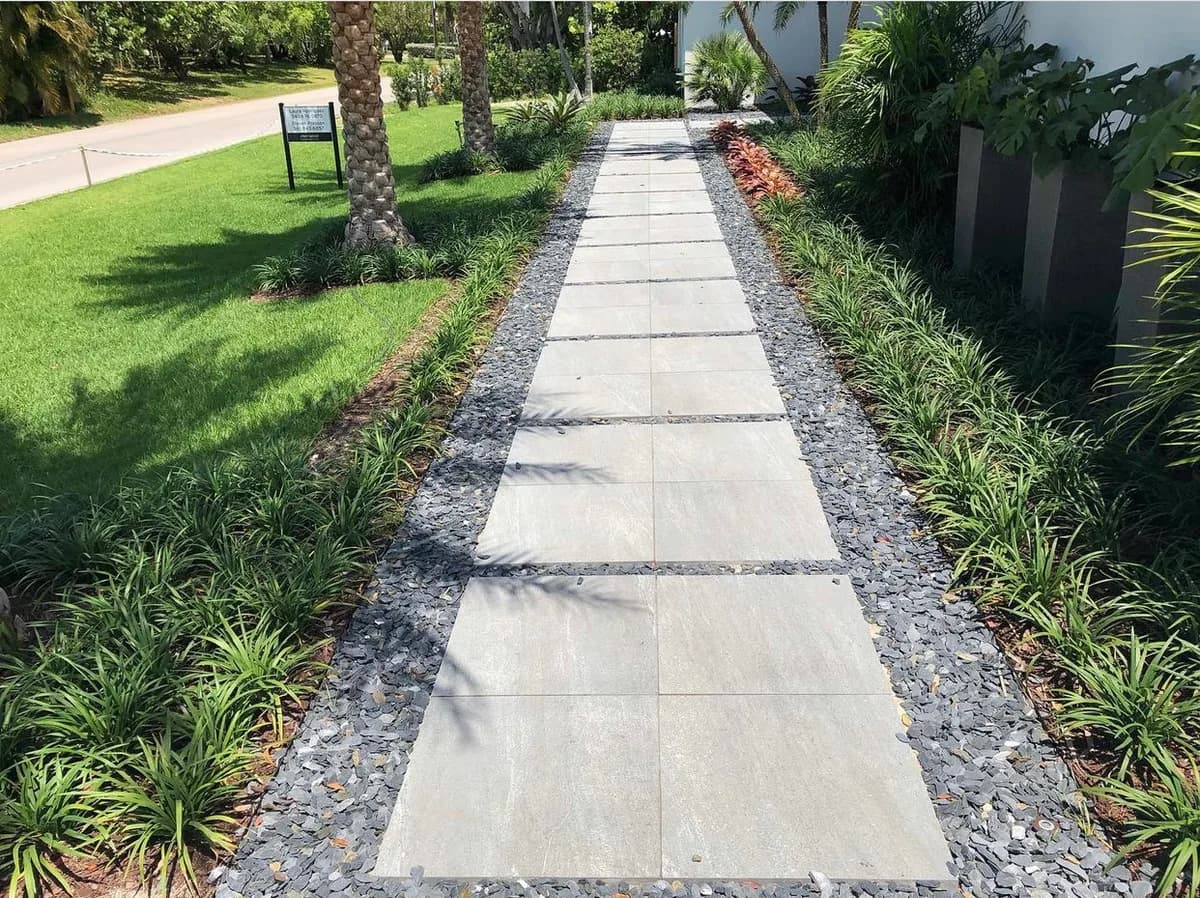
Ten years out, what shows age on a porcelain deck is never the porcelain. It is the joints, the perimeter, and the drainage, which is to say it is the install. Our sandy soil and high water table mean water has to be sent somewhere on purpose, so we hold a one to two percent fall away from the house and the pool coping. A dead-flat deck ponds after every August cell and turns its joint lines into a slow algae farm. Within about five miles of the Gulf we specify epoxy grout instead of cementitious, because chlorides in salt-laden air work on ordinary grout for years before anything becomes visible. And on any bond-set install over an existing slab, every control joint in that concrete gets carried straight up through the porcelain as a soft movement joint. Skip that single detail and the slab's normal seasonal movement finds its own path, which is a crack line running through your slabs. None of that is maintenance. All of it is decided before the first paver lands.
So the honest version of the maintenance answer includes the install. A broom-and-hose routine only stays a broom-and-hose routine when the substrate was flat, the fall was intentional, the joints were specified for a coastal Florida climate, and the movement detailing was respected. We are the only Hardscape.com Certified porcelain paver installer across Sarasota, Manatee, Hillsborough, Orange, Lee and Pasco Counties, and the practical meaning of that credential is not a plaque on a truck. It is that the crew has been trained on how large-format porcelain actually fails, and therefore on how to build a deck that does not hand you a problem in year five. What you should end up with is a surface you stop thinking about entirely: cool underfoot at three in the afternoon in August, the same tone as the day it went down, and yours on the weekends instead of the other way around.
Ten years of upkeep on a 600 sq ft Sarasota pool deck
| Surface | What the routine actually is |
|---|---|
| Porcelain pavers | Weekly soft broom, monthly rinse, mild soap on spills. No sealing, ever. |
| Travertine | Soft wash plus reseal every 1–2 years |
| Concrete pavers | Reseal every 2–3 years, re-sand joints, and the color still fades |
| Stamped or painted concrete | Recoat every 2–3 years, plus crack repair and eventual resurfacing |
Sarasota and Manatee market conditions for a typical 600 sq ft deck. If a sealer has already failed and has to be stripped before recoating, that stripping is an added cycle cost most quotes omit.
Financing Available
See your monthly payment before you decide
Compare real offers from more than twenty lenders through Acorn Finance, our financing partner. It takes about a minute, and checking does not affect your credit score.
Pay the way that suits you: credit and debit cards, bank transfer or check — or finance the project over monthly payments through our partner.
- Offers from 20+ lenders
- Pre-qualify in about 60 seconds
- No impact on your credit score

Financing is provided through Acorn Finance, an independent lending marketplace. EC Paver Solutions is not a lender and does not set rates or terms. Pre-qualification uses a soft credit inquiry and does not affect your credit score; final rates and terms come from the lender and are subject to approval.
Frequently Asked Questions
Do porcelain pavers need to be sealed?+
Can you pressure wash porcelain pavers?+
How do you remove stains from porcelain pavers?+
What is the best cleaner for porcelain pavers?+
Do porcelain pavers get slippery or grow mold in Florida?+
A Deck You Get to Stop Thinking About
We will walk your deck, tell you honestly whether your current surface is worth keeping, and put the porcelain spec in writing — thickness, slip rating, joint product, fall, and movement detailing — so the care routine stays a broom and a hose for the next decade. EC Paver Solutions is the only Hardscape.com Certified porcelain paver installer in Sarasota, Manatee, Hillsborough, Orange, Lee and Pasco Counties. Call (941) 250-4635.

Written by
EC Paver Solutions
EC Paver Solutions delivers premium paver installation across Sarasota, Bradenton, Lakewood Ranch, Tampa, Orlando, and Fort Myers. Hardscape.com Certified — the only certified hardscape contractor across five Florida counties.