

How to Choose a Porcelain Paver Installer in Florida
A Florida license and a million in liability coverage get a contractor onto your list — they do not tell you whether that crew has ever bonded a 24 by 24 porcelain slab onto a lanai slab. Here are the seven questions that do, what a great answer sounds like, and the red-flag version of each.
The Baseline Every Bid Has to Clear First
Start with the floor, not the ceiling. Any paver work in Florida priced above $2,500, or any job that requires a permit, has to be performed under a valid contractor license — and you can verify that yourself in about ninety seconds on the state DBPR license portal instead of taking a business card at face value. Ask for the license number, then ask for a certificate of insurance emailed straight from the agent showing general liability and workers compensation. The liability policy matters if a wet saw throws a chip through a neighbor's slider. The workers compensation policy matters far more, because if an uninsured crew member is hurt on your Lakewood Ranch driveway, that claim can find its way to your homeowners policy. Then ask for the estimate in writing and itemized: material, base depth, setting method, joint product, edge restraint, disposal, each on its own line. A single number scrawled on a quote form is not a price. It is a placeholder that gets renegotiated the morning demolition starts.
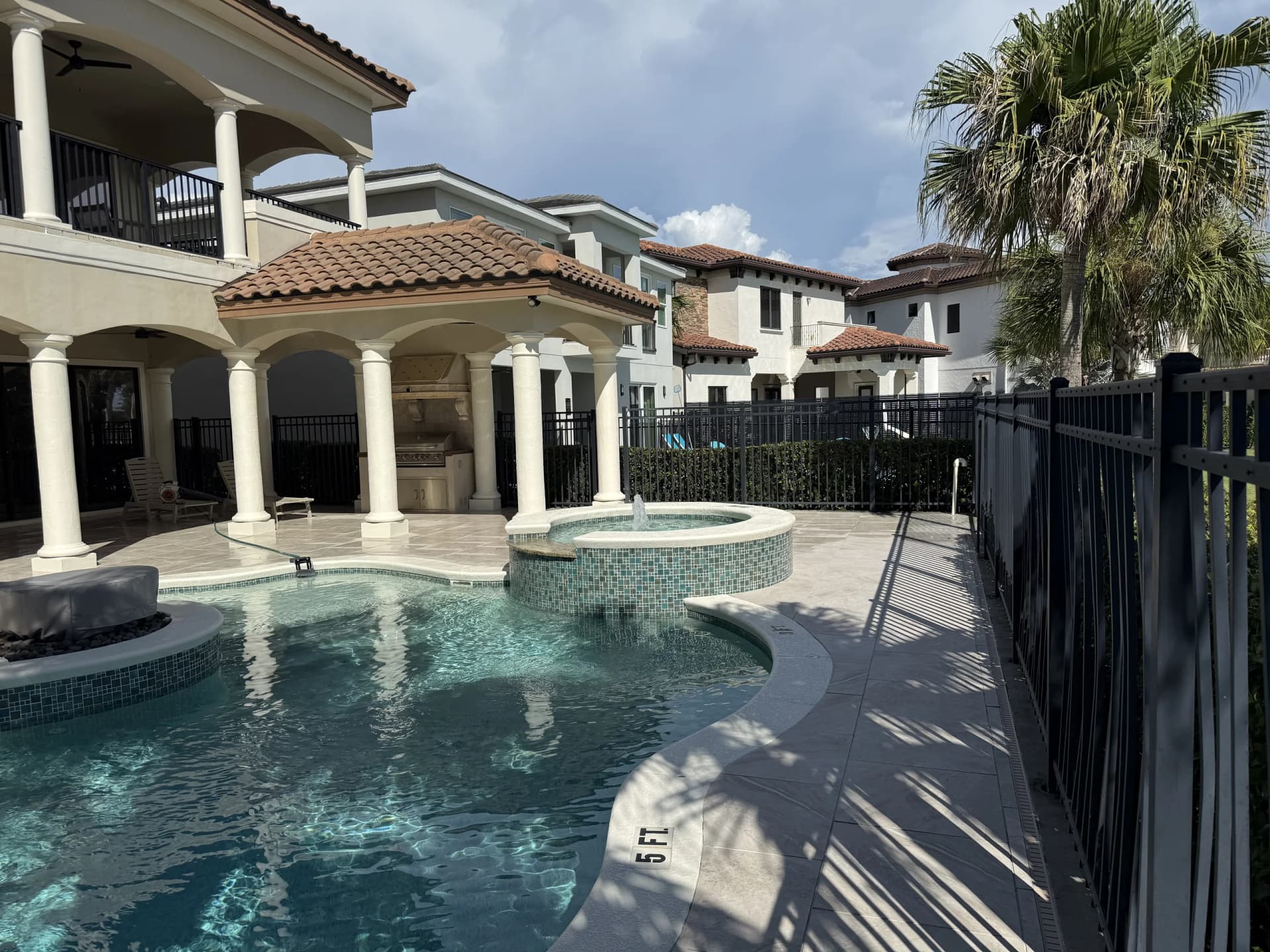
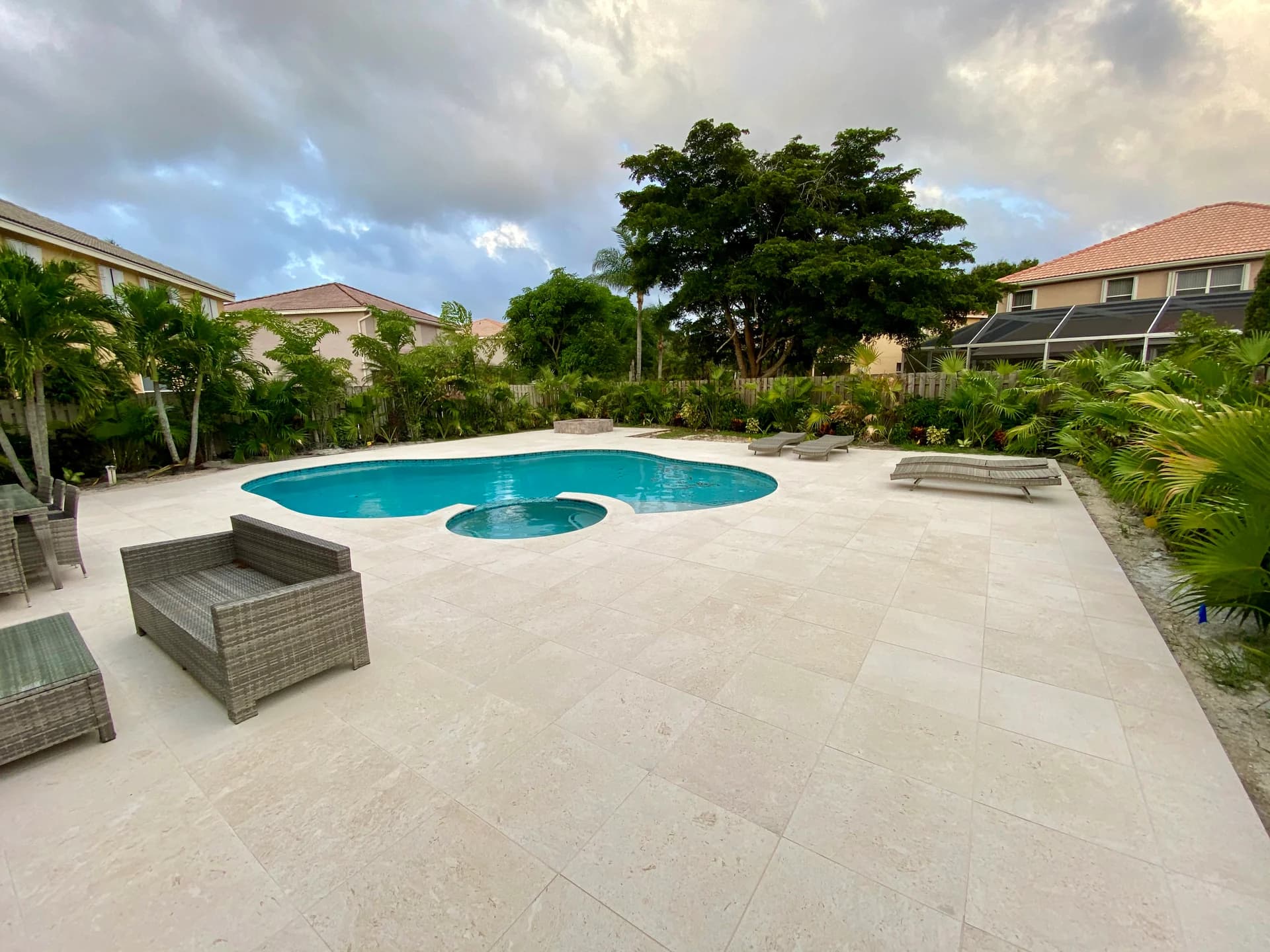
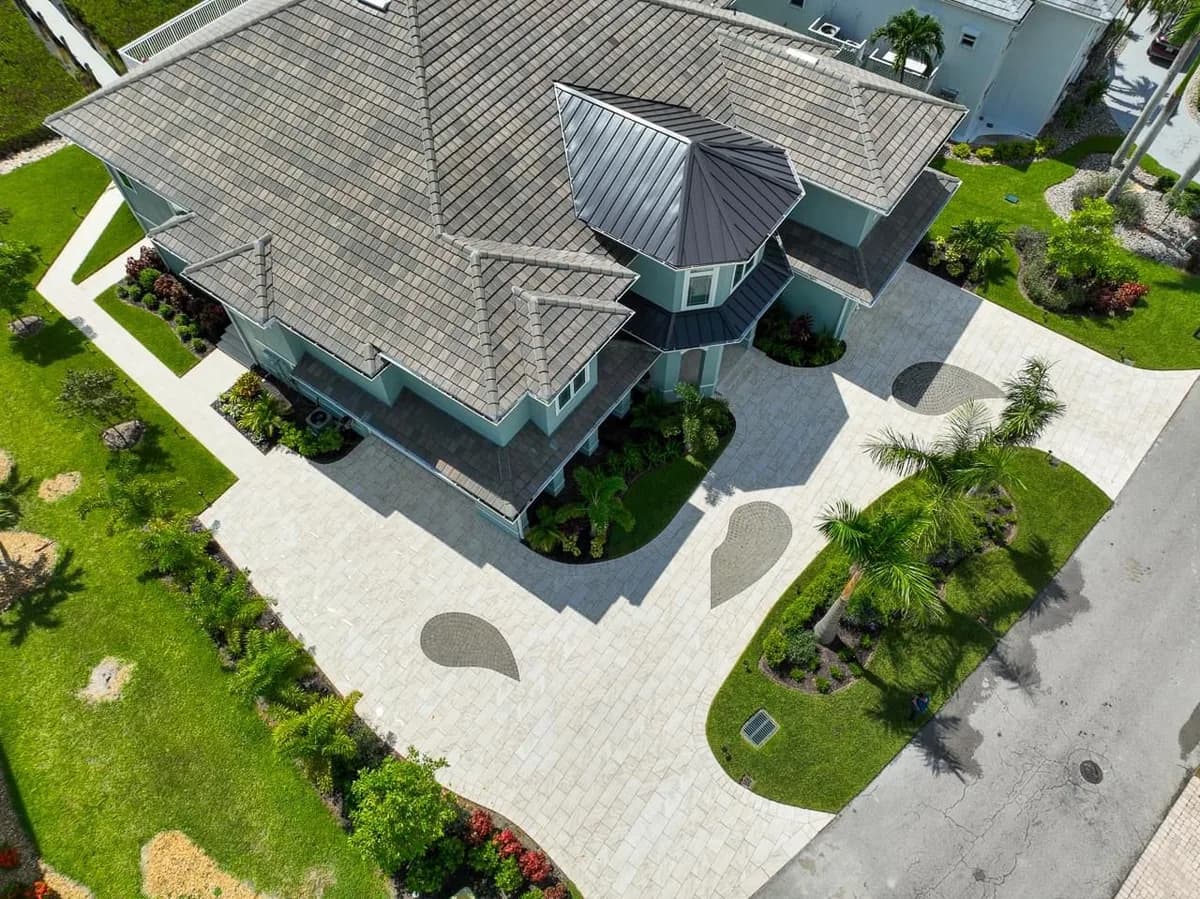
The portfolio question needs one adjustment for porcelain. Every paver company in Sarasota can show you a folder of concrete-paver driveways, and none of that proves anyone on the truck has set a large-format porcelain slab. Ask specifically for porcelain projects, ask when each was installed, and ask to see one that is at least three years old — because porcelain does not fail on install day. It fails in the second summer, at the joints and along the field edges, after the surface has cycled through a hundred afternoons where an unshaded deck swings close to forty degrees between the seven a.m. and two p.m. readings. Ask whether the crew arriving is in-house or subbed out that morning. A subcontracted crew may be excellent, but you cannot check their porcelain history and neither, usually, can the salesperson who quoted you. All of that is the baseline. It makes a company legitimate; it does not make them right for porcelain. The seven questions below are what actually separate them.

Questions 1 to 3: What Happens Before a Single Paver Is Set
Question one: how will you prepare the surface my porcelain sits on? If you are going over an existing lanai or pool deck slab in Palmer Ranch, the right answer walks you through sounding the slab for hollow spots, checking cracks for active movement, mechanically grinding off every trace of old acrylic sealer or cool-deck coating, and bond-setting each paver in an exterior polymer-modified thin-set with full coverage underneath. The phrase you want to hear is full coverage. Roughly a third of outdoor porcelain failures trace back to spot-bonding — five dabs of mortar under a 24 by 24 slab, leaving the middle hollow and the edges ready to chip the first time a chair leg lands hard. The red-flag answer is any version of we will lay it right over what is there, or a shrug about the old sealer. That sealer is a bond breaker. Porcelain has almost no porosity to grip with, so the mortar bond is the entire mechanical connection holding your deck together.
Question two: what happens to my slab's control joints? Concrete has saw-cut joints because concrete moves, and porcelain bonded straight across one will crack in a clean line directly above it, usually inside the first year. The answer you want is that every existing control joint is carried up through the porcelain field as a soft movement joint, with a perimeter joint anywhere the deck meets the house, the pool coping, or a column. The published standard for bonded exterior tile puts movement joints on a regular grid, roughly every eight to twelve feet across the field, and under Florida sun that spacing is a floor rather than a ceiling. Question three: what thickness are you quoting, and why that one? A 2CM paver tests around 13,000 newtons of breaking strength and belongs on pool decks, lanais, patios, and walkways. A 3CM tests as high as 29,672 and is what a driveway or a golf-cart path needs, because a tire pivoting in place is a twisting point load, not a parked weight. An installer who quotes one thickness for every surface has not thought about yours.
Questions 4 to 7: The Details That Decide Year Ten
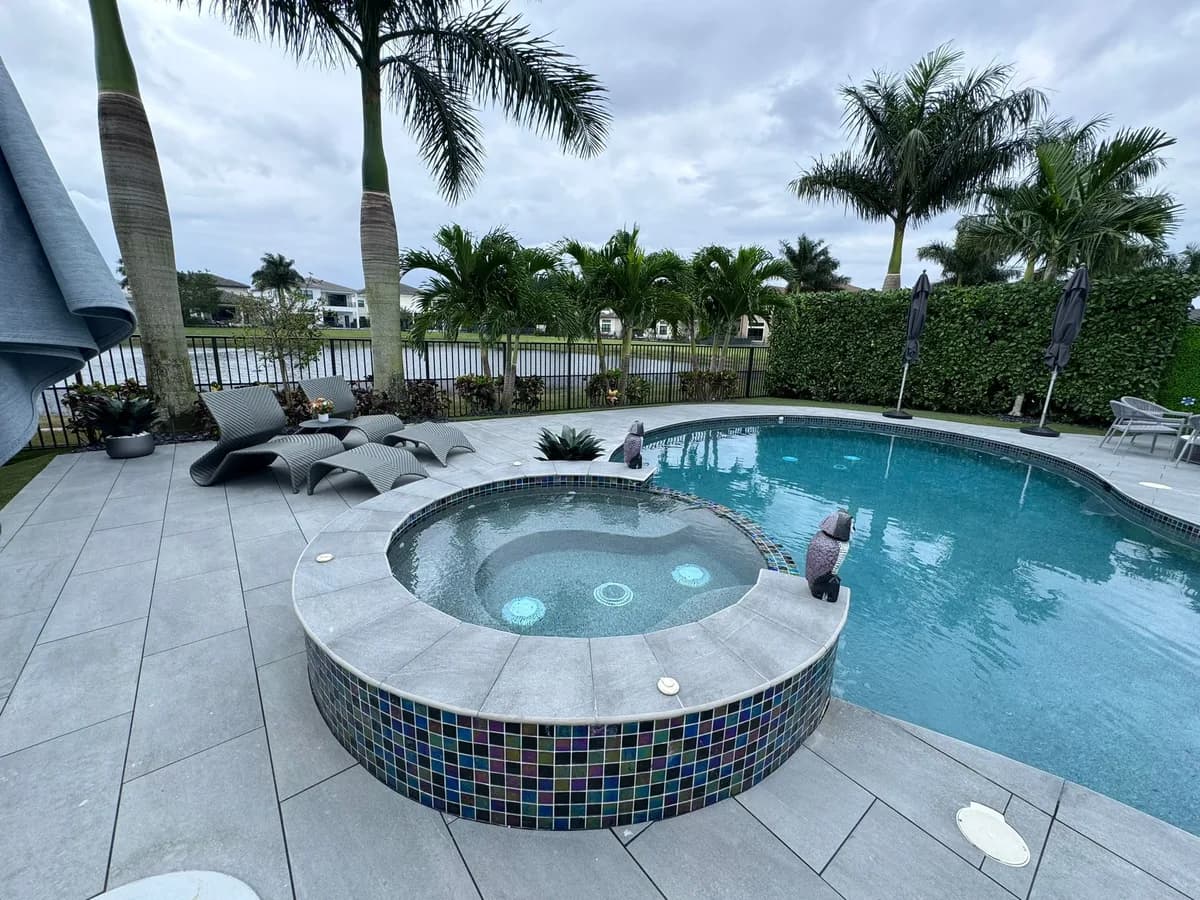
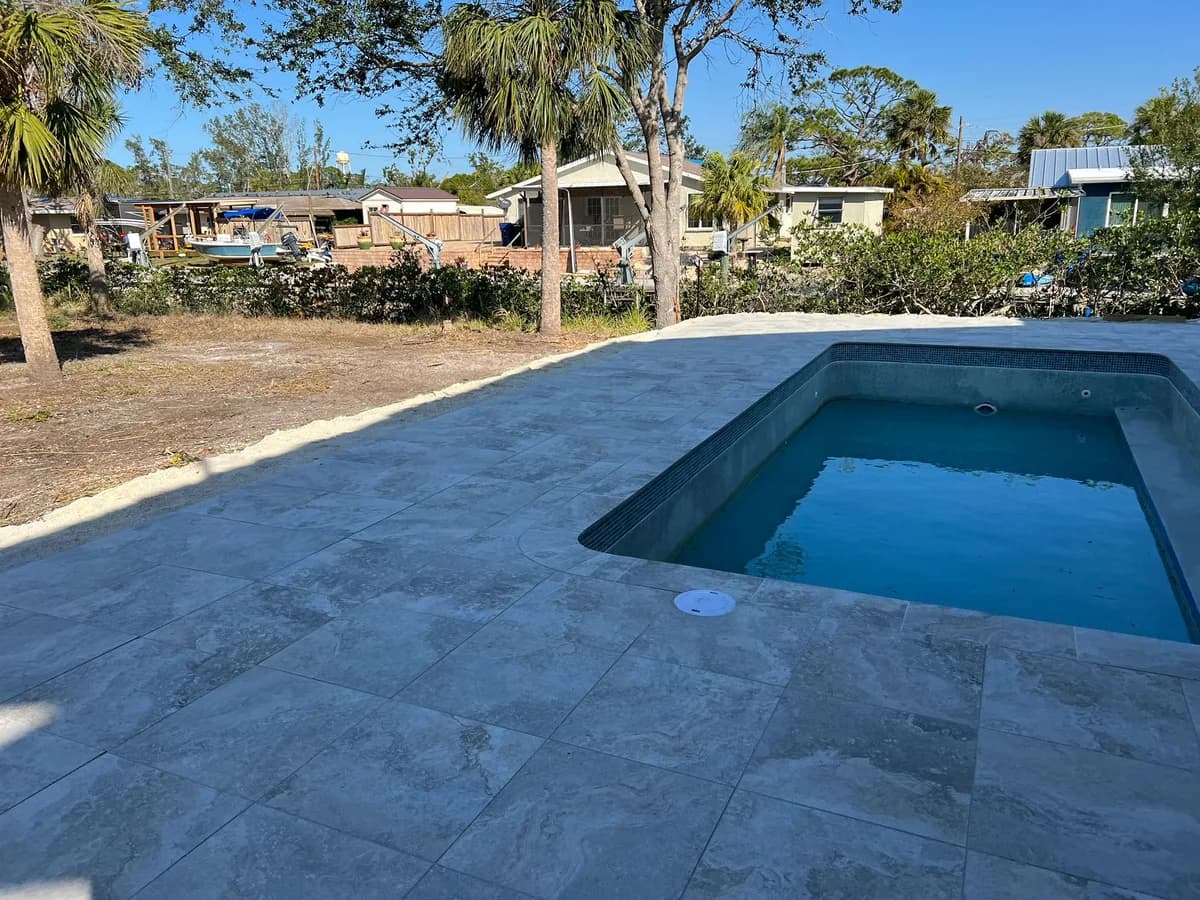
Question four: what slip rating is on the tile you are specifying? Porcelain is rated R9 through R13 under the German DIN 51130 ramp test, and that number is a property of the finish, not of the thickness or the price. For a pool deck, coping, an outdoor shower, or anywhere people walk barefoot and wet, R11 is the answer. A polished R9 marble-look slab looks extraordinary under showroom lighting — the same soft grey veining that reads as honed Carrara — and it is genuinely dangerous around a Siesta Key pool in July. A good installer raises this before you ask and steers you to the textured version of the same collection so you keep the look without the liability. Question five: how do you handle large format? The 2026 direction is oversized, 24 by 24 and up, fewer joint lines, a deck that reads calmer and visually bigger. It is also far less forgiving of a substrate that is merely close to flat.
On layout, the answer should be an offset no greater than about a third of the slab or plank length on any piece over fifteen inches. A traditional fifty percent running bond drops the high center of one slab against the low edge of the next and manufactures lippage out of perfectly flat tile. On leveling, you want to hear about clip-and-wedge systems used across the entire field, not only at the awkward spots. On cutting, you want a wet saw with a rated continuous-rim blade and a crew that has already chipped its share of pieces on someone else's dime. Question six: what goes in the joints, and does that change near the water? Within a few miles of Anna Maria Island or Longboat Key, chloride attacks the joint and the setting bed long before it bothers a vitrified paver, so the honest answer is a marine-grade or epoxy joint compound at roughly thirty to fifty cents per square foot. Question seven: where does the water go? You want about a quarter inch of fall per foot away from the house and a stated plan for the three-inch August afternoon.
Certified Porcelain Training vs. We Also Do Pavers
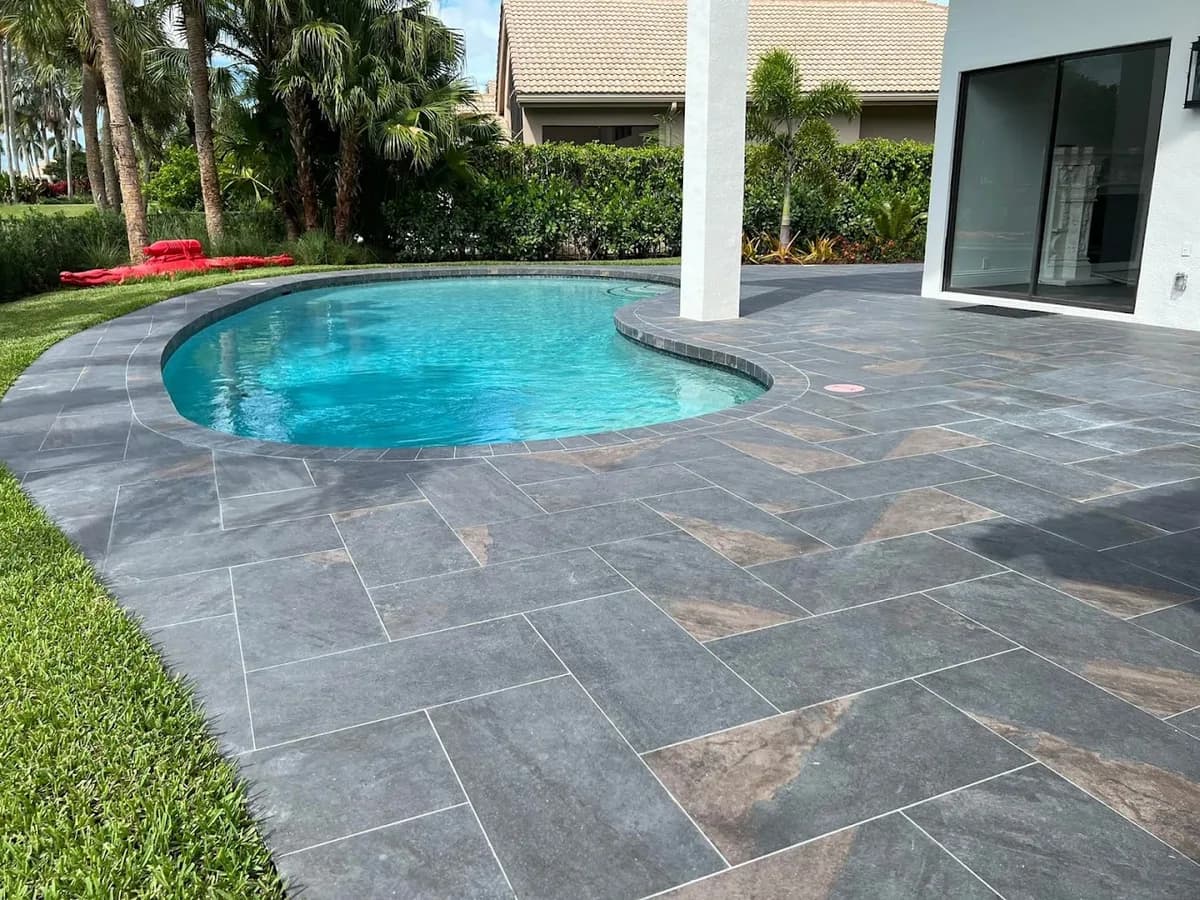
Notice what those seven questions share: not one of them is about pavers in general. Every one is about porcelain specifically, because porcelain fails differently than concrete pavers do. A concrete paver is porous, forgiving, and interlocks with its neighbors, so it tolerates a base that is slightly off and a joint that is slightly wide. A vitrified porcelain slab absorbs under half a percent water, does not interlock at all, and transmits every flaw in the surface below it directly to the face you look at. The habits that make a crew fast and genuinely good at concrete pavers — sand-set tolerances, generous joints, spot-bonding on the rare bonded job — are precisely the habits that crack porcelain. That is why a state license, an ICPI card, and twenty years of beautiful Bradenton driveways are all real credentials that still do not answer the question you are actually asking, which is whether this specific crew knows this specific material.
That gap is what the Hardscape.com Certified Installer credential exists to close. It is manufacturer-run, product-specific training: substrate assessment, bonded installation and full-coverage mortar technique, movement joint detailing, large-format handling and cutting, and thickness by application, taught by the people whose material is going onto your deck. EC Paver Solutions holds it as the only certified installer across Sarasota, Manatee, Hillsborough, Orange, Lee and Pasco Counties, which is less a boast than an explanation for why we keep getting called to finish other crews' porcelain. Here is the practical test, though, and it does not require you to trust a word of that. Ask any contractor question one. If they answer inside thirty seconds with specifics — sealer removal, full coverage, joints carried up — you are talking to someone who has done this before. If the answer is a price and a start date, you also have your information. Get three bids and let the answers do the sorting, not the numbers.
Financing Available
See your monthly payment before you decide
Compare real offers from more than twenty lenders through Acorn Finance, our financing partner. It takes about a minute, and checking does not affect your credit score.
Pay the way that suits you: credit and debit cards, bank transfer or check — or finance the project over monthly payments through our partner.
- Offers from 20+ lenders
- Pre-qualify in about 60 seconds
- No impact on your credit score

Financing is provided through Acorn Finance, an independent lending marketplace. EC Paver Solutions is not a lender and does not set rates or terms. Pre-qualification uses a soft credit inquiry and does not affect your credit score; final rates and terms come from the lender and are subject to approval.
Frequently Asked Questions
How do I know if a paver contractor is licensed in Florida?+
What questions should I ask a paver contractor before hiring?+
Can any paver company install porcelain pavers?+
How much does porcelain paver installation cost in Sarasota?+
Do porcelain pavers need to be installed over concrete?+
Ask Us All Seven. We Will Answer On Site.
Walk your deck with us and we will answer every question on this list in front of you — substrate, control joints, thickness, slip rating, joint product, and drainage — then put the whole specification in writing before you owe anything. EC Paver Solutions is the only Hardscape.com Certified porcelain paver installer in Sarasota, Manatee, Hillsborough, Orange, Lee and Pasco Counties. Reach us at (941) 250-4635.

Written by
EC Paver Solutions
EC Paver Solutions delivers premium paver installation across Sarasota, Bradenton, Lakewood Ranch, Tampa, Orlando, and Fort Myers. Hardscape.com Certified — the only certified hardscape contractor across five Florida counties.