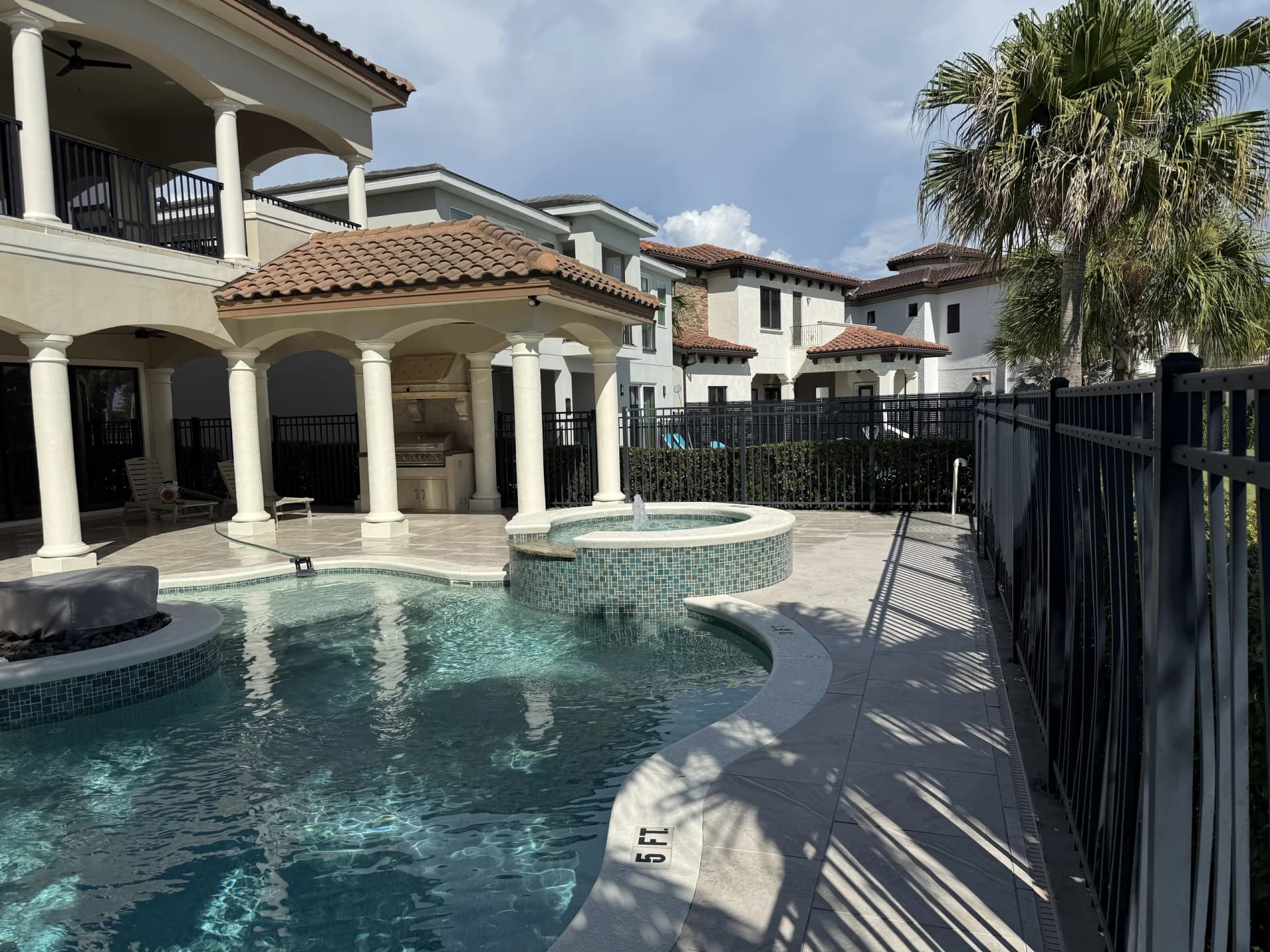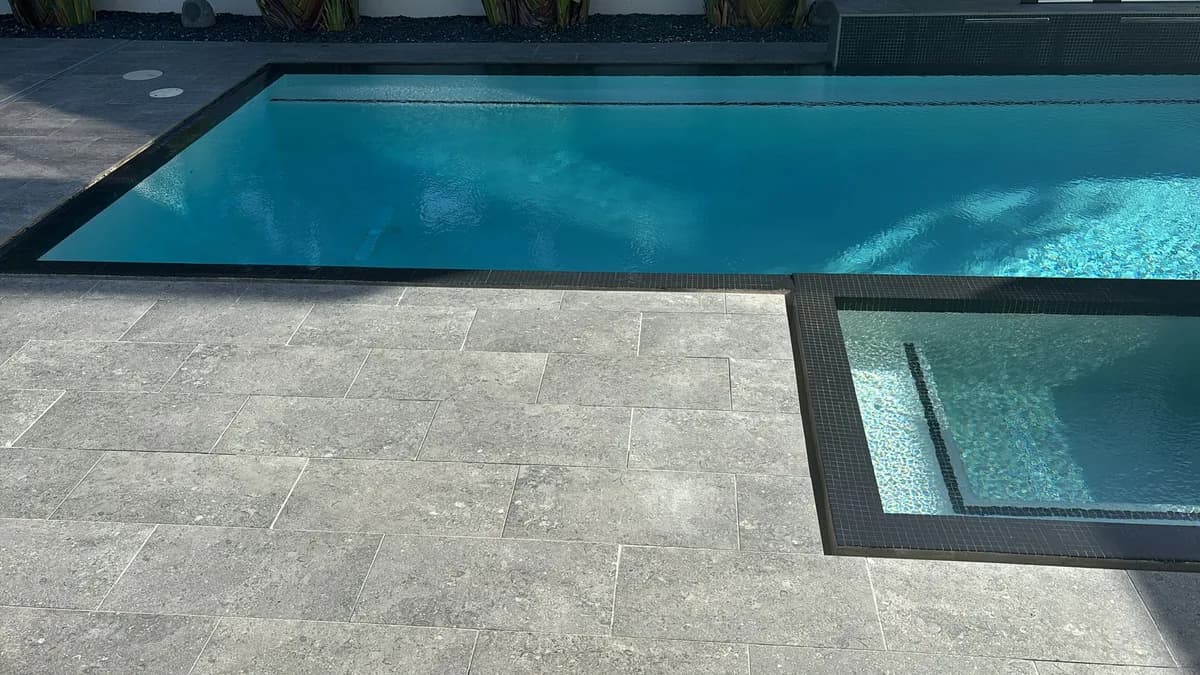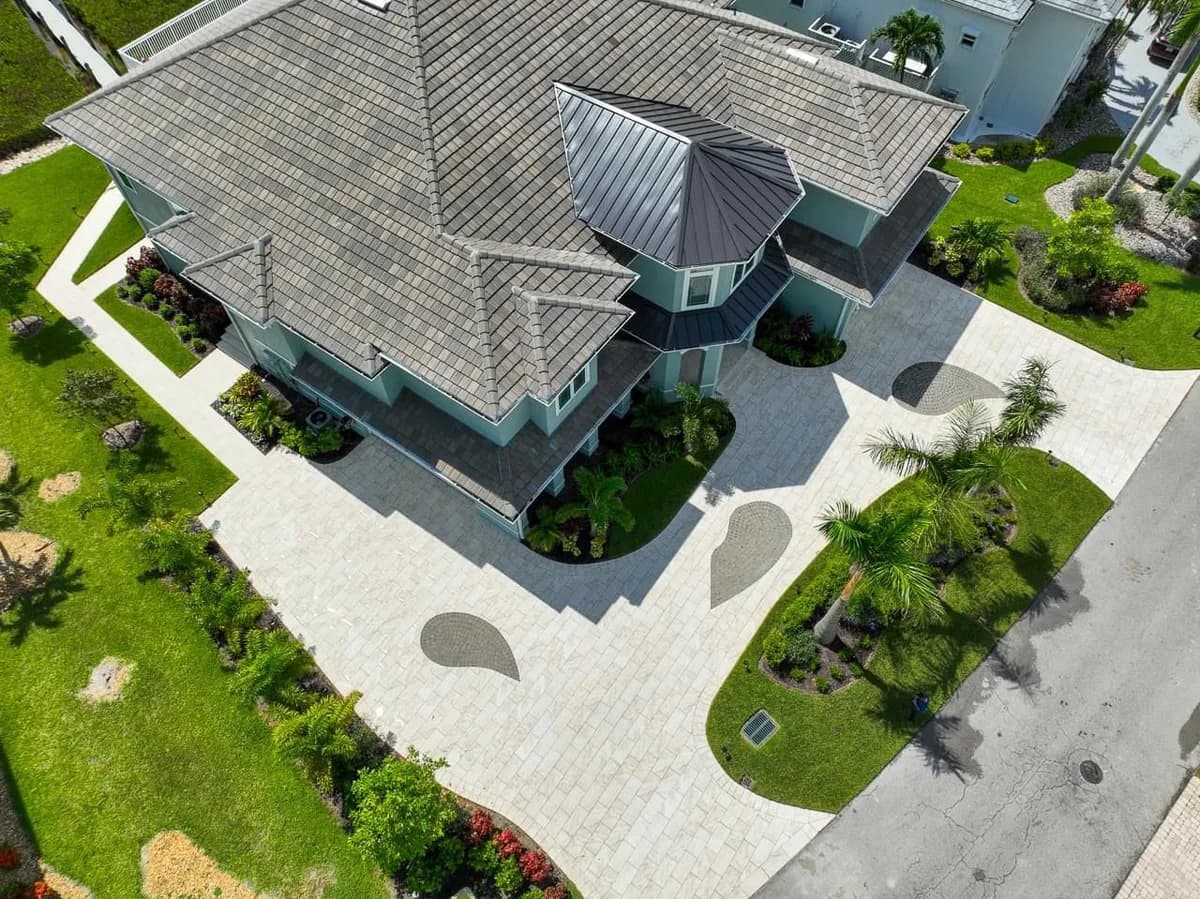


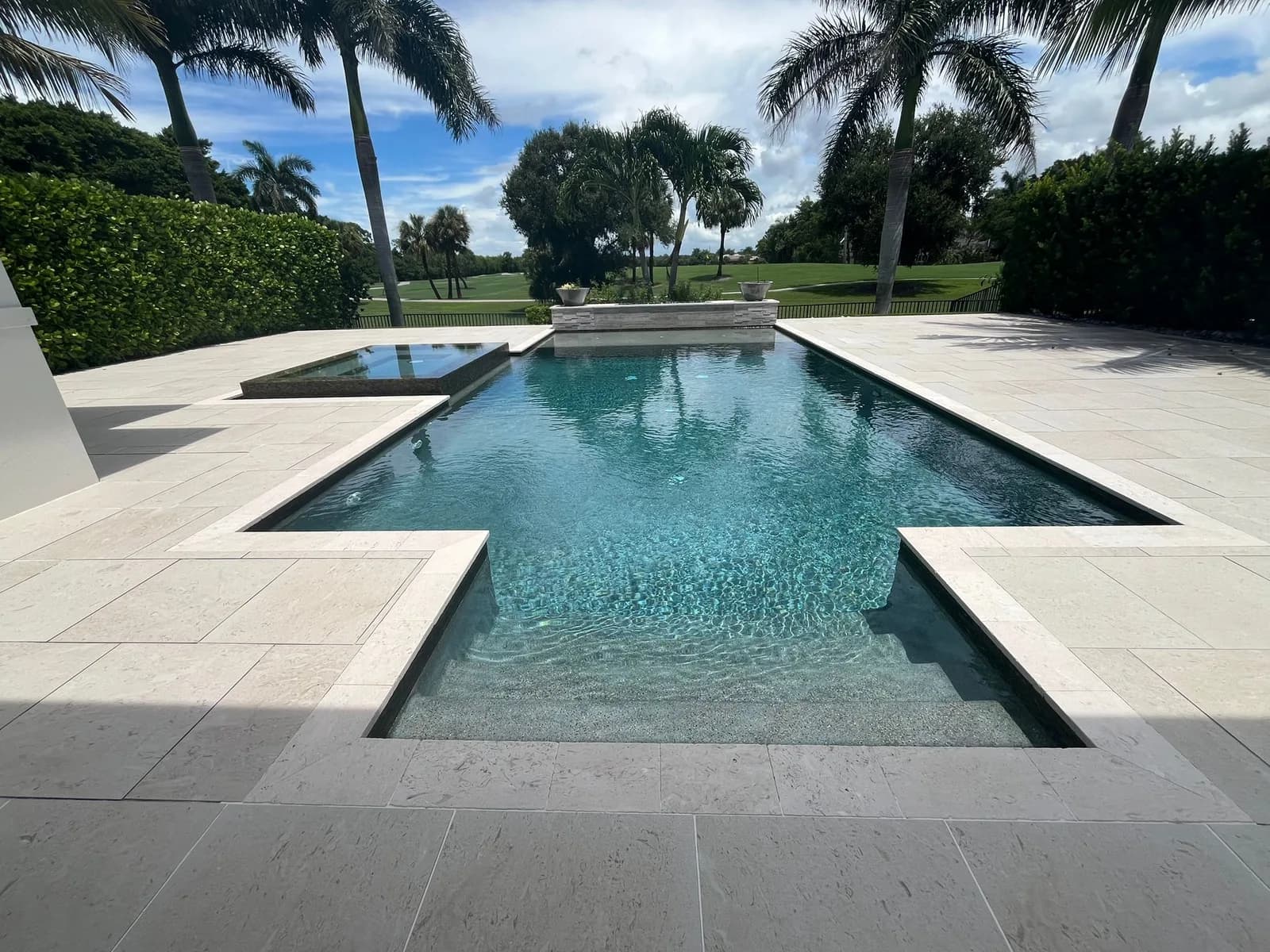
Filled vs. Unfilled Travertine for Florida Pool Decks
Filled and unfilled travertine come from the same quarries and cost about the same to install, but in Florida rain, humidity and salt-pool splash they age very differently. Here is what the open voids really do on a Sarasota pool deck, how often each one needs sealing, and when unfilled still makes sense.
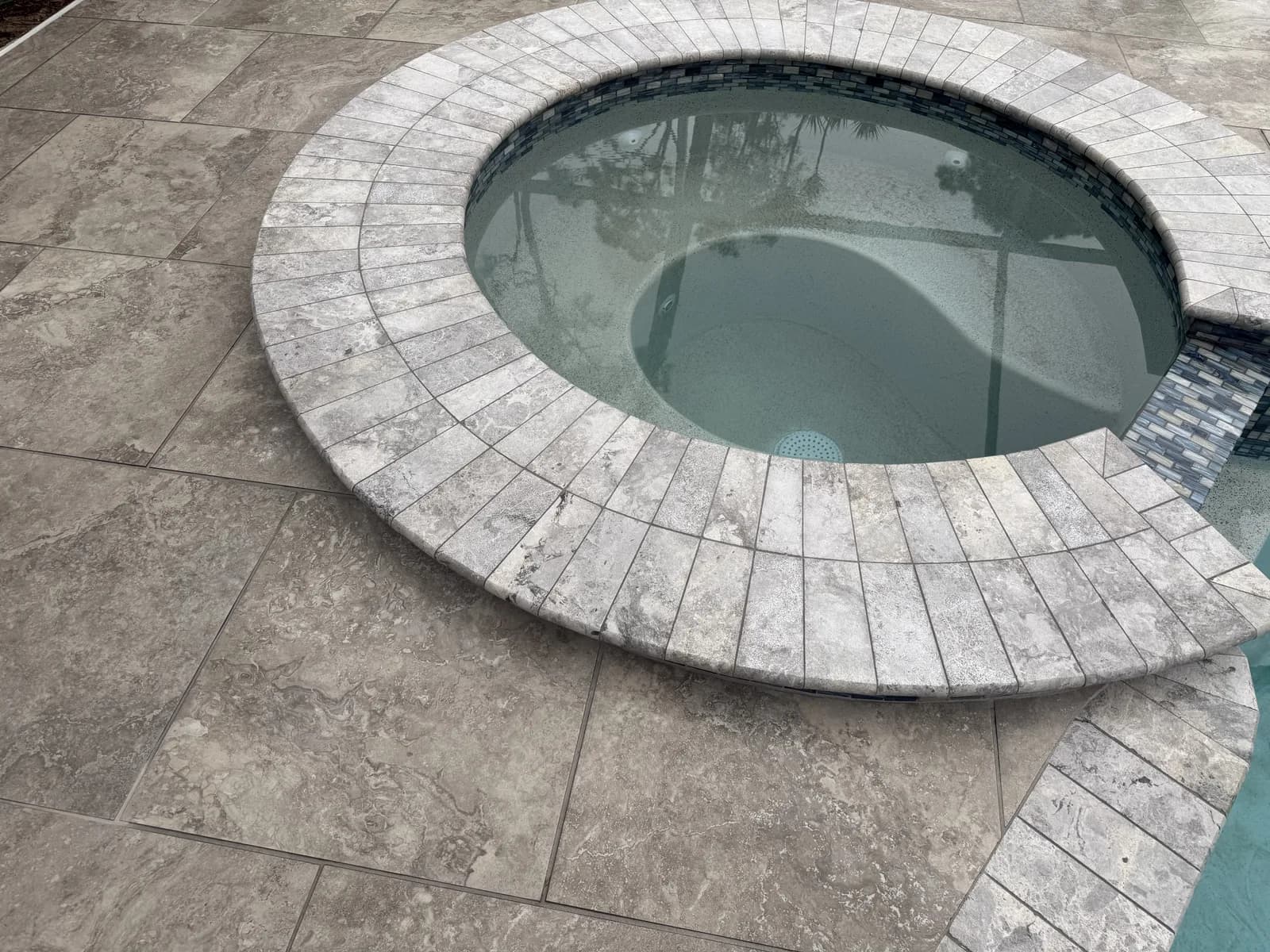
What "Filled" Actually Means, and Why the Holes Exist
Every travertine paver starts as limestone deposited by mineral hot springs, and as that stone formed, carbon dioxide bubbled through it and left the natural pits and channels that give travertine its character. What happens next at the factory decides which product you are buying. Filled travertine has those voids packed with a cementitious or resin filler, usually tinted to match, and then the face is honed or brushed, so the paver reads as mostly solid with soft cloudy patches where the fill sits. Unfilled travertine skips that step and is usually tumbled, leaving rounded edges and an open, pitted Old World face. Both often come out of the same Turkish quarries, in the same Ivory, Walnut, Noce and Silver colorways, and in the same 3cm thickness we use for pool decks. Same stone, same density, same heat behavior underfoot. The only real difference is whether the holes are open to the weather or closed before the stone reaches your Lakewood Ranch backyard.
In a dry climate that difference is mostly cosmetic. In Florida it becomes a maintenance question. Each open void is a tiny cup, and a Sarasota pool deck refills thousands of them every afternoon from June through September when the summer storms roll through. Sunscreen, oak pollen and grass clippings settle into the cups, the humidity never lets them fully dry, and within one rainy season you start seeing dark algae freckles across the deck. Add a saltwater chlorinator, now standard in new Manatee and Sarasota pools, and the chemistry gets harder on the stone. Splash water evaporates in the voids and leaves chloride behind, and as those salt crystals grow and dissolve with every wet-dry cycle, they work on the thin rims of stone around each pit. Those rims are the weakest part of the paver, so micro-fracturing starts there and the pits slowly widen. That is why we recommend filled travertine for roughly 95 percent of the residential pool decks we build.
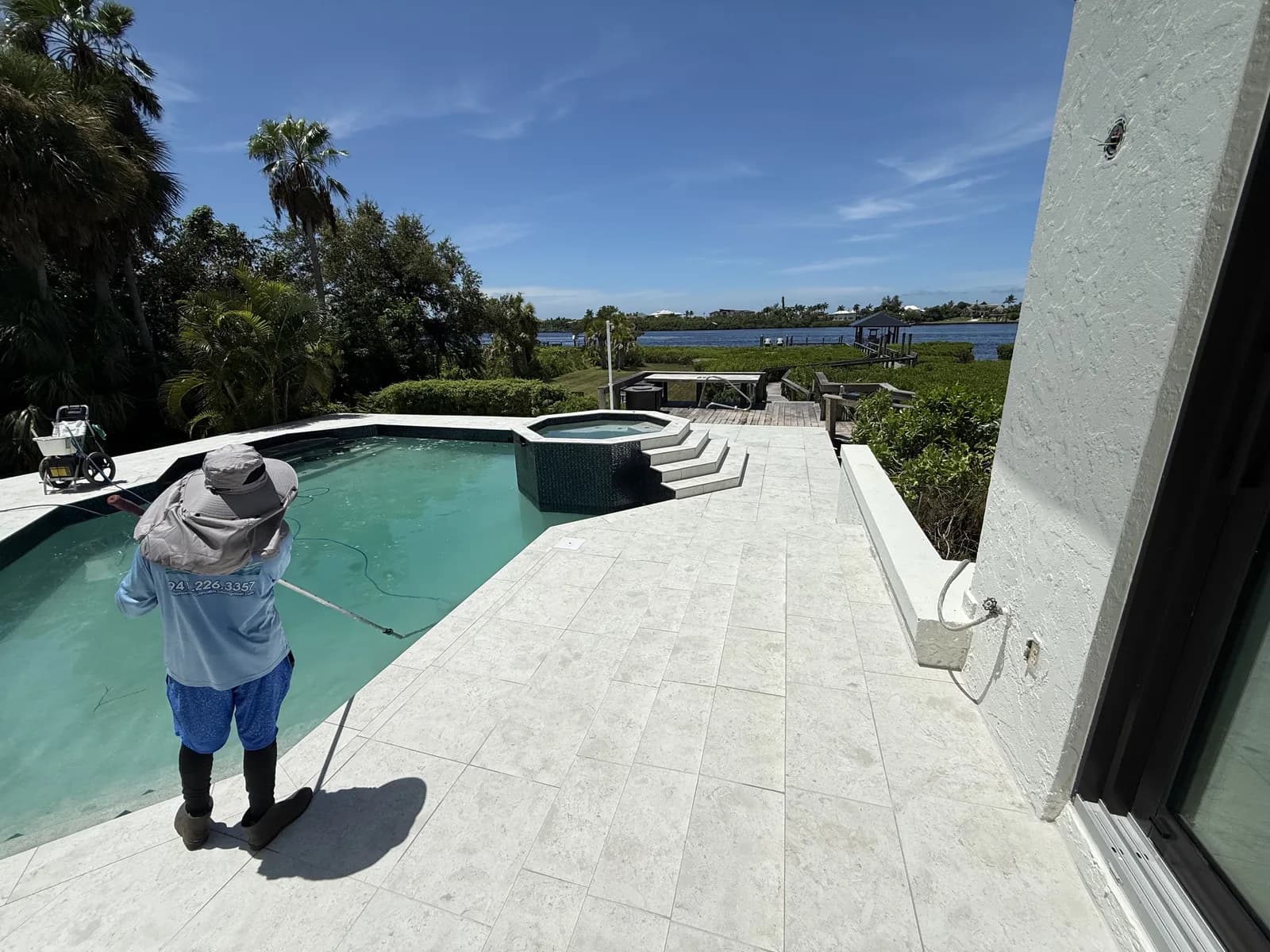
The Real Maintenance Calendar: 12 Months vs. 3 Years
Here is the honest maintenance picture for each option, because this is where the choice really lives. Unfilled travertine around a Florida pool needs a penetrating sealer every 12 to 18 months to keep water, salt and organic matter out of the voids, and before every reseal the pits have to be pressure-washed and allowed to dry for a day or two, which in a wet August can mean waiting a week for a dry window. Filled travertine on the same deck typically wants resealing every two to three years, and closer to every one to two years on a waterfront lot in west Bradenton or on Siesta Key, where salt air settles on the stone every day. A professional clean-and-seal in our market runs roughly $1.50 to $3 per square foot, so an 800-square-foot pool deck costs $1,200 to $2,400 per cycle. Over ten years, unfilled stone can need twice as many of those cycles as filled stone.
Day to day, the gap is just as real. A filled deck rinses clean with a garden hose and a soft broom, and a spill of red wine or sunscreen usually lifts with warm water and a pH-neutral stone cleaner. On an unfilled deck, that same spill runs down into the pits, and getting it out means a stiff nylon brush and a lot of patience. Never use acids, vinegar or bleach-heavy cleaners on either one; travertine is calcium carbonate, and acid etches the face in seconds and dulls the fill. Black algae in the voids is the most common call we get from owners of unfilled decks in Palmer Ranch and Venice, and once it roots deep in a pit, surface cleaning only bleaches the top. If you love the look of tumbled, open stone, go in knowing that keeping it handsome is a twice-a-year chore rather than an every-few-years one, and budget the time and money for that from day one.
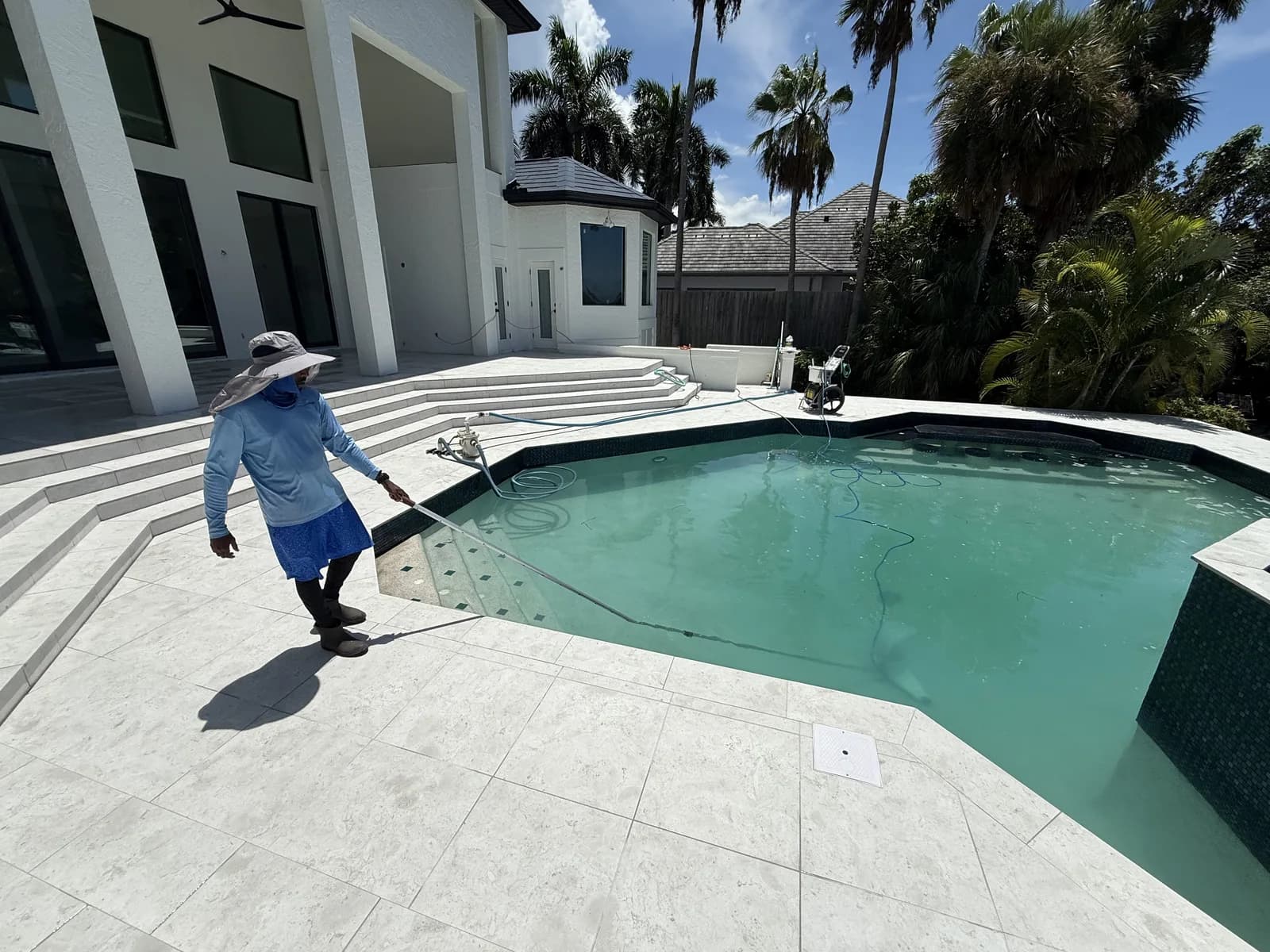
Where Unfilled Wins, and the Truth About Fill Popping Out
Unfilled travertine is not the wrong answer everywhere, and pretending otherwise would not be honest. The open pits do give a wet foot a little more texture to grip, and the tumbled, timeworn surface suits Mediterranean and Old Florida architecture, the kind of courtyard you see in older Venice and Sarasota neighborhoods. Away from the pool, on a covered front entry, a shaded garden path or a vertical wall cladding where water drains straight off, the void problem shrinks dramatically. We also like unfilled stone for a deliberate rustic look on raised, breezy patios where the sun dries the pits quickly after each storm. Where we push back is the wet band around the coping and the splash zone of a salt pool, because that is exactly where open voids, standing water and chloride combine. A filled stone with a tumbled or brushed finish gets you most of that grip and most of that character with far less upkeep.
The fair complaint about filled travertine is that the fill can come out. It is true: factory cement fill is more porous and more brittle than the stone around it, and on many Tampa Bay pool decks older than five years you will find a scatter of small pits where fill has cracked and popped loose. Those empty pits then behave exactly like unfilled voids, collecting dirt and turning dark. The fix is not to give up on filled stone but to manage it. We inspect for loose fill at handover, and at each reseal visit we refill any open pits with a color-matched epoxy or polyester stone filler, which bonds harder and tolerates pool chemistry and heat movement better than the original cement. A few dozen pits on an 800-square-foot deck is usually a one-afternoon touch-up costing a few hundred dollars, and it resets the surface before algae has a chance to move in.
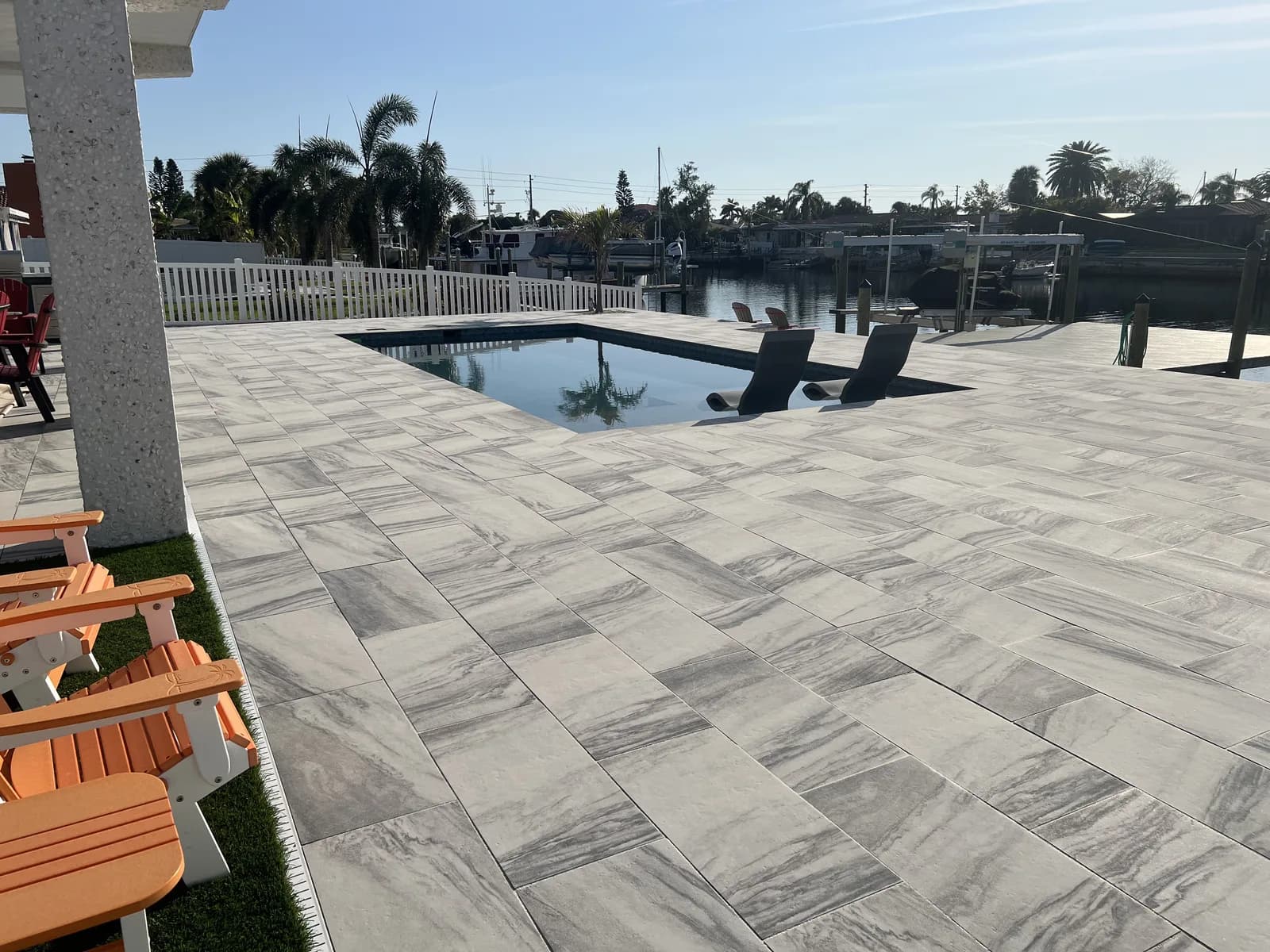
Installation Details That Decide How Either One Ages
Whichever stone you choose, what sits under it decides whether it stays flat. Most travertine pool decks in our area are 3cm pavers sand-set over a compacted crushed-limerock base, built in three-inch lifts over geotextile fabric so our sandy, high-water-table soil cannot migrate up into the base during a summer downpour. Around the coping we lock the perimeter with a concrete restraint so the field cannot creep toward the water, and we pitch the deck at roughly an eighth to a quarter inch per foot away from the pool so storms clear fast instead of sitting in the joints. On a sound existing slab, a mortar-set install with full coverage is the other route. In Sarasota, Bradenton and Tampa, budget roughly $20 to $28 per square foot installed for filled travertine and about the same for unfilled; the stone price difference is small next to labor and base.
If you love the travertine look but not the reseal calendar, there is a third option worth seeing in person. Travertine-look porcelain, such as Belgard's Travertini and the travertine looks in the Hardscape.com porcelain range, reproduces the soft Ivory and Walnut patterning and even the shadow of a filled pit, but it is fired to absorb less than half a percent of water, so there is nothing to seal and no fill to lose. On a salt pool on Anna Maria Island, that removes the entire maintenance problem this article is about. It runs about $22 to $32 per square foot installed, needs an R11 textured finish beside the water, and demands a dead-flat substrate, which is the product-specific discipline our Hardscape.com certification covers. We install all three, so we will set filled, unfilled and porcelain samples side by side on your deck and let you feel each one barefoot in the afternoon sun.
Filled vs. unfilled travertine vs. travertine-look porcelain — Sarasota and Tampa Bay pool decks, 2026
| What matters | Filled travertine | Unfilled travertine | Travertine-look porcelain |
|---|---|---|---|
| Installed cost | $20–$28 / sq ft | $20–$27 / sq ft | $22–$32 / sq ft |
| Reseal interval (Florida pool) | Every 2–3 years (1–2 coastal) | Every 12–18 months | Never required |
| Reseal cycles over 10 years | About 3–5 | About 6–8 | None |
| Clean-and-seal per cycle (800 sq ft) | $1,200–$2,400 | $1,200–$2,400 plus extra void cleaning | $0 |
| Algae in voids | Rare; only where fill has popped | Common after one rainy season | None — non-porous |
| Wet grip | Good with tumbled or brushed finish | Very good | Very good with R11 finish |
| Best fit | Most residential pool decks | Shaded, dry or covered areas; rustic looks | Salt pools, coastal homes, zero upkeep |
Sarasota, Bradenton, Lakewood Ranch and Tampa Bay pricing for a typical 600–900 sq ft pool deck, 3cm pavers sand-set over a compacted limerock base, material and installation. Demolition, coping replacement and waterfront access add cost; porcelain bond-set over a sound slab lands at the low end of its range. Sealing costs assume a professional clean-and-seal at $1.50–$3 per sq ft. Every number goes in writing after we measure in person.
Financing Available
See your monthly payment before you decide
Compare real offers from more than twenty lenders through Acorn Finance, our financing partner. It takes about a minute, and checking does not affect your credit score.
Pay the way that suits you: credit and debit cards, bank transfer or check — or finance the project over monthly payments through our partner.
- Offers from 20+ lenders
- Pre-qualify in about 60 seconds
- No impact on your credit score

Financing is provided through Acorn Finance, an independent lending marketplace. EC Paver Solutions is not a lender and does not set rates or terms. Pre-qualification uses a soft credit inquiry and does not affect your credit score; final rates and terms come from the lender and are subject to approval.
Frequently Asked Questions
Is filled or unfilled travertine better for a pool deck?+
Does filled travertine need to be sealed?+
Is unfilled travertine slippery when wet?+
Why is my filled travertine getting holes?+
How much does a travertine pool deck cost in Florida?+
Compare Filled, Unfilled and Porcelain on Your Own Deck
Choosing between filled and unfilled travertine is easier when you can see both wet, in your own light, next to your pool. We will bring filled, unfilled and travertine-look porcelain samples to your home in Sarasota, Bradenton, Lakewood Ranch, Tampa, Orlando or Fort Myers, check your base and drainage, and leave a written, itemized quote with an honest maintenance schedule for each option. Call (941) 250-4635 to book it.

Written by
EC Paver Solutions
EC Paver Solutions delivers premium paver installation across Sarasota, Bradenton, Lakewood Ranch, Tampa, Orlando, and Fort Myers. Hardscape.com Certified — the only certified hardscape contractor across five Florida counties.