

Artificial Turf vs. Natural Grass in Florida: 10-Year Cost
Artificial turf costs several times more than sod to install, but St. Augustine sends a bill every year for mowing, water, fertilizer, pest control and re-sodding. Here is how the two compare over ten years in a Florida yard, when turf usually breaks even, and where grass is still the smarter call.
The Honest Starting Point: Turf Costs More on Day One
Every turf-versus-grass conversation we have in Lakewood Ranch or Palmer Ranch starts in the same place, and we would rather say it first than have you discover it on the quote: artificial turf costs several times more to install than new sod. Sod is a pallet of St. Augustine rolled onto graded soil in an afternoon. A turf lawn built to last in Florida is closer to a hardscape project. We excavate several inches of native sand, lay geotextile so the soil cannot pump up into the base, compact a free-draining crushed aggregate base, set a contained edge, then roll out perforated turf, seam it and brush in the infill. That labor and base material are most of the difference, and no honest comparison hides it. If someone shows you a turf number that sits close to sod, ask exactly what is going under it.
So the real question is not which one is cheaper today. It is which one is cheaper to own, and when the two lines cross. Natural grass in Florida works like a subscription: it bills you every week for mowing, every month for irrigation water, several times a year for fertilizer and pest control, and every few years for replacing the patches that chinch bugs, drought or shade took out. Turf cancels most of that subscription, though not all of it, and it brings a few costs of its own: periodic cleaning, infill top-ups and a replacement somewhere around year ten to fifteen. This guide walks through each line the way we do on a site visit, without dollar figures, because your yard size, shade and water bill change the math more than any average could. What we can give you is the shape of it, and how many years it usually takes before turf pays back its head start.
The Recurring Bill Grass Sends Every Year
St. Augustine, the grass under most Sarasota and Manatee homes, is beautiful when it is happy and demanding when it is not. Through the growing season, roughly April to October here, it wants mowing every week, irrigation of about three-quarters of an inch once or twice a week per UF/IFAS guidance, fertilizer on a schedule and a constant eye out for southern chinch bugs. Chinch bugs thrive in exactly the hot, dry patches a Florida summer creates, especially where sprinkler heads do not overlap, and a bad outbreak can brown out whole sections in a couple of weeks. Add weeds, fungus during the rainy months, and the shade under oaks and lanai cages where St. Augustine thins out, and most homeowners end up paying a lawn service, buying treatments and re-sodding patches on a recurring cycle.
Water is the line people underestimate. Household irrigation accounts for about a fifth of all water use across the Southwest Florida Water Management District, and in 2026 the district placed our region under Phase III extreme water-shortage restrictions that limited when and how often lawns could be watered. A lawn that cannot get enough water gets stressed, a stressed lawn invites chinch bugs, and a chinch-bug lawn gets re-sodded. That cycle drives the long-run cost of grass in Florida far more than the original sod does. If you already run a low-input lawn, mow it yourself and accept some brown in May, your yearly bill is small and turf will take a long time to pay back. If you pay for full-service lawn care, irrigation and pest control, the recurring bill is substantial, and that is exactly the bill turf replaces.
What Turf Still Asks of You, and Its Real Downside
Turf is low maintenance, not no maintenance, and UF/IFAS makes the fair point that synthetic upkeep can exceed a deliberately low-input natural lawn. In a Florida yard that means blowing off leaves and oak debris, rinsing pet areas, brushing the fibers upright a few times a year so busy lanes do not mat down, and topping up infill as it migrates. Pet lawns also need an enzyme cleaner and a zeolite topdressing to keep odor down. None of it is weekly and none of it depends on watering restrictions, but it is real time or a real service call. The other line is lifespan. Florida UV is relentless, and a quality turf typically gives around ten to fifteen years before the fibers fade and thin enough to replace. The good news is that the base underneath can usually stay, so the second lawn is far less work than the first.
Then there is heat, the downside we put on the table at every estimate. On a clear July afternoon, turf in full sun can read 140 to 160F, and UF/IFAS and WUSF reporting puts it roughly 40 degrees hotter than natural grass in the same sun. Grass cools itself by transpiring; plastic cannot. That does not make turf wrong for Florida, but it changes where it belongs. We steer it toward shaded side yards, dog runs, spots under trees or screen cages where St. Augustine refuses to grow, and the joints between pavers, and away from the open western exposure where kids play barefoot at 3pm. Cool infill, a lighter blade blend and smart placement narrow the gap considerably. Anyone who tells you turf is as cool as grass in August is selling, not installing.
The Break-Even in Years, and Who Should Make the Switch
Put the two sides together and the break-even usually lands somewhere around year five to eight for a Florida homeowner who pays for full-service lawn care, irrigation and pest control, and re-sods damaged areas every few years. After that point, every year the turf keeps performing is money the grass would have taken. For a homeowner who mows a small, low-input lawn themselves, the payback can stretch close to the life of the turf itself, and grass may simply be the better value. The variables that move the date most are the size of the area, how much of your current lawn bill is service versus do-it-yourself, how often you re-sod, and whether the spot is shaded, which kills grass but keeps turf cool. Small, hard-to-grow spaces pay back fastest; a big, sunny lawn pays back slowest.
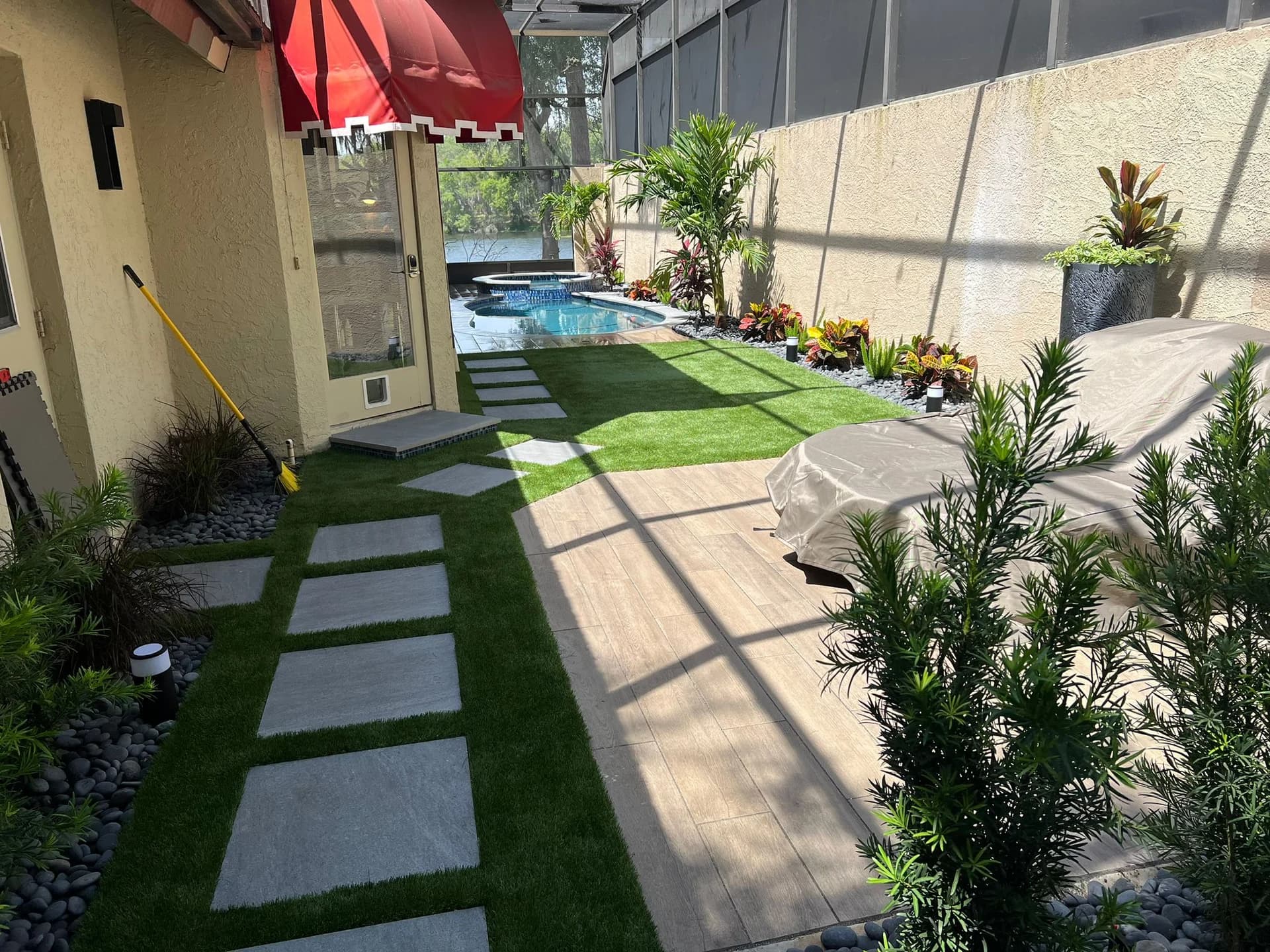
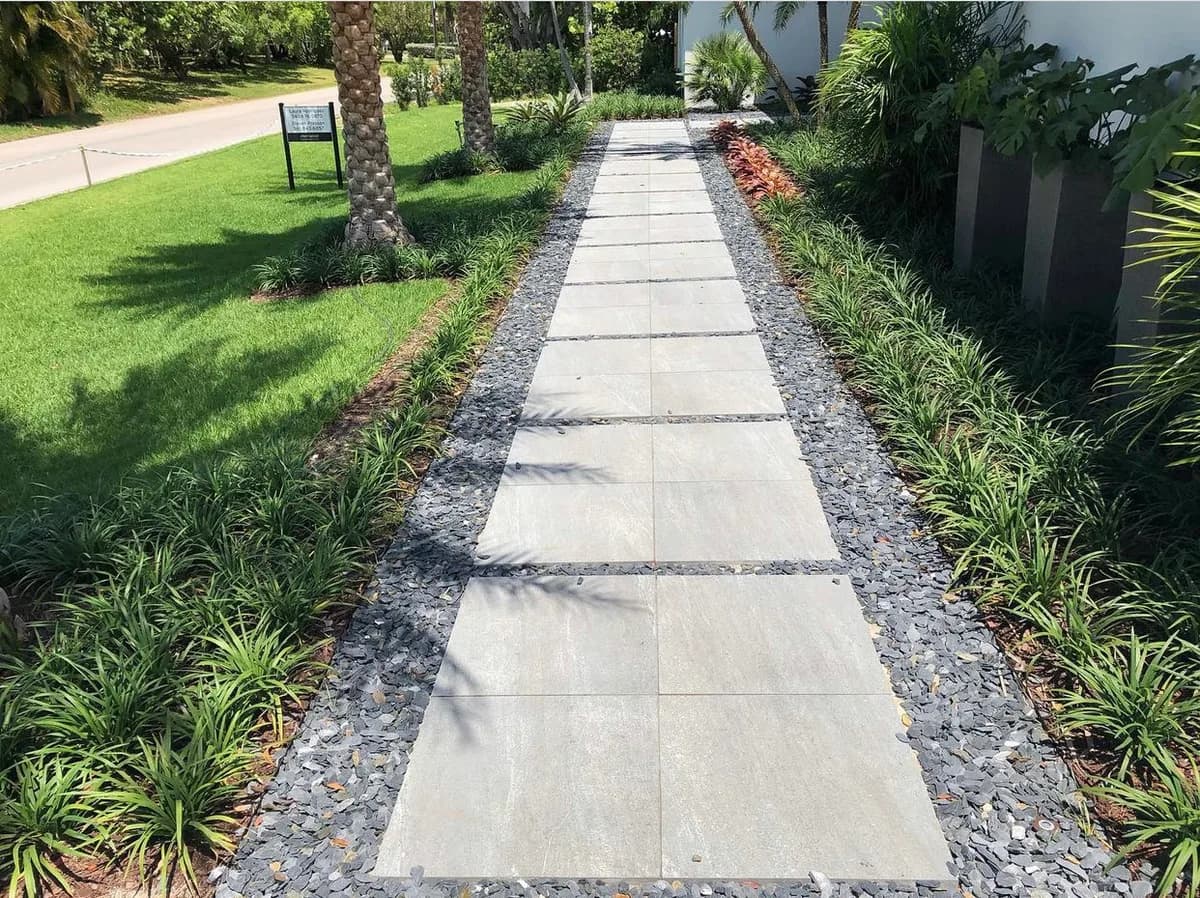
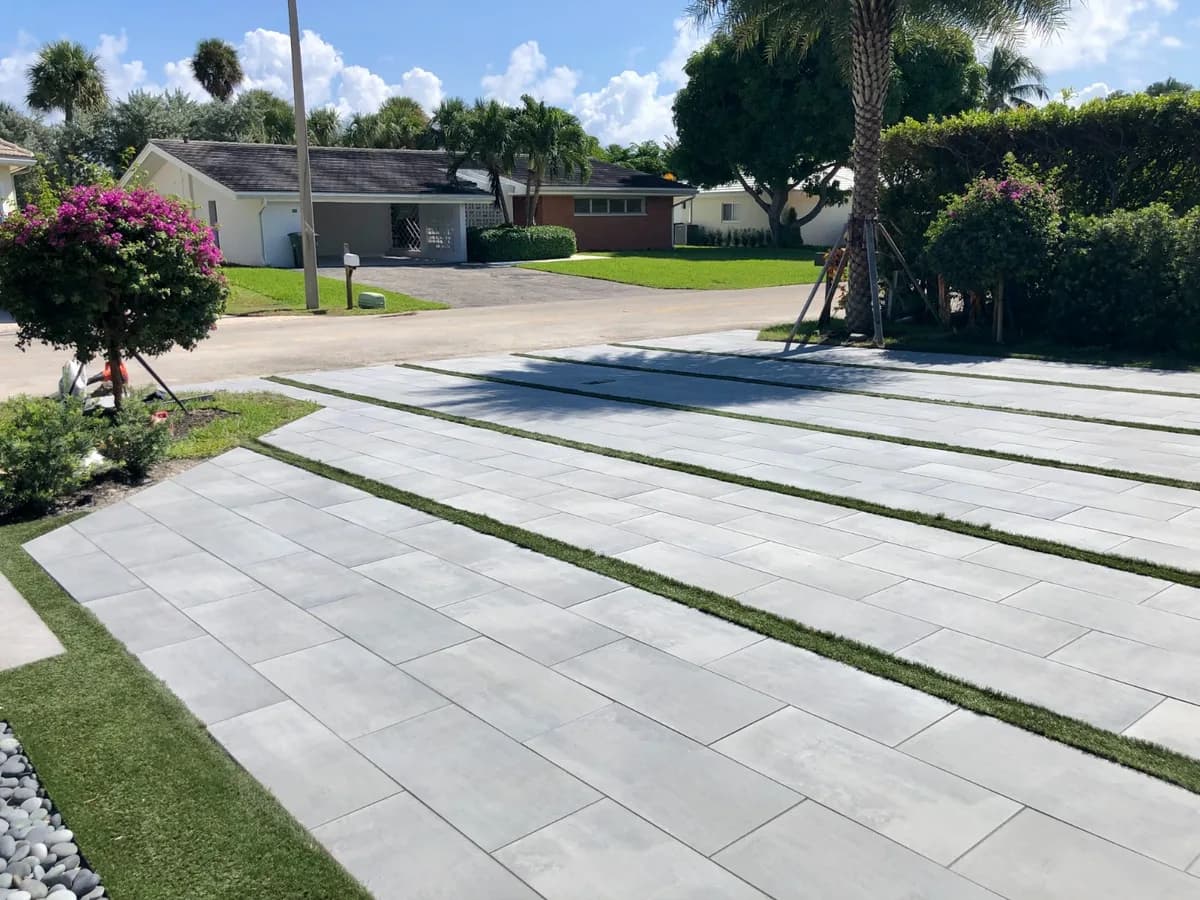
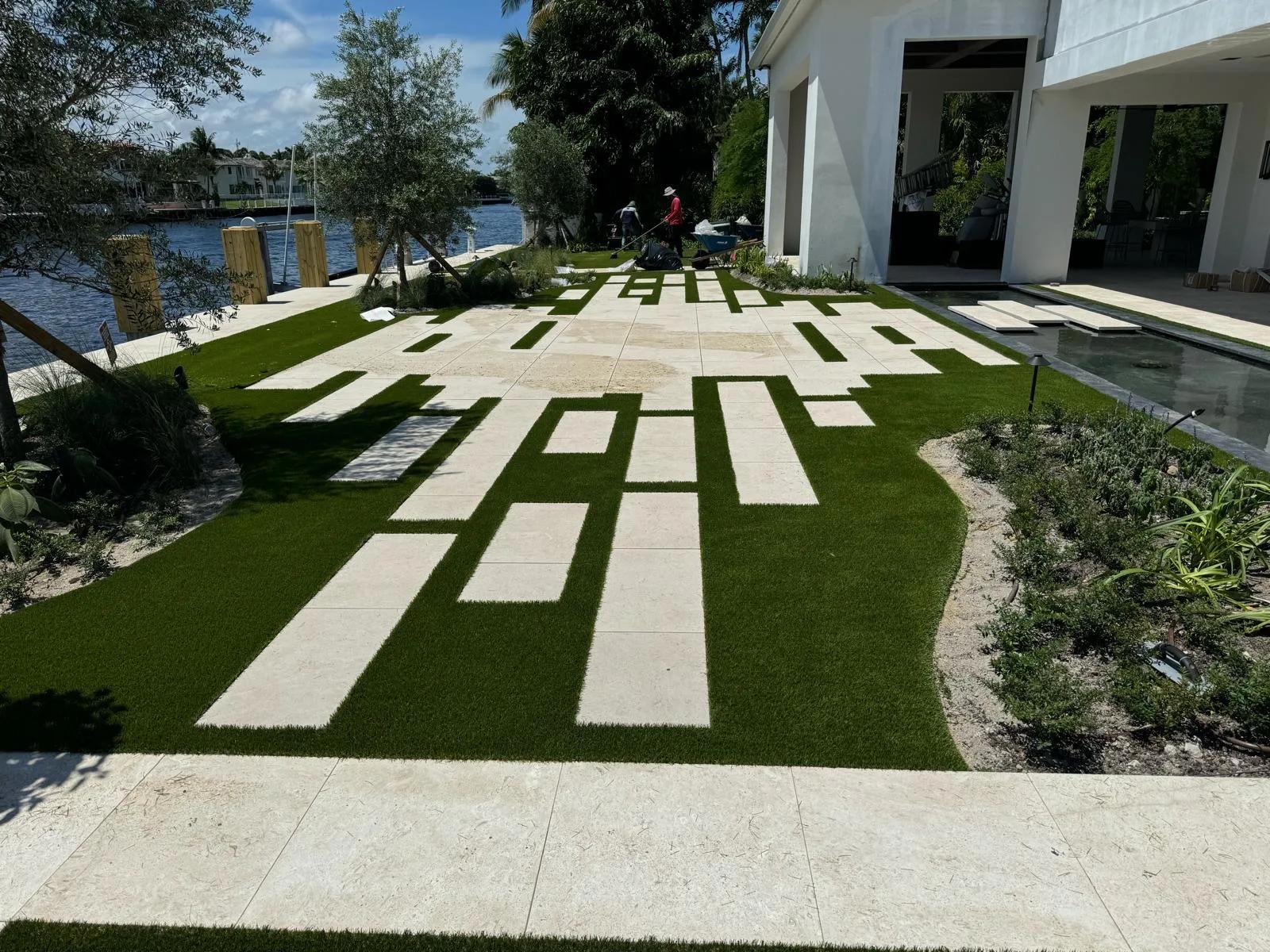
That is why the answer we give most often is not all or nothing. In Bradenton and Lakewood Ranch we frequently keep healthy St. Augustine where it thrives in the sun and put turf where grass keeps failing: the shady strip beside the house, the dog run, the courtyard under the oak, the joints of a paver walkway or a pool deck. Built over the same compacted, free-draining base we use under pavers, those areas drain within minutes of a summer downpour and stay level for years. Because we are also the only Hardscape.com Certified porcelain paver installer in Sarasota, Manatee, Hillsborough, Orange and Lee Counties, we design turf and hardscape as one system, so the edges where they meet hold their line. Walk the yard with us and we will show you which parts are worth converting first.
Natural grass vs artificial turf in a Florida yard: what each one asks of you
| Factor | Natural grass (St. Augustine) | Artificial turf |
|---|---|---|
| Install work | Sod rolled onto graded soil in a day | Excavation, geotextile, compacted aggregate base, edging, seaming, infill |
| Upkeep, April to October | Weekly mowing and edging; irrigation once or twice a week | Occasional blowing and rinsing; brushing a few times a year |
| Water | About 3/4 inch per watering, subject to SWFWMD restrictions | None for the lawn; a rinse for pet areas |
| Pests and disease | Chinch bugs, rainy-season fungus, weeds | No chinch bugs; weeds only at edges if the base is built right |
| Summer surface heat | Self-cooling through transpiration | Roughly 40F hotter in full sun; cool infill and shade narrow the gap |
| Shade tolerance | St. Augustine thins under oaks and screen cages | Performs in shade and stays coolest there |
| Service life | Ongoing with care; patches re-sodded every few years | Roughly 10 to 15 years; base usually reused |
No prices here on purpose: yard size, shade, lawn-service habits and access change the numbers. We give a written quote after a site visit.
Financing Available
See your monthly payment before you decide
Compare real offers from more than twenty lenders through Acorn Finance, our financing partner. It takes about a minute, and checking does not affect your credit score.
Pay the way that suits you: credit and debit cards, bank transfer or check — or finance the project over monthly payments through our partner.
- Offers from 20+ lenders
- Pre-qualify in about 60 seconds
- No impact on your credit score

Financing is provided through Acorn Finance, an independent lending marketplace. EC Paver Solutions is not a lender and does not set rates or terms. Pre-qualification uses a soft credit inquiry and does not affect your credit score; final rates and terms come from the lender and are subject to approval.
Frequently Asked Questions
Is artificial turf cheaper than grass in Florida in the long run?+
How long does artificial turf last in Florida?+
What are the disadvantages of artificial turf in Florida?+
Does artificial turf increase home value in Florida?+
How much does artificial turf cost compared to sod in Florida?+
Find Out Where Turf Pays Off in Your Yard
Book a site visit in Sarasota, Bradenton, Lakewood Ranch, Tampa, Orlando or Fort Myers. We will walk your lawn, map the sun and shade, show you which areas are worth converting and which grass is worth keeping, and leave you a written quote. Call (941) 250-4635 or book online.

Written by
EC Paver Solutions
EC Paver Solutions delivers premium paver installation across Sarasota, Bradenton, Lakewood Ranch, Tampa, Orlando, and Fort Myers. Hardscape.com Certified — the only certified hardscape contractor across five Florida counties.