

The Real Reason Artificial Turf Gets Hot in Florida (And What We Do About It)
A dog that won't go outside is usually the first sign. Here is why artificial turf hits 140–160°F in Florida sun, the three things that actually cool it, and exactly how we spec pet turf.
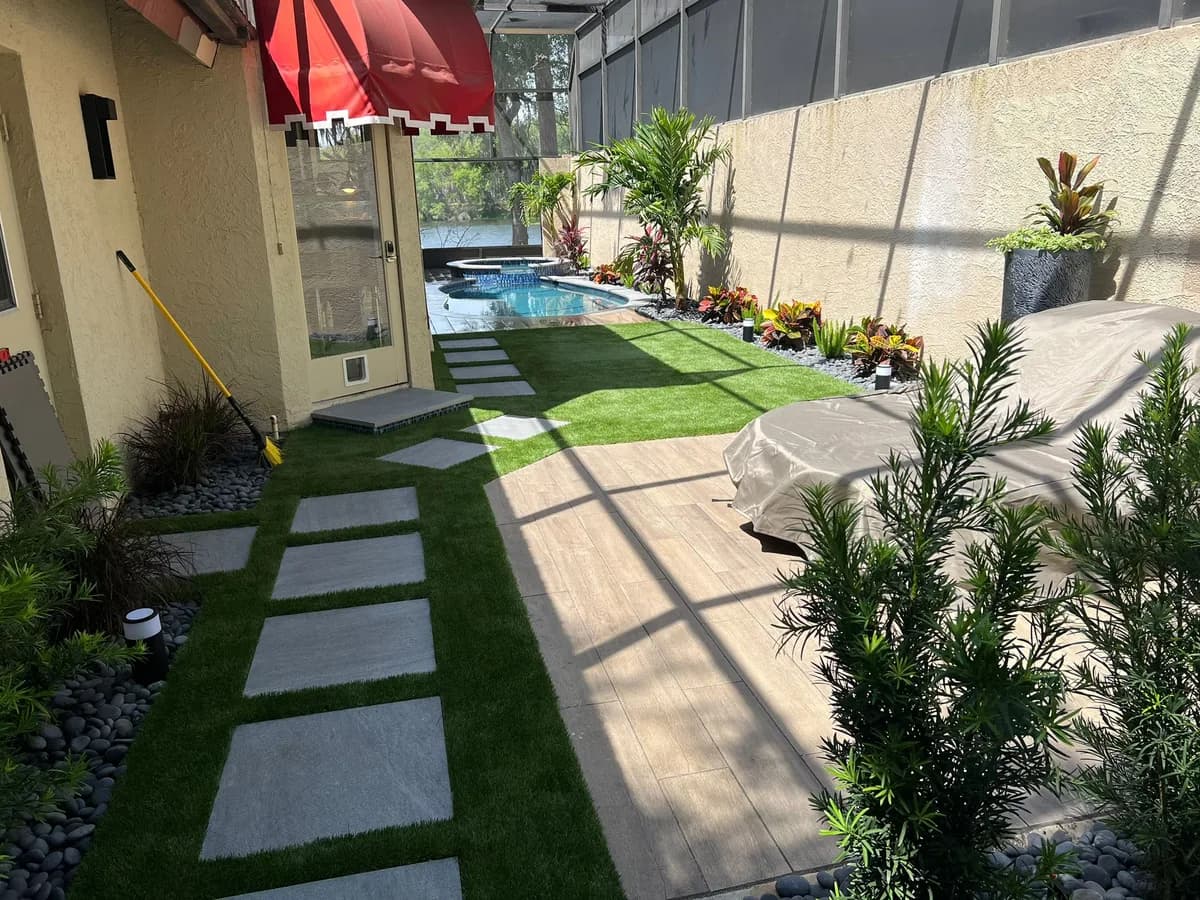
It usually starts with a dog that won't go outside
The call we get most often about artificial turf in the summer is not about the grass at all. It is about a dog. "He walks to the edge of the turf, lifts a paw, and turns right back around." Or a parent: "The kids won't play out there after eleven in the morning." The homeowner assumes the turf is defective. It is not. It is doing exactly what standard turf does in Florida sun — and it is completely preventable if you plan for it before installation.
Heat is the one real disadvantage of artificial turf that most installers understate or skip entirely. We put it on the table at the first visit, because the fix is a design decision, not a repair. Here is what is actually happening, and the three things we do about it on every Sarasota and Lakewood Ranch project.
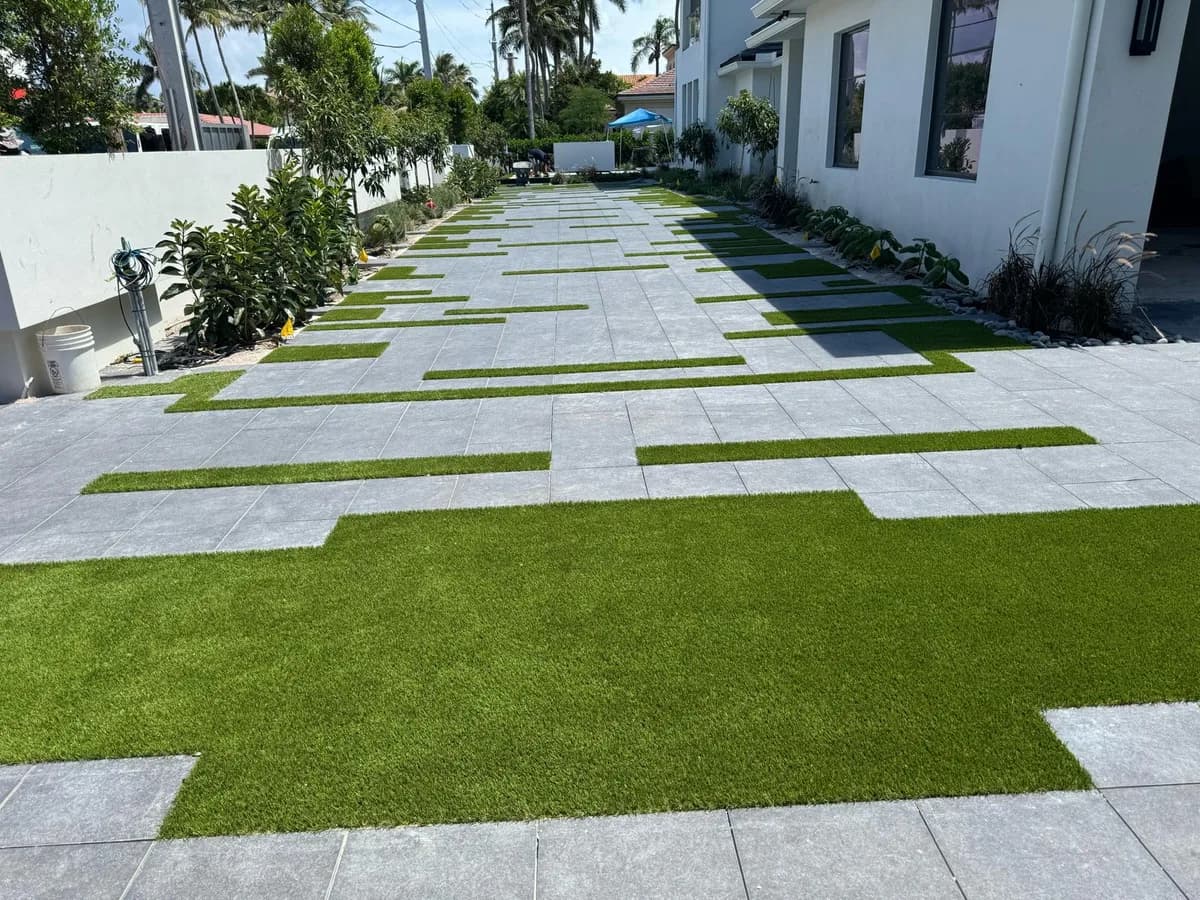
Why turf hits 140–160°F — and why the infill is the real culprit
Artificial turf blades are plastic, and plastic in direct Florida sun gets hot. On a clear July afternoon a standard turf surface reads 140–160°F — hot enough to be uncomfortable barefoot and genuinely unsafe for a dog paws. Natural grass never does this because it transpires: it moves water and cools itself. Turf cannot.
But the blades are only half the story. The bigger heat driver is the infill — the granular material brushed down between the blades to keep them standing up. The most common and cheapest infill is crumb rubber (ground-up recycled tires). Crumb rubber is black, dense, and absorbs and holds heat like asphalt. On a hot afternoon it can be the single hottest thing in the yard.
This is why "the turf is too hot" is usually really "the infill is wrong for Florida." Change the infill and the same turf behaves very differently. That is the first lever we pull.
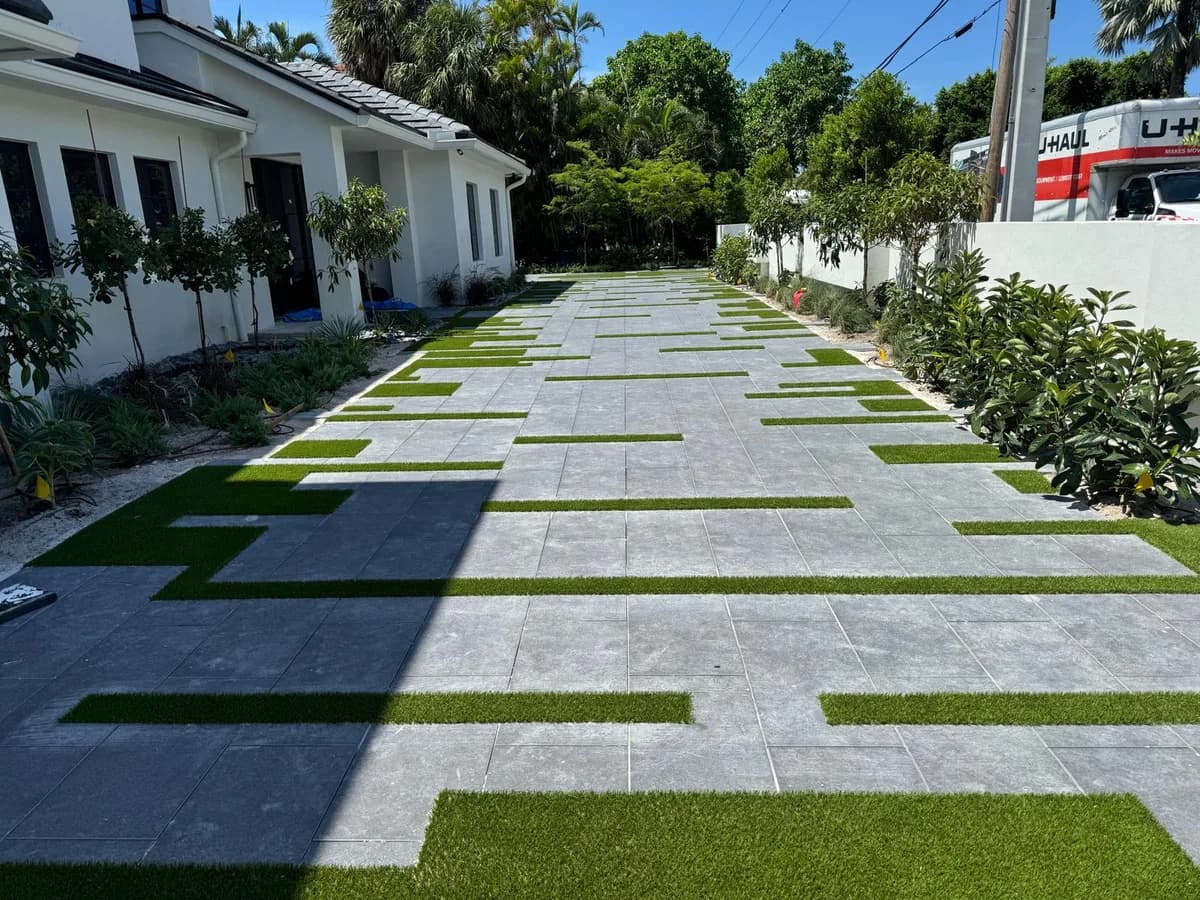
The three things that actually cool a Florida lawn
There is no product that makes turf as cool as shaded natural grass — anyone who tells you otherwise is selling. But three measures used together take a surface from unusable at 2pm to comfortable most of the day.
First, shade planning. We assess sun exposure at the estimate visit — which parts of the yard bake and which stay shaded, and when. Positioning the turf relative to existing trees, the house, a pergola or a shade sail changes the surface temperature more than any product. Sometimes the best move is simply not putting turf in the one spot that gets full western sun all afternoon.
Second, cool infill. We swap crumb rubber for a lighter, non-heat-retaining infill — organic options like cork and coconut fiber, or a coated silica sand. These reflect rather than absorb, and they can run 30–50°F cooler than crumb rubber under the same sun. On pet and play areas we specify cool infill as standard, not as an upgrade.
Third, a cooling rinse. Turf drops 30–50°F within minutes of a water rinse. For clients who want the yard usable at any hour, we can tie a simple pop-up or misting line into the existing irrigation so a two-minute cycle cools the surface before the dog goes out or the kids come home — using a fraction of the water a natural lawn needs.
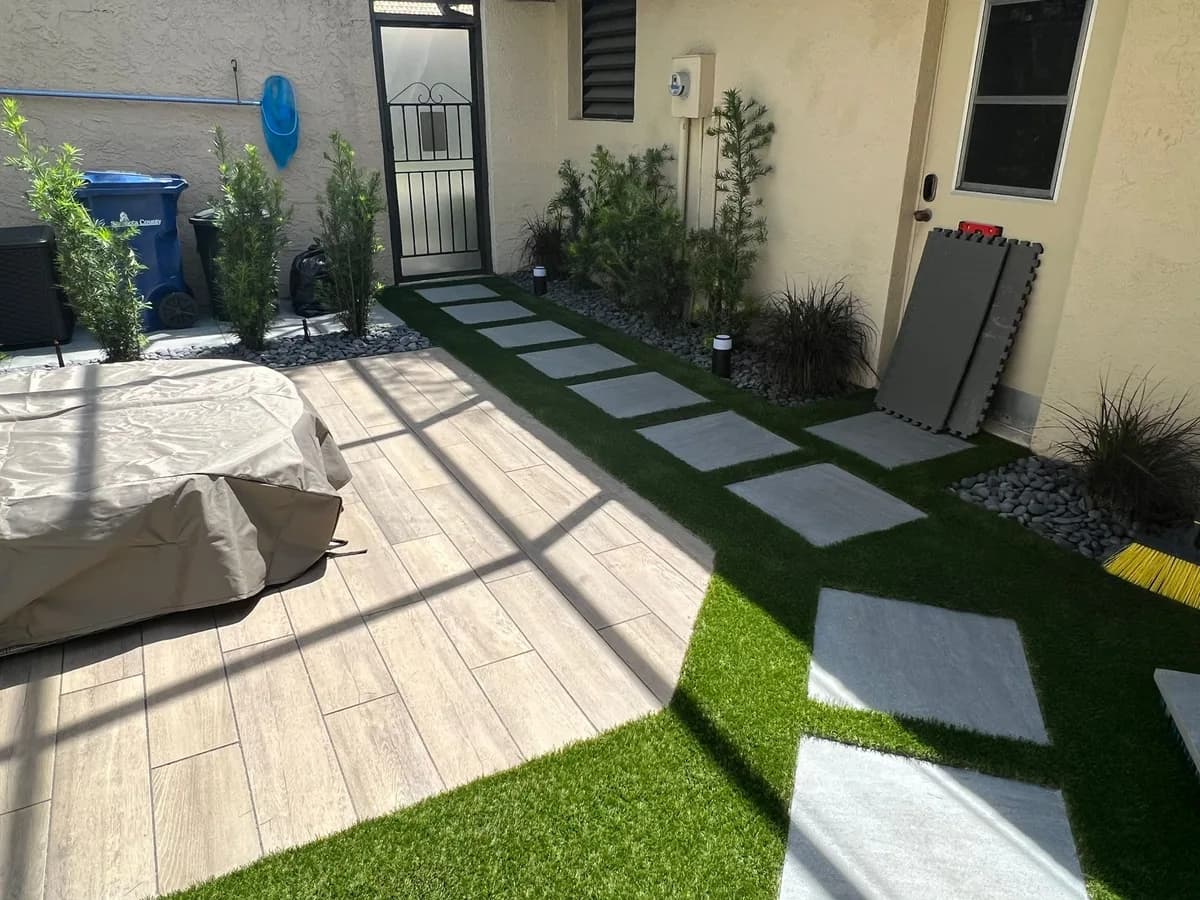
How we actually spec pet turf for Florida dogs
Dogs add a second requirement on top of heat: odor and drainage. Dog urine destroys natural Florida grass in weeks, which is why so many turf projects start as "the dog killed the lawn." Turf solves that — but only if it is built for it.
Our pet spec: a shorter pile height (1.25–1.5 inch) so the surface dries fast and cleans easily; a commercial-grade, fully perforated backing; and an 8-inch aggregate base with drainage capacity that exceeds Florida rainfall rate, so urine and storm water pass straight through instead of pooling. On top we use an antimicrobial infill plus a zeolite topdressing — zeolite is a natural mineral that captures and neutralizes the ammonia in urine, which is what actually causes odor. Reapplying zeolite every 6–12 months is the single most important maintenance item for pet turf, and we show every client how to do it.
And critically: no crumb rubber on a pet lawn. It gets too hot for paws and it is the wrong material around animals. Cool organic or coated infill, every time.
What the right turf costs — and where the money goes
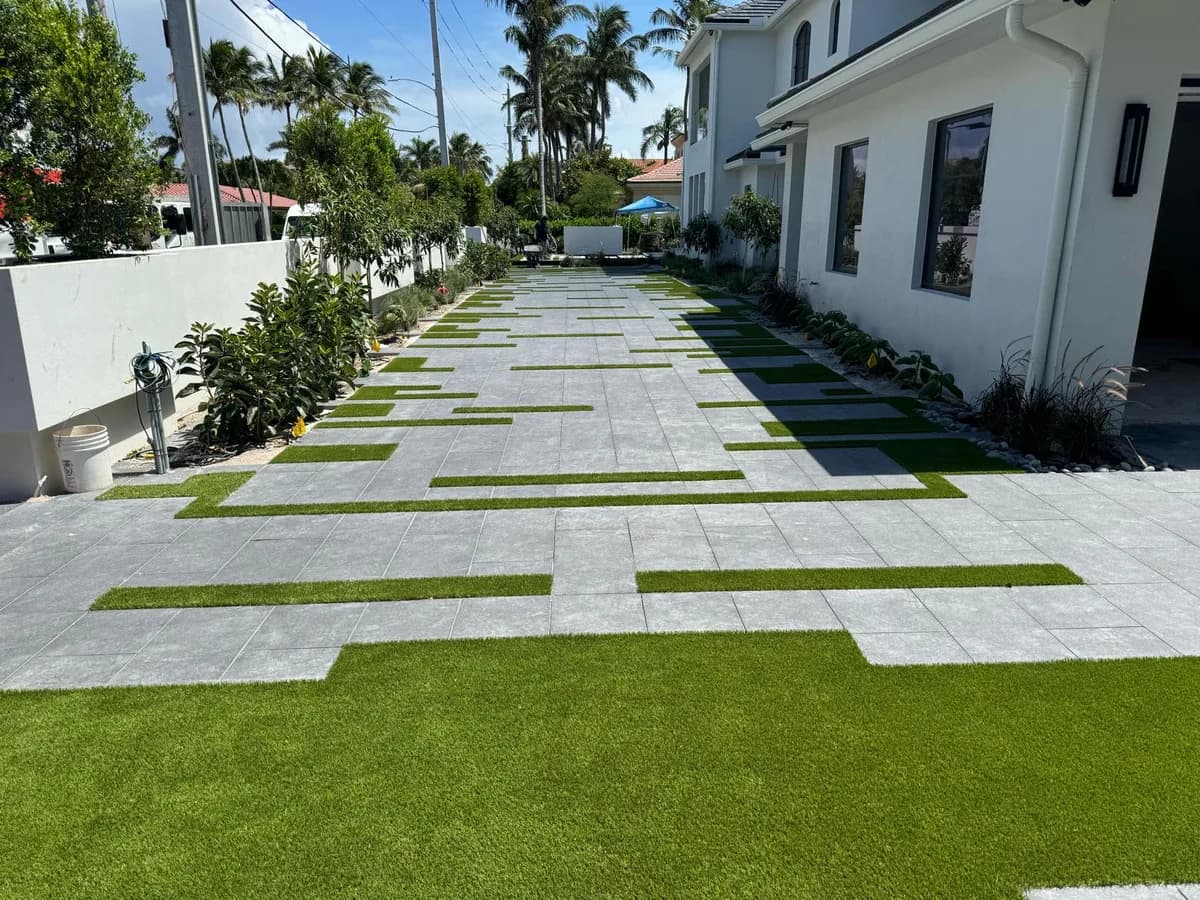
Turf is priced by the square foot installed, and the range comes almost entirely from the base, the backing quality and the infill — not the blade color. A properly built Florida lawn includes excavation, an aggregate base engineered for drainage, a quality perforated turf, the right infill, and a contained border.
The temptation is to save money on infill. It is the wrong place to cut. Crumb rubber is cheaper up front and it is the thing you will regret every summer afternoon. Spending the difference on cool infill is the highest-value dollar on the whole project.
Infill types — the choice that decides how hot your lawn gets
| Infill | Heat behavior | Best for |
|---|---|---|
| Crumb rubber | Hottest — absorbs & holds heat | We avoid it in Florida; never on pets |
| Coated silica sand | Moderate — reflects some heat | Budget backyards with shade |
| Cork / coconut (organic) | Coolest — reflects, does not store heat | Pet areas, play areas, full-sun lawns |
| Antimicrobial + zeolite topdressing | Cool + neutralizes pet odor | Dog areas (our standard) |
Installed turf pricing in Florida moves with base preparation, backing quality and infill. Cool infill is a small share of the total and the best value on the project.
Financing Available
See your monthly payment before you decide
Compare real offers from more than twenty lenders through Acorn Finance, our financing partner. It takes about a minute, and checking does not affect your credit score.
Pay the way that suits you: credit and debit cards, bank transfer or check — or finance the project over monthly payments through our partner.
- Offers from 20+ lenders
- Pre-qualify in about 60 seconds
- No impact on your credit score

Financing is provided through Acorn Finance, an independent lending marketplace. EC Paver Solutions is not a lender and does not set rates or terms. Pre-qualification uses a soft credit inquiry and does not affect your credit score; final rates and terms come from the lender and are subject to approval.
Frequently Asked Questions
How hot does artificial turf actually get in Florida?+
Is artificial turf safe for dogs in the Florida heat?+
What is the best infill for artificial turf in Florida heat?+
How much does artificial turf installation cost in Sarasota?+
Planning turf? Let's talk about your sun exposure first.
We assess sun and shade on-site before recommending anything, and we spec cool infill and pet drainage as standard — not as upsells. Free on-site estimate across Sarasota, Bradenton and Lakewood Ranch.
Written by
EC Paver Solutions
EC Paver Solutions delivers premium paver installation across Sarasota, Bradenton, Lakewood Ranch, Tampa, Orlando, and Fort Myers. Hardscape.com Certified — the only certified hardscape contractor across five Florida counties.