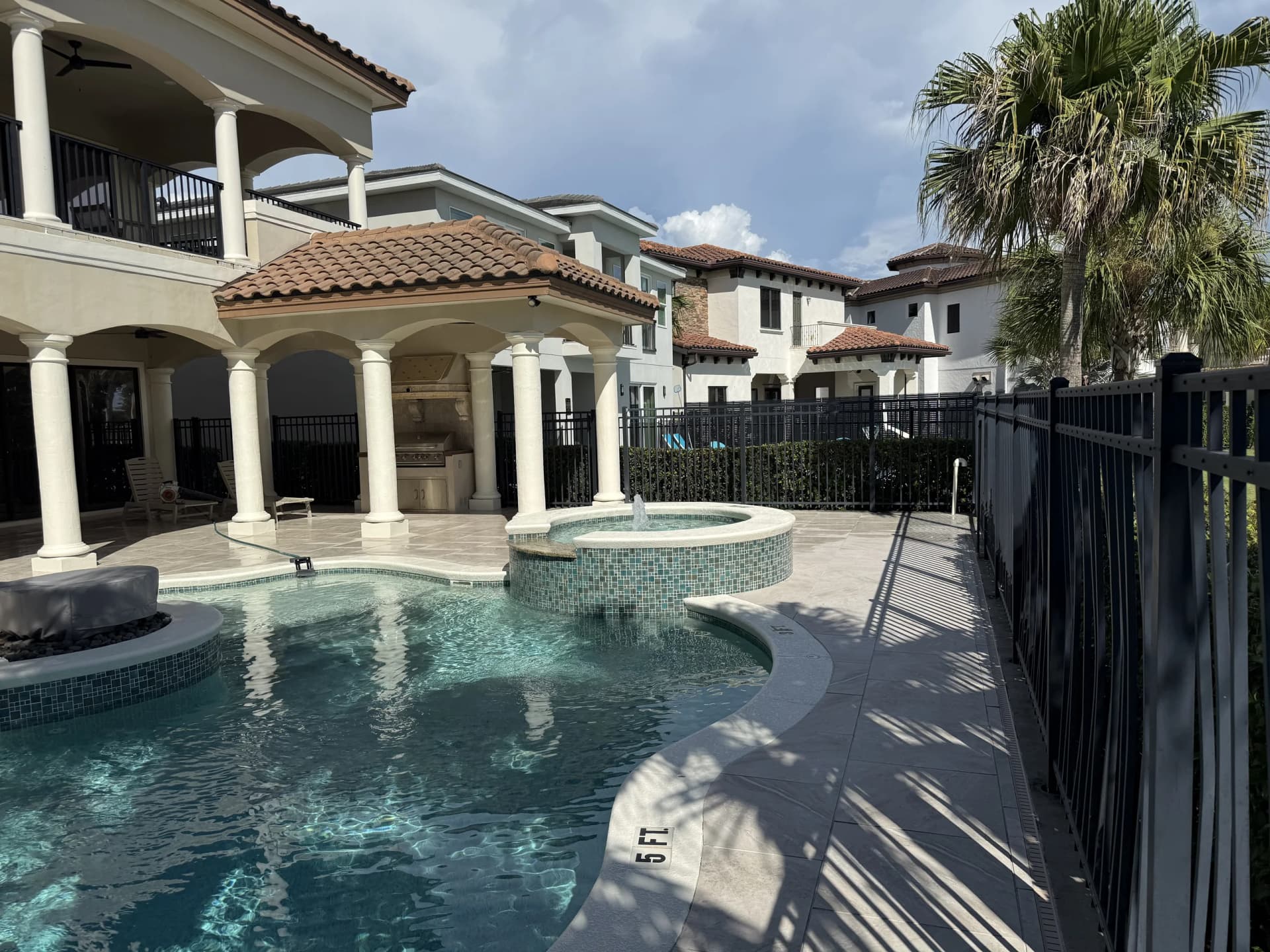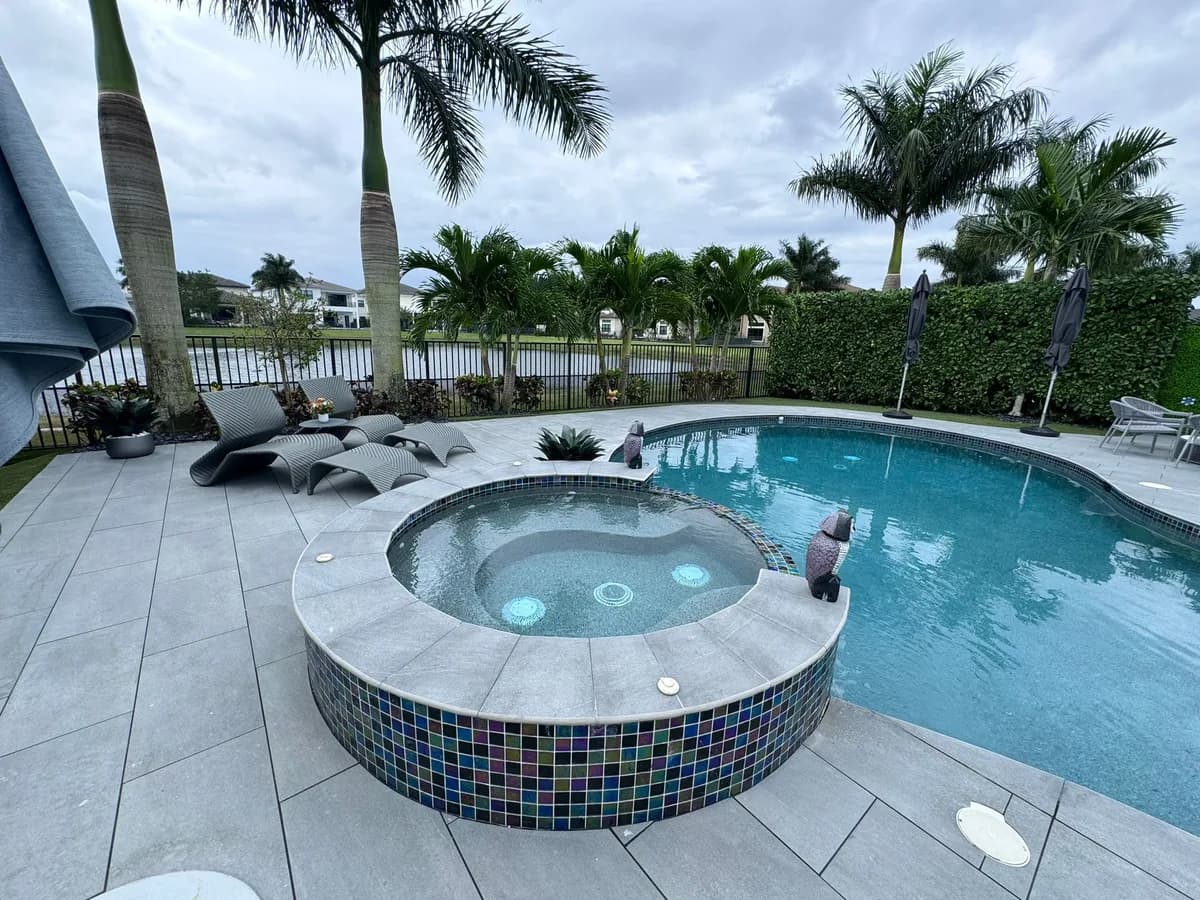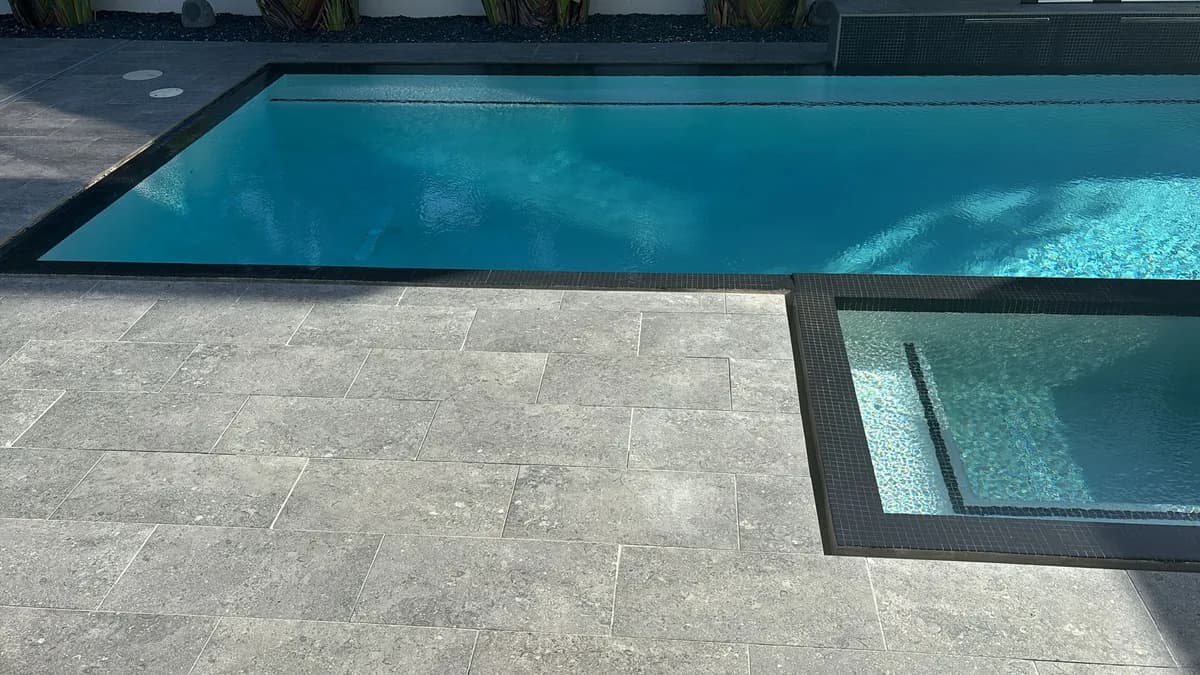


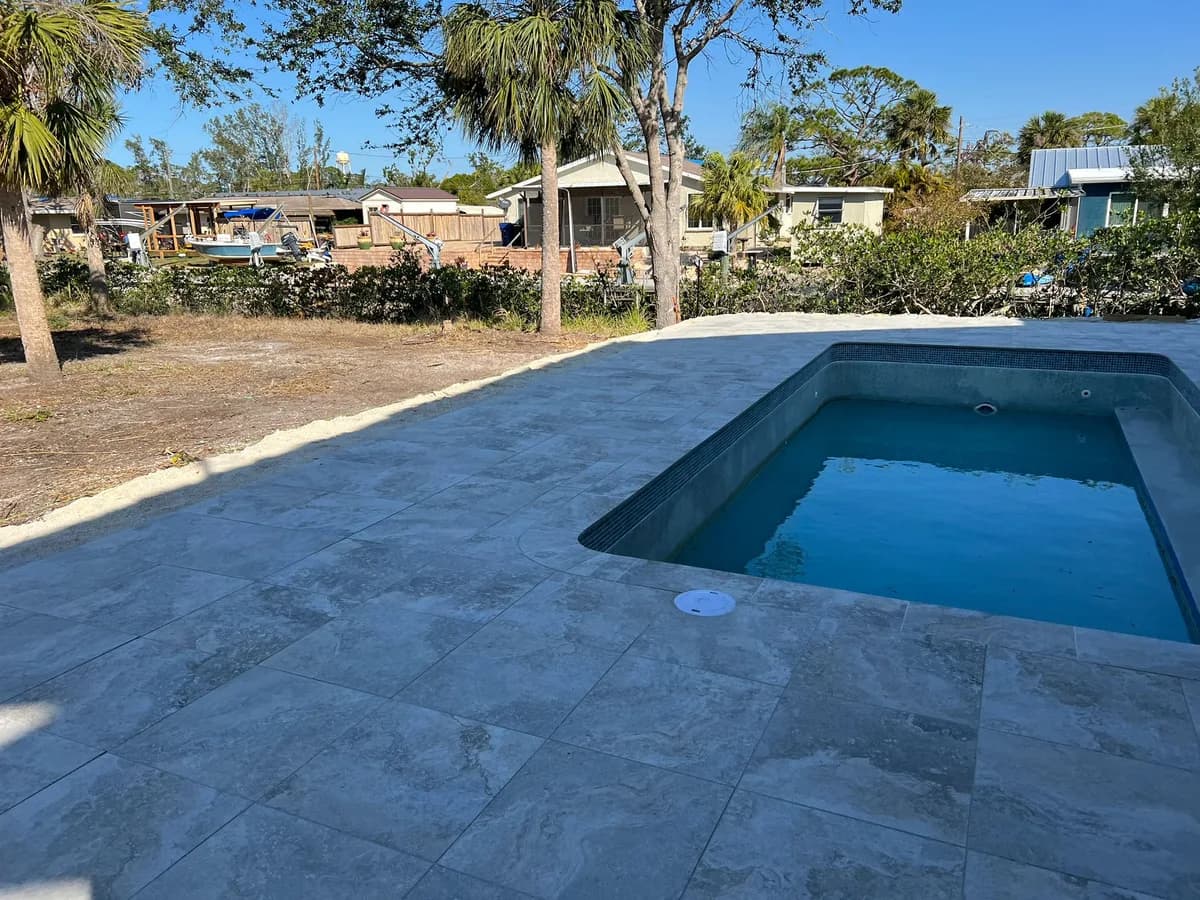
Do Porcelain Pavers Need to Be Sealed? The Real Answer for Florida
Homeowners ask us this on almost every porcelain estimate. The honest answer is no, porcelain pavers do not need sealing, but there is one part of the installation that still needs attention.
The Short Answer: No, and Here Is Why
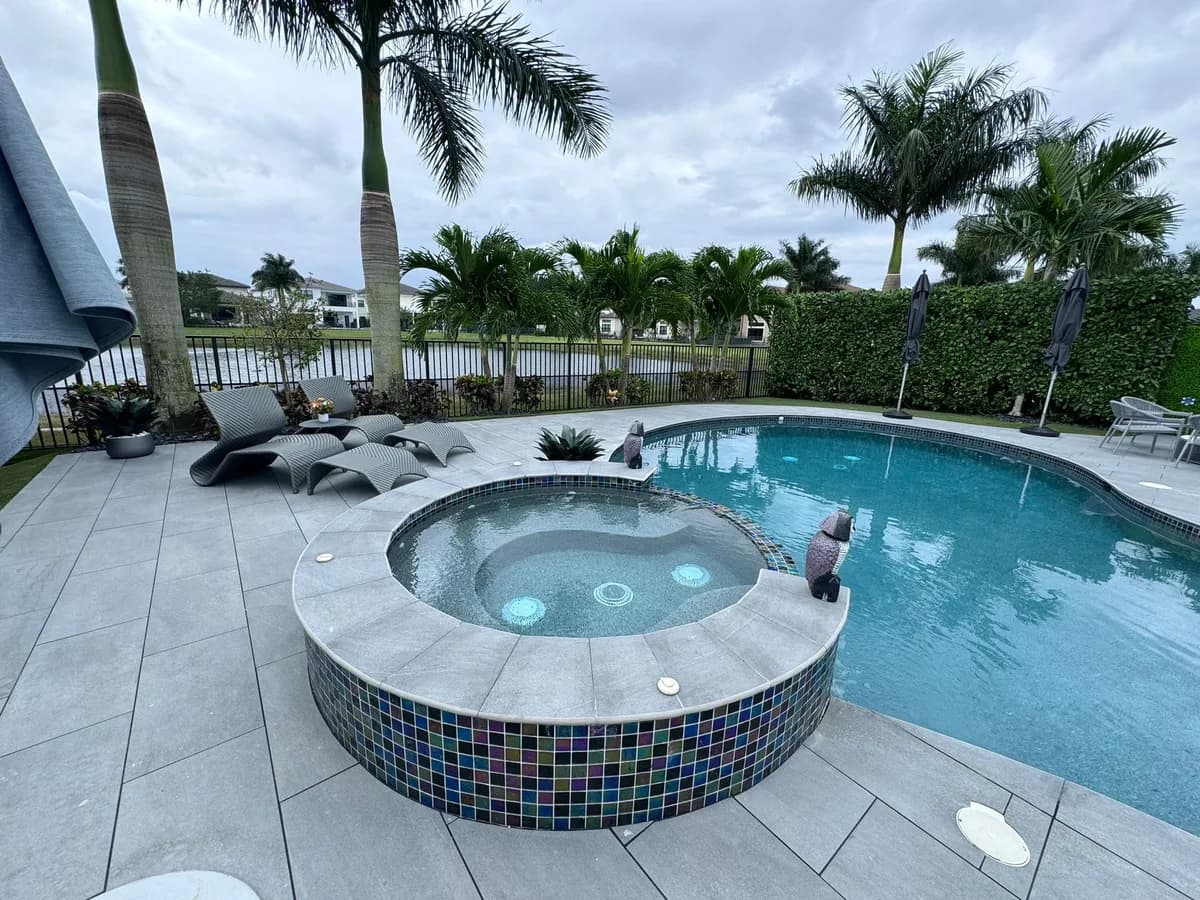
Every time we hand a homeowner a proposal for a porcelain pool deck or driveway, the same question comes up within the first few minutes: when do we need to seal it? The answer surprises most people, because it is different from every other paving material they have owned before. Porcelain pavers do not need to be sealed, and applying a sealer to them is not just unnecessary, it is a wasted afternoon and a wasted product. This is not a sales pitch dressed up as advice. It is a direct result of how the material is manufactured.
Porcelain pavers are made from fine clay and mineral compounds compressed under enormous pressure and fired in a kiln at temperatures well above what a brick or a concrete paver ever sees, often north of 2,200 degrees Fahrenheit. That firing process vitrifies the material, meaning it fuses into an almost glass-like, dense body with virtually no open pore structure left for water to enter. Industry testing puts water absorption for through-body porcelain pavers at less than 0.5 percent, and most of the product we install tests closer to 0.1 percent or lower. A material that will not absorb water in any meaningful quantity has nothing for a sealer to protect against, because the entire job of a sealer is to block porosity that porcelain simply does not have.
What Actually Needs Attention: The Joints, Not the Paver
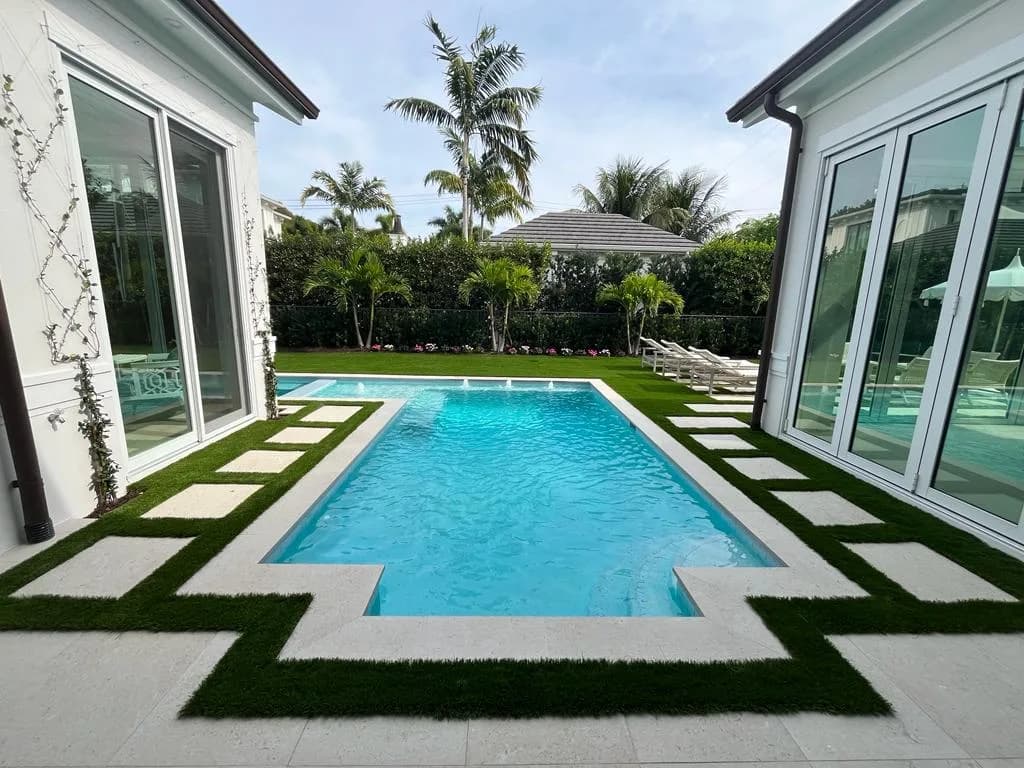
Here is where I want to be straight with homeowners instead of just telling them what they want to hear: porcelain itself needs no sealing, but that does not mean a porcelain patio or deck is a low-maintenance surface forever. The part of the system that actually calls for periodic attention is the joint line between pavers, not the paver face. Most porcelain installations in our market use a polymeric sand in the joints, sometimes paired with a resin-based joint stabilizer on pool decks and driveways, and that sand is the piece doing the work of locking pavers in place, resisting weed growth, and keeping ants and washout at bay.
Polymeric sand can erode over years of hard rain, pressure washing, and pool splash-out, and in a handful of joints it may need to be topped off or re-swept down the road, particularly at the deck edge or around drains where water concentrates. This is routine joint maintenance, the same kind every hardscape material requires in some form, and it has nothing to do with sealing the porcelain tile itself. If you ever hear a contractor tell you the paver needs sealing to protect the joints, that is a sign they are either unfamiliar with porcelain or trying to sell you a service the material does not require. Ask what specifically the sealer would be protecting, and if the answer is vague, that is your cue to get a second opinion.
Porcelain vs Travertine: Why the Sealing Question Even Comes Up
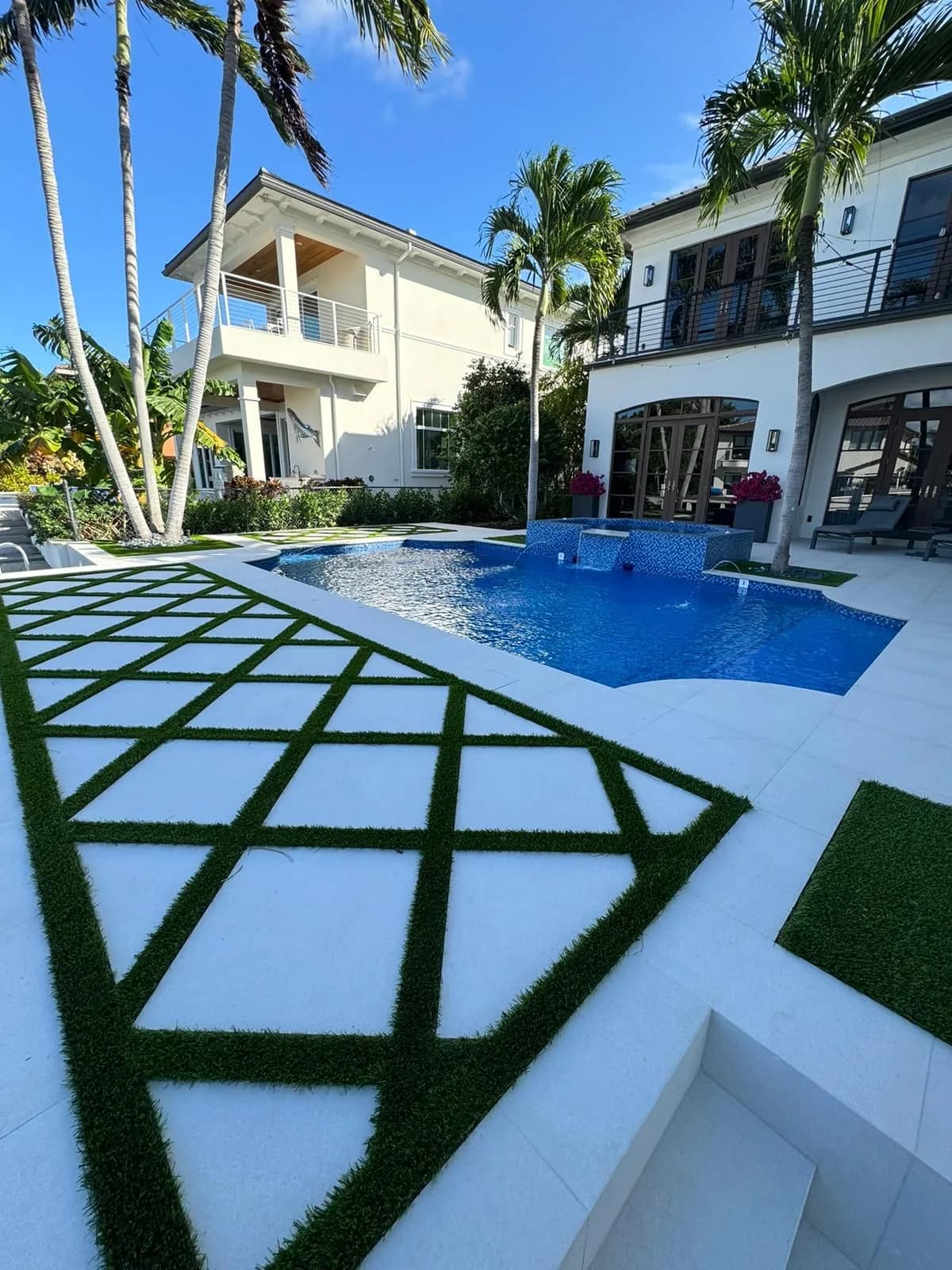
This question exists at all because most homeowners shopping for pool decks and patios in Sarasota and Bradenton have already looked at, or already own, travertine. Travertine is a natural limestone with a genuinely porous structure full of tiny surface pockets, and it absorbs water, oil, sunscreen, and pool chemicals the way a sponge does compared to porcelain. That porosity is exactly why every reputable travertine installer will tell you it needs to be sealed on installation and then resealed roughly every two to three years, sooner in a harsh coastal environment. Skip that resealing cycle on travertine and you will see staining, dulling, and in some cases pitting from acidic exposure over time.
Brick pavers and standard concrete pavers fall into a similar category, both porous enough that sealing extends their life and keeps color from fading, and both requiring that maintenance cycle to stay looking like day one. Porcelain simply was not built with that vulnerability in the first place, so comparing sealing schedules between the two materials is really a comparison of two different manufacturing philosophies. Travertine relies on an applied barrier to compensate for a porous natural stone. Porcelain relies on its own density, engineered in the kiln, to never need that barrier at all. Once homeowners understand that distinction, the sealing question usually resolves itself.
The Florida Test: Salt Air, Pool Chemicals, and UV
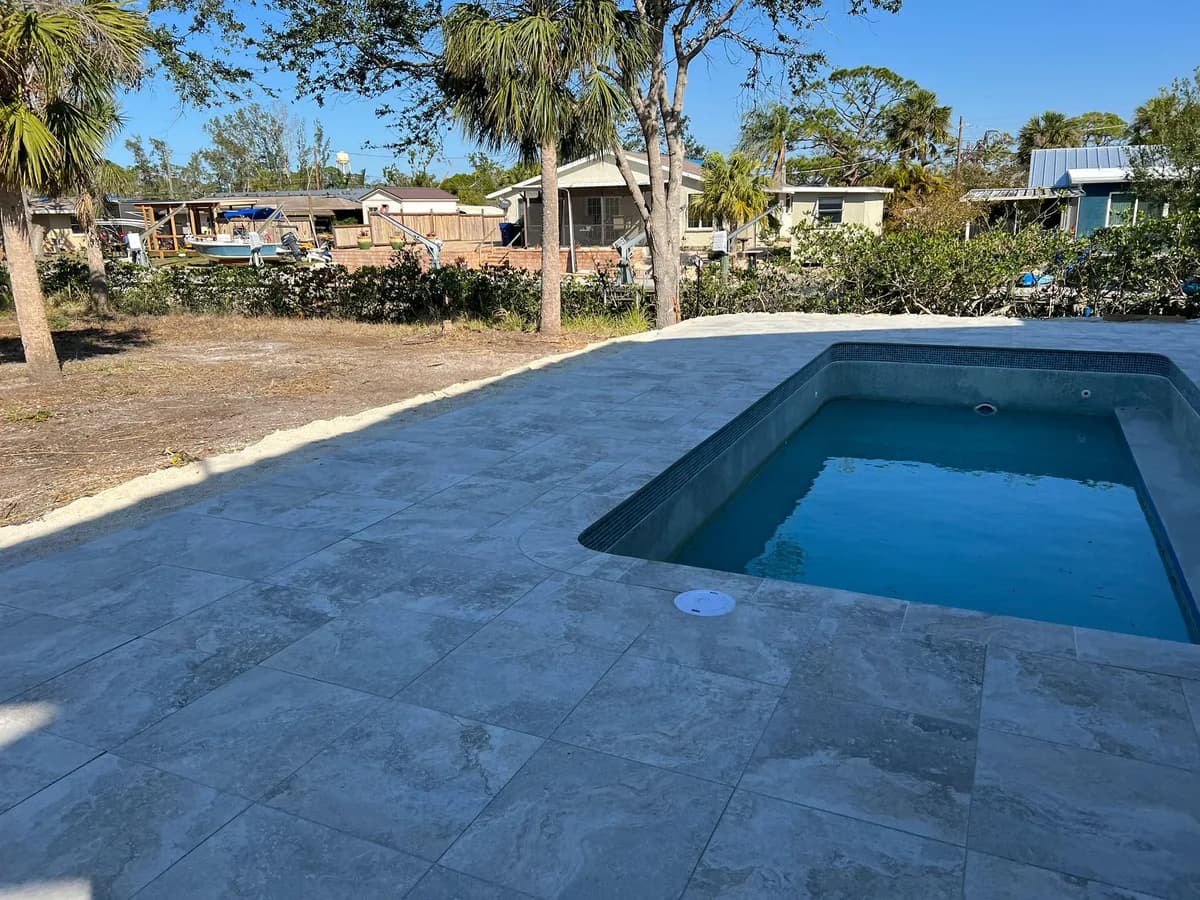
Florida is not a gentle environment for outdoor hardscape, and that is really where the sealing question gets tested in the real world rather than on a spec sheet. Between Gulf Coast salt air in Sarasota and Bradenton, the near-constant sun exposure, and pool water loaded with chlorine or salt-system byproducts, we ask more of paving materials here than almost anywhere else in the country. None of those three stressors have anything to penetrate on a porcelain surface. Salt cannot work its way into pores that do not exist, chlorinated or salt pool splash-out sits on the surface and rinses off instead of soaking in, and there is no oil or sunscreen staining risk because there is no absorption pathway for it to follow.
UV resistance is the other piece homeowners care about once they have lived through a Florida summer, and porcelain holds up here too, since the color runs through the body of the tile rather than sitting in a topical coating that can chalk or fade. We have porcelain decks we installed years ago in full Gulf Coast sun that still match the color samples from the day we set them. That is the real-world payoff of skipping the sealing conversation entirely: less maintenance, no resealing calendar to track, and a surface that was engineered from the start to shrug off exactly the conditions that make Florida hardscape hard on lesser materials.
Financing Available
See your monthly payment before you decide
Compare real offers from more than twenty lenders through Acorn Finance, our financing partner. It takes about a minute, and checking does not affect your credit score.
Pay the way that suits you: credit and debit cards, bank transfer or check — or finance the project over monthly payments through our partner.
- Offers from 20+ lenders
- Pre-qualify in about 60 seconds
- No impact on your credit score

Financing is provided through Acorn Finance, an independent lending marketplace. EC Paver Solutions is not a lender and does not set rates or terms. Pre-qualification uses a soft credit inquiry and does not affect your credit score; final rates and terms come from the lender and are subject to approval.
Frequently Asked Questions
Do porcelain pavers need to be sealed?+
Do the joints between porcelain pavers need sealing?+
Do porcelain pavers stain?+
How do you clean porcelain pavers?+
Is porcelain better than travertine for a Florida pool deck?+
Thinking porcelain for your space?
Talk to a Hardscape.com Certified installer about whether porcelain fits your pool deck, patio, or driveway in the Sarasota, Bradenton, Tampa, Orlando, or Fort Myers area.

Written by
EC Paver Solutions
EC Paver Solutions delivers premium paver installation across Sarasota, Bradenton, Lakewood Ranch, Tampa, Orlando, and Fort Myers. Hardscape.com Certified — the only certified hardscape contractor across five Florida counties.