

What Are the Downsides of Porcelain Pavers? An Honest Installer Answer
Higher upfront cost, exacting installation, tricky repairs, and slip risk with the wrong finish — the honest truth from a Sarasota paver crew.
The Real Costs: Money and Skill
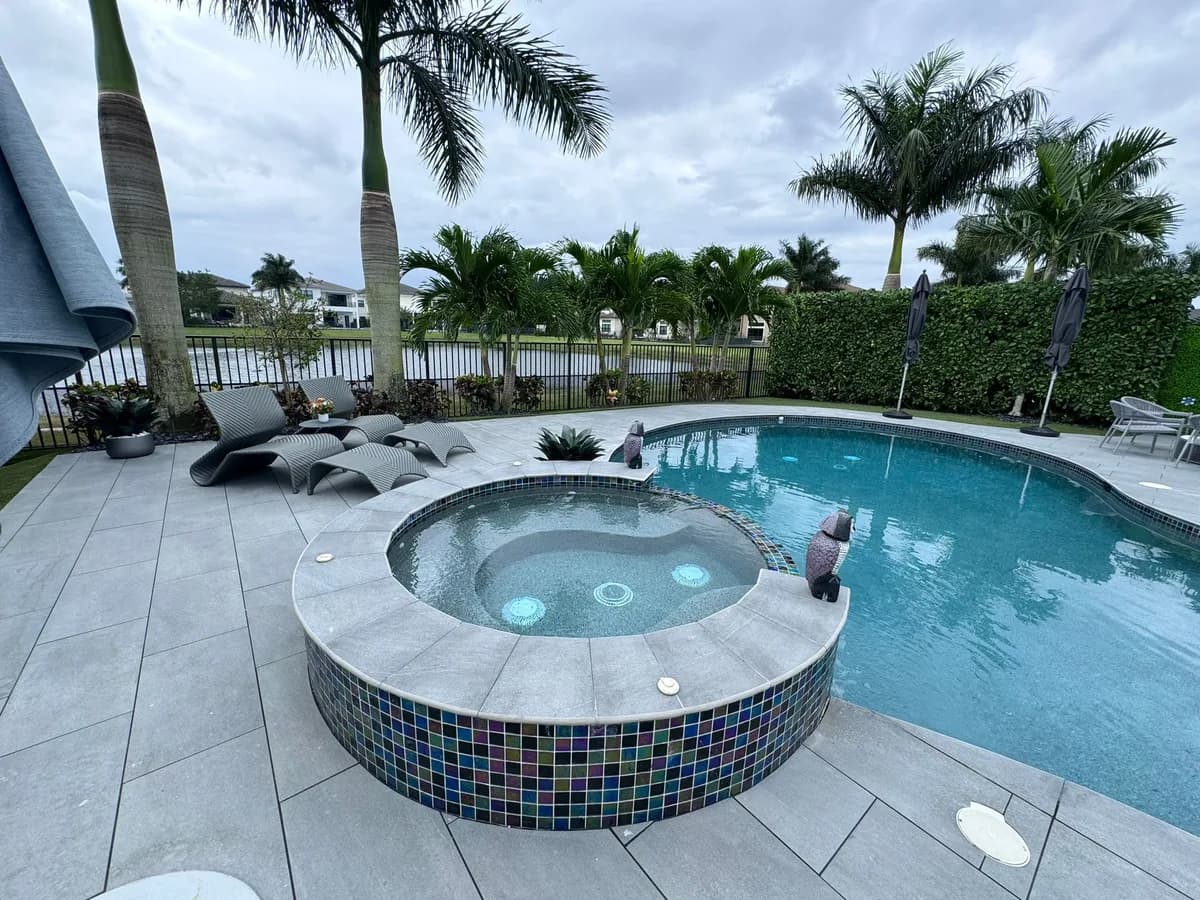
Let us get the obvious one out of the way first: porcelain pavers cost more upfront than concrete pavers, full stop. The slab is manufactured differently, it is fired at extreme temperatures, and the large-format sheets are more expensive to produce, ship, and handle on site. We do not hide this from a homeowner — every quote we write itemizes material and labor separately so you can see exactly where the cost difference comes from, instead of us just saying porcelain runs higher and leaving you to guess why.
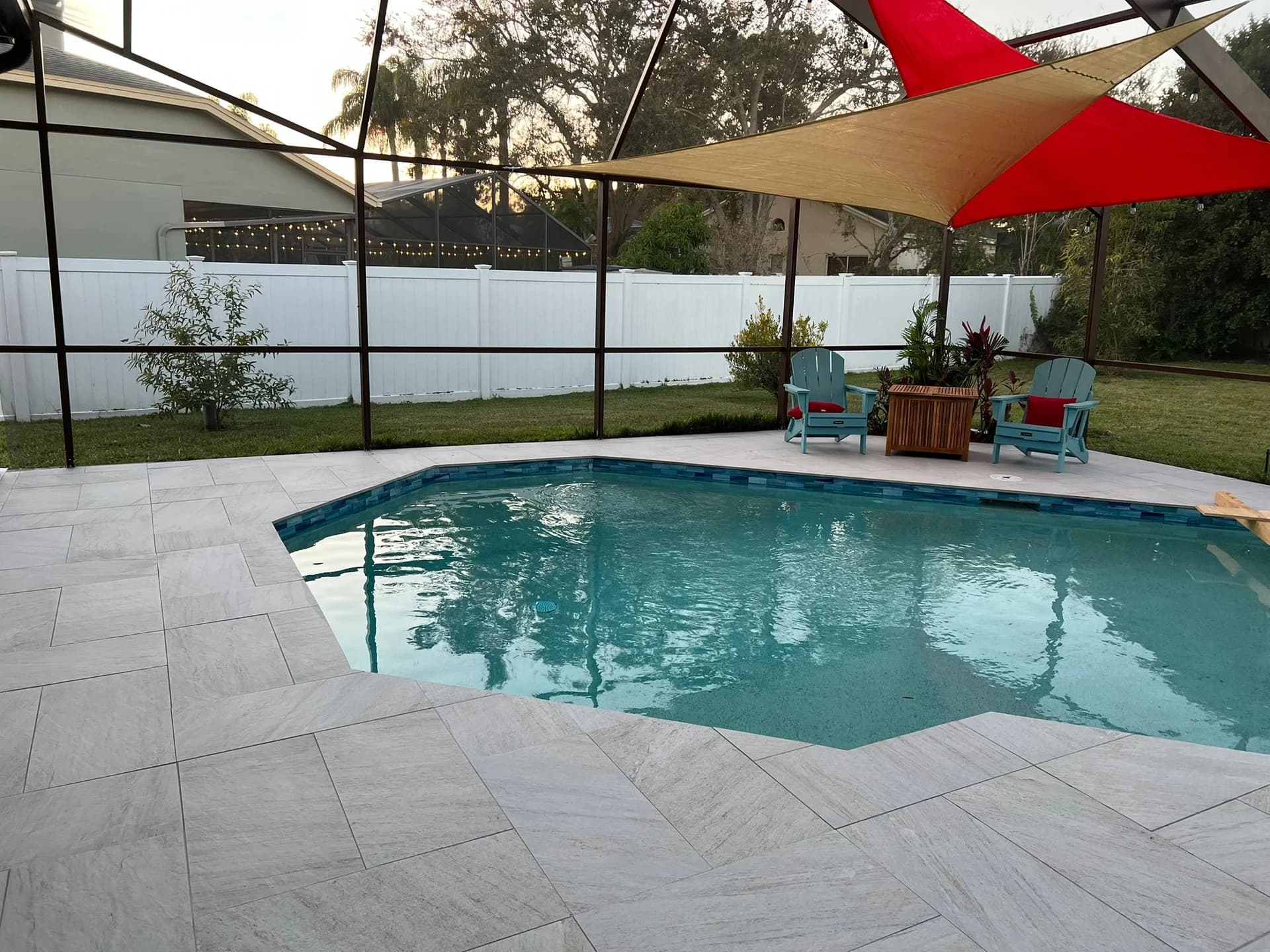
The second downside is less talked about but matters more long-term: porcelain demands a skilled crew. Large-format panels are unforgiving compared to a small concrete paver — there is very little margin for an uneven mortar bed, a rushed set, or a crew that does not understand lippage tolerances. We install almost all of our Florida porcelain jobs as a full mortar-set system over a proper slab, not sand-set like concrete pavers, because that is what keeps large panels stable. Hire an installer who treats porcelain like just another paver and you will see chipped edges, cracked corners, and lippage within a season.
Slip Risk and the Repair Headache
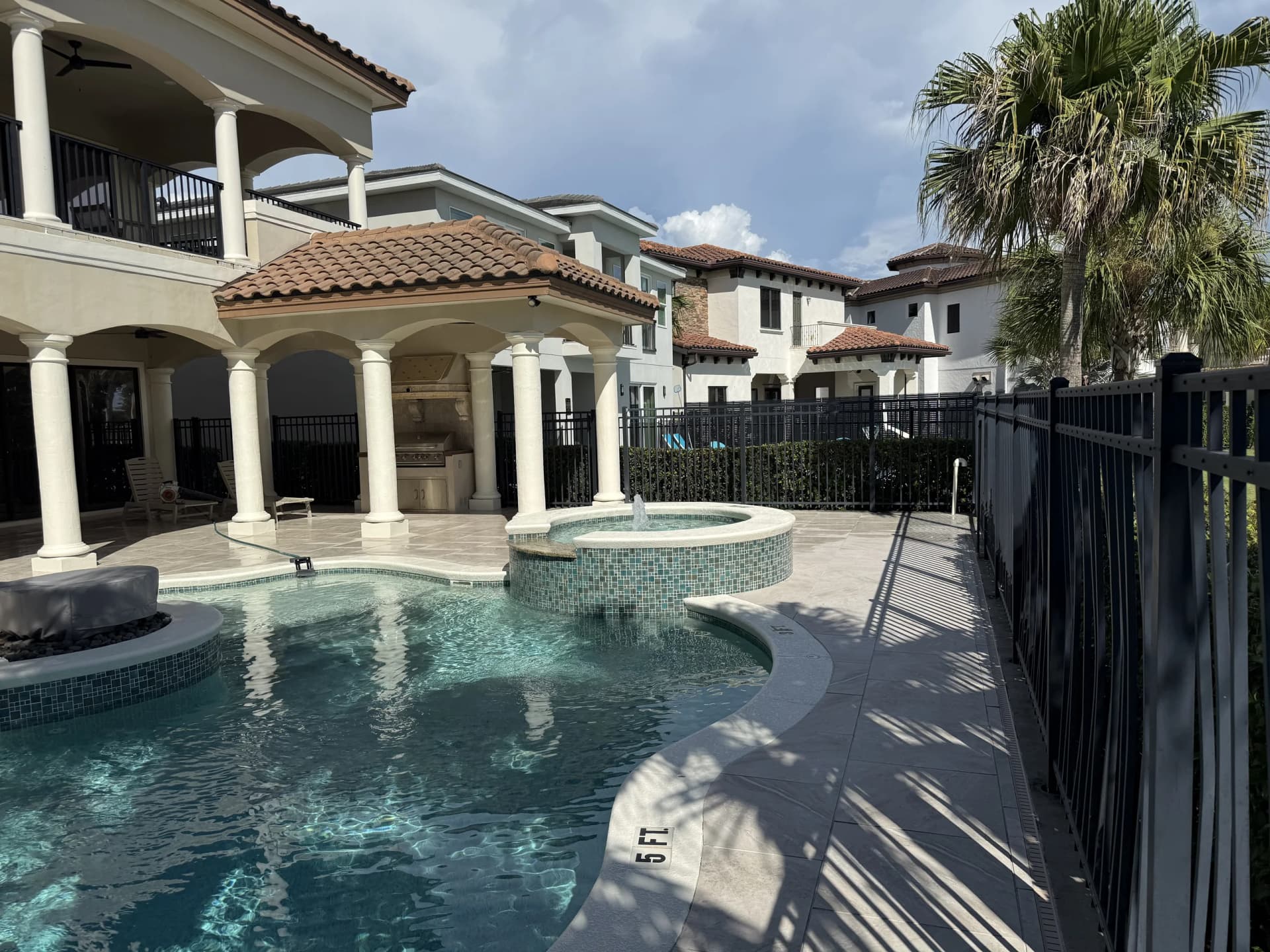
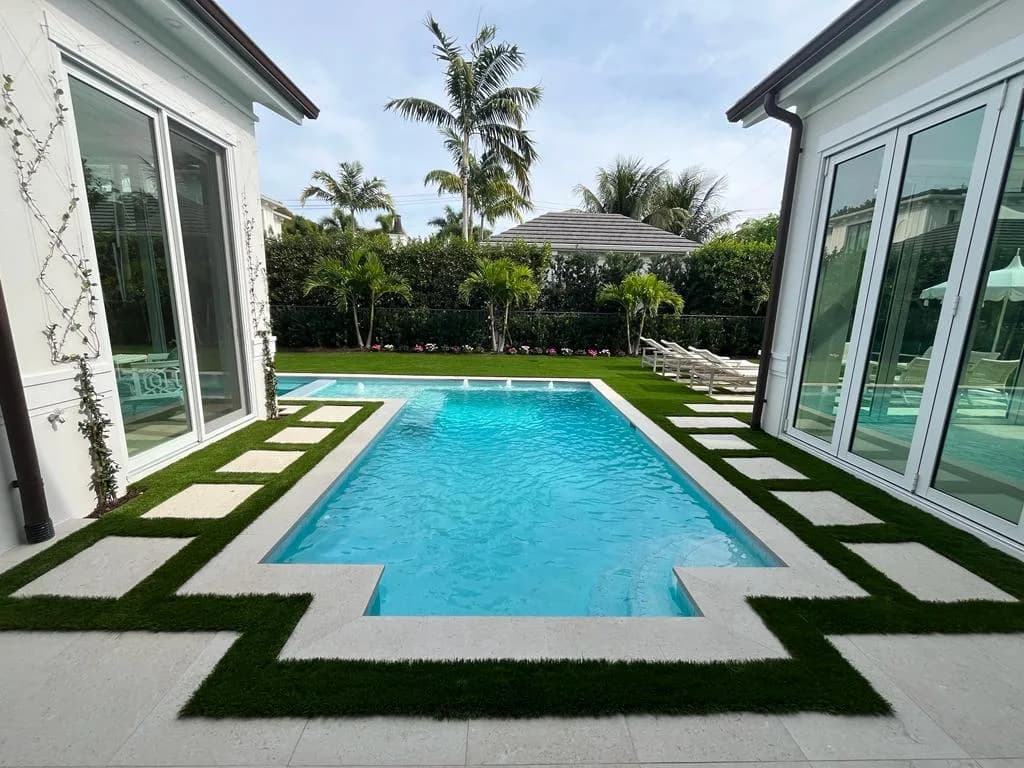
Here is a downside that genuinely worries us when we see it done wrong: porcelain can be slippery when wet, but only if the wrong porcelain is used. Polished or indoor-rated porcelain has a smooth finish meant for interior floors, and it has no business anywhere near a Florida pool deck or lanai. Every outdoor slab we install is specified R11 or higher with a textured, matte finish rated for wet-traffic areas. If a supplier or installer ever quotes you porcelain for a pool deck without mentioning slip rating, that is a red flag — ask directly what R-rating the tile carries before it ever goes on the truck.
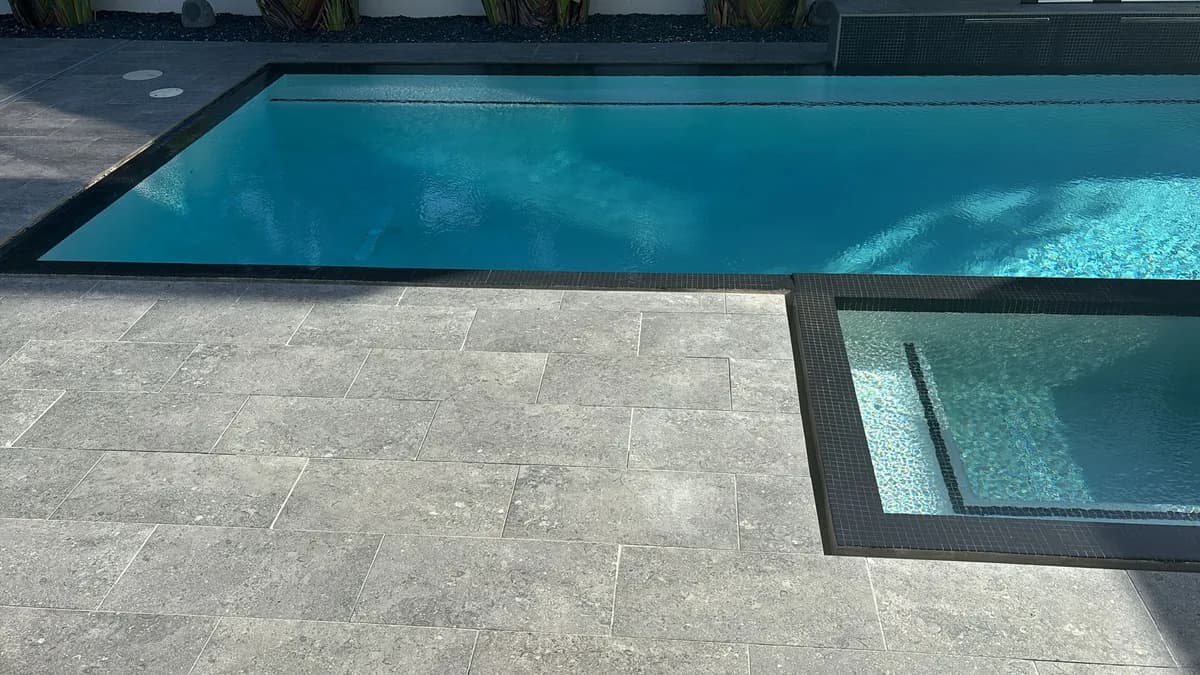
The other honest downside is repair. If one concrete paver cracks, you pull it and drop in a near-identical replacement. Porcelain is trickier because it is manufactured in dye lots, and a box ordered even a few months later can be a slightly different shade than what is already on the ground — sun fading is not the issue, batch variation is. Our fix is simple: we always order a small percentage of overage at the time of the original install and hand those extra pieces off to the homeowner, so a future repair uses tile from the exact same lot instead of a new order that might not match perfectly.
2CM vs 3CM: Why Thickness Matters on a Driveway
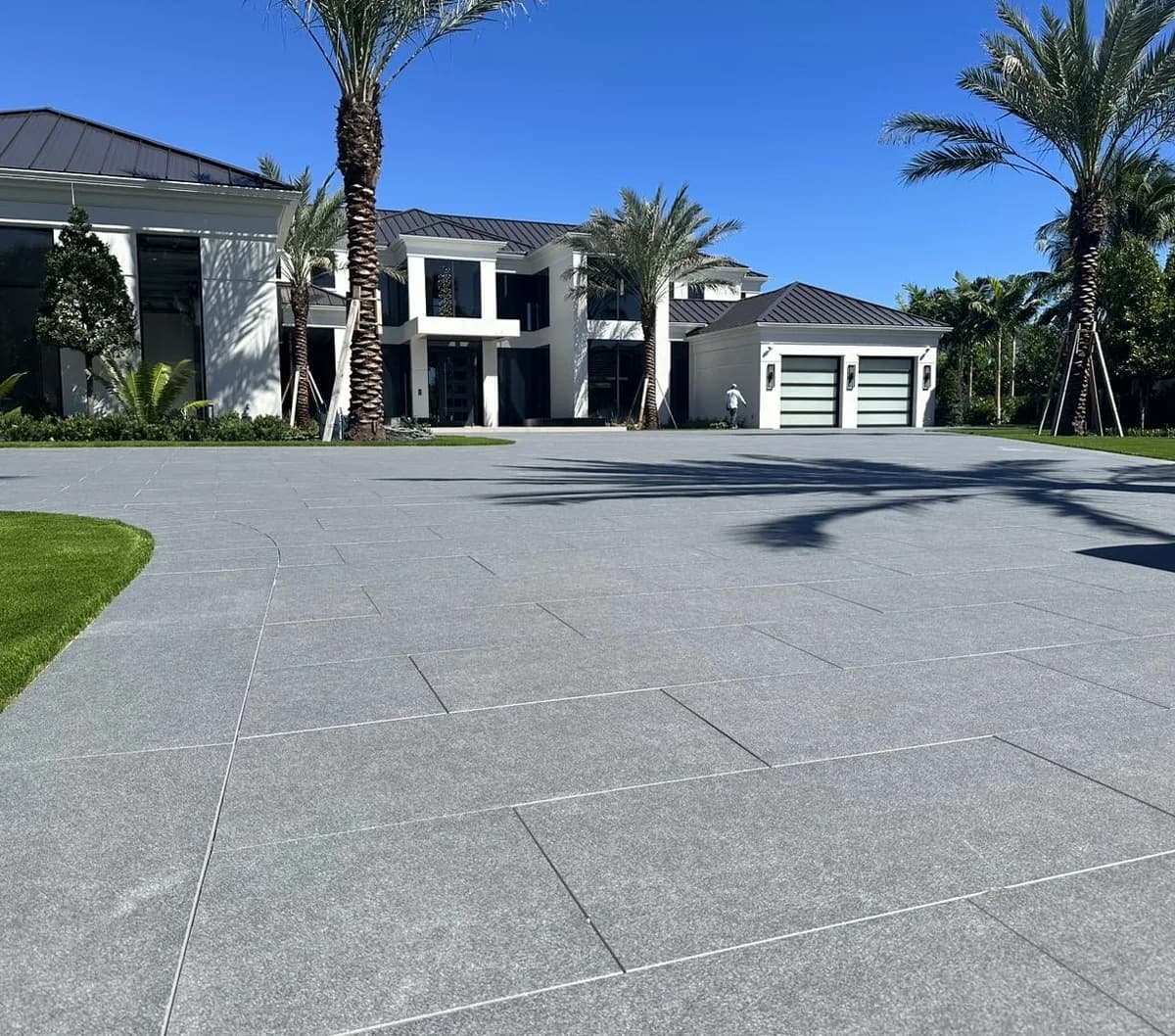
2CM porcelain — the thinner format most commonly used on patios and pool decks — is not rated for vehicle traffic. It is built for pedestrian loads over a full mortar setting bed, and putting a car or truck on it is a fast way to crack panels that were never engineered to carry that weight. We see this mistake most often when a homeowner tries to save money by having a crew install patio-grade material on a driveway, and it almost always ends in cracked tile within the first year or two.
For any vehicle-bearing surface, the answer is 3CM porcelain, full stop — it is roughly 50 percent thicker and manufactured specifically to handle driveway and parking loads. Even with the correct thickness, Florida heavy rain and shifting sandy soils mean the base preparation matters as much as the tile itself: proper compaction, drainage, and edge restraint are non-negotiable. This is another spot where installer skill outweighs the product — 3CM porcelain installed on a weak base will still fail, so we treat the substrate engineering as seriously as the tile selection.
Why We Still Recommend Porcelain (When It Is Installed Right)
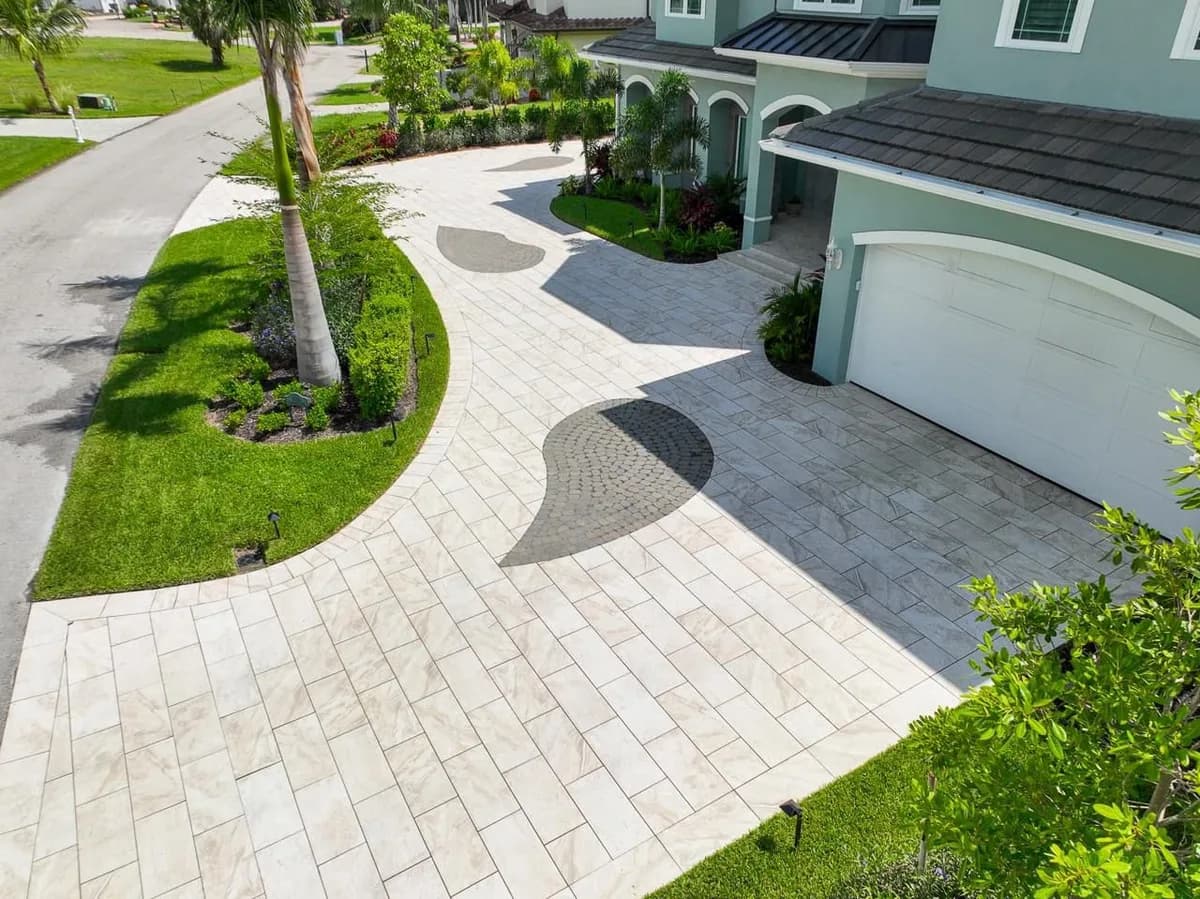
So why do we still install so much of it? Because once the cost, the installer skill, the R-rating, and the thickness are handled correctly, porcelain genuinely outperforms concrete in Florida climate. It is non-porous, so it will not soak up pool chemicals, sunscreen oils, or the algae and mildew growth that concrete pavers battle constantly in our humidity. It never needs sealing — not at year one, not at year ten — and it will not fade under our brutal UV exposure the way dyed concrete eventually does.
The honest summary is this: porcelain downsides are real, but every one of them is manageable with the right installer and the right spec — R11 or higher for wet areas, 3CM for driveways, a matched dye lot held in reserve, and a written quote that shows you exactly what you are paying for and why. That is a very different conversation than porcelain has problems, and it is why we still put it on more Florida pool decks and patios every year.
Financing Available
See your monthly payment before you decide
Compare real offers from more than twenty lenders through Acorn Finance, our financing partner. It takes about a minute, and checking does not affect your credit score.
Pay the way that suits you: credit and debit cards, bank transfer or check — or finance the project over monthly payments through our partner.
- Offers from 20+ lenders
- Pre-qualify in about 60 seconds
- No impact on your credit score

Financing is provided through Acorn Finance, an independent lending marketplace. EC Paver Solutions is not a lender and does not set rates or terms. Pre-qualification uses a soft credit inquiry and does not affect your credit score; final rates and terms come from the lender and are subject to approval.
Frequently Asked Questions
What are the downsides of porcelain pavers?+
Are porcelain pavers slippery when wet?+
Can you use 2CM porcelain on a driveway?+
Are porcelain pavers hard to repair?+
Are porcelain pavers worth it in Florida?+
Want the honest pros and cons for your project?
We will walk your specific space, tell you where porcelain makes sense and where it does not, and put every cost in writing before you decide.
Written by
EC Paver Solutions
EC Paver Solutions delivers premium paver installation across Sarasota, Bradenton, Lakewood Ranch, Tampa, Orlando, and Fort Myers. Hardscape.com Certified — the only certified hardscape contractor across five Florida counties.