

Best Porcelain Paver Colors for Florida Heat
On an unshaded Florida pool deck, an ivory porcelain surface sits around 100 to 110 degrees at two in the afternoon while a charcoal one climbs past 140 — a thirty degree difference decided by a four-inch sample in an air-conditioned showroom. Here is which porcelain colors stay walkable through an August afternoon, which ones we talk homeowners out of, and where the dark tones still earn their place.
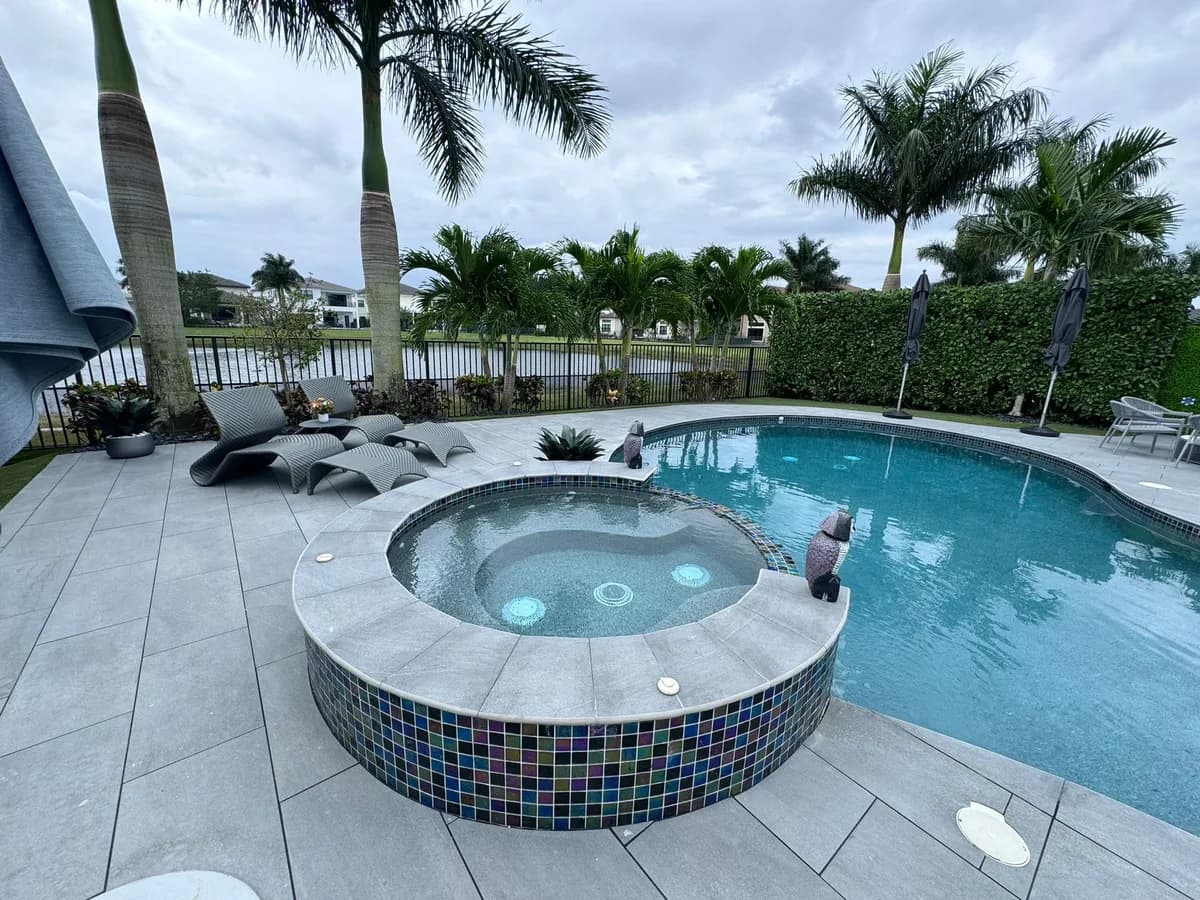
The 2 P.M. Test Your Deck Either Passes or Fails
It is two forty on a Tuesday in August in Lakewood Ranch. The air says 94 degrees, the pool is 88, and your ten-year-old is standing at the slider doing quiet math on whether the twelve feet of deck between the door and the water is survivable. On the wrong deck that trip is a sprint with a yelp in the middle of it. On the right one she just walks, and she keeps walking, back and forth, all afternoon. That is the entire argument for color, and it is not an aesthetic argument at all. It is the difference between a deck your family lives on from noon to dusk and one that is technically gorgeous and functionally closed until five. Everything else we could tell you about porcelain — that it never needs sealing, that it will not fade, that it shrugs off chlorine and salt — matters less on an August afternoon than the single question of what tone you picked, because tone is what sets the temperature under a bare foot.
The physics behind it is unglamorous and completely reliable. A light surface reflects roughly 60 to 80 percent of the solar radiation landing on it; a dark one absorbs 70 to 90 percent and converts it into heat you can feel through a beach towel. Measured side by side under the same sun, an ivory or cream surface tends to sit around 100 to 110 degrees while a charcoal or near-black one climbs past 140. That is a thirty to forty degree spread produced entirely by a decision made off a four-inch chip under showroom lighting. There is an industry number for it, the Solar Reflectance Index, scaled zero to one hundred with higher meaning cooler, but you do not need the spec sheet to use this. You need the discipline to judge the sample outdoors, at midday, on the ground in your own yard instead of held up at chest height where it will always look flattering and always look cool.
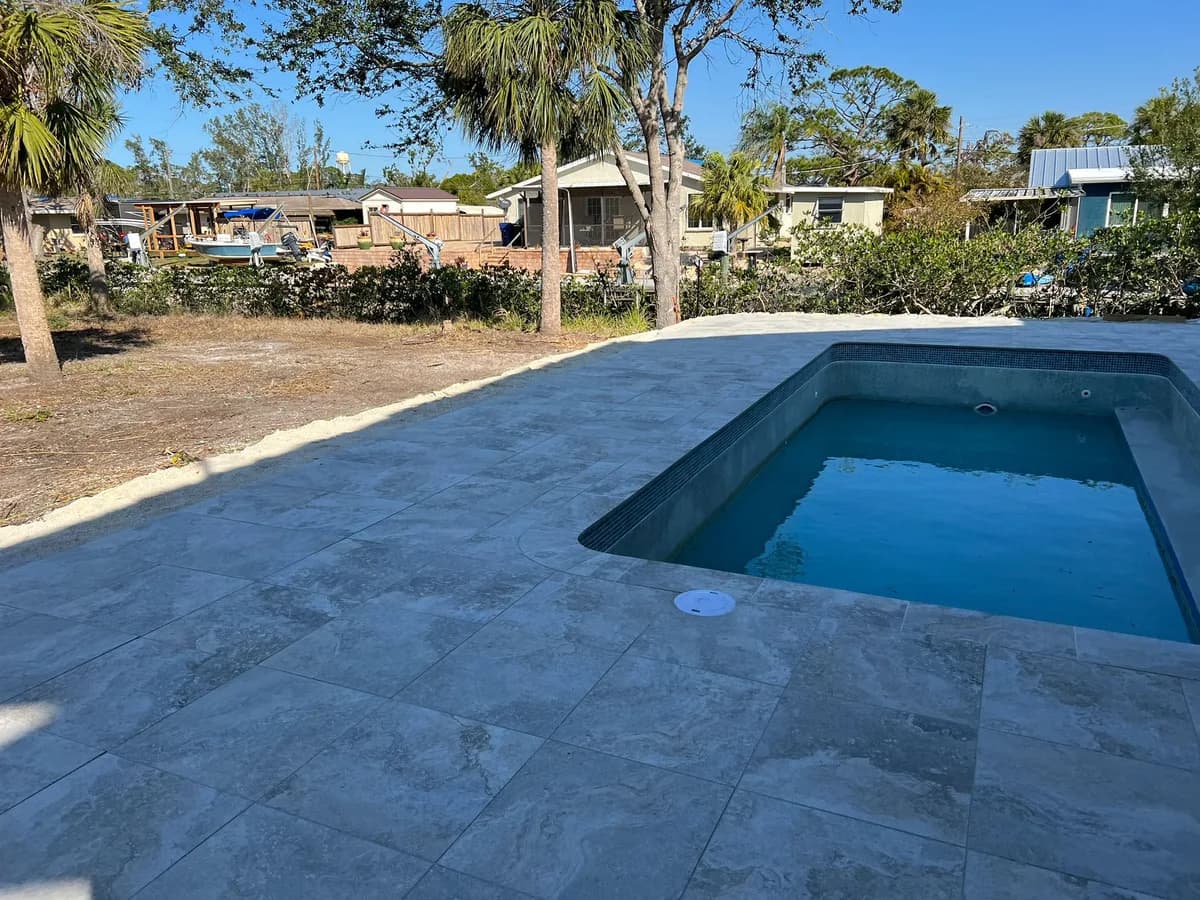
The Light Tones That Win Florida Afternoons
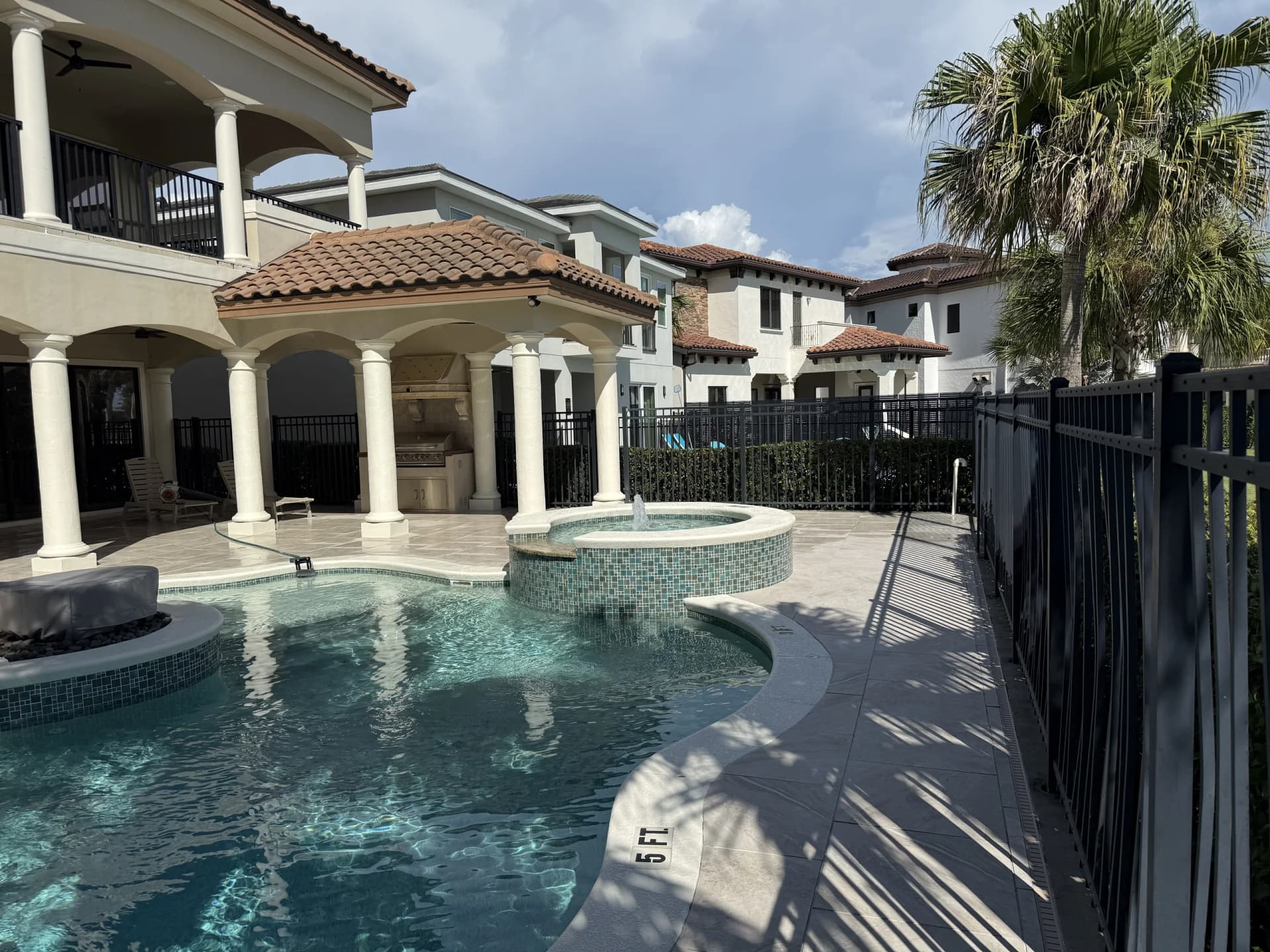
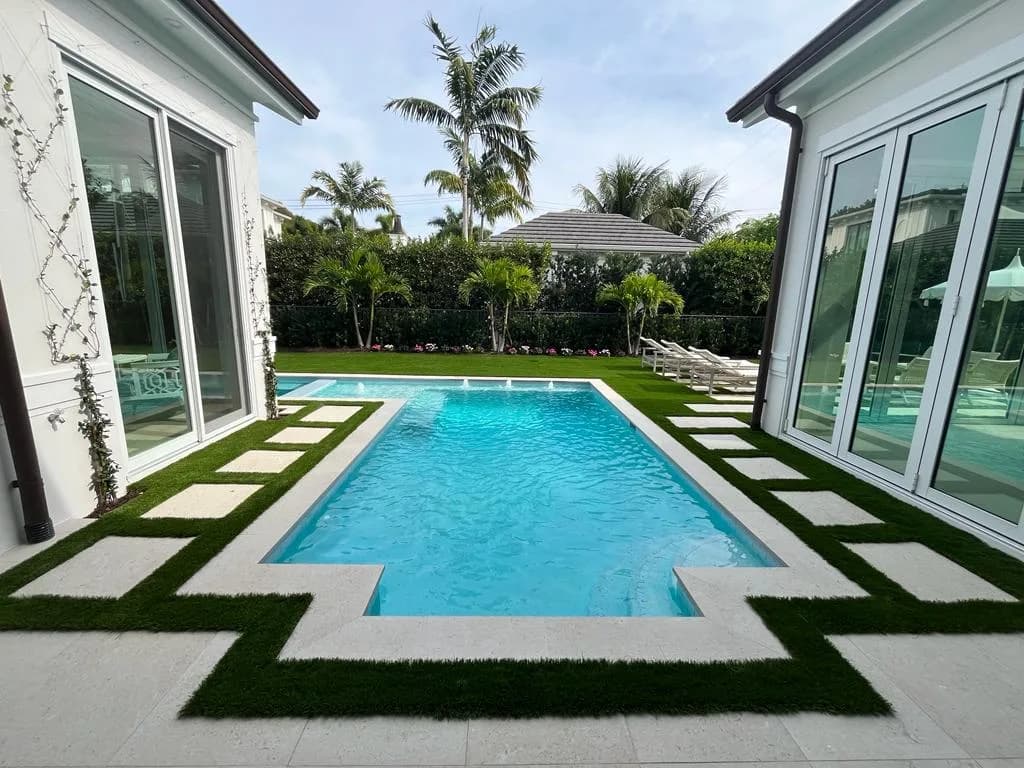
Start with ivory, because ivory is the safest beautiful answer in this state. Hardscape.com's Coralina Ivory reads as a warm beige coral stone with soft grey veins drifting through it, and on a pool deck it does something photographs undersell: it holds light rather than throwing glare, so the deck stays bright at noon without the sting of a stark white. Its sibling Coralina Bianco pushes cooler and whiter for a cleaner, more contemporary read, and Acido Bianco takes that further into true marble-look white if your house is coastal modern with black window frames and a lot of glass. All three sit at the reflective end of the range, which is why a Siesta Key deck in one of them is still walkable at the hour a dark deck has effectively closed. If your architecture leans Mediterranean or transitional, Shellstone and Beach Beige carry the warm sand tone Florida homes have wanted for forty years, without a real shell stone's porosity or its resealing calendar.
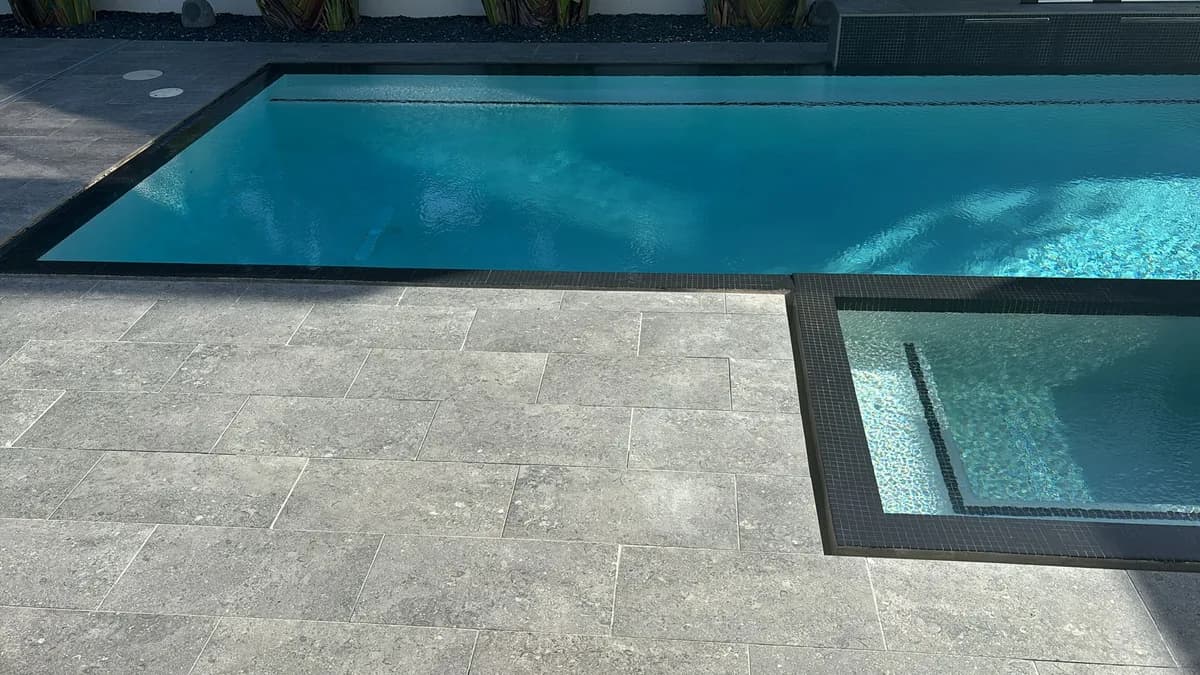
Grey is the other correct answer, and it is where 2026 is trending hardest. Light Grey and Coralina Grey deliver the cool, quiet, gallery-floor look that makes a deck read modern, and they run within a few degrees of ivory underfoot, because value is what governs heat, not hue. Quartz Beige and Sandstone Beige split the difference for homeowners who want warmth with less yellow in it. Snow White and Silver White are the brightest options on the board and the coolest of all underfoot; the honest caveat is glare, which on a full-sun, unshaded Bradenton deck can be genuinely tiring on the eyes by four in the afternoon. Our usual counsel there is to step one shade off pure white. The most useful thing you can do with any of these is order two or three full pieces, not chips, and leave them out on the deck for a weekend. Look at them wet, look at them at noon, and stand on them barefoot. Whichever one you keep standing on is your answer.
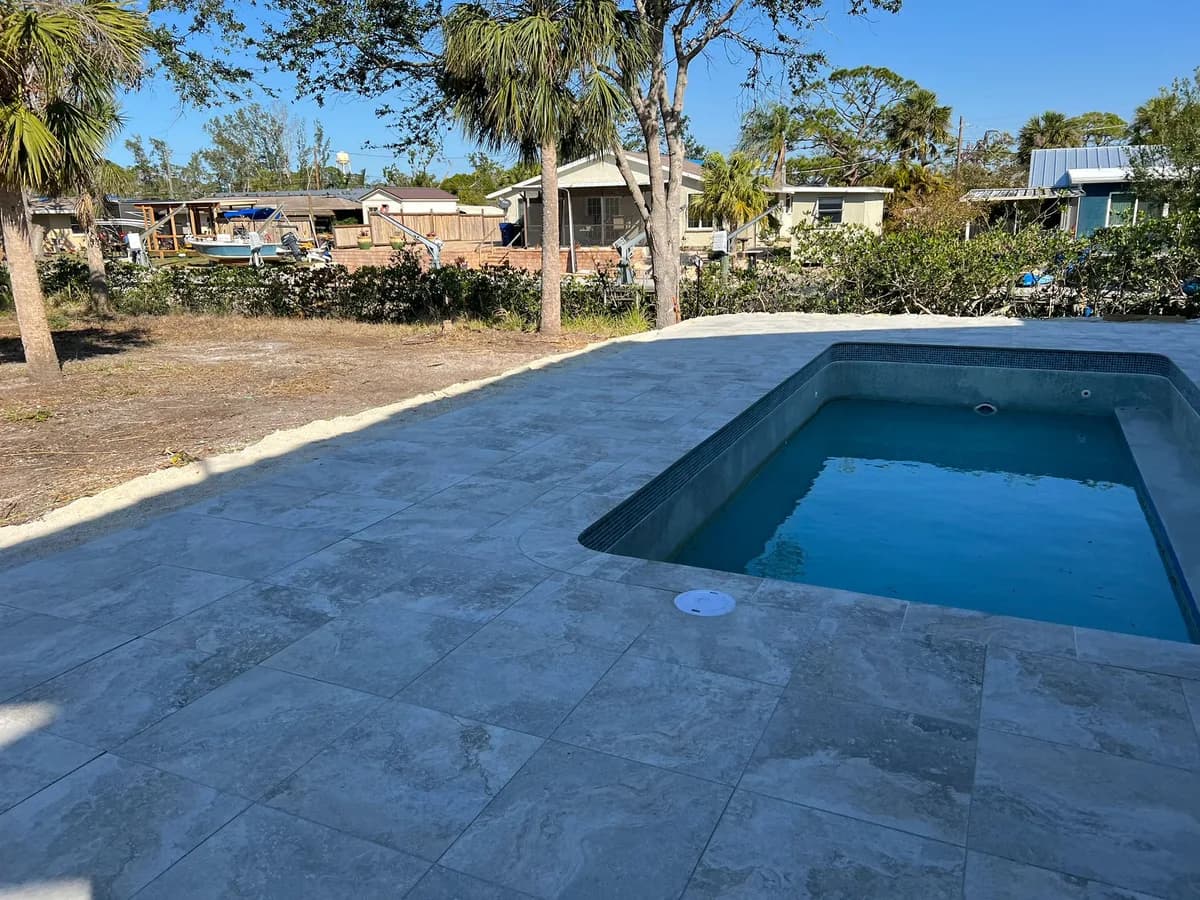
The Colors We Talk Homeowners Out Of (and Where They Still Belong)
Now the hard conversation. Basalt Black, Bluestone Dark, Antico Grigio, and Diana Imperial are genuinely striking materials — the deep saturated charcoals and near-blacks that make a modern house look expensive in a photograph — and we will not run them across a full-sun Florida pool deck. Not because they are lesser products. A dark Hardscape.com paver is the same vitrified body, the same sub-half-percent water absorption, the same color-through-body stability twenty years out as a light one. It is that on an unshaded Palmer Ranch deck the surface swings close to forty degrees between the seven a.m. reading and the two p.m. one, and a dark tone puts the top of that swing past what a bare foot will tolerate. Homeowners almost never regret the look. They regret the July where nobody crossed from the slider to the pool without shoes, and the floats stayed in the garage because the deck stopped being a place anyone lingered.
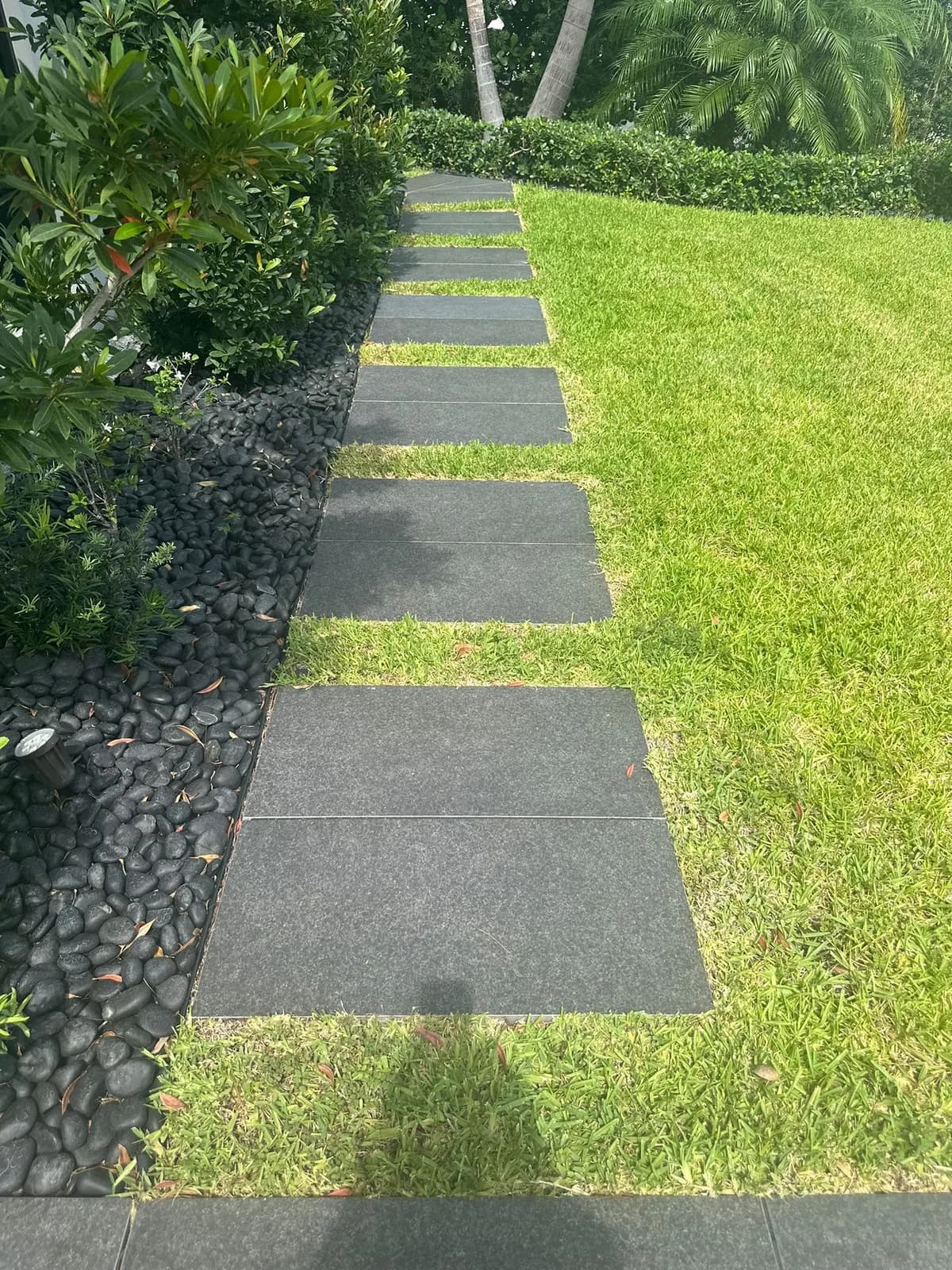
Dark tone is not banned here. It is a tool with a specific job. Use it as a border, where a single soldier course of Ancient Grey or Basalt Black framing an ivory field is the detail that makes a deck look designed instead of merely tiled, and where nobody stands anyway. Use it on a screened lanai, where the cage and the roof cut the direct load and the floor never sees straight noon sun. Use it on a covered entry, a north-facing walkway, a path running under live oaks in Bradenton, or the surround of an outdoor kitchen where everyone is in shoes with a drink in hand. What we steer people away from regardless of color is a polished finish. A glossy marble-look slab rated R9 is the most seductive thing in the showroom and it is genuinely hazardous at a wet pool edge. Take the same collection in its textured version — you keep the veining and the depth, and you keep your footing.
Color Is Half the Answer. Finish and Format Are the Rest.
Color gets you most of the way there. Finish is the remainder. Anywhere people are barefoot and wet — the pool perimeter, the coping, an outdoor shower, any step — you want a slip rating of R11 under the German ramp test and a wet dynamic coefficient of friction of at least 0.42, with R12 worth asking for right at the pool edge and on wet stairs. The surface that gets you there in 2026 without looking industrial is a sandblasted or structured face, which reads soft and matte in a light tone and gives the ball of your foot something to grip. It solves a second Florida problem at the same time, because a three-inch afternoon downpour sheets across a deck fast and texture is the only thing standing between that and ten minutes of skating rink. This is where a cool color and a real slip rating stop being two decisions and become one.
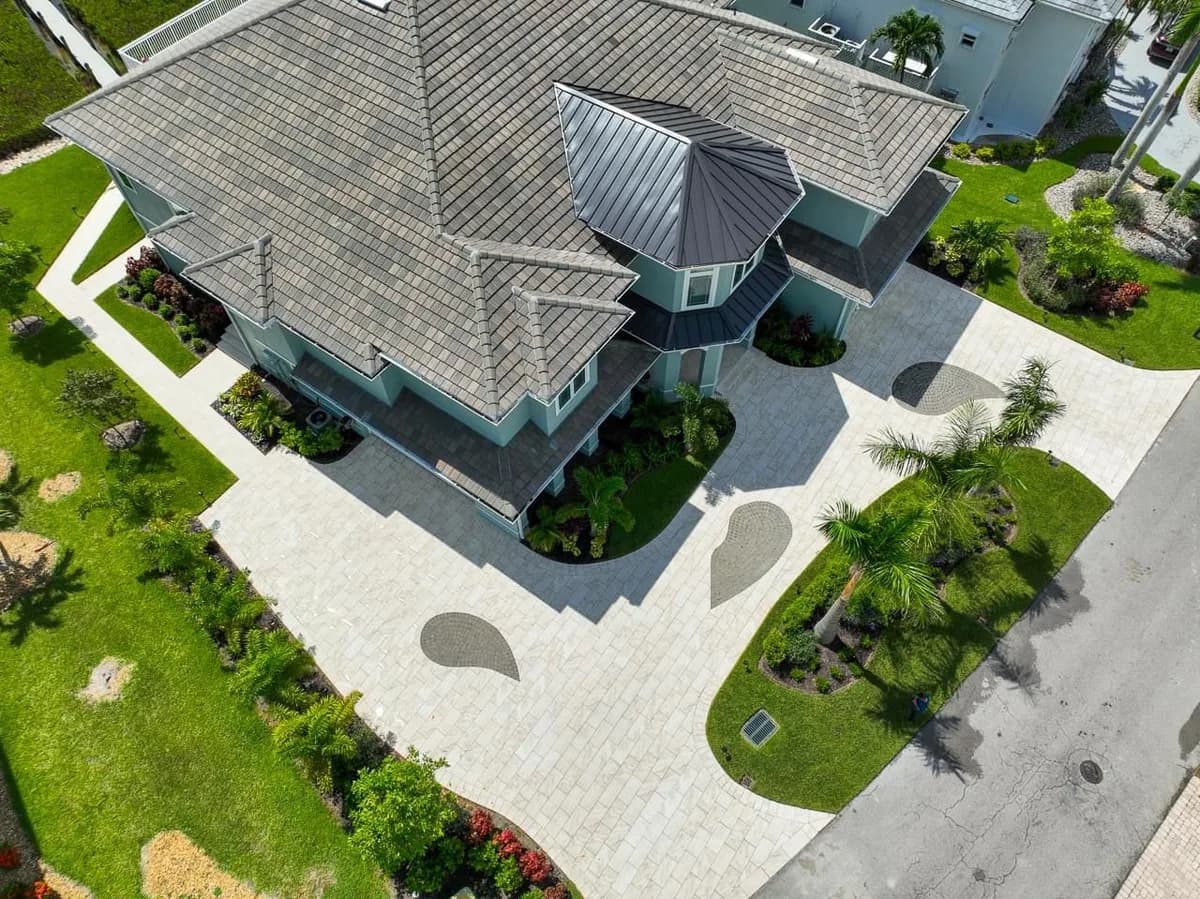
Format matters more than most people expect. The 2026 direction is large — 24 by 24 and up — because fewer joint lines make a deck read calmer and visually bigger, and in a pale tone that effect compounds until a modest Lakewood Ranch pool deck feels like a courtyard. It also raises the stakes below the surface: large-format porcelain in a light color shows every millimeter of lippage as a shadow line, so the substrate has to be truly flat, the layout offset held to about a third of the slab, and leveling clips run across the entire field rather than just the awkward corners. That part is not a showroom decision, and it is the reason the same ivory tile looks serene on one deck and restless on another. As the only Hardscape.com Certified porcelain installer across Sarasota, Manatee, Hillsborough, Orange, Lee and Pasco Counties, the work we take seriously is making sure the deck you fell for in a sample is still that in year ten — same color, still cool, still flat.
What each tone actually does on an unshaded Florida deck
| Tone | Typical midday surface | Where we use it |
|---|---|---|
| Ivory / cream — Coralina Ivory, Shellstone, Beach Beige | About 100–110F | Full-sun pool decks and every barefoot zone |
| Bright white — Snow White, Acido Bianco, Silver White | Coolest of the range | Full sun, but expect glare after 4 p.m. |
| Light grey / beige — Light Grey, Quartz Beige, Sandstone Beige | Within a few degrees of ivory | Modern decks and indoor-outdoor flow |
| Mid grey — Ancient Grey, Silver Grey, Coralina Grey | Noticeably warmer underfoot | Screened lanais, borders, shaded walkways |
| Charcoal / black — Basalt Black, Bluestone Dark, Diana Imperial | Can pass 140F | Borders, covered areas, shoes-on zones only |
Surface temperatures are typical full-sun readings, not manufacturer claims — value (how light or dark) drives them far more than hue does. Judge every sample outdoors, on the ground, at midday.
Financing Available
See your monthly payment before you decide
Compare real offers from more than twenty lenders through Acorn Finance, our financing partner. It takes about a minute, and checking does not affect your credit score.
Pay the way that suits you: credit and debit cards, bank transfer or check — or finance the project over monthly payments through our partner.
- Offers from 20+ lenders
- Pre-qualify in about 60 seconds
- No impact on your credit score

Financing is provided through Acorn Finance, an independent lending marketplace. EC Paver Solutions is not a lender and does not set rates or terms. Pre-qualification uses a soft credit inquiry and does not affect your credit score; final rates and terms come from the lender and are subject to approval.
Frequently Asked Questions
Do dark pavers get hot in Florida?+
What is the coolest paver color for a pool deck?+
Do porcelain pavers get hot in the sun?+
Do porcelain pavers fade in the Florida sun?+
What color pavers hide dirt best in Florida?+
See the Colors on Your Deck, Not in a Showroom
We will bring full-size samples of the light tones to your yard, lay them where the pool deck actually is, and let you step on them at the hour that decides everything — then put the color, the slip rating, the format, and the substrate plan in writing before you owe anything. EC Paver Solutions is the only Hardscape.com Certified porcelain paver installer in Sarasota, Manatee, Hillsborough, Orange, Lee and Pasco Counties. Call (941) 250-4635.

Written by
EC Paver Solutions
EC Paver Solutions delivers premium paver installation across Sarasota, Bradenton, Lakewood Ranch, Tampa, Orlando, and Fort Myers. Hardscape.com Certified — the only certified hardscape contractor across five Florida counties.