

2CM vs 3CM Porcelain Pavers: Florida Thickness Guide
A 2CM porcelain paver tests at roughly 13,000 newtons of breaking strength; a 3CM tests as high as 29,672 — about 2.3 times the resistance, for one more centimeter of material. Here is exactly which thickness belongs on a Sarasota pool deck, which one a driveway requires, and why the base underneath decides more than either number.
The Numbers That Actually Separate 2CM and 3CM
Thickness is the line on a porcelain quote most homeowners scroll past, and there is a real number behind it. A 2CM paver carries a breaking strength of roughly 13,000 newtons, while a 3CM paver tests as high as 29,672 newtons — about 2.3 times the resistance for a piece that is only one centimeter thicker. In practical terms, 2CM lands near three quarters of an inch and a 24 by 24 piece weighs about 40 pounds; 3CM runs about an inch and a quarter and the same piece weighs closer to 60 pounds. The published breaking-strength figures above are manufacturer values for specific product lines, measured as a concentrated point load — ask for the datasheet of the exact item being quoted rather than treating either number as a category-wide guarantee. Breaking strength is a lab measurement of a concentrated point load, not a marketing figure, and that is precisely why it belongs in this conversation. A patio chair leg, a dropped dumbbell, and a turning car tire are all point loads. They simply differ by an order of magnitude, and the thickness you order has to match the largest one your surface will ever see.
The second difference rarely shows up on a quote at all: which installation methods each thickness unlocks. 2CM is built to be fully supported — bond-set in exterior thin-set over a sound concrete slab, or sand-set over a properly built base where every square inch of the underside is bearing. 3CM is rated to carry load with less continuous support, which is why it is the thickness manufacturers specify for sand-set driveways and for pedestal systems over a roof deck or a low lanai. Price follows the same line. In the Sarasota, Bradenton, and Tampa market, 3CM carries a material premium over 2CM, and installed pricing for either moves with the substrate you are building on and installs higher once the deeper base a driveway needs is included. The material premium is real but modest. What sits under the paver is where the money actually goes.
Why 2CM Is the Right Call for Almost Every Florida Pool Deck
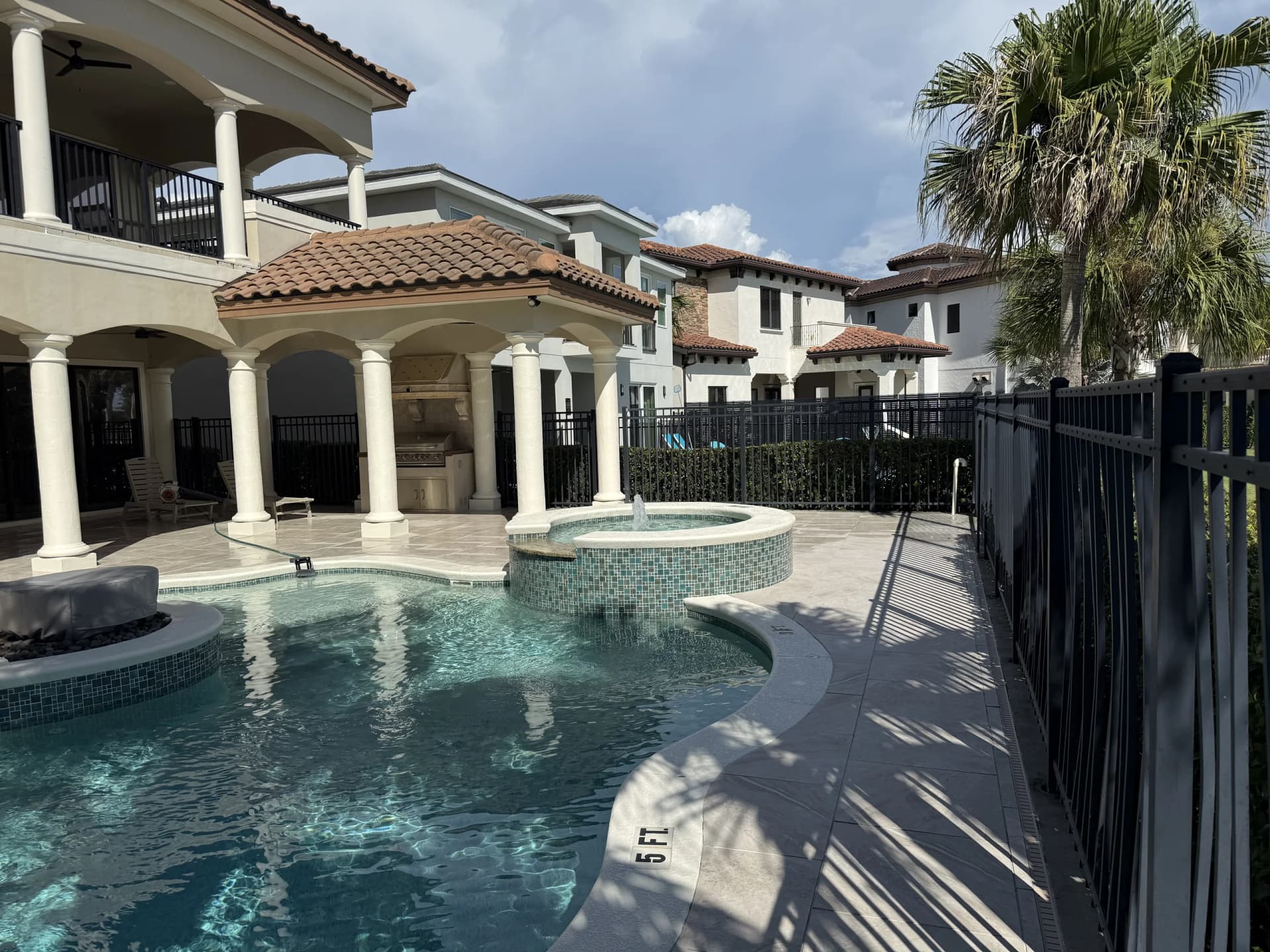
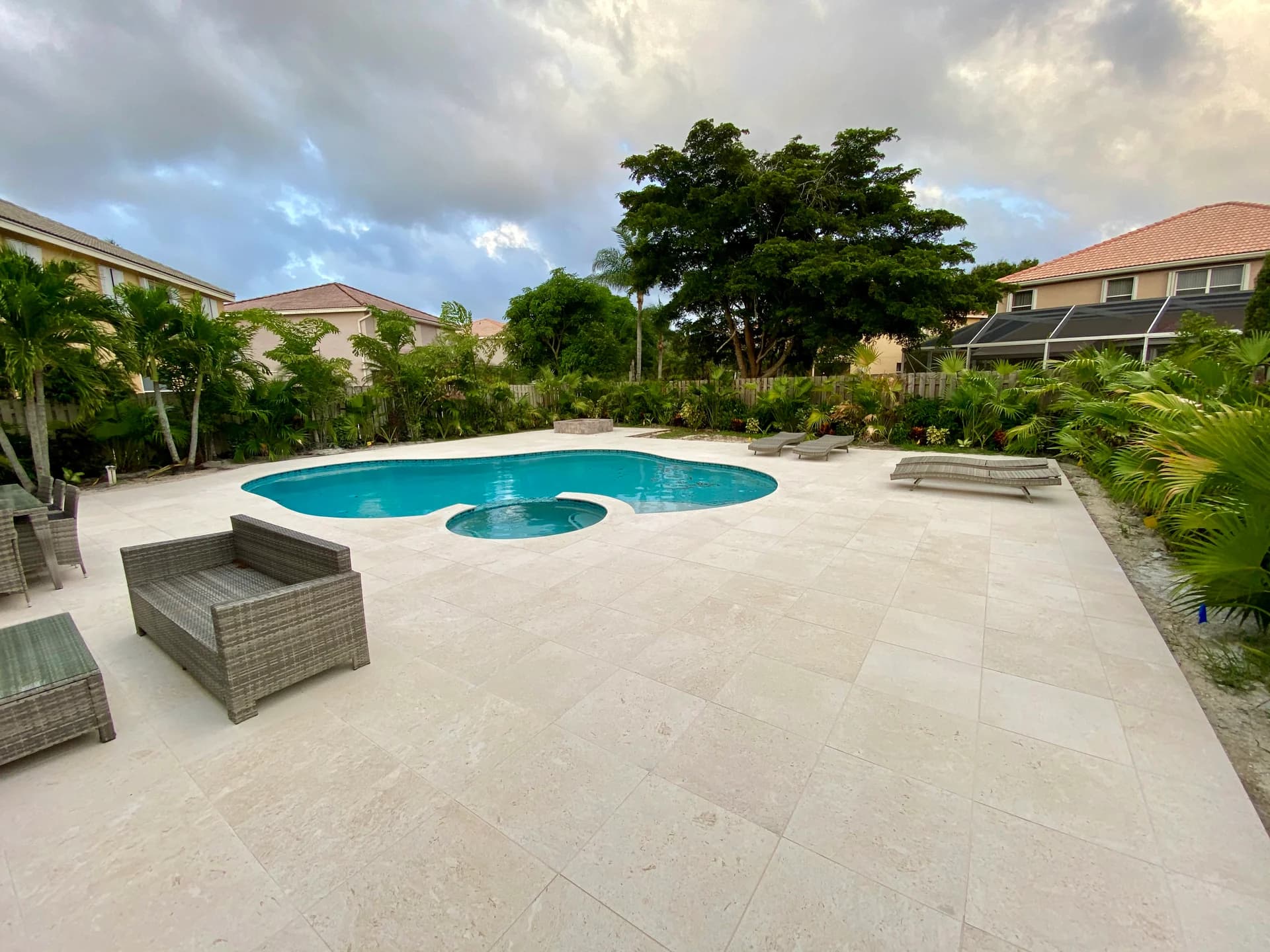
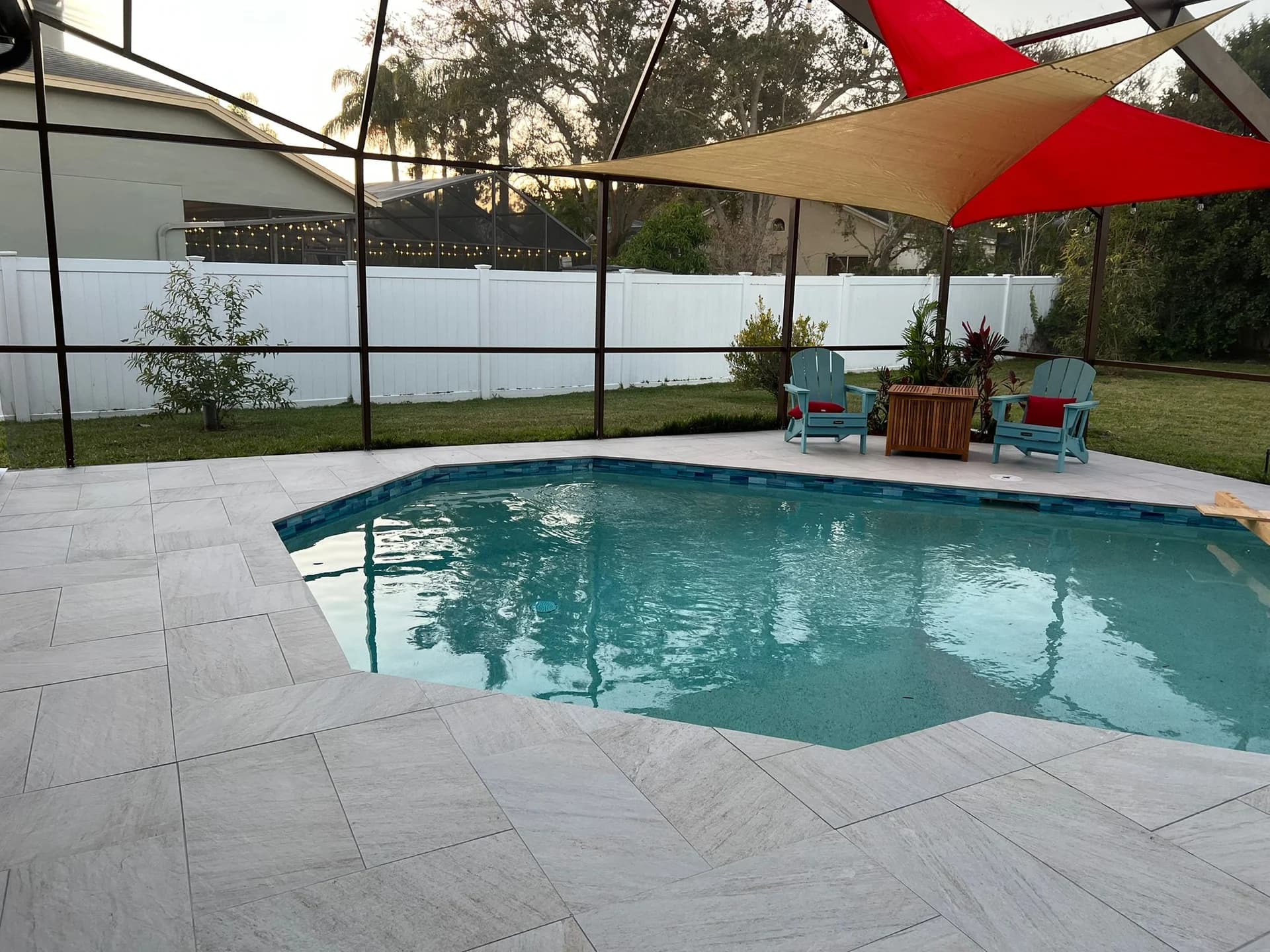
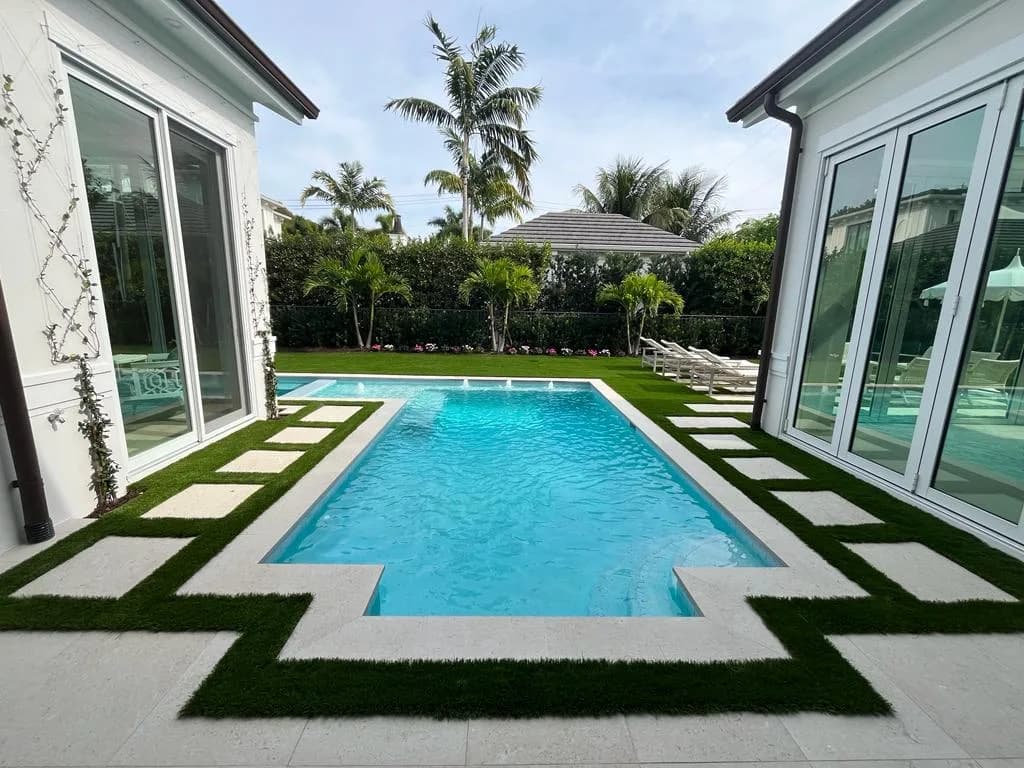
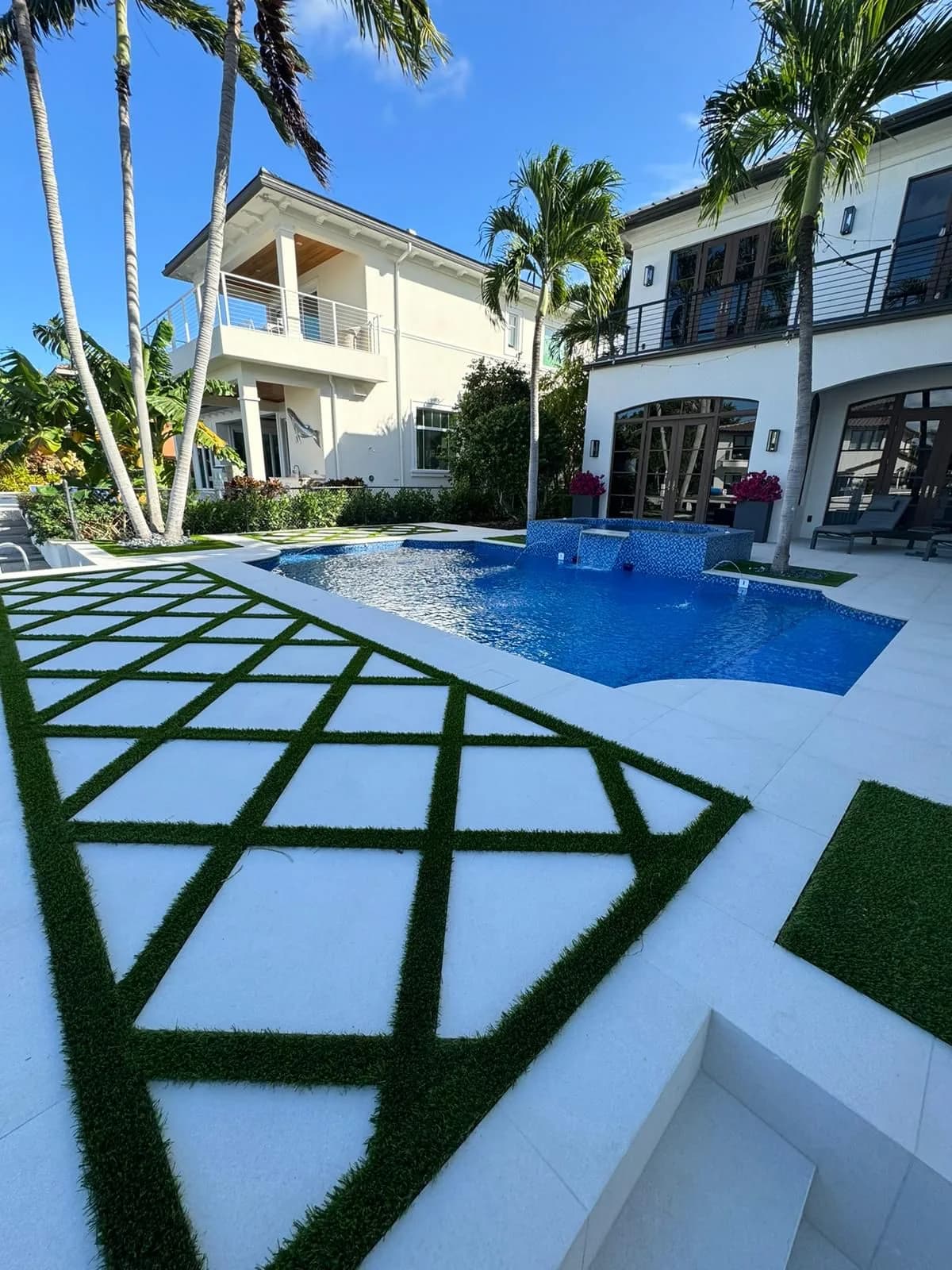
For a pool deck, a screened lanai, a patio, or a walkway, 2CM is not the budget compromise. It is the correct specification. Those surfaces see foot traffic, patio furniture, and the occasional grill, and a fully supported 2CM paver absorbs all of it with a wide margin left over. The thinner profile also solves a Florida problem that has nothing to do with strength. Overlaying an existing lanai slab in Palmer Ranch or Lakewood Ranch raises the finished floor, and that rise has to fit under the slider threshold and land correctly against the pool coping. 2CM plus a thin-set bed adds roughly an inch; 3CM plus the same bed adds close to an inch and a half. On a lanai where the slider already sits low, that half inch is the difference between a clean transition and a modified threshold with a trim piece hiding the compromise.
There are three places we will not use 2CM, and every one comes down to support rather than weight. The first is anything a vehicle touches, including the tail of a driveway apron where a tire clips the corner during a three-point turn. The second is a pedestal system, where the paver spans an air gap on four corner supports and the center carries nothing underneath it — that application gets 3CM, or a 2CM piece with a factory fiberglass backing sheet, and never a bare 2CM slab. The third is a sand-set field where the bedding was not built to a dead-flat, fully compacted plane, because a 2CM paver bridging a soft spot concentrates the entire load right at the void edge. Florida makes that third case common. Sandy fill migrates, heavy summer rain moves fines through an unseparated base, and a bed that was flat in May can be dished by September.
Once a Car Is Involved, 3CM Stops Being Optional
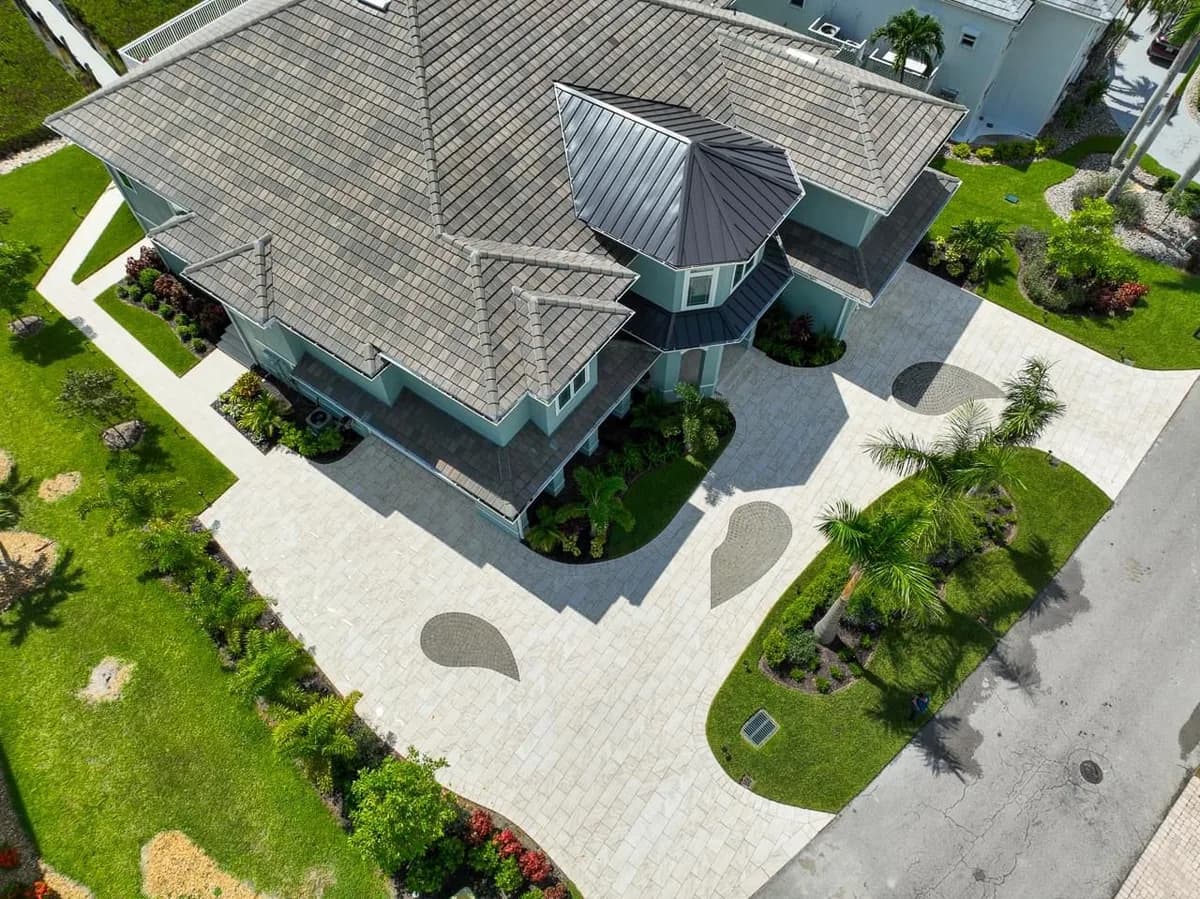
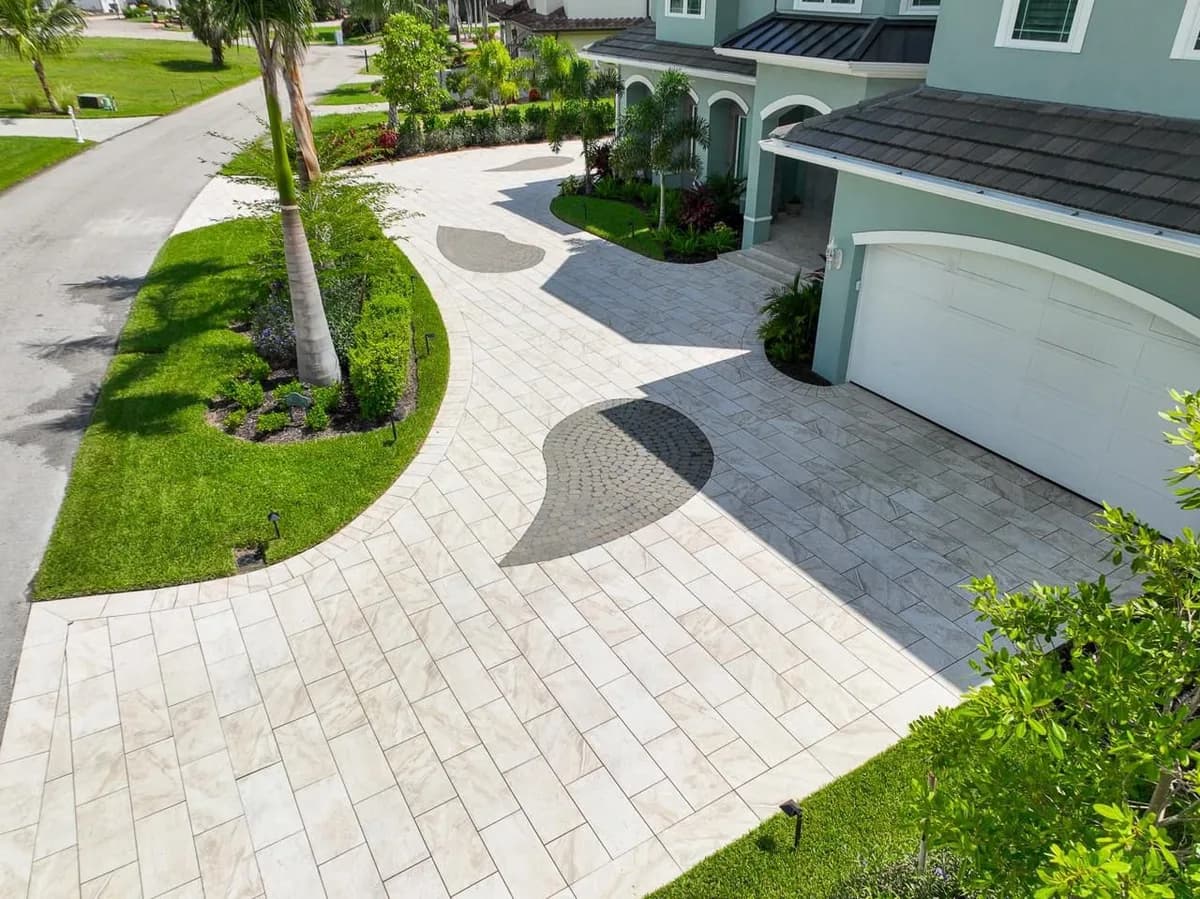
A driveway does not load a paver the way a patio does. A parked sedan is a static load and almost anything survives it. A car turning its front wheels while stopped is a dynamic, twisting point load, and that is the force that snaps thin porcelain. 3CM is engineered for exactly that, and manufacturers rate it for residential vehicle traffic with support for loads well beyond 50,000 pounds when it is bedded correctly. Hardscape.com offers its Da Vinci marble-look collection in both thicknesses for this reason — the same rich browns, greys, and white veining that reads as honed marble on a pool deck is available in a 3CM version that will take an SUV every day for twenty years. You are not trading appearance for capability. You are matching the thickness to whatever rolls, parks, and turns on it.
The build underneath changes with the thickness, and this is where driveway quotes diverge the most. Under a 2CM pool deck we are usually working over an existing slab or a six to seven inch compacted limestone base. Under a 3CM driveway in Manatee or Sarasota County we want eight to ten inches of compacted crushed limestone or shell rock placed in three inch lifts over geotextile separation fabric, a proper concrete sand bedding course, and a rigid edge restraint that will not let the field creep outward. Golf-cart communities around Lakewood Ranch deserve their own note here. A cart is light, but a cart path absorbs thousands of tight turning cycles a year, and we spec 3CM there as well. For commercial plazas, loading zones, or anywhere delivery trucks pivot regularly, 5CM exists — and we will say so rather than pushing a residential thickness into a job it was never rated for.
What the Spec Sheet Says vs. What We See in Florida
The manufacturer spec is right, and it is also incomplete for our soil. Hardscape.com publishes clean guidance: 2CM for foot traffic, 3CM for residential driveways, 5CM for heavy commercial vehicle loads, sand-set over a compacted aggregate base with about a quarter inch of fall per foot. Every word of that is correct. What a national sheet cannot account for is that our base is fighting sandy subgrade, a water table that can sit two or three feet down, and rain events that drop three inches in an afternoon. We have lifted cracked 3CM pavers off driveways that failed anyway, and the porcelain was never the problem — the base had bled its fines into the subgrade because nobody put separation fabric down. Thickness buys you margin. It does not buy you a base, and ordering the correct thickness onto a bad one is just an expensive way to fail slowly.
Two more Florida details move the answer. Within a few miles of the water on Siesta Key or Anna Maria Island, we change the jointing spec before we change the thickness spec, because chloride attacks the joint and the setting bed long before it bothers a vitrified paver — a marine-grade or epoxy joint matters far more there than an extra centimeter of porcelain. For any wet surface we want an R11 rated texture regardless of thickness, since slip resistance is a finish property, not a thickness property. Cutting is the last practical difference: a large-format 3CM piece needs a wet saw, a rated blade, and a crew that has actually done it, and a chipped edge on a premium large-format paver is not a mistake anyone wants to absorb. That product-specific training is what the Hardscape.com Certified credential covers, and it is why we get called in to finish other crews' porcelain.
Porcelain Paver Thickness by Use — Sarasota, Bradenton & Tampa
| Thickness | Breaking strength | Right for |
|---|---|---|
| 2CM (about 3/4 in) | Approx. 13,000 N | Pool decks, lanais, patios, walkways — foot traffic |
| 2CM bond-set over sound slab | Approx. 13,000 N (slab carries load) | Overlays on existing concrete, low-threshold lanais |
| 3CM (about 1 1/4 in) | Up to approx. 29,672 N | Residential driveways, golf-cart paths, pedestal systems |
| 5CM (about 2 in) | Highest rated | Commercial plazas, loading areas, constant truck turning |
Driveway pricing assumes 8–10 in of compacted crushed limestone or shell rock over geotextile fabric — the single largest cost variable and the one cheap quotes leave out. Coastal projects near Siesta Key or Anna Maria Island add a marine-grade joint compound. Large-format 3CM cutting, tight access, and screened enclosures all add labor. Every number goes in writing after we measure the site in person.
Financing Available
See your monthly payment before you decide
Compare real offers from more than twenty lenders through Acorn Finance, our financing partner. It takes about a minute, and checking does not affect your credit score.
Pay the way that suits you: credit and debit cards, bank transfer or check — or finance the project over monthly payments through our partner.
- Offers from 20+ lenders
- Pre-qualify in about 60 seconds
- No impact on your credit score

Financing is provided through Acorn Finance, an independent lending marketplace. EC Paver Solutions is not a lender and does not set rates or terms. Pre-qualification uses a soft credit inquiry and does not affect your credit score; final rates and terms come from the lender and are subject to approval.
Frequently Asked Questions
What thickness porcelain paver do I need for a driveway?+
Can you use 2CM porcelain pavers on a driveway?+
Are 3CM porcelain pavers better than 2CM?+
How thick should pool deck pavers be?+
Can porcelain pavers be installed over sand?+
Not Sure Which Thickness Your Project Needs?
Tell us what the surface has to carry and what it is going over, and we will spec the thickness, the base, and the finish in writing before you commit to anything. EC Paver Solutions is the only Hardscape.com Certified porcelain paver installer in Sarasota, Manatee, Hillsborough, Orange, Lee and Pasco Counties.

Written by
EC Paver Solutions
EC Paver Solutions delivers premium paver installation across Sarasota, Bradenton, Lakewood Ranch, Tampa, Orlando, and Fort Myers. Hardscape.com Certified — the only certified hardscape contractor across five Florida counties.