

Pool Deck Resurfacing vs. Replacement in Florida
Resurfacing costs a fraction of a full replacement in Sarasota and Bradenton — but the price gap is not the decision. Here is how we check whether your slab can actually carry a coating, and the third option almost nobody quotes you.
Resurfacing Is Not One Product — It Is at Least Three
Three contractors quote your pool deck and you get three numbers that look nothing alike, and the reason is almost always the same: resurfacing is not one product, it is at least three. The cheapest tier is an acrylic spray texture, usually sold as cool deck, and it is the least expensive option on the board the day it goes down. Above that sits knockdown texture, and above that a decorative overlay or polyaspartic system. Every one of those is a coating bonded to the concrete slab you already own. That is the detail homeowners miss when they line up bids: resurfacing changes what the deck looks like and how it feels underfoot, but it does not change what the deck is sitting on. If the slab under the coating is sound, that is a genuine bargain. If it is not, you have just paid to hide the problem for a season.
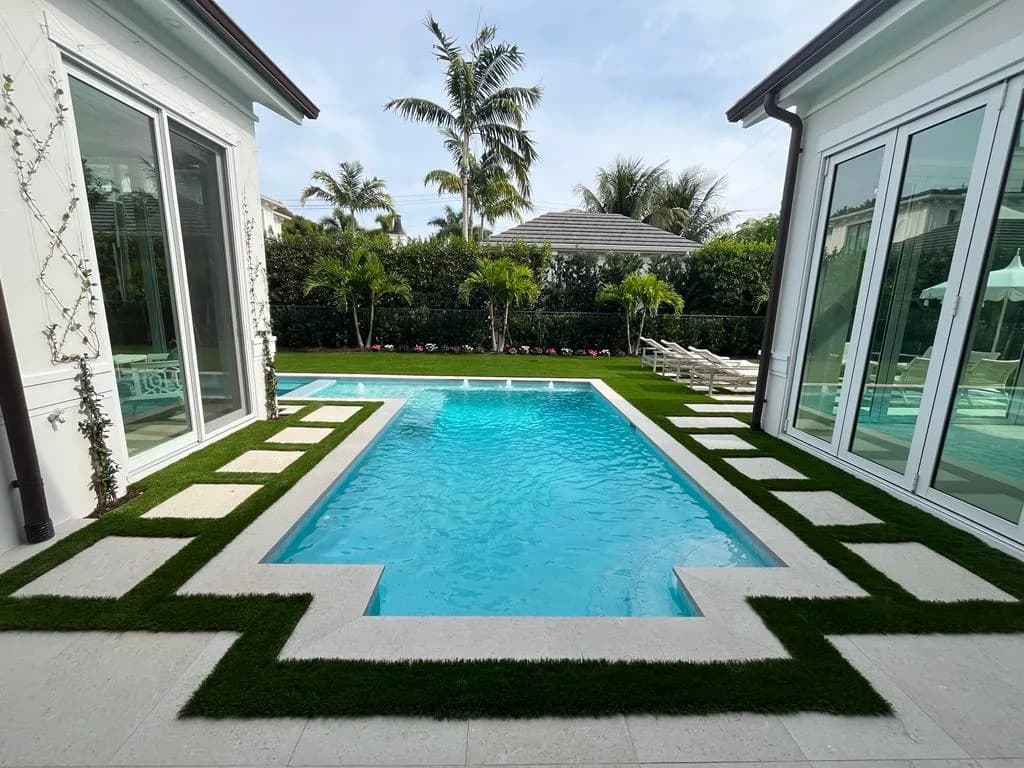
Replacement sits at the other end of the scale. A true replacement means saw-cutting and demolishing the existing deck, hauling the debris out, re-grading and compacting the base, then either pouring new concrete or building a paver system on top of it. In our market the number moves with access, deck size, and how much of the base has to be rebuilt — which is why it is quoted after the assessment, not before. On a 600 square foot deck — a common size around Palmer Ranch and Lakewood Ranch — a rebuild is a multiple of what a coating costs on day one. The spread is real, but so is the difference in what you are buying. Replacement is the only option on this list that lets us correct the two things Florida punishes hardest: a base that has lost compaction under sandy fill, and a deck that no longer sheds water away from the house.
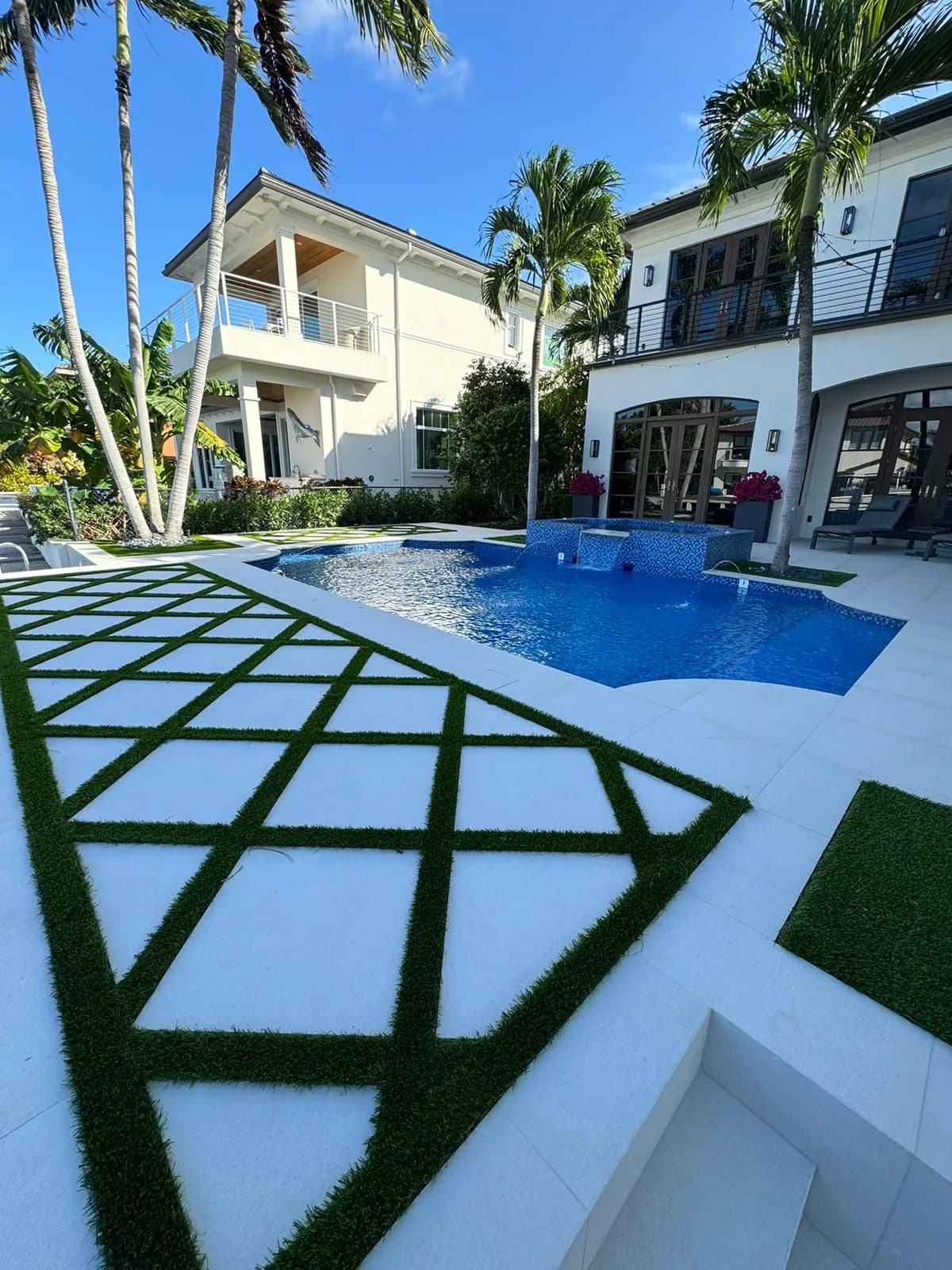
When Resurfacing Works, and When It Is Money Down the Drain
We put every deck through the same three checks before we will endorse a coating, and they are the checks any honest resurfacer should be running too. First, are the cracks cosmetic? Hairline up to about a quarter inch, with both sides of the crack sitting at the same height, is a candidate. Second, is the slab still in full contact with its base? Tap across it and listen — hollow sections mean the sandy fill underneath has washed out and left a void, which is common on 1980s and 1990s homes in Bradenton and out on the barrier islands where storm water has been moving under slabs for decades. Third, does it drain? You want roughly a quarter inch of fall per foot away from the house. A deck that ponds after an August afternoon storm will keep ponding under a new coating, because a coating is about an eighth of an inch thick and cannot regrade anything.
When a deck fails those checks, resurfacing becomes the most expensive cheap decision a homeowner can make. Skim a resurfacer over an active, differential crack and it telegraphs back through the new finish, usually within one wet season — we have been called out to coatings that split along the original crack line before the first summer ended. Salt makes it worse near the water; on Siesta Key and Anna Maria Island we see chloride-driven spalling that keeps eating the slab underneath while the coating on top still looks presentable. And even on a perfect slab, a coating is a maintenance commitment: plan on resealing every two to three years inland and every twelve to eighteen months on a coastal deck, with a realistic service life of seven to twelve years for acrylic systems and ten to fifteen for a good decorative overlay.
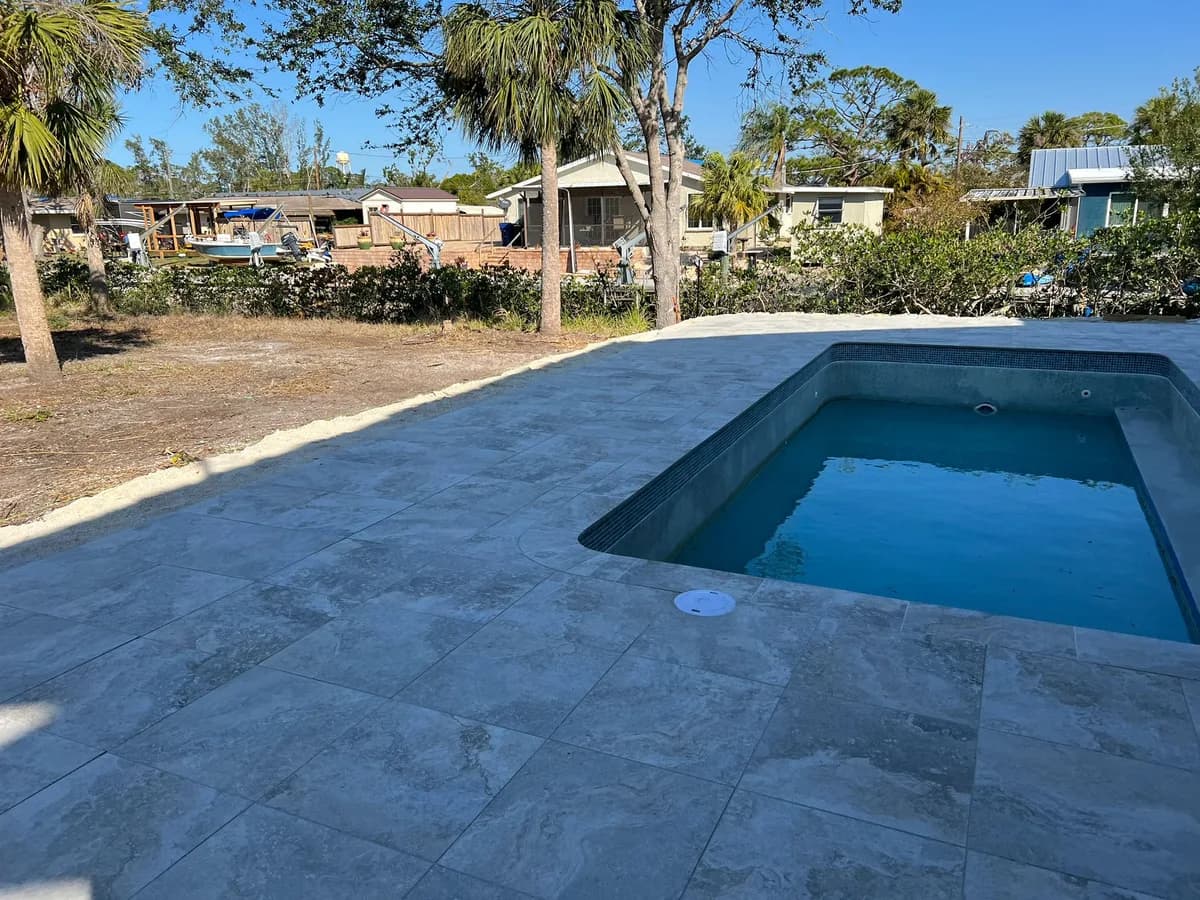
The Third Option Nobody Quotes: Porcelain Over Your Existing Slab
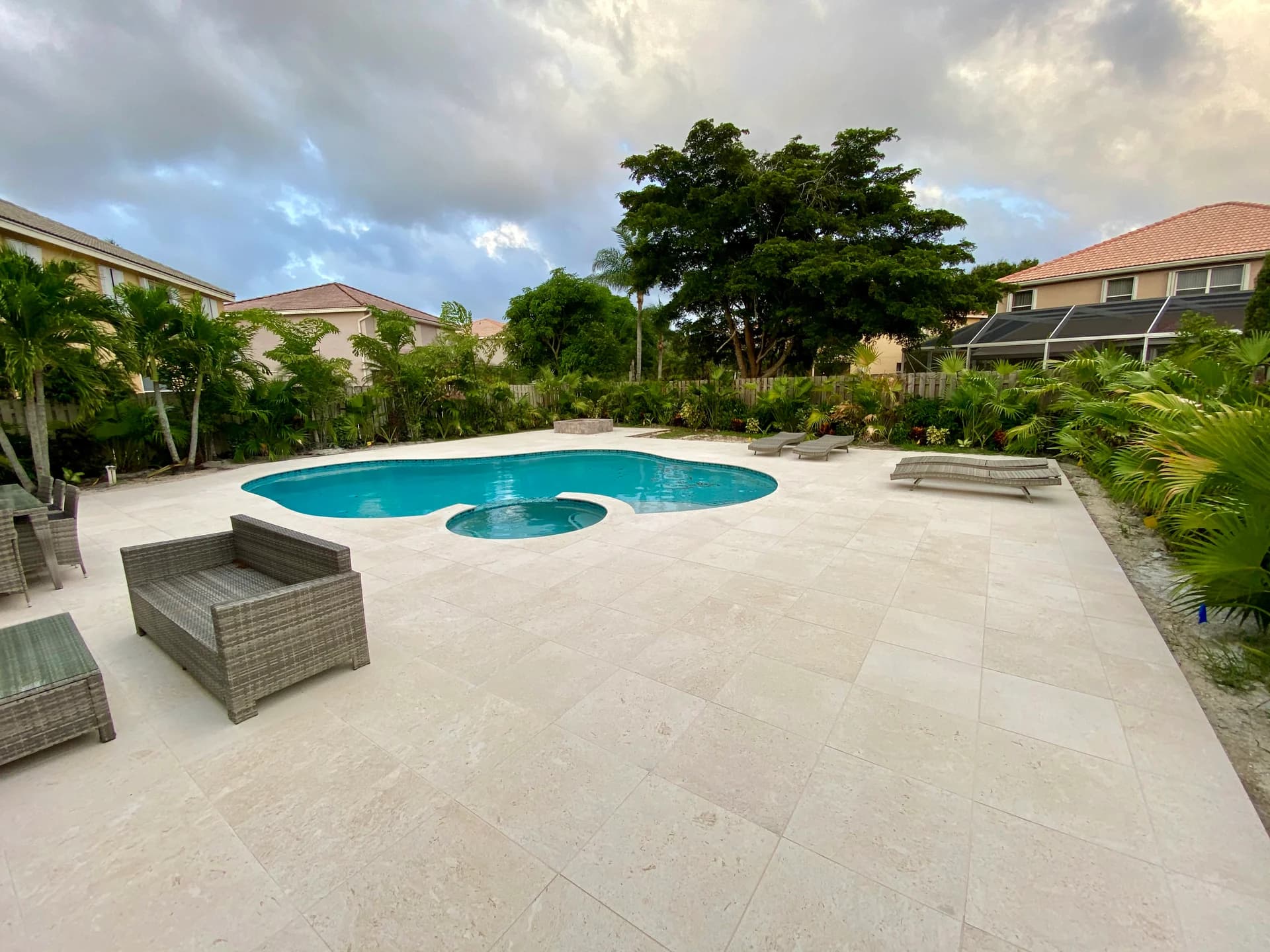
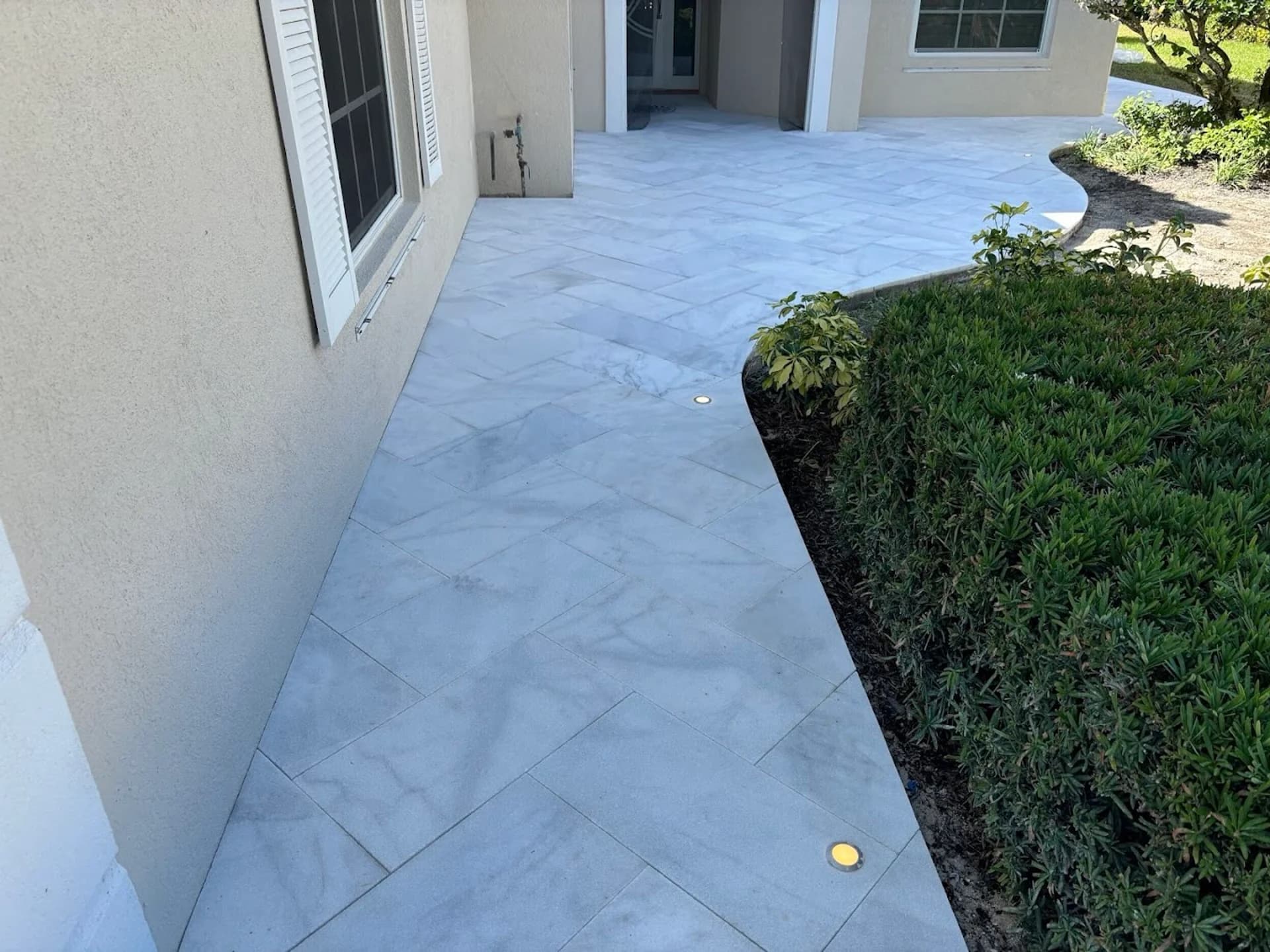
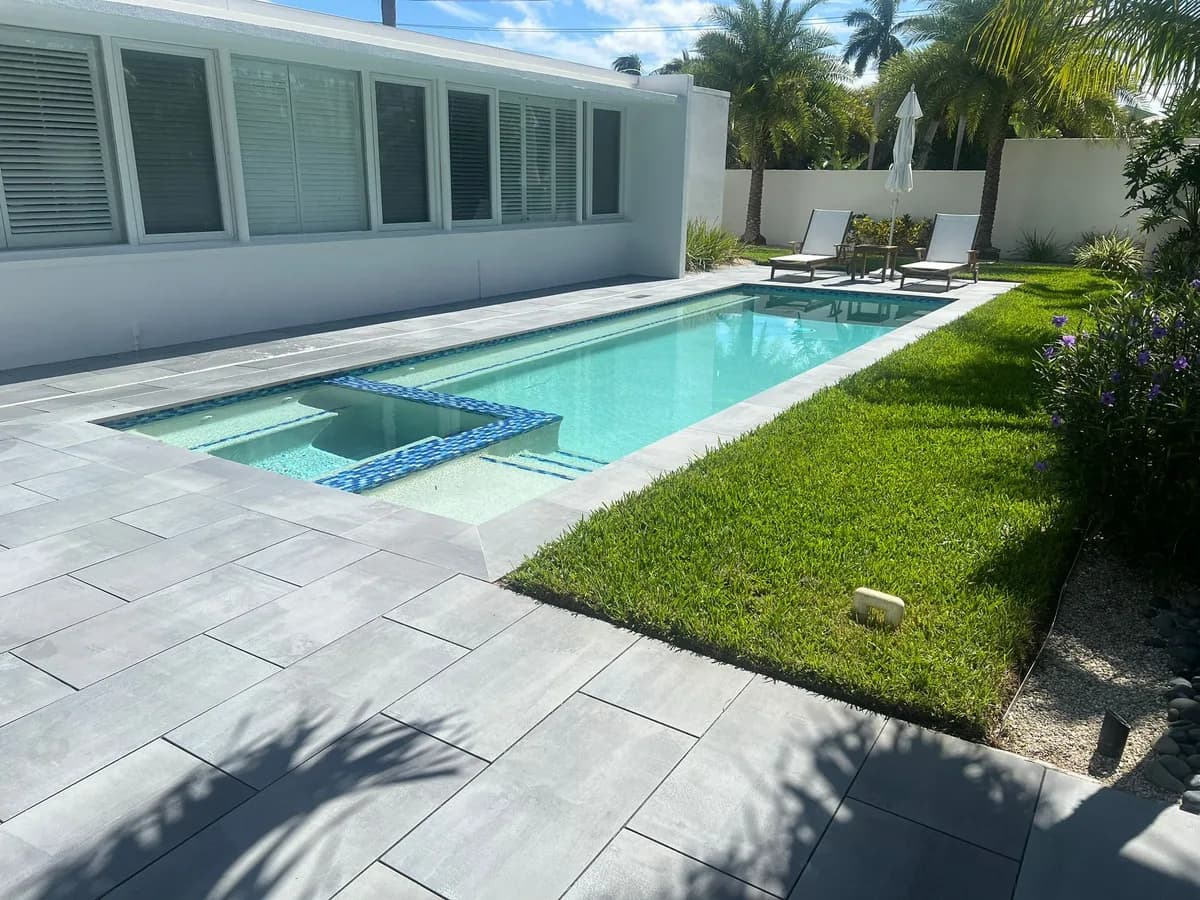
Here is the option most homeowners never hear about, because concrete resurfacing companies do not sell it and most paver crews are not set up to install it. If your slab passes those same three checks, porcelain pavers can be bond-set directly onto it with an exterior polymer-modified thin-set — no demolition, no new base, no haul-away. It reuses your existing concrete exactly the way a coating does, which is why it prices below a full porcelain installation over a new base. What the premium over a coating buys you is a surface that is not a coating at all: a fired, vitrified paver with water absorption under half a percent, which never needs sealing and does not chalk, peel, or fade under Florida UV. The recoat cycle simply goes away.
Heat is the argument that closes it for most pool owners. A light ivory or pearl porcelain reads dramatically cooler underfoot than a mid-tone or dark coating in July, when air temperature sits above 95 degrees and an unshaded deck surface can swing close to 40 degrees between a 7 a.m. and a 2 p.m. reading. That daily expansion and contraction is also why the install details matter more here than the material does — the slab control joints have to be carried up through the porcelain field, and any old acrylic sealer has to be ground off completely or it acts as a bond breaker. Translating a correct national spec into what actually survives a Sarasota summer is the practical value of holding the Hardscape.com Certified Contractor credential. It is also the reason we will tell you no when a slab is not a candidate.
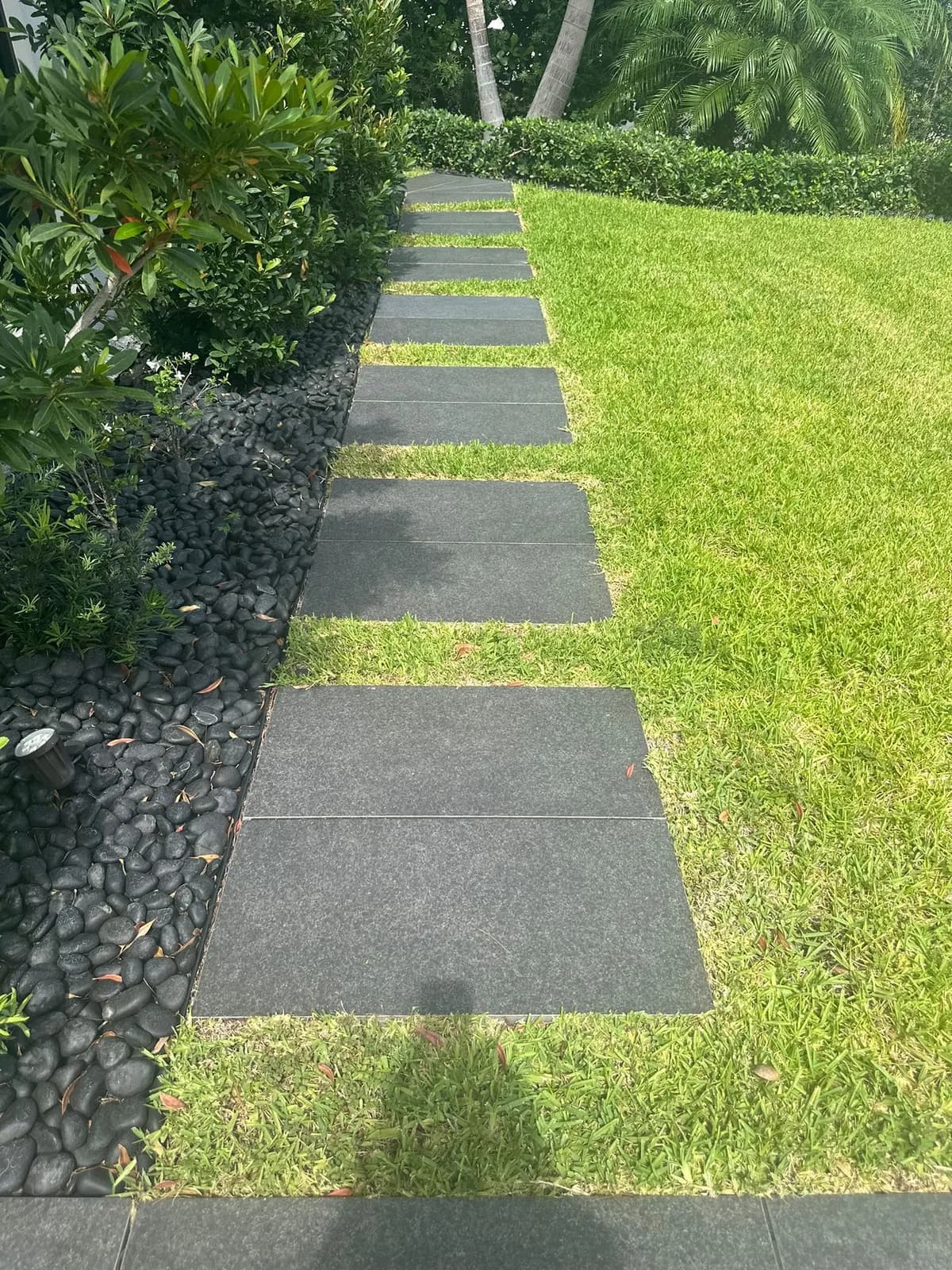
When Replacement Is Actually the Cheaper 15-Year Number
Replacement wins in four situations, and we will say so even when it is the quote a homeowner hoped to avoid. The first is base failure — a hollow, settling, or differentially cracked slab, where nothing you put on top will outlast the movement underneath. The second is drainage: if the deck slopes toward the house or ponds against a slab-on-grade foundation, that has to be regraded, and no overlay of any kind regrades anything. The third is a footprint change. If you want the deck wider for a summer kitchen, a new sun shelf edge, or a spa pad, you are excavating anyway, and blending a coating across old and new concrete never looks right. The fourth is a deck that has already been resurfaced twice, because at that point you are stacking coating over coating and the oldest bond line becomes the weakest layer in the whole assembly.
The honest way to choose is to run the fifteen-year number instead of the today number. An acrylic deck is the cheapest line on the estimate, then adds a reseal every two to three years, then a full redo somewhere between year eight and year twelve — and after all of it you still own the same slab you started with. A porcelain overlay is paid once, with no sealing and no recoat cycle after it. Full replacement costs the most up front and resets the base and drainage for twenty-five years. And if you are selling the house in three years, the acrylic coating is genuinely the right answer — which is a sentence you will not hear from a company that only installs one of these.
Resurfacing vs. Porcelain Overlay vs. Replacement — Sarasota & Bradenton
| Option | Realistic Florida lifespan | Fixes a failing slab? |
|---|---|---|
| Acrylic spray texture / cool deck | 7–10 yrs, reseal every 2–3 yrs | No — cosmetic only |
| Knockdown or decorative overlay | 10–15 yrs, reseal every 2–3 yrs | No — cosmetic only |
| Bond-set porcelain over sound slab | 20+ yrs, no sealing required | No — but far more tolerant |
| Full tear-out and replacement | 25+ yrs | Yes — base and drainage rebuilt |
Coastal decks on Siesta Key and Anna Maria Island shorten every reseal interval to 12–18 months. Crack routing and repair adds to the scope, and grinding off an old acrylic sealer is a separate line before any overlay. Access matters more than homeowners expect — a screened, gated backyard where material moves by wheelbarrow adds labor to every line above. Every number goes in writing after we measure the deck in person.
Financing Available
See your monthly payment before you decide
Compare real offers from more than twenty lenders through Acorn Finance, our financing partner. It takes about a minute, and checking does not affect your credit score.
Pay the way that suits you: credit and debit cards, bank transfer or check — or finance the project over monthly payments through our partner.
- Offers from 20+ lenders
- Pre-qualify in about 60 seconds
- No impact on your credit score

Financing is provided through Acorn Finance, an independent lending marketplace. EC Paver Solutions is not a lender and does not set rates or terms. Pre-qualification uses a soft credit inquiry and does not affect your credit score; final rates and terms come from the lender and are subject to approval.
Frequently Asked Questions
Is it cheaper to resurface or replace a pool deck?+
How long does pool deck resurfacing last in Florida?+
Can you resurface a cracked pool deck?+
Can you put pavers over an existing concrete pool deck?+
How much does it cost to replace a pool deck in Florida?+
Not Sure Which One Your Deck Actually Needs?
We will assess your slab in person, tell you honestly whether it can carry a coating, take a porcelain overlay, or needs to come out, and put real numbers in writing before you spend anything. EC Paver Solutions is the only Hardscape.com Certified porcelain paver installer in Sarasota, Manatee, Hillsborough, Orange, Lee and Pasco Counties.

Written by
EC Paver Solutions
EC Paver Solutions delivers premium paver installation across Sarasota, Bradenton, Lakewood Ranch, Tampa, Orlando, and Fort Myers. Hardscape.com Certified — the only certified hardscape contractor across five Florida counties.