

Porcelain vs Travertine for Pool Decks in Sarasota: What We Actually Recommend
The most common question we get in Sarasota — answered honestly by a contractor who installs both. When porcelain wins, when travertine wins, and the two mistakes that ruin either one.
The question we get more than any other in Sarasota
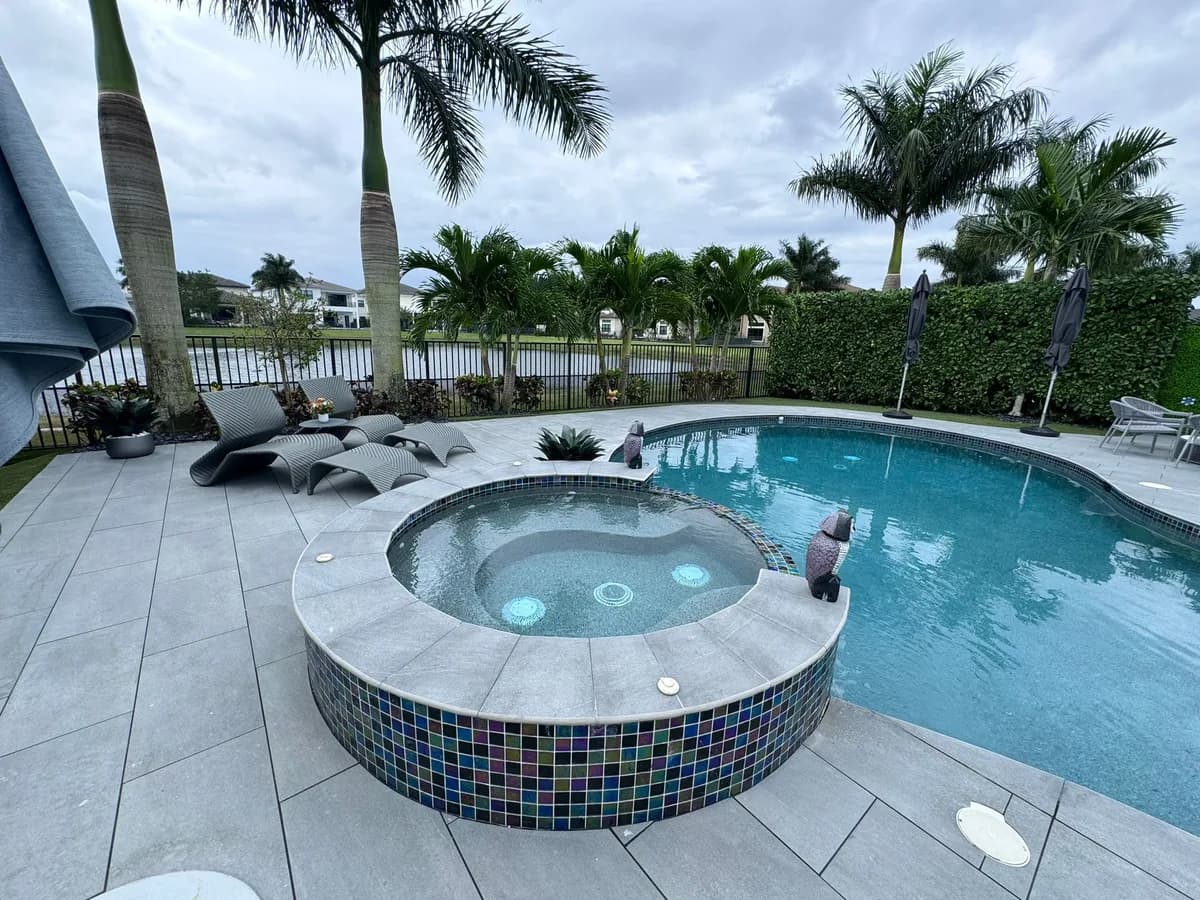
Almost every pool deck estimate in Sarasota includes the same question, usually within the first five minutes: "Porcelain or travertine?" People have read that both are premium, both stay cooler than concrete, and both look far more expensive than they cost — and they want to know which is right. The honest answer, from a contractor who installs both and sells neither exclusively, is: it depends on your pool, your look, and how you feel about maintenance. Here is how we actually decide.
What goes wrong with each one — when the spec is wrong
Before the comparison, the disqualifiers — because the fastest way to hate either material is to install the wrong version of it.
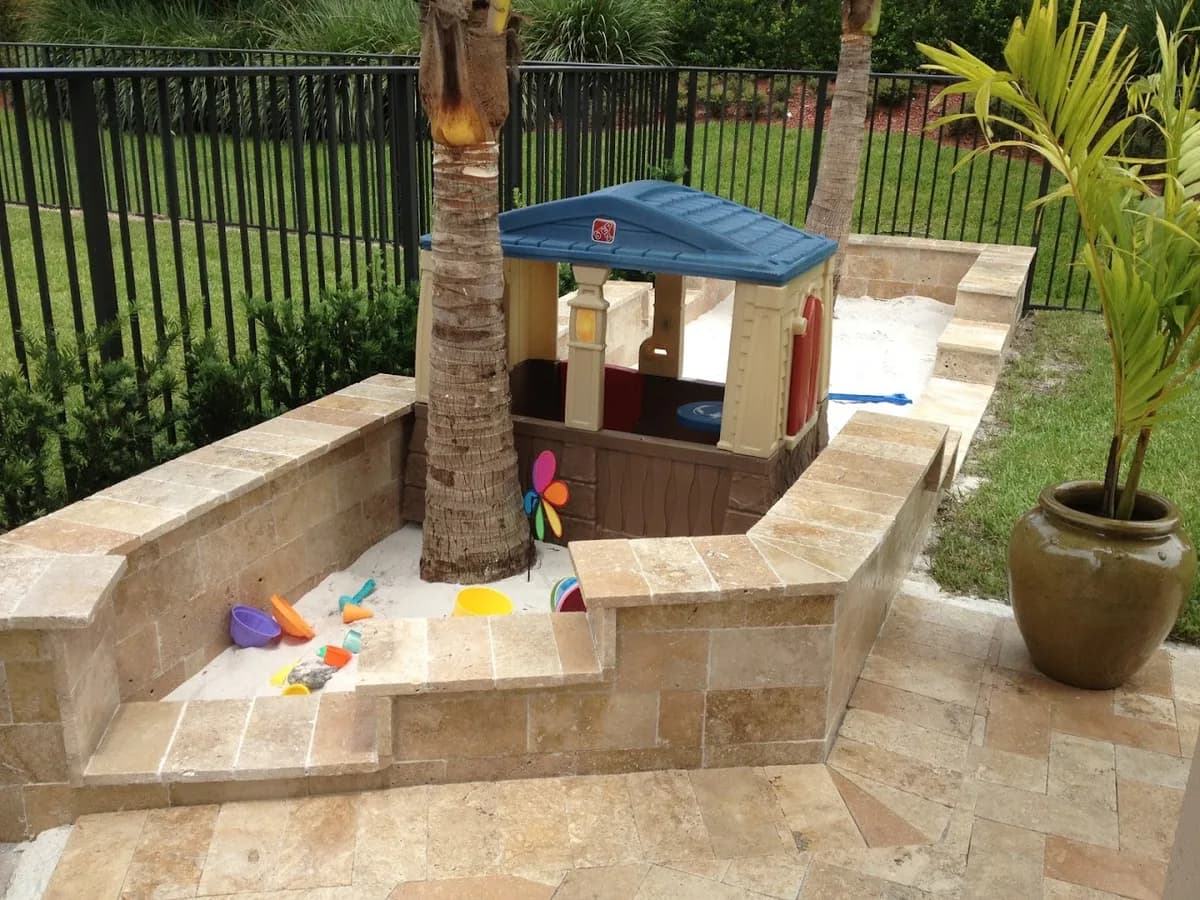
Travertine failure mode is unfilled, unsealed stone around a pool. Travertine is naturally porous, and the unfilled (tumbled, open-void) look is gorgeous in a magazine and a problem at a Sarasota pool: the voids collect water, sunscreen and organic debris, and in Florida humidity they grow algae. Around water we only install filled, sealed travertine, and we reseal it on schedule — skip that and the stone stains and darkens within a couple of seasons.
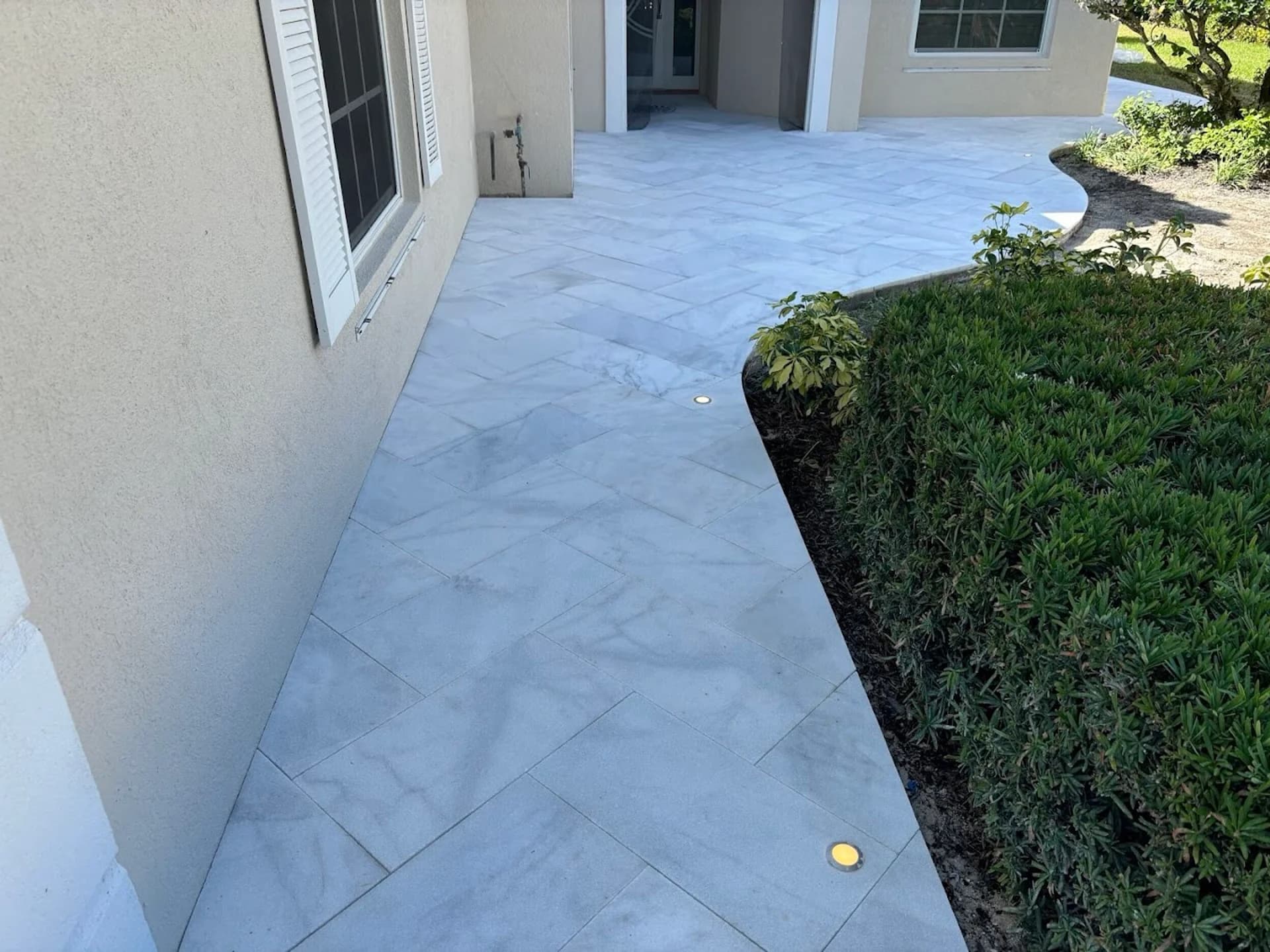
Porcelain failure mode is the wrong product entirely: polished or indoor "porcelain tile" used outside. Indoor tile is thin and slick; outdoors it cracks and turns into a slip hazard when wet. For pool decks we only use outdoor-rated 2CM porcelain pavers with an R11 slip rating and a DCOF above 0.60. Get that right and porcelain is nearly indestructible; get it wrong and it is dangerous.
When porcelain wins, when travertine wins
With the right versions on the table, the decision comes down to four things: maintenance, feel, look and pool chemistry.
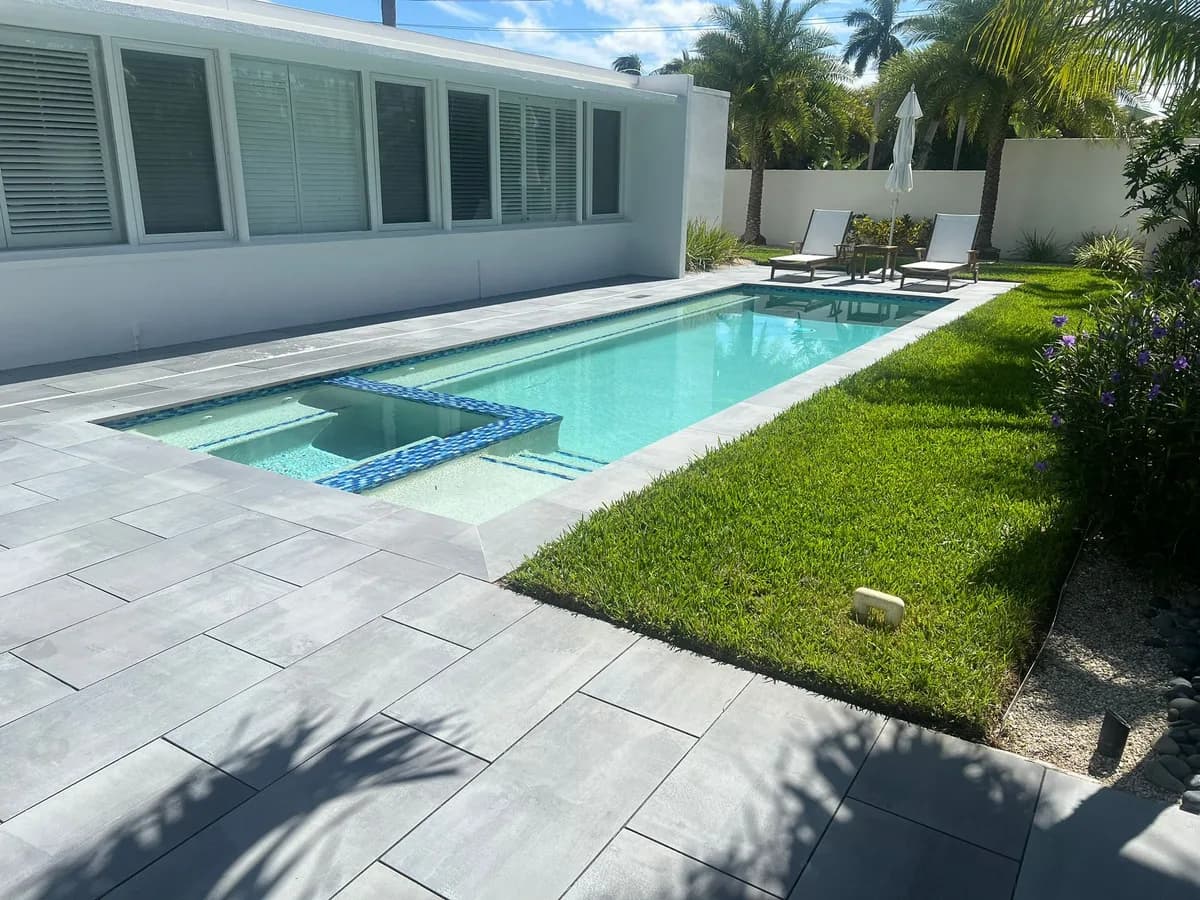
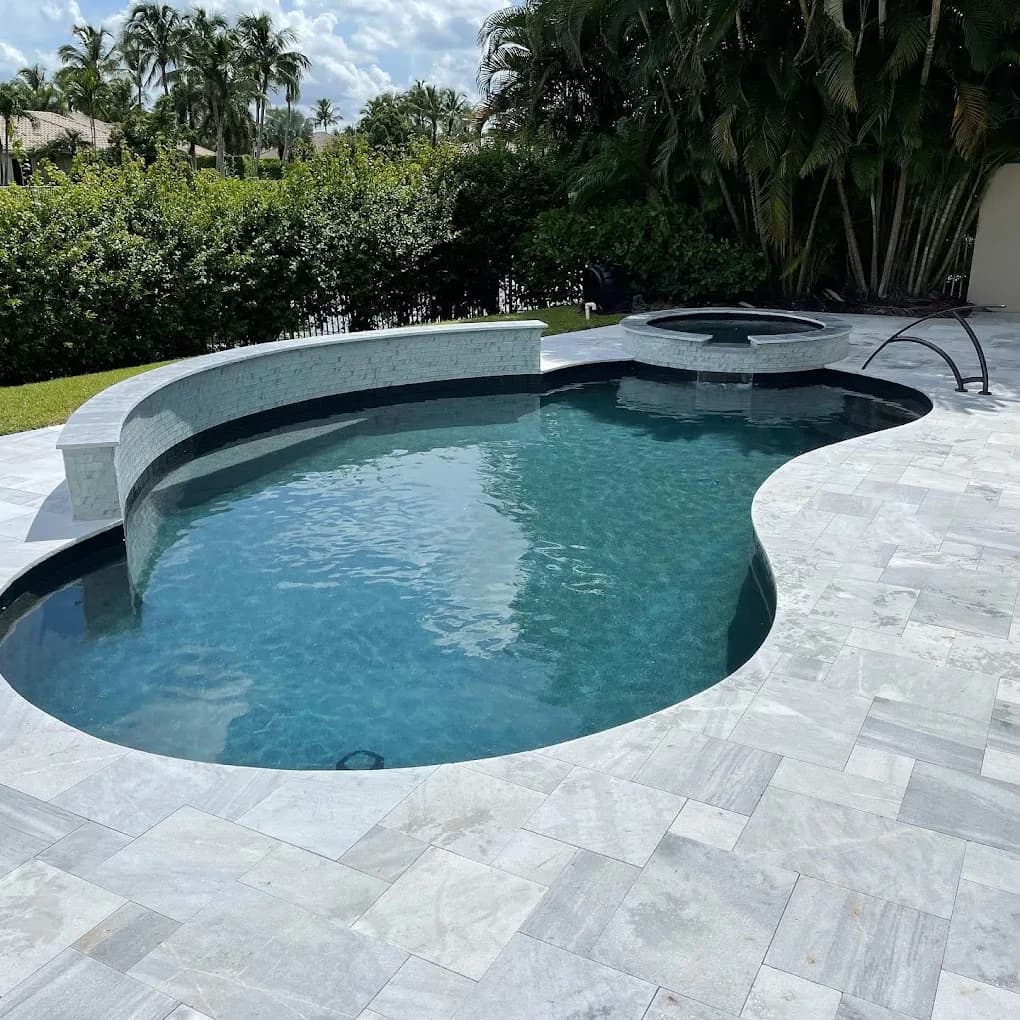
Porcelain wins when maintenance is the priority. It is non-porous — water absorption under 0.5% — so pool chemicals, salt and sunscreen never soak in. It never needs sealing, ever. For a salt-system pool, a heavily used family pool, or a vacation rental where nobody is on a sealing schedule, porcelain is the honest low-maintenance choice. It also reads as clean and contemporary, which suits Lakewood Ranch new construction and modern Sarasota homes.
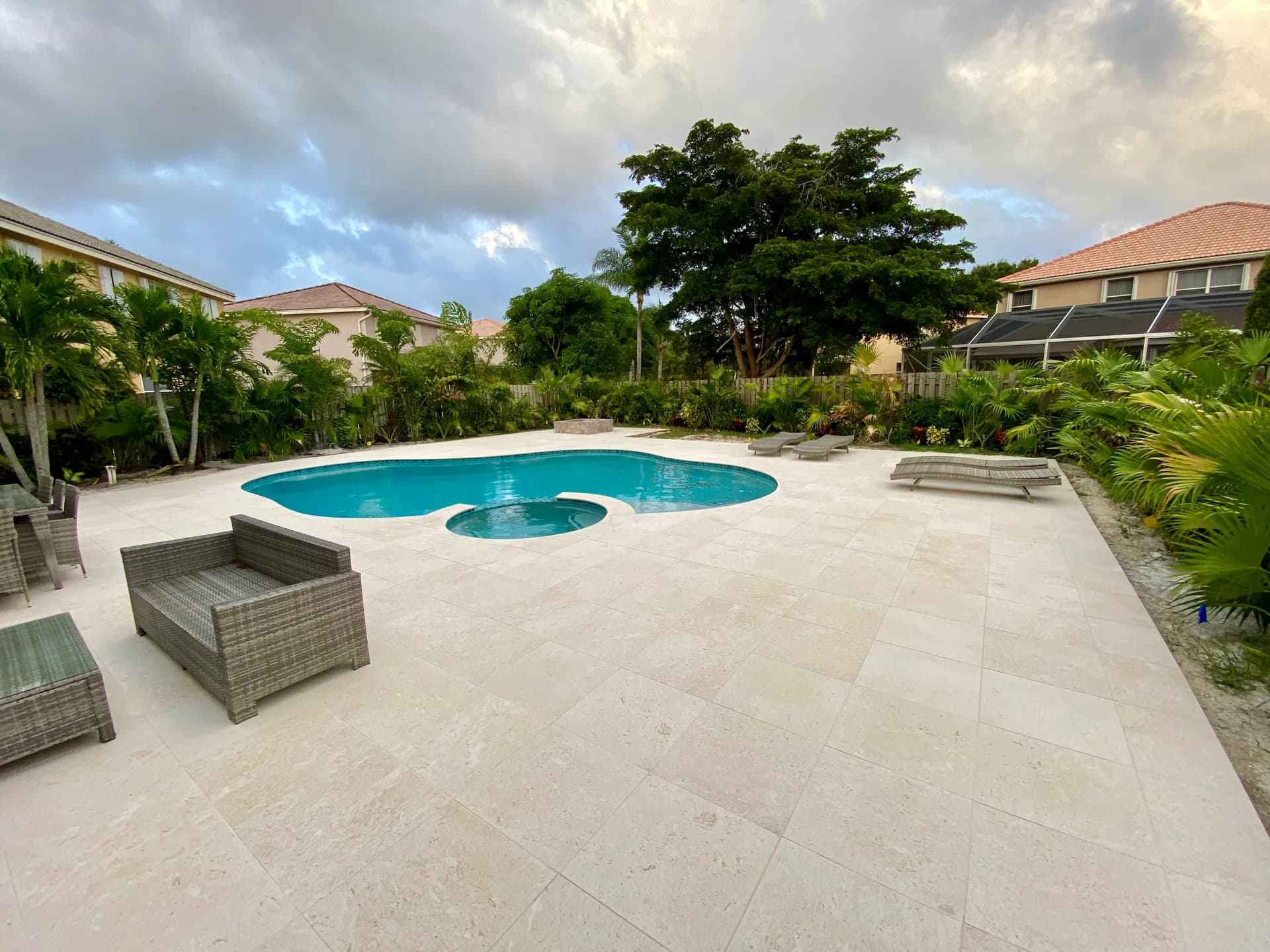
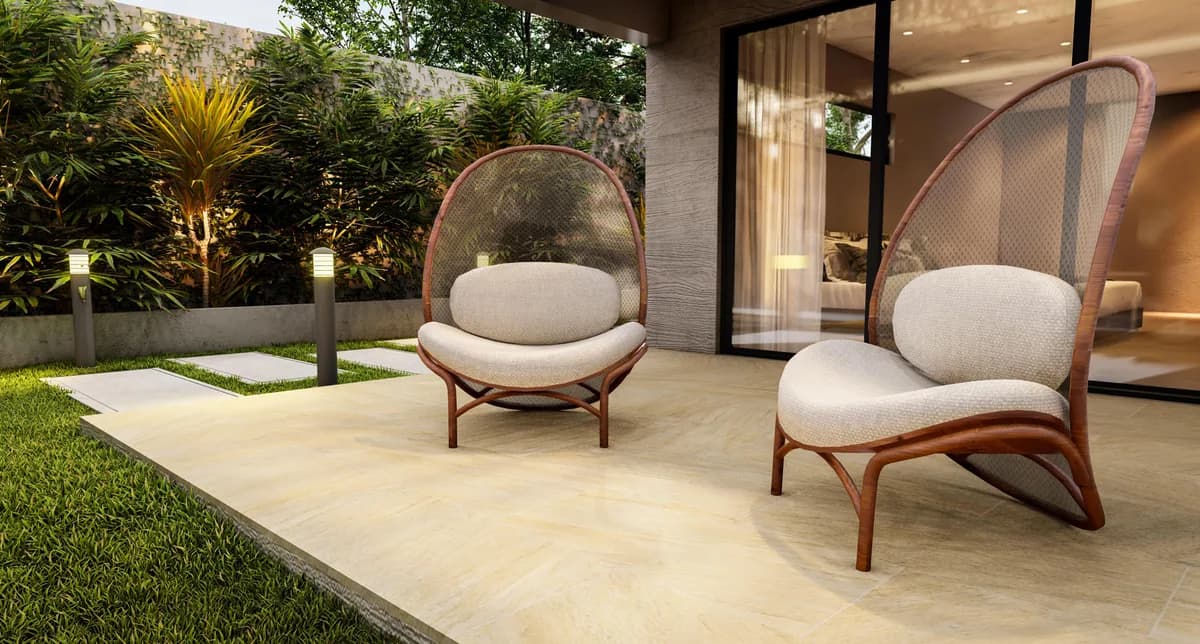
Travertine wins on feel and warmth. As a dense natural stone it stays remarkably cool underfoot — a touch cooler than even light porcelain — and it has an organic, Mediterranean character a manufactured product cannot fully replicate. For a Siesta Key coastal home, a traditional or Mediterranean-style property, or anyone who simply loves real stone and does not mind sealing every two to three years, travertine is the right answer.
A concrete example of how we split it: for a Siesta Key vacation rental we often steer toward porcelain — it photographs bright and clean, cleans fast between guests, and never stains from sunscreen. For a Lakewood Ranch primary residence where the owners want warmth and are happy to maintain it, travertine. Same city, opposite recommendation, because the property is different.
The honest side-by-side
Here is the comparison the way we lay it out at the kitchen table. Neither column is the loser — they are different tools, and the right one is simply the one that matches your pool and how much maintenance you want to do.
Porcelain vs travertine for a Sarasota pool deck
| Factor | Porcelain | Travertine |
|---|---|---|
| Maintenance | Zero — never seal | Seal every 2–3 years |
| Pool chemical resistance | Excellent — non-porous | Good if filled & sealed |
| Heat underfoot (light colors) | Low | Lowest (natural stone) |
| Look | Clean, contemporary, precise | Warm, organic, Mediterranean |
| Best for | Rentals, salt pools, modern homes | Coastal, traditional, warmth |
| Installed cost | Premium tier | Mid tier |
Coping, site access and base preparation drive the number more than the choice between porcelain and travertine — and no material survives a poor base.
Financing Available
See your monthly payment before you decide
Compare real offers from more than twenty lenders through Acorn Finance, our financing partner. It takes about a minute, and checking does not affect your credit score.
Pay the way that suits you: credit and debit cards, bank transfer or check — or finance the project over monthly payments through our partner.
- Offers from 20+ lenders
- Pre-qualify in about 60 seconds
- No impact on your credit score

Financing is provided through Acorn Finance, an independent lending marketplace. EC Paver Solutions is not a lender and does not set rates or terms. Pre-qualification uses a soft credit inquiry and does not affect your credit score; final rates and terms come from the lender and are subject to approval.
Frequently Asked Questions
Is porcelain or travertine more expensive for a pool deck?+
Which lasts longer, porcelain or travertine?+
Which is better for a saltwater pool?+
Which photographs better for a vacation rental?+
Not sure which is right for your pool?
We install both and recommend based on your pool, your look and your maintenance appetite — with a written estimate that specifies the base, coping and grout, not just the surface.

Written by
EC Paver Solutions
EC Paver Solutions delivers premium paver installation across Sarasota, Bradenton, Lakewood Ranch, Tampa, Orlando, and Fort Myers. Hardscape.com Certified — the only certified hardscape contractor across five Florida counties.