

Pavers vs Concrete: Which Is Cheaper in Florida? (The 15-Year Total Cost)
Concrete wins on day one. Over 15 Florida summers, the math flips — here is the real cost breakdown, not just the install price.
The Upfront Number Everyone Quotes You
I get asked this question on almost every driveway estimate: why is your paver quote higher than the concrete guy number? It is a fair question, and I will not dodge it — poured concrete is almost always the cheapest option per square foot going in. A plain broom-finish slab is the entry point for hardscaping in Florida, and if all you are comparing is the invoice you sign this month, concrete wins that round every time.
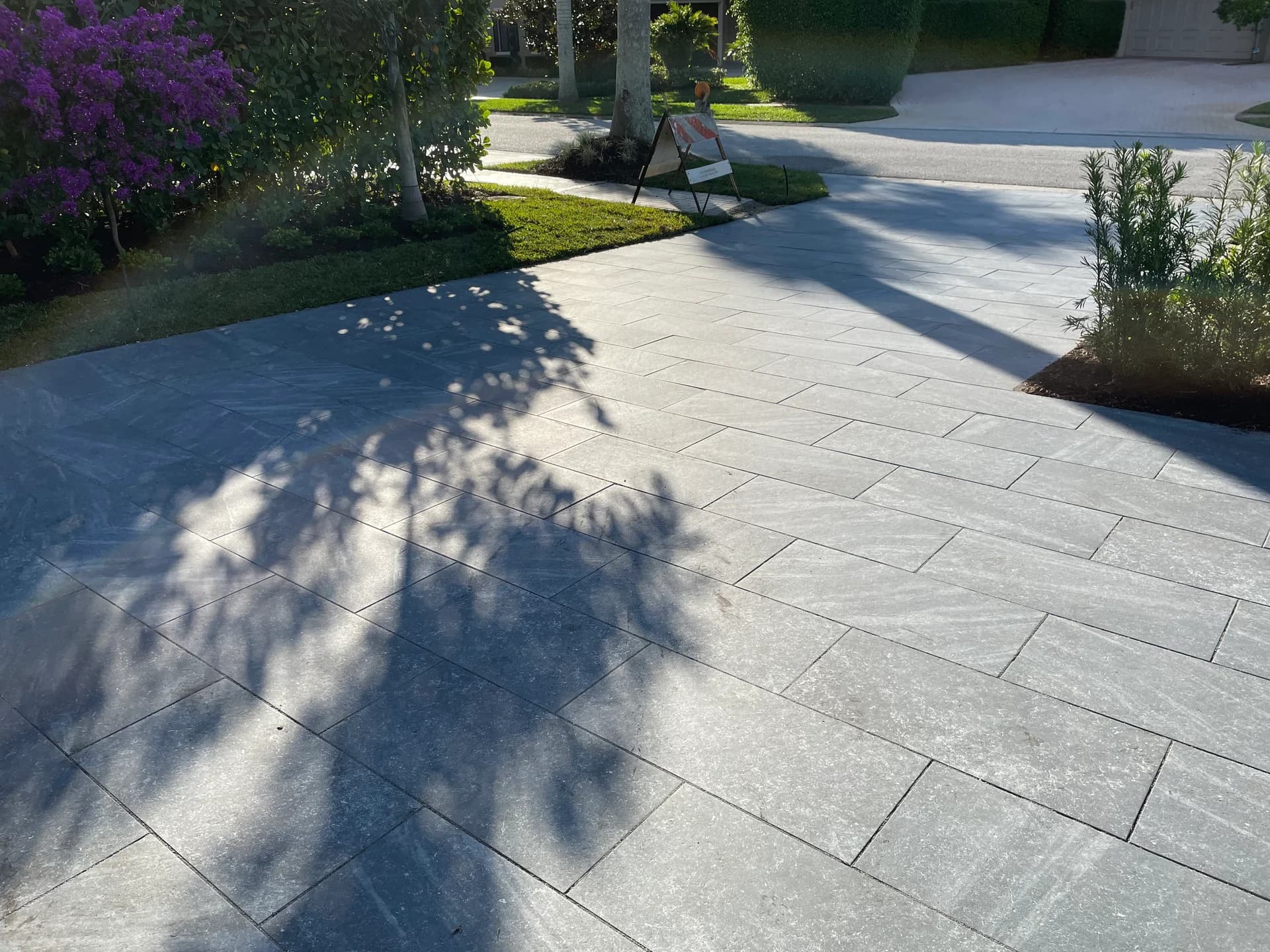
Pavers cost more upfront because you are paying for individual units, sand-set or polymeric-jointed installation labor, and a base system built to flex rather than one poured mass. Within pavers there is a real spread too — standard concrete pavers sit at the lower end, brick and travertine run in the middle, and 3CM porcelain pavers sit at the top of the range. None of that upfront math is fake. What it leaves out is everything that happens to your driveway between year one and year fifteen, which is where Florida stops being gentle on concrete.
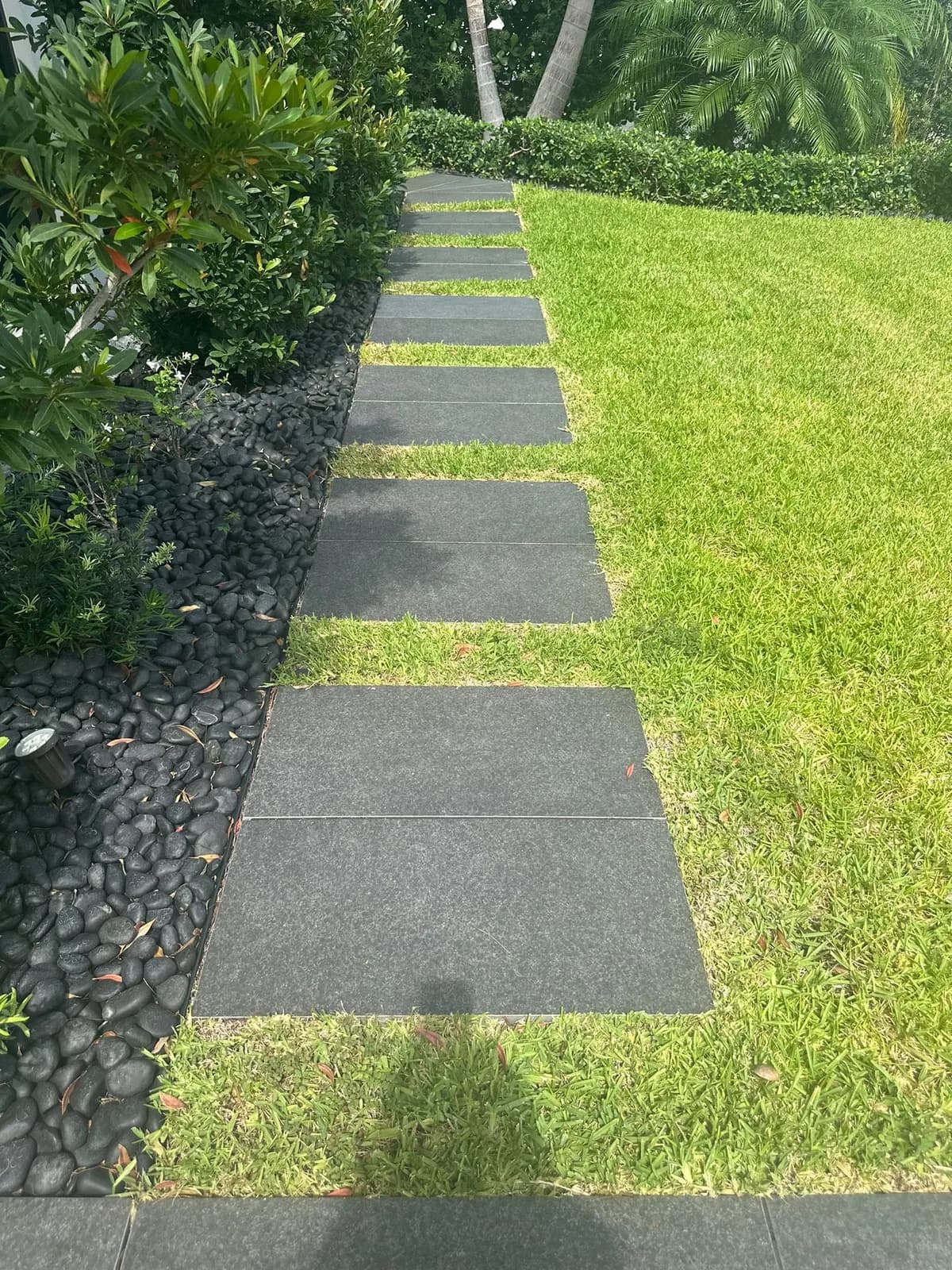
Why Concrete Loses Ground in Sandy Florida Soil
Sarasota, Bradenton, Tampa, and Fort Myers sit on sandy, loose soil that moves with every heavy summer rain and every dry stretch that follows. Poured concrete is a single rigid slab, and rigid slabs do not like moving ground. When the soil beneath it shifts even a little, the slab cannot flex — it cracks. I see it constantly on driveways poured five, six years ago: hairline cracks that widen, tripping-hazard lips at the expansion joints, and dark staining where water sits in the crack and never fully dries in our humidity.
Pavers are built for exactly this soil condition. Each unit sits on a compacted aggregate base with sand-filled joints, so the whole surface can move slightly with the ground underneath it and settle back into place without breaking. That is not a marketing line — it is the entire engineering premise of a paver system versus a monolithic slab. In a state where the ground genuinely does not sit still, that flexibility is the difference between a driveway that ages gracefully and one that needs patching by year eight.
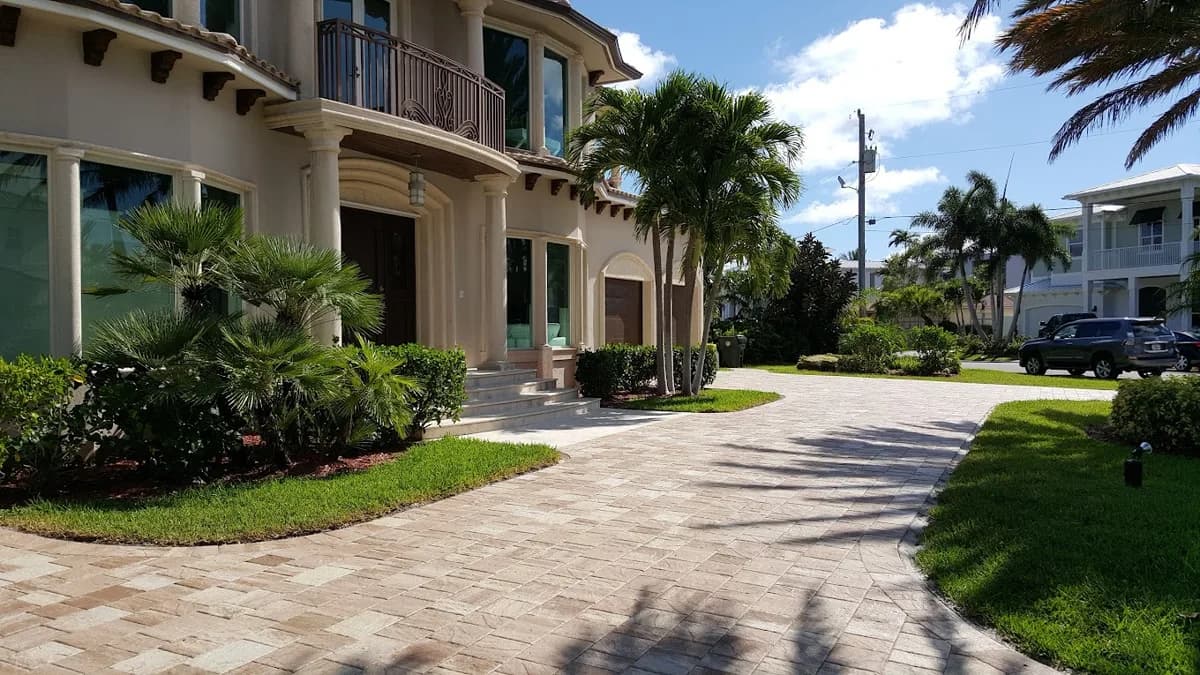
The Repair Model: Whole Slab vs One Unit
This is the part homeowners underestimate the most, because it never shows up on the initial quote. When a concrete slab cracks, stains, or heaves, your realistic options are limited: patch it (which almost always looks patched), resurface the whole driveway, or demo and repour the entire section. There is no such thing as replacing just the cracked part of a monolithic slab without it reading as a visible scar for the rest of its life.
With pavers, a damaged unit — cracked from a dropped tool, stained from a leaking car, or sunken from a tree root — gets lifted out and swapped for a matching paver from the same batch, same color, same texture. It is a repair measured in minutes, not a resurfacing project measured in days and dollars. Over 15 years, that repair model alone often closes the entire cost gap between the two materials, especially once you factor in one or two full concrete resurfacing cycles that most Florida driveways need.
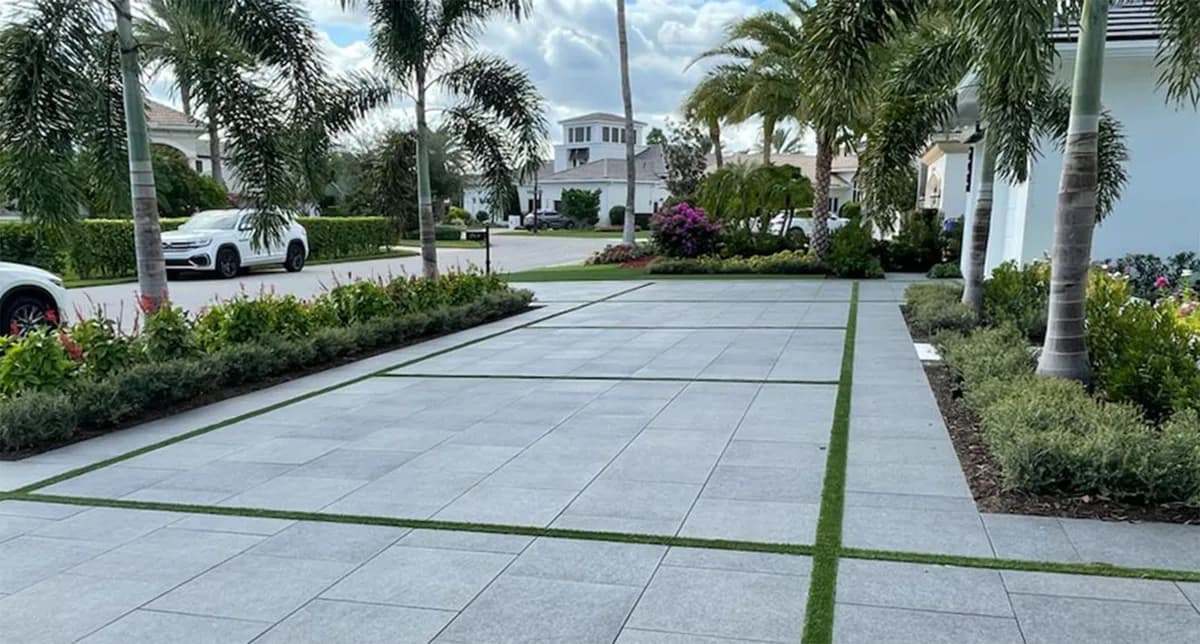
Resale, Curb Appeal, and When Concrete Still Makes Sense
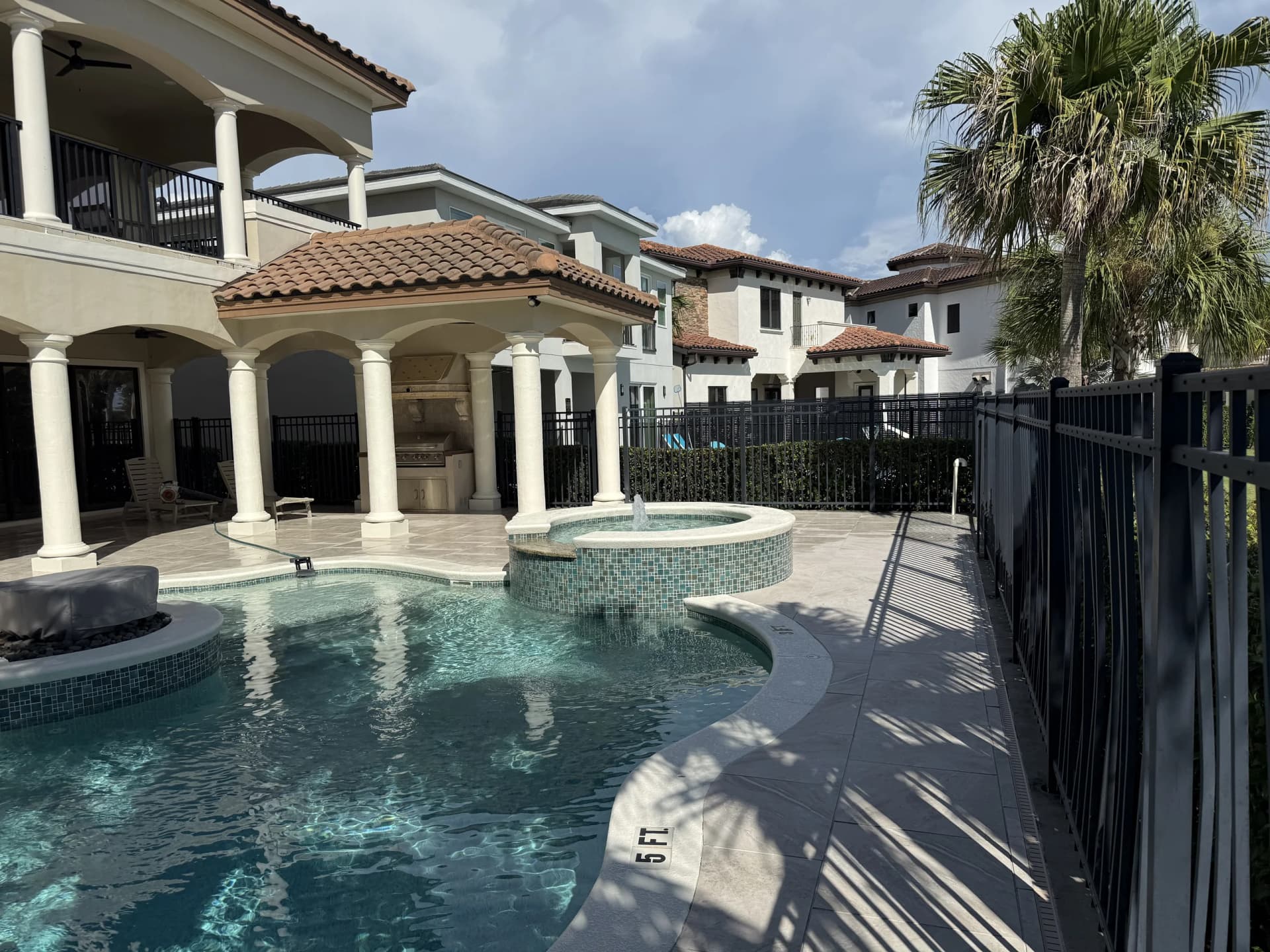
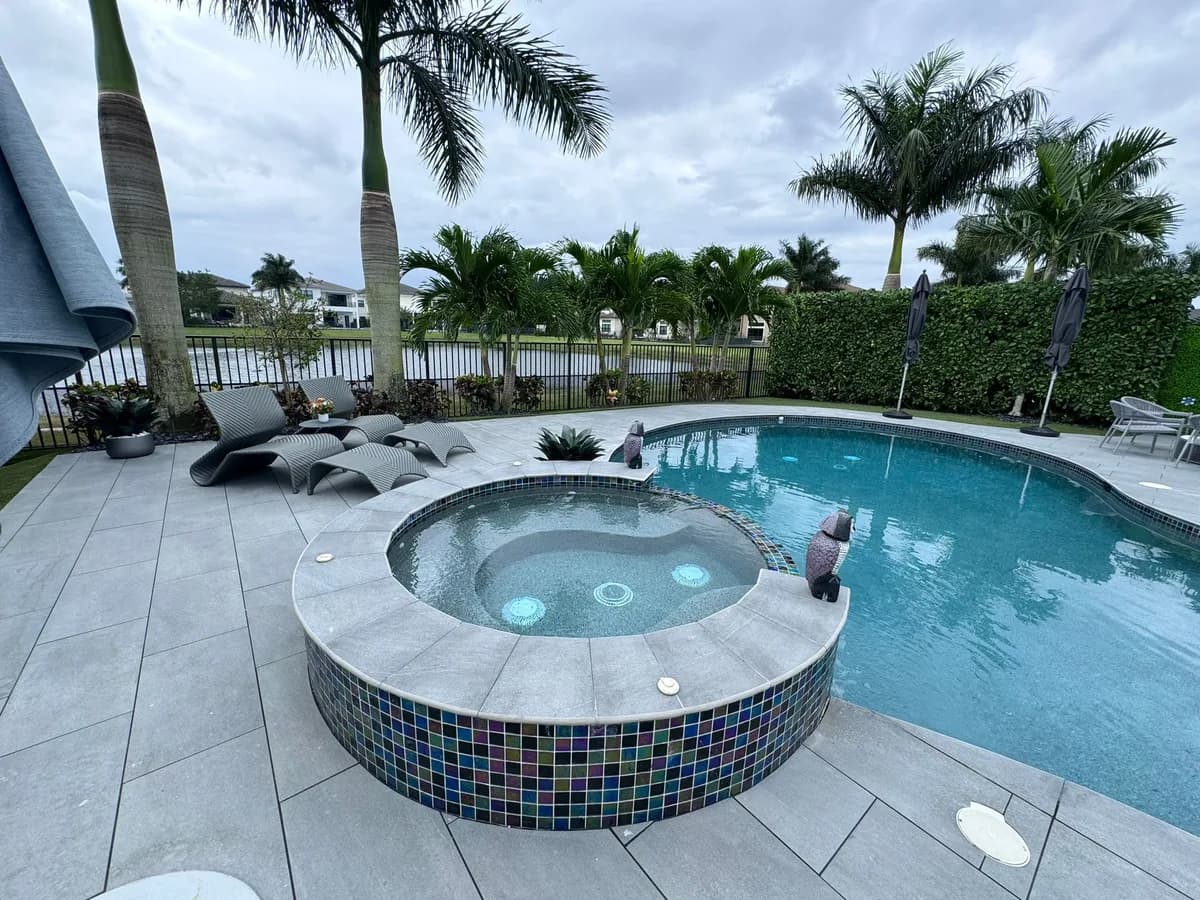
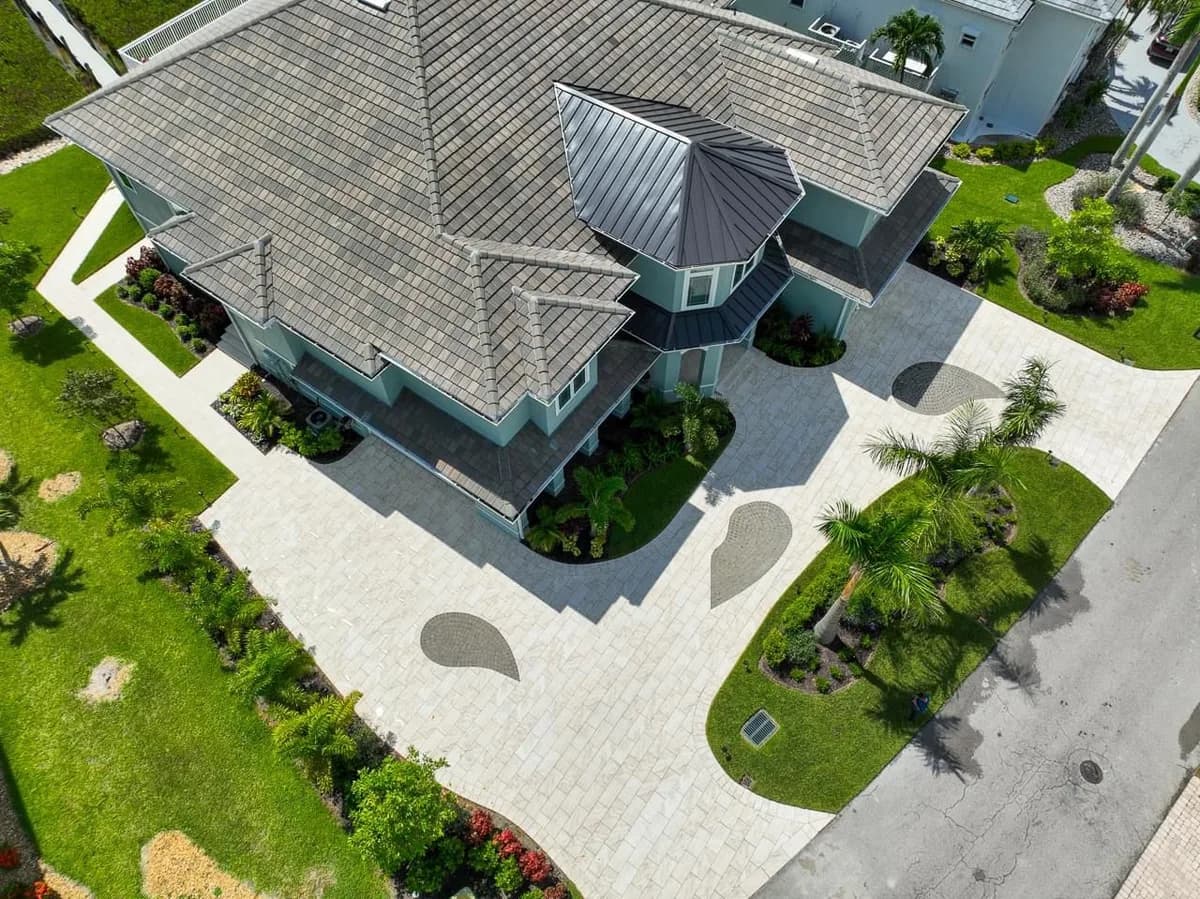
Buyers notice the difference before they notice why. A paver driveway or lanai reads as an upgrade — texture, pattern, and color that photograph well and hold up in a walkthrough. A concrete slab, even a nice one, reads as the standard thing that came with the house, and a stained or cracked one actively works against your curb appeal and your resale conversation. Appraisers and agents in this market consistently treat paver hardscaping as a value-add in a way plain concrete rarely gets credit for.
None of this means concrete is a bad choice — it has a real place. If you are on a strict budget, selling within a year or two and not trying to maximize resale, or covering a low-visibility utility area like a side pad or dumpster pad, poured concrete is a perfectly reasonable call. Where I steer clients toward pavers is the driveway, front walkway, pool deck, or lanai — the surfaces you actually look at every day and the ones a buyer judges the whole property by. We will give you the honest read for your specific site, not just the cheaper number.
Pavers vs Concrete — the real Florida picture
| Factor | Poured Concrete | Pavers |
|---|---|---|
| Upfront cost | Lowest per sq ft | Higher — concrete pavers lowest tier, brick/travertine mid, 3CM porcelain highest |
| Cracking in sandy soil | Common within 5-8 years as ground shifts | Joints flex with soil movement — cracking is rare |
| Repair model | Patch, resurface, or repour the whole slab | Lift and swap the single damaged unit |
| Sealing / maintenance | Sealing and staining upkeep every few years | Concrete/brick benefit from sealing; 3CM porcelain never needs sealing |
| 15-year outlook | Likely 1-2 resurfacing or repair cycles | Spot repairs only — no full replacement needed |
| Resale / curb appeal | Reads as standard, stains hurt appeal | Reads as an upgrade, holds appearance long-term |
Ranges vary by material, site prep, and access — we walk your property and provide a written itemized quote before anything is signed.
Financing Available
See your monthly payment before you decide
Compare real offers from more than twenty lenders through Acorn Finance, our financing partner. It takes about a minute, and checking does not affect your credit score.
Pay the way that suits you: credit and debit cards, bank transfer or check — or finance the project over monthly payments through our partner.
- Offers from 20+ lenders
- Pre-qualify in about 60 seconds
- No impact on your credit score

Financing is provided through Acorn Finance, an independent lending marketplace. EC Paver Solutions is not a lender and does not set rates or terms. Pre-qualification uses a soft credit inquiry and does not affect your credit score; final rates and terms come from the lender and are subject to approval.
Frequently Asked Questions
Is it cheaper to pour concrete or use pavers?+
Do pavers add more value than concrete?+
Do concrete driveways crack more than pavers in Florida?+
Are pavers worth the extra cost over concrete?+
Which lasts longer, pavers or concrete, in Florida?+
Weighing pavers against concrete?
Tell us about your driveway, patio, or lanai and we will walk you through the honest 15-year cost picture for your specific site.

Written by
EC Paver Solutions
EC Paver Solutions delivers premium paver installation across Sarasota, Bradenton, Lakewood Ranch, Tampa, Orlando, and Fort Myers. Hardscape.com Certified — the only certified hardscape contractor across five Florida counties.