

Hardscape.com CertifiedThe ONLYCertified Porcelain Paver Installer in Sarasota, Manatee, Hillsborough, Orange, Lee & Pasco Counties
(941) 250-4635
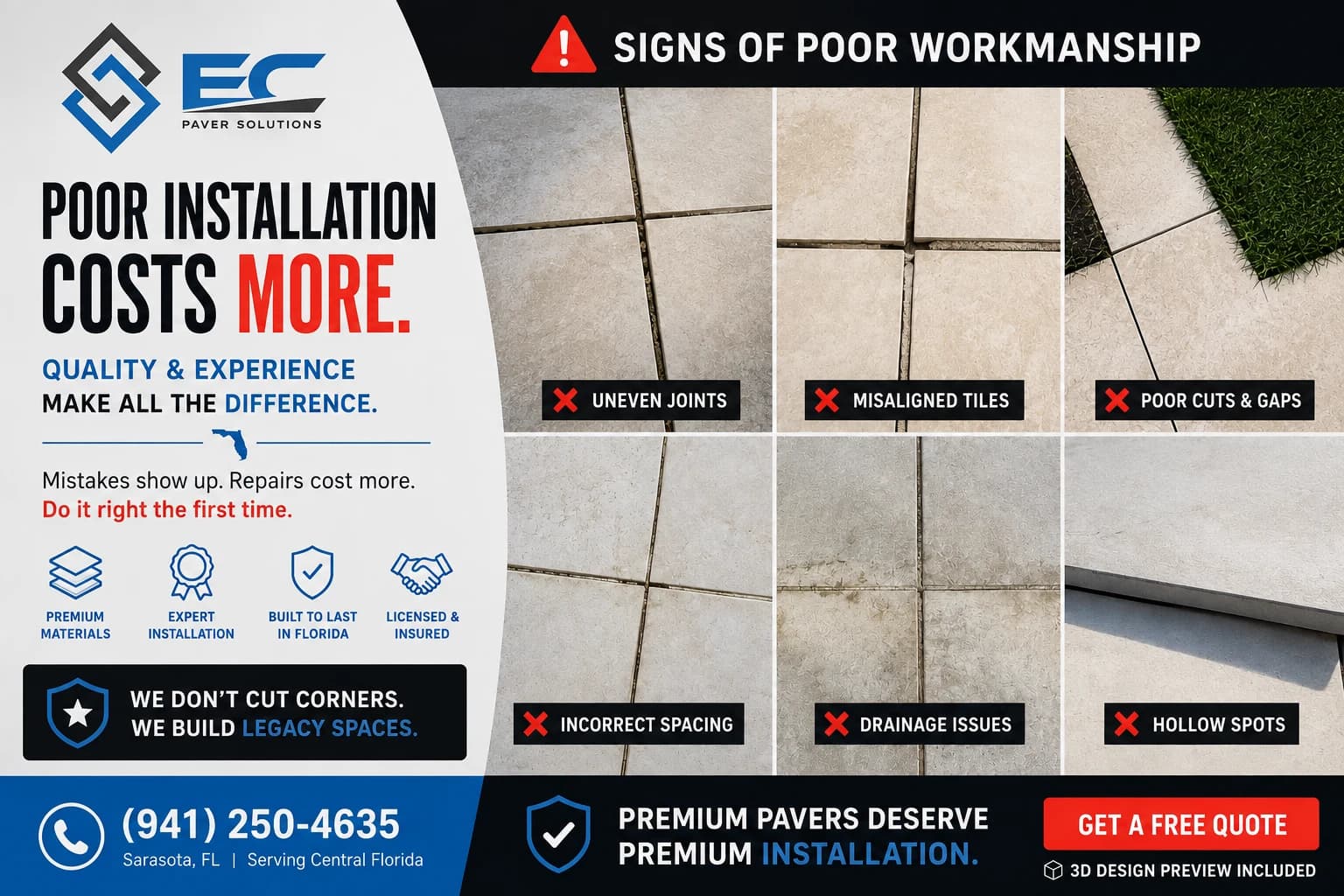
Signs of poor porcelain paver workmanship found on installations around Naples, Florida

Collier County

Pavers installed wrong in Naples?

What the defect is telling you, why it happened here, and what a correct installation required instead.

Why it goes wrong in Naples

Bad porcelain installations are not evenly distributed. They cluster around whatever kind of work dominates a market, because that is what sets the pace the crews work to. Around Naples, the concentration is in estate and waterfront properties around Old Naples, Port Royal and Pelican Bay — and in practice most of what we are asked to look at sits in Old Naples, Port Royal, Pelican Bay, Golden Gate and the streets around them.

At this end of the market the deck is specified by a designer and then bid down by a builder, and the gap between the drawing and the crew that shows up is where the specification gets lost. Large-format layouts are the least forgiving of that gap.

The material is rarely at fault. At 2CM and 3CM porcelain is classified as tile, not as paver — no interlocking geometry, no load transfer to its neighbours, not enough mass to hold position. Installed the way a concrete paver patio is installed, it has nothing holding it. That single misclassification is behind most of what we are called out to look at in Collier County.

What we find most in Collier County

The two defects that show up first here

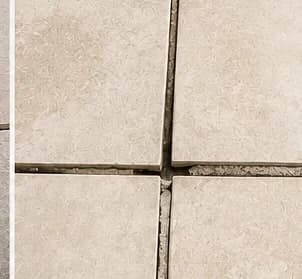
Misaligned porcelain pavers with one edge higher than the next, showing lippage Sign 1

Tiles that sit at different heights

Run a bare foot across the field and you catch an edge. In low sun the shadow line along each raised edge makes the whole surface look restless.

What went wrong

This is lippage, and on large-format porcelain it usually traces to two things: mortar that was not fully embedded under the tile, and a bond pattern with too much offset. Large tiles carry a slight crown, so a 50 percent offset lands the high centre of one tile against the low corner of its neighbour.

What it required

ANSI A137.1 allows 1/32 inch of lippage for joints between 1/16 and 1/4 inch. The TCNA recommends a maximum offset of about 33 percent for large-format tile — which is why a 30 percent running bond is the working standard on porcelain pavers, not the 50 percent brick pattern.
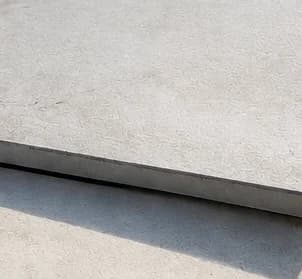
Porcelain paver edge lifting and separating from the bed, indicating hollow spots and bond failure Sign 2

Tiles that sound hollow when tapped

Tap across the deck with a knuckle or a coin and the tone changes. The hollow ones are the ones that will crack first, usually at a corner, usually under a chair leg.

What went wrong

The mortar was spot-set or combed in one direction and never back-buttered, leaving voids under the tile. A void under a 2CM piece means a point load has nothing beneath it, and porcelain that is unsupported at the edge breaks rather than flexes.

What it required

Full coverage under exterior tile, achieved by back-buttering and beating the tile in so the mortar ridges collapse. On an exterior deck the target is effectively complete contact, not the partial coverage tolerated on an interior floor.

Seeing something else? There are six defects we look for, each with a photograph and the standard it broke — plus why there is no settled installation standard for outdoor porcelain in the first place.

All six signs

Naples questions

The material does not fail — the assembly does. In and around Naples the work that goes wrong is concentrated in estate and waterfront properties around Old Naples, Port Royal and Pelican Bay. At this end of the market the deck is specified by a designer and then bid down by a builder, and the gap between the drawing and the crew that shows up is where the specification gets lost. Large-format layouts are the least forgiving of that gap. The result is the same handful of defects: voids under the tile, joints that drift, and water that has nowhere to go.

Yes, and it is a large part of what we do. We come out, sound the field for voids, check the slope against what a bonded porcelain deck actually requires, look at the joints and the perimeter detail, and give you a written assessment of what failed and why — including whether it needs a full rebuild or can be corrected in place. If it can wait, we say so.

Yes. We serve Naples from our certified service area next door, bringing the same Hardscape.com certified installation standards and the same written specification. Assessment visits are free.

Get it assessed in Naples

Free on-site visit, written findings, and a straight answer about whether it needs a rebuild or a repair. We bring Hardscape.com certified installation standards to Naples.

No obligation. We respond within 24 hours.

Five-year workmanship warranty · or call (941) 250-4635