Do Porcelain Pavers Get Hot in Florida Sun? Here’s What You Need to Know
If you’re planning a pool deck, patio, or outdoor living space in Florida, one of the first practical questions on your mind is likely this: do porcelain pavers get hot in Florida sun? It’s a fair and important question. With summer temperatures routinely climbing into the low-to-mid 90s across Sarasota, Tampa, and Central Florida — and surfaces absorbing far more radiant heat than the air temperature alone suggests — the material you choose for your hardscape directly affects how much you actually use and enjoy the space.
The short answer is yes, porcelain pavers can get warm under direct Florida sun. But the more useful answer involves understanding exactly why they heat up, how that compares to your other options, and how smart product selection can make a meaningful difference underfoot.
How Porcelain Pavers Absorb and Retain Heat
All hard surfaces absorb solar energy — that’s simple physics. What varies between materials is how quickly they heat up, how much heat they retain, and how fast they release that heat once the sun shifts or a breeze moves through. Porcelain pavers are fired at extremely high temperatures, producing a dense, non-porous tile with low water absorption. That density is one of the reasons porcelain pavers are so durable and stain-resistant in Florida’s humid, storm-prone climate.
However, that same density means porcelain does absorb and hold surface heat. The critical variables that determine how hot a porcelain surface actually gets are:
- Color: Darker tones absorb significantly more solar radiation than lighter ones. A dark charcoal porcelain in full Florida sun will be notably hotter than a cream or light gray option.
- Surface finish: Highly polished or glossy finishes reflect some light but also intensify heat at the surface. Matte and textured finishes tend to diffuse heat more effectively.
- Direct sun exposure: A pool deck facing west with zero shade in Bradenton or Lakewood Ranch will always run hotter than a shaded lanai, regardless of material.
- Tile thickness: Thicker porcelain slabs have more mass to absorb heat but also take longer to cool down once the sun moves.
At EC Paver Solutions, our team recommends light-colored, matte or brushed-finish porcelain for pool decks and open patios receiving full afternoon sun. It’s the single most effective way to manage surface temperature without sacrificing the aesthetic you’re after.
Porcelain Pavers vs. Other Florida Pool Deck Materials
Understanding how porcelain performs in Florida heat is easier when you compare it directly to the alternatives most homeowners consider.
Porcelain vs. Concrete
Standard poured concrete — especially when finished with a dark sealer or painted surface — ranks among the hottest surfaces you can install around a pool in Florida. Concrete is highly absorptive, and once it stores heat it radiates it back intensely, even after the sun has passed. Quality porcelain in lighter tones consistently outperforms generic concrete for surface temperature and comfort.
Porcelain vs. Travertine
This is the comparison Florida homeowners ask about most often. Natural travertine pavers have earned a strong reputation for staying relatively cool underfoot, and that reputation is largely deserved. Travertine’s natural micro-porosity allows for slight thermal dissipation and airflow at the surface, which contributes to a cooler feel in direct sun. For homeowners whose top priority is barefoot comfort at the water’s edge, travertine is a time-tested solution.
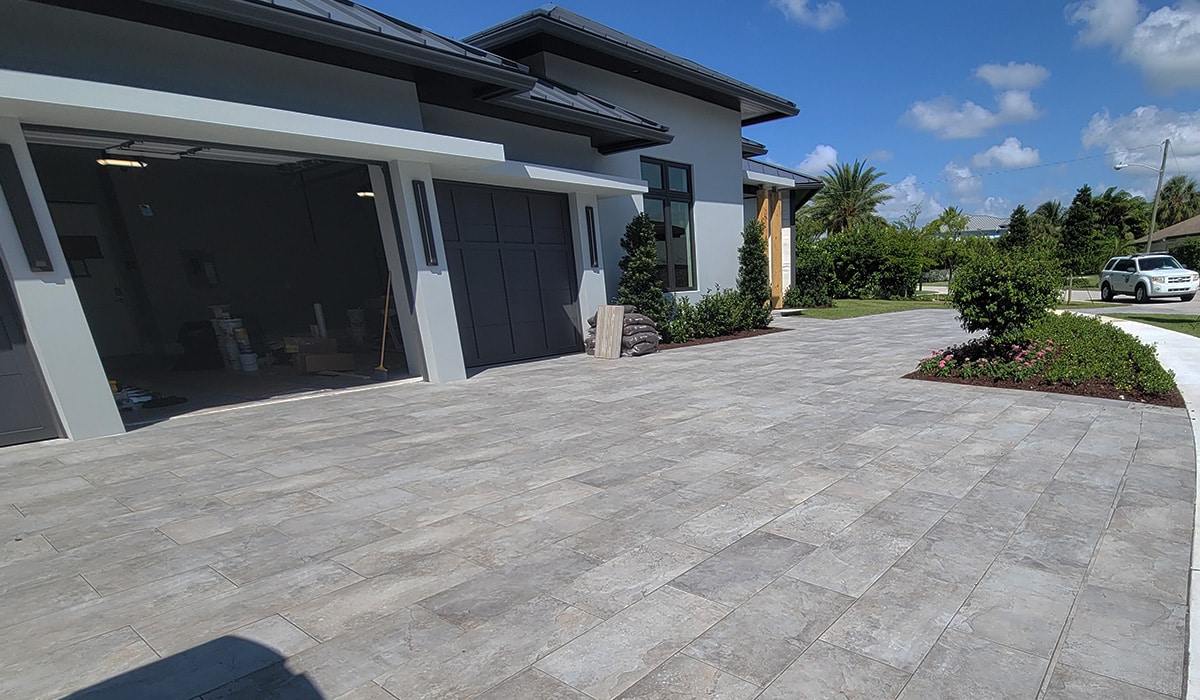
That said, light-toned porcelain with a brushed or matte finish performs comparably in many real-world installations. The difference is often less dramatic than homeowners expect — particularly in shaded areas or on surfaces that get a gentle hosing down throughout the day, as pool decks naturally do.
Porcelain vs. Brick Pavers
Traditional clay brick pavers absorb considerable heat and can be rough and uneven underfoot around a pool. While they have their place in driveway paver installation and traditional landscape design, they’re generally not the first choice for a modern Florida pool deck where comfort and low maintenance are priorities.
Why Porcelain Is Still One of the Best Choices for Florida Pool Decks
Despite the heat question, pool decks throughout Sarasota, Tampa, and the greater Orlando area are increasingly being finished in porcelain — and for very good reasons.
- Salt and chlorine resistance: Porcelain is non-porous and essentially impervious to pool chemicals, salt air, and the kind of UV degradation that causes other materials to fade, flake, or stain over time.
- Zero sealing required: Unlike travertine or natural stone, porcelain does not need to be sealed annually to maintain its surface integrity in Florida’s humidity and rainy season.
- Slip resistance: When specified correctly, porcelain pavers achieve high slip-resistance ratings — a critical safety factor for wet pool deck environments.
- Design range: Modern porcelain is available in finishes that convincingly replicate wood, limestone, marble, and concrete — giving homeowners premium aesthetics without the maintenance trade-offs of the natural materials.
- Durability through hurricane season: Properly installed porcelain pavers handle ground movement, standing water, and storm debris far better than poured surfaces that crack under shifting soil.
EC Paver Solutions has installed hundreds of porcelain paver projects across Sarasota, Tampa, and Central Florida, and what we consistently see is that homeowners who select the right product for their specific site conditions — sun exposure, shade coverage, proximity to water — end up extremely satisfied with both comfort and performance over the long term.
Choosing the Right Porcelain for Florida’s Climate
Not all porcelain products are equal, and the Florida market is flooded with options that vary widely in quality, heat performance, and long-term durability. Here’s what to look for when evaluating porcelain for a Florida patio or lanai, pool surround, or walkway.
Prioritize Light Tones for Sun-Exposed Areas
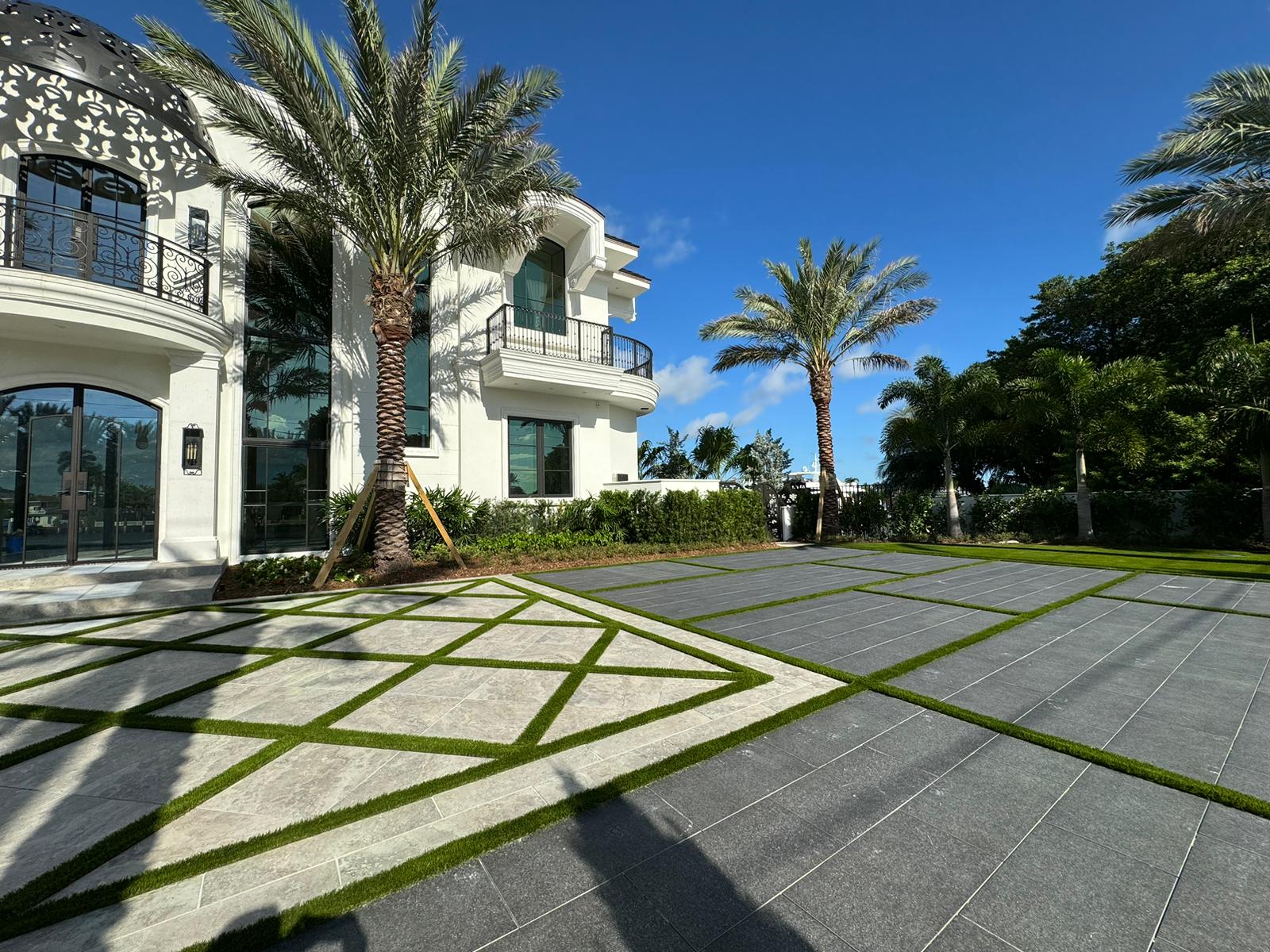
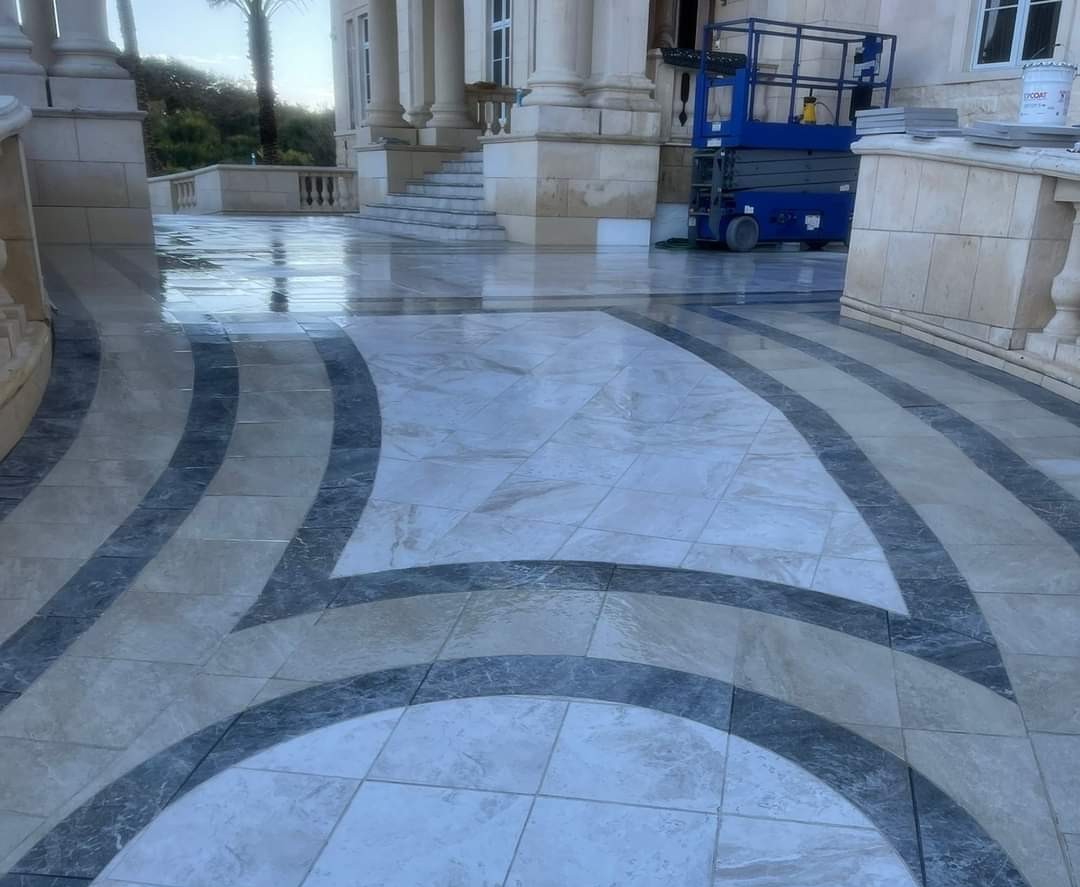
Creams, warm whites, soft grays, and pale beiges are your best allies against surface heat. These tones reflect a greater proportion of solar radiation before it can be absorbed into the tile. Our certified hardscape specialists at EC Paver Solutions advise homeowners to reserve darker porcelain tones for shaded areas, interior transitions, or accent banding — not for the main field of a west-facing pool deck.
Select a Textured or Matte Finish
A brushed, sandblasted, or lightly textured surface finish does double duty in Florida: it improves slip resistance when wet and diffuses surface heat more effectively than a mirror-smooth tile. This is a recommendation we make on nearly every pool deck project we design and install.
Consider Large-Format Slabs for Modern Spaces
Large-format porcelain slabs — 24×24, 24×48, or even larger — create fewer grout joints, which can subtly affect thermal performance and make the surface easier to clean after Florida’s frequent afternoon downpours. They also deliver a clean, contemporary aesthetic that resonates strongly with new construction and remodel projects in communities like Lakewood Ranch and Sarasota’s waterfront neighborhoods.
Pair with Strategic Shade and Landscaping
No paver material fully eliminates heat absorption under a relentless Florida summer sun. Pergolas, shade sails, mature canopy trees, and even artificial turf in adjacent areas all contribute to a cooler, more comfortable outdoor environment — and they work together with the right paver selection rather than in place of it.
Frequently Asked Questions
Do porcelain pavers get hot in Florida sun?
Yes, porcelain pavers can absorb heat under direct Florida sun, but lighter-colored porcelain with a textured or matte finish stays noticeably cooler than darker surfaces. The color, finish, and tile thickness all influence how much heat a surface retains. Choosing the right product for your specific exposure is key.
Are porcelain pavers cooler than concrete around a pool?
In most cases, yes. Poured concrete — especially when sealed with a dark or glossy finish — tends to absorb and radiate more heat than quality porcelain pavers. Porcelain’s denser composition and lighter surface options generally make it a more comfortable barefoot surface on a Florida pool deck.
What color porcelain pavers are best for keeping cool in Florida?
Light tones — creams, soft grays, warm whites, and pale beiges — reflect more solar energy and stay cooler underfoot. At EC Paver Solutions, our team consistently recommends light-toned porcelain for pool decks and patios that receive full afternoon sun in Florida’s southwest and central regions.
How do porcelain pavers compare to travertine for heat in Florida?
Natural travertine has long been praised for its cool-to-the-touch surface, partly because its natural pores allow for slight air circulation and thermal dissipation. Porcelain in lighter tones performs comparably when selected carefully, but travertine remains a popular choice for homeowners who prioritize barefoot comfort above all else.
Can porcelain pavers be used around a salt-water pool in Florida?
Absolutely. Porcelain pavers are non-porous and highly resistant to salt, chlorine, and the UV degradation that breaks down lesser materials over time. This makes them an excellent choice for both salt-water and chlorinated pool environments throughout Florida’s coastal communities.
Do porcelain pavers hold up during Florida hurricane season?
When properly installed on a prepared base, porcelain pavers perform very well through Florida’s hurricane season. Their interlocking installation method allows for some ground movement without cracking, and their dense composition resists water infiltration, mold, and storm debris damage better than many alternative surface materials.
Ready to Install Porcelain Pavers Around Your Florida Pool?
The question of whether porcelain pavers get hot in Florida sun has a nuanced answer — one that depends on the specific product, color, finish, and site conditions involved. With the right selection and professional installation, porcelain delivers a pool deck, patio, or outdoor living surface that looks exceptional, holds up through decades of Florida weather, and stays comfortable underfoot for your family and guests year-round.
EC Paver Solutions brings that level of expertise to every project we take on across Sarasota, Bradenton, Tampa, Lakewood Ranch, and Orlando. As a Hardscape.com Certified Contractor, our team combines deep product knowledge with firsthand experience across hundreds of Florida installations — so we can guide you toward the exact solution that performs best for your home, your exposure, and your lifestyle.
Call us at +1 (941) 250-4635 or request a free estimate today. We’ll walk you through material options, show you real project examples from your area, and provide a detailed 3D design preview so you can see exactly how your new outdoor space will look before a single paver is placed.