Porcelain Paver Installation Cost in Florida: What to Expect in 2025
If you’re planning an outdoor upgrade and trying to understand the porcelain paver installation cost in Florida, you’re asking the right question at the right time. Porcelain pavers have become one of the most requested hardscape materials across Sarasota, Tampa, and Lakewood Ranch — and for good reason. They’re built to handle everything Florida’s climate throws at them: relentless UV exposure, summer humidity, salt air near the coast, and the kind of year-round outdoor living that demands a surface that always looks sharp. But the investment is real, and understanding what drives pricing before you commit will help you plan confidently.
What Does Porcelain Paver Installation Cost in Florida?
Pricing for porcelain pavers in Florida typically falls in the range of $18 to $35 or more per square foot installed. That figure includes materials, labor, base preparation, and standard finishing — though your specific project may land higher or lower depending on several variables covered below.
It’s worth noting that Florida installations carry some unique cost considerations compared to other parts of the country. The ground conditions here — sandy soil, high water tables in certain areas, and the need for proper drainage planning ahead of hurricane season — mean that site preparation is never a step that should be rushed or skimped on. A properly prepared base is what separates a paver project that looks great for twenty years from one that shifts, settles, or cracks within a few seasons.
At EC Paver Solutions, our team recommends that homeowners think of the installation as a complete system — not just the tile itself. The base, the bedding layer, the joint material, and the drainage design all contribute to how the finished surface performs over time in Florida’s demanding environment.
Key Factors That Influence Your Final Price
No two porcelain paver projects are priced identically, and understanding what moves the number up or down will help you evaluate quotes accurately.
Tile Size and Format
Large-format porcelain tiles — think 24×24 or 24×48 — are increasingly popular for contemporary pool decks and lanais in communities like Lakewood Ranch and Bradenton. They create a seamless, upscale look, but they require more careful handling, more precise cutting, and a flatter, more stable base. That adds to labor time and cost. Smaller standard tiles are generally more forgiving to install and sit at the lower end of the pricing range.
Project Application
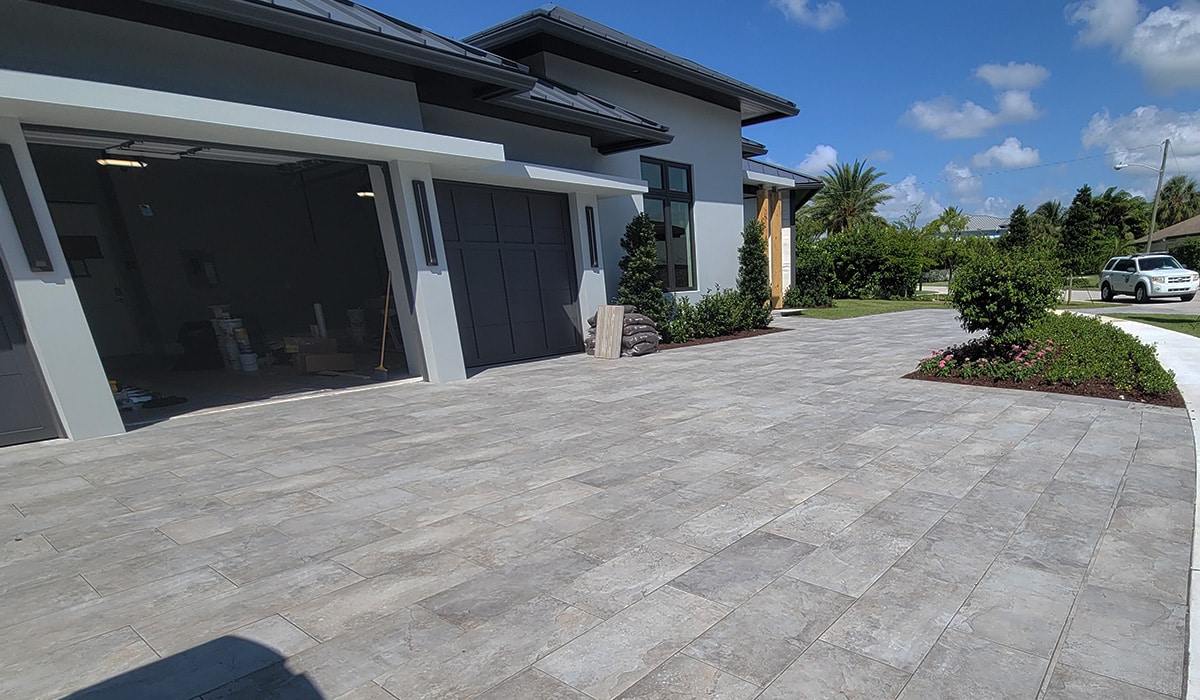
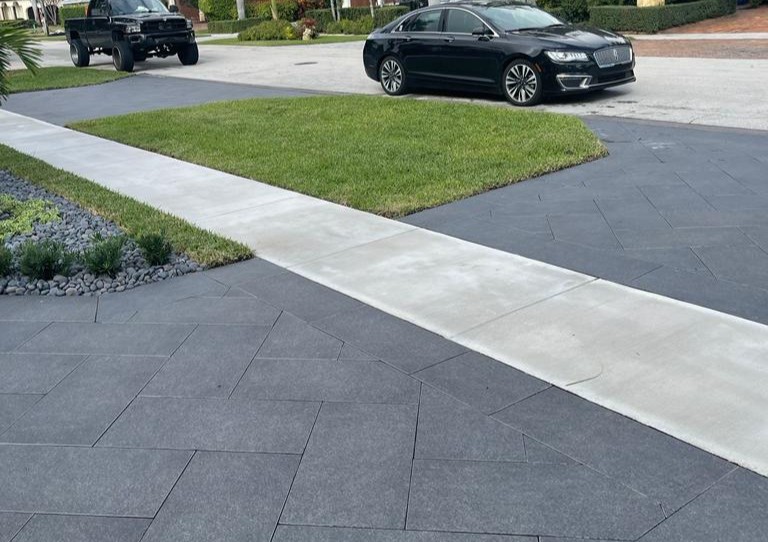
Where porcelain pavers are being installed significantly affects pricing. A straightforward backyard patio has different requirements than a pool deck, which must account for slip resistance ratings, drainage slopes, and proximity to water and pool chemicals. A driveway paver installation requires a much heavier-duty base capable of supporting vehicle weight. Patios and lanais and walkways typically fall in the mid-range of complexity.
Site Preparation Requirements
Existing surfaces that need to be removed, areas with significant grading issues, or properties with poor drainage will require more extensive prep work. In Florida, where the ground can shift seasonally and low-lying areas are common, thorough site prep isn’t optional — it’s essential. What we see in the field across Sarasota, Orlando, and Tampa is that projects with inadequate base preparation are the primary reason homeowners end up calling for repairs years later.
Pattern Complexity
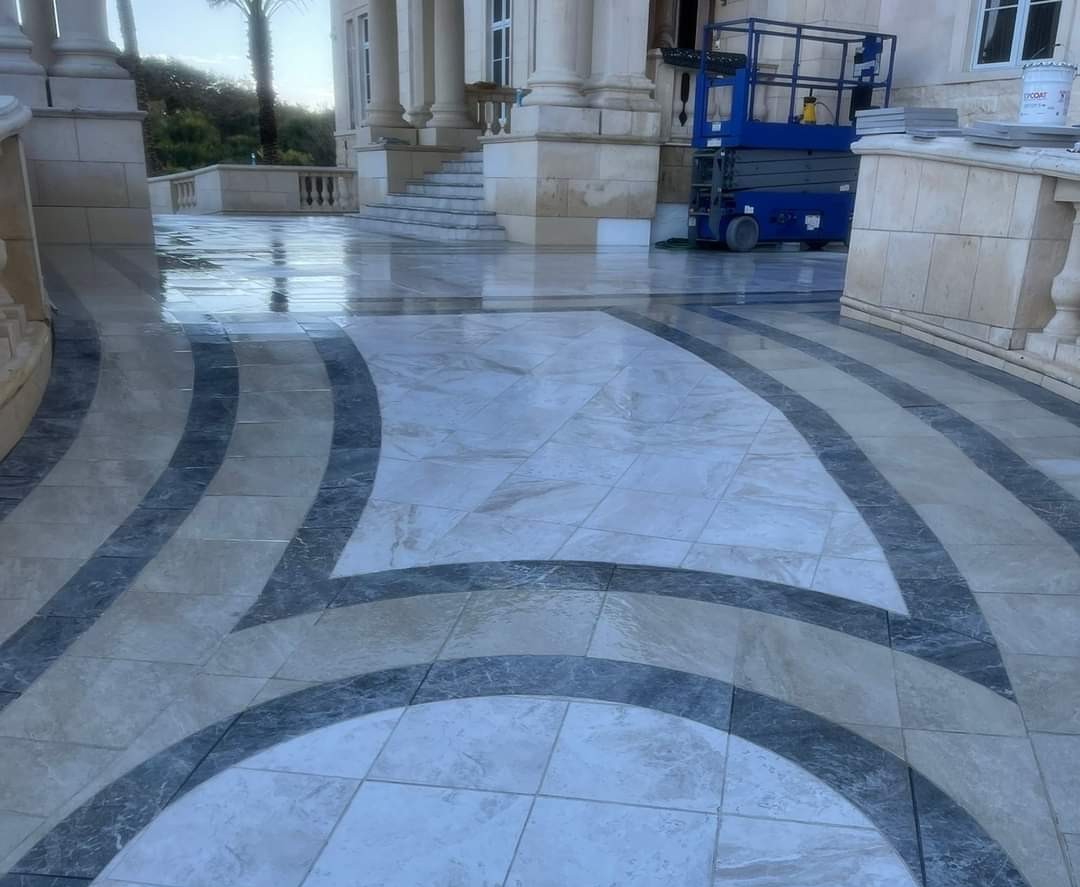
A simple running bond layout cuts efficiently and installs quickly. Herringbone, basketweave, or custom inlay designs require more precise cuts, more material waste allowance, and more installation time. If design is a priority, expect that to be reflected in the labor cost.
Square Footage
Larger projects benefit from economies of scale — the cost per square foot generally decreases as the total square footage increases. A 200-square-foot patio will typically have a higher per-square-foot price than a 1,200-square-foot pool deck and driveway combination.
Porcelain vs. Other Paver Materials: Is the Cost Justified?
Florida homeowners often weigh porcelain against travertine pavers, concrete pavers, or natural stone. Each has its place, and the right choice depends on your priorities.
Travertine is a beautiful, naturally cool-to-the-touch material that has been a longtime favorite around Florida pools. It’s generally priced competitively with mid-range porcelain. The trade-off is that travertine is a natural stone — it’s porous, which means it requires sealing and more attentive maintenance in humid, salt-air environments near the Gulf Coast.
Porcelain, by contrast, is engineered to be nearly non-porous. It doesn’t absorb moisture, won’t stain from pool chemicals or organic debris, and holds its color against Florida’s intense UV without fading. For high-traffic surfaces and year-round outdoor entertaining spaces, the reduced maintenance burden over a decade or more often makes porcelain the stronger long-term value, even if the upfront cost is slightly higher.
EC Paver Solutions has installed hundreds of porcelain paver projects across Sarasota, Tampa, and Central Florida, and the feedback from homeowners consistently points to satisfaction with long-term performance — particularly around pool decks and lanais that see daily use in the Florida sun.
Getting the Most Value From Your Porcelain Paver Investment
A few practical steps can help you maximize the return on your investment and avoid costly surprises.
- Request a 3D design preview. Seeing your project before the first tile is set helps you confirm scale, layout, and material choices. EC Paver Solutions offers 3D design previews so you can visualize the finished space with confidence before work begins.
- Ask about drainage planning. Florida’s summer storms and hurricane season demand that drainage be part of the design from day one — not an afterthought.
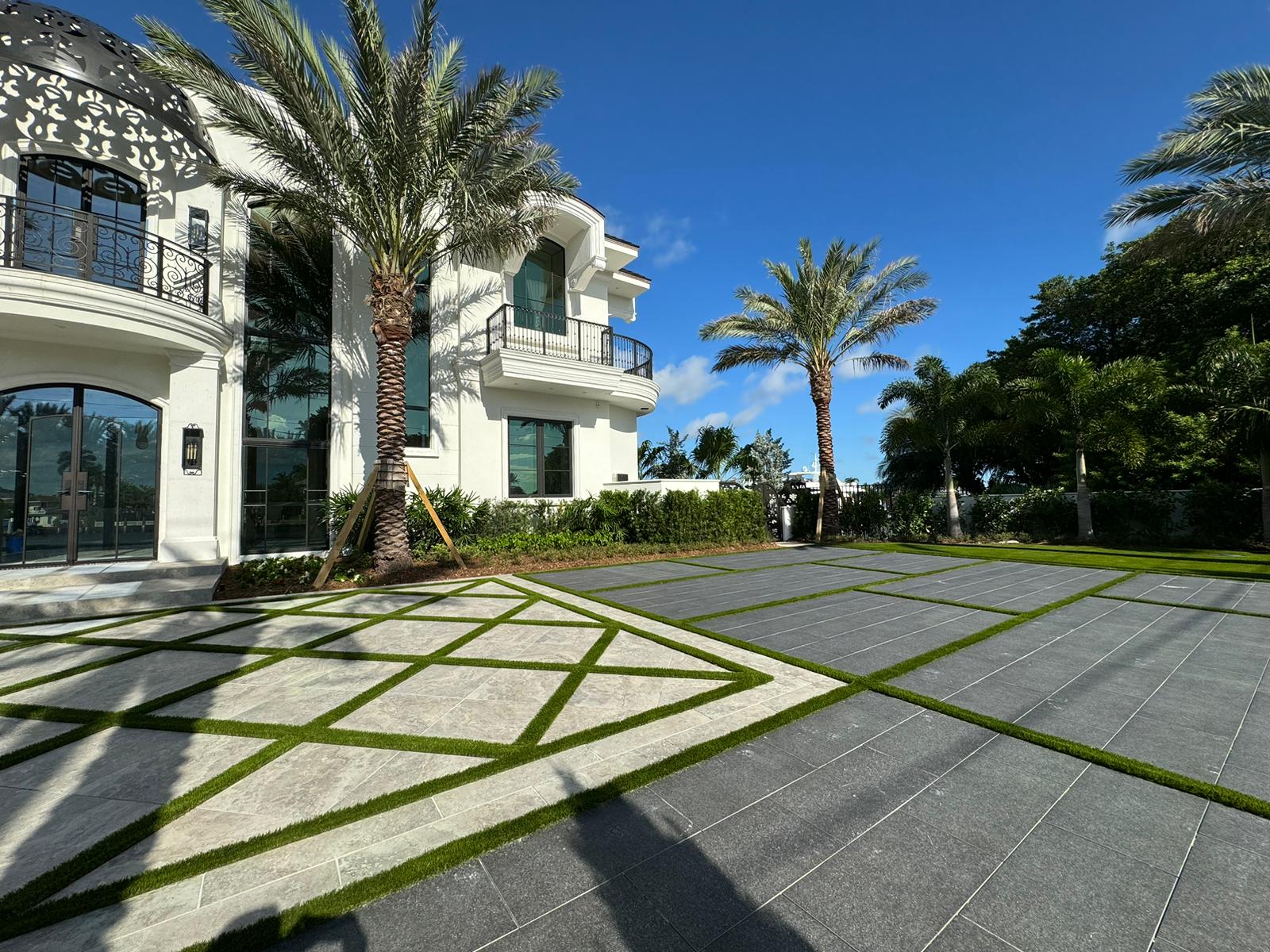
- Consider pairing surfaces. Many homeowners in Bradenton and Lakewood Ranch combine porcelain pavers with artificial turf to create outdoor spaces that are both beautiful and low-maintenance year-round.
- Get a detailed written estimate. A quality hardscape contractor will itemize materials, labor, base preparation, and any site-specific work so there are no surprises at the invoice stage.
- Factor in long-term maintenance savings. Porcelain requires no sealing and minimal upkeep compared to many natural stone options — a real advantage for Florida homeowners who want outdoor spaces that stay looking great without constant attention.
Our certified hardscape specialists at EC Paver Solutions advise homeowners to look at the full lifecycle cost of their outdoor surface — not just the installation price. When you account for sealing, repairs, and replacement cycles, porcelain consistently performs as one of the most cost-efficient choices available for Florida’s climate.
Frequently Asked Questions
What is the average porcelain paver installation cost in Florida?
Porcelain paver installation in Florida typically ranges from $18 to $35 or more per square foot installed, depending on the tile size, project complexity, site conditions, and the specific application — such as a pool deck, driveway, or patio. Larger, premium-format tiles and intricate patterns will sit at the higher end of that range.
Are porcelain pavers worth the cost compared to other materials?
For Florida homeowners, porcelain pavers offer strong long-term value. They resist UV fading, moisture absorption, staining, and salt air corrosion far better than many natural stone alternatives. Their durability and minimal maintenance requirements make them a cost-effective choice over a 10- to 20-year horizon.
What factors drive up the cost of a porcelain paver project?
Key cost drivers include the size and format of the tile, project square footage, site preparation requirements, the complexity of the pattern or layout, and the specific application. Pool deck installations, for example, require additional considerations for drainage and anti-slip finishing that can affect overall pricing.
Do porcelain pavers stay cool enough around a Florida pool?
Yes — lighter-colored porcelain pavers reflect heat more effectively than darker natural stones or concrete, making them a popular choice for Florida pool decks. The specific surface finish also plays a role, and the team at EC Paver Solutions can help homeowners select tiles rated for both slip resistance and heat reflectivity.
How long does porcelain paver installation take?
Most residential porcelain paver projects in Florida take between two and five days depending on square footage, site prep requirements, and project scope. EC Paver Solutions provides a clear project timeline during the estimate phase so homeowners know exactly what to expect.
Can porcelain pavers handle Florida’s hurricane season and heavy rain?
Porcelain pavers are dense and virtually non-porous, making them highly resistant to moisture damage and standing water. When properly installed with adequate drainage planning — something EC Paver Solutions prioritizes on every project — they hold up well through Florida’s intense summer storms and hurricane-season rainfall.
Ready to Get an Accurate Quote for Your Project?
Understanding the porcelain paver installation cost in Florida is the first step. The next is getting a detailed, no-obligation estimate from a team that knows Southwest and Central Florida’s conditions inside and out.
EC Paver Solutions serves homeowners across Sarasota, Tampa, Bradenton, Lakewood Ranch, Orlando, and surrounding communities. Whether you’re envisioning a resort-style pool deck, an upgraded driveway, a covered lanai, or a complete outdoor transformation, our team brings the expertise, the craftsmanship, and the local knowledge to deliver results built for Florida living.
Call us at +1 (941) 250-4635 or request a free estimate today. We’ll walk you through material options, show you a 3D preview of your finished project, and provide transparent, itemized pricing — so you can move forward with complete confidence.