Best Pool Deck Material for Florida Heat: A Homeowner’s Guide
Choosing the best pool deck material for Florida heat is one of the most practical decisions you will make for your outdoor space — and it is more nuanced than most homeowners expect. Florida’s combination of intense UV radiation, high humidity, salt air in coastal areas, and temperatures that push pavement surface temps well above air temperature means that a material that works well in Georgia or Arizona may fail, fade, or scorch bare feet here. This guide breaks down the top options honestly so you can invest with confidence.
Why Florida’s Climate Demands a Different Standard
Florida is not simply a warm state — it is a UV-intense, moisture-heavy, hurricane-season environment that tests outdoor surfaces year-round. Pool decks in Sarasota, Tampa, and Bradenton are in use every single month of the year, not just summer weekends. That continuous exposure accelerates wear, fading, and thermal stress on materials that were designed for more moderate climates.
The specific challenges Florida homeowners need to solve for include:
- Surface heat: Dark or dense surfaces can reach temperatures that cause burns to bare feet, making material color and composition critical.
- UV degradation: Prolonged UV exposure fades sealers, degrades stamped concrete patterns, and causes color shifting in lower-quality pavers.
- Moisture and mold: Florida’s humidity and frequent rain mean pool decks must drain well and resist mildew growth between the surface and the base.
- Salt air: Coastal communities from Pinellas County down through Sarasota experience salt air that accelerates corrosion and surface breakdown in reactive materials.
- Hurricane-season stress: Wind-driven debris, flooding, and ground saturation put structural stress on pool deck systems every single year.
At EC Paver Solutions, our team works exclusively in Florida markets and has seen firsthand how each of these factors plays out over the life of a pool deck. That field experience shapes every material recommendation we make.
The Top Pool Deck Materials Compared
Porcelain Pavers
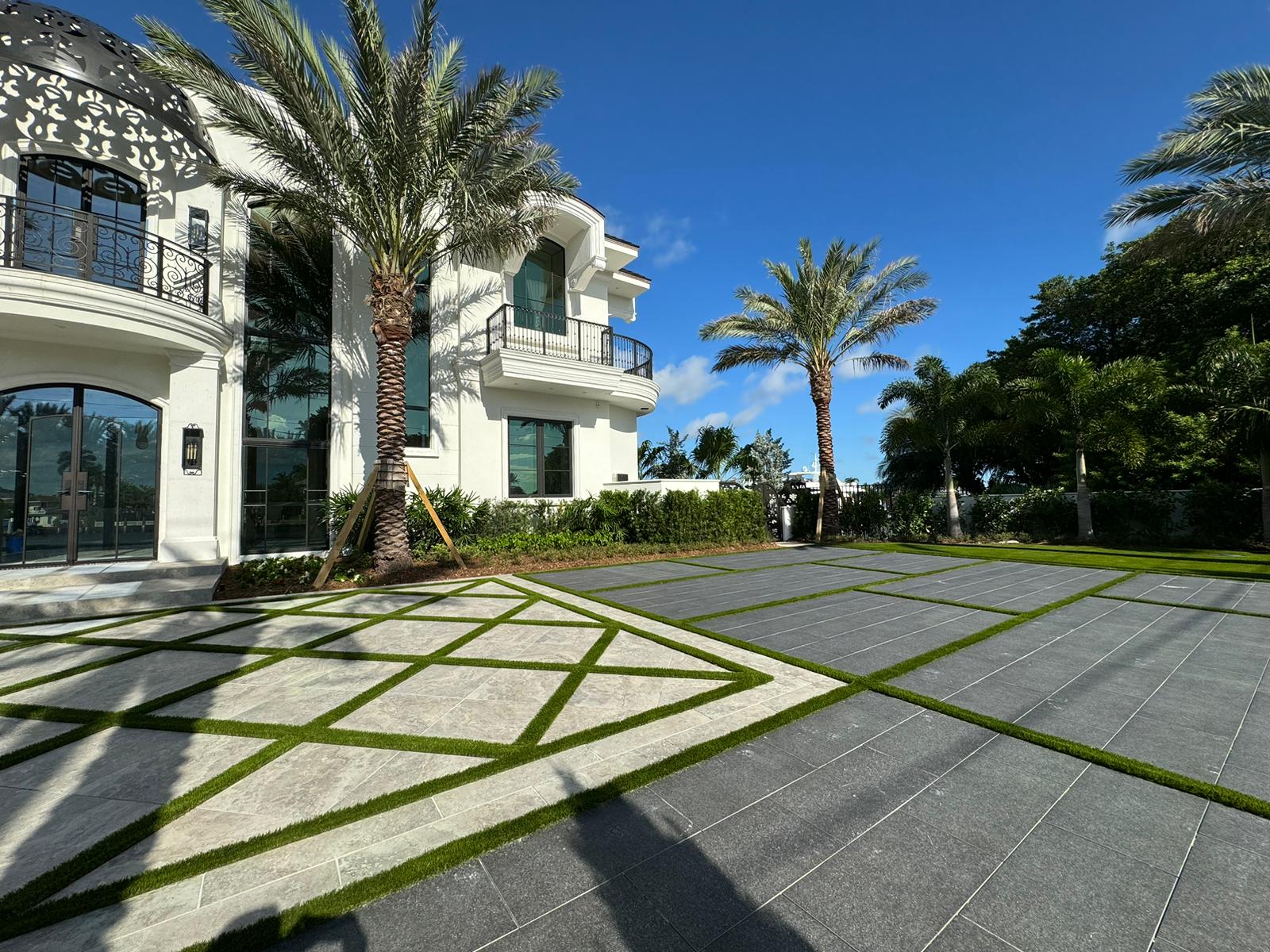
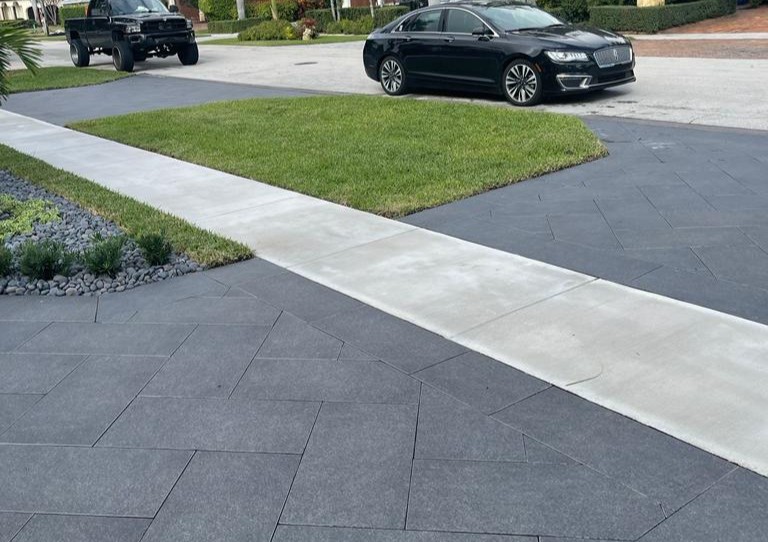
For homeowners prioritizing a cool surface, low maintenance, and a modern aesthetic, porcelain pavers have become the leading choice for Florida pool decks. Manufactured at extremely high temperatures, porcelain is virtually non-porous, which means it resists moisture absorption, mold, mildew, and staining without requiring annual sealing.
Porcelain’s light-toned finishes — which are available in large-format tile styles that look stunning around water — reflect rather than absorb solar radiation, keeping surface temperatures meaningfully lower than darker alternatives. The material also does not fade under UV exposure the way painted or sealed concrete does, which means the surface looks as good in year seven as it did on installation day.
EC Paver Solutions has installed porcelain pool decks across Sarasota, Lakewood Ranch, and the broader Tampa Bay area, and it consistently earns the highest homeowner satisfaction scores of any pool deck surface we install. The combination of beauty, durability, and thermal performance makes it the recommendation our certified hardscape specialists lead with for most Florida pool deck projects.
Travertine Pavers
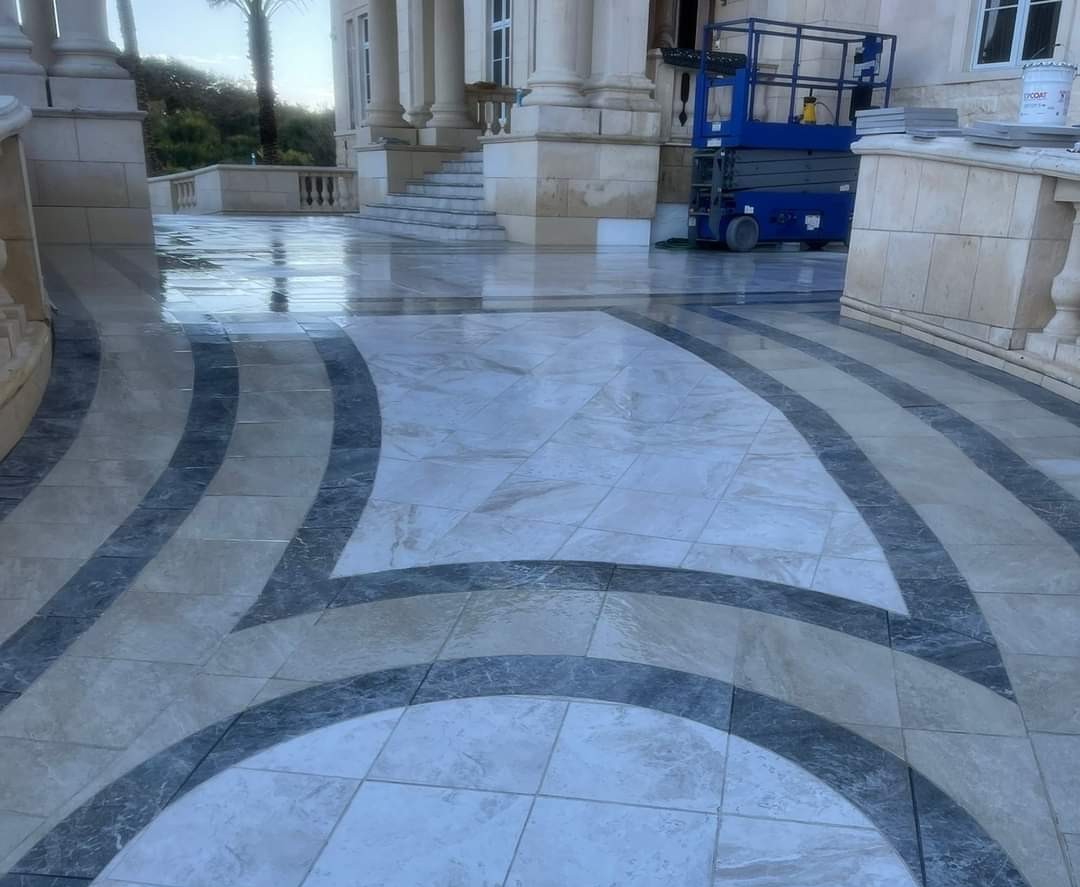
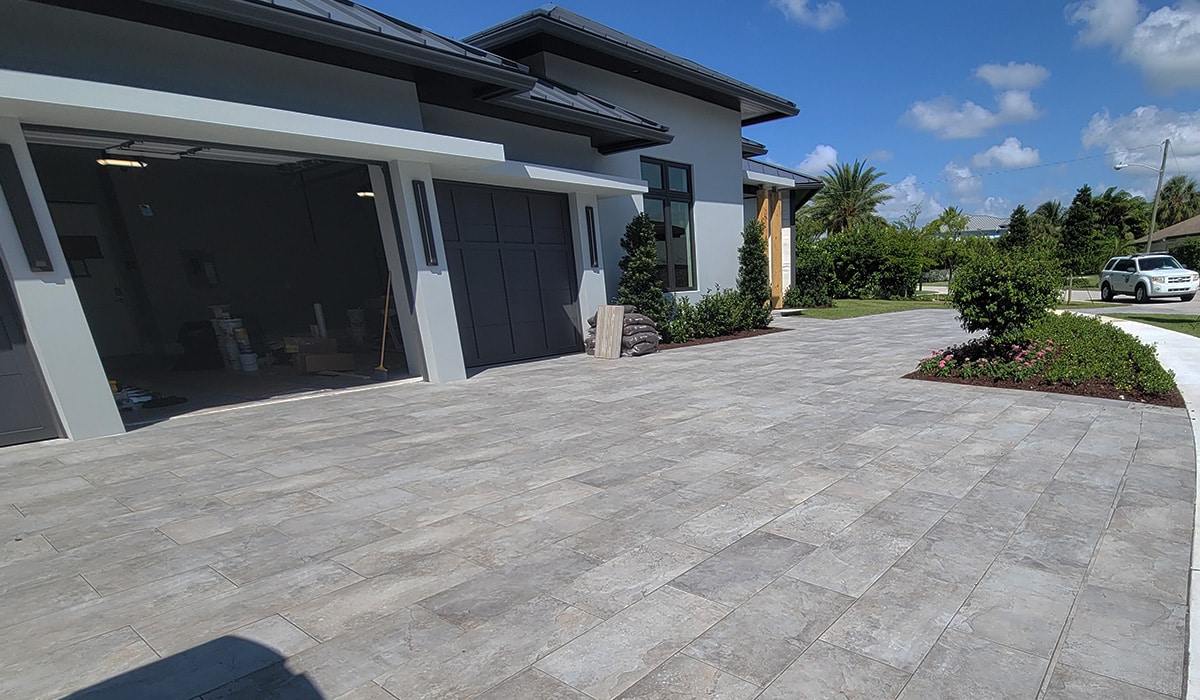
Travertine pavers have a proven track record around pools in hot climates that spans centuries, and that reputation is well earned. As a natural limestone-based stone, travertine has an open cellular structure that allows it to dissipate heat rather than storing and radiating it. Walk on travertine barefoot in direct Florida sun and you will notice the difference compared to concrete or brick immediately.
Travertine also has a timeless, resort-quality appearance that complements both traditional and contemporary Florida architecture. Its natural variation in color and texture gives each installation a unique character that manufactured products cannot replicate. For homeowners in communities like Lakewood Ranch or along Sarasota’s waterfront where exterior aesthetics matter significantly, travertine delivers an elevated curb appeal that enhances property value.
The one consideration worth understanding: travertine is porous and benefits from periodic sealing in Florida’s high-humidity environment to minimize staining from organic material like leaves or pool chemicals. Our team advises homeowners to plan for sealing every two to three years depending on tree coverage and usage, which is a modest maintenance investment for a material that can last decades.
Stamped Concrete
Stamped concrete is a common pool deck choice largely because it tends to carry a lower upfront cost. However, it comes with performance trade-offs that are amplified in Florida’s climate. Concrete absorbs and retains heat aggressively, making light-colored stamped concrete the only reasonably comfortable option — and even then, surface temps can be uncomfortable during peak summer hours.
More significantly, stamped concrete relies on a surface sealer to maintain its appearance. Florida’s UV intensity degrades these sealers faster than in northern climates, and once the sealer breaks down, the surface becomes susceptible to fading, cracking, and staining. Crack repair in a stamped concrete deck is difficult to make invisible, which is a meaningful aesthetic risk over a 10- to 15-year horizon.
Brick Pavers
Brick pavers offer solid durability and a classic look, but they tend to run hot underfoot in direct Florida sun and are more susceptible to mold and algae growth in shaded or humid conditions than porcelain or travertine. They remain a viable choice for certain design aesthetics, but for the specific demands of a Florida pool deck used year-round, they are generally not the first recommendation from experienced hardscape contractors.
What Makes a Great Pool Deck Beyond the Surface Material
The material choice matters enormously, but so does everything beneath it. A pool deck installation is only as durable as its base preparation. In Florida’s sandy soils, proper compaction and base depth are essential to prevent settling, shifting, and drainage problems — all of which become visible and costly if shortcuts are taken during installation.
What we see in the field across Bradenton, Lakewood Ranch, and Orlando is that many homeowners who come to us for pool deck restorations are dealing with problems that trace back to inadequate base work from a prior installer — not material failure. The pavers themselves are often in reasonable condition; the issue is the foundation underneath them.
Drainage design is equally important. Florida pool decks receive enormous volumes of water — from rain, from splashing, and from afternoon thunderstorms that drop several inches in under an hour. A properly graded deck with permeable joint sand or designed drainage channels prevents water from pooling around your pool’s structural edge and your home’s foundation.
Beyond the pool itself, a well-designed outdoor living space integrates seamlessly. Many of our clients extend the same paver material to their patios and lanais, walkways, and even their driveway paver installation for a cohesive, high-end look throughout the entire property. Others choose to incorporate artificial turf in adjacent lawn areas, creating low-maintenance greenery that stays beautiful without irrigation or mowing in Florida’s heat.
How to Choose the Right Material for Your Pool Deck
The decision ultimately comes down to three factors: how you use the space, what look you want, and what maintenance commitment you are comfortable with. Here is a straightforward framework:
- Prioritizing cool underfoot temperature: Both porcelain and travertine outperform concrete and brick. For the absolute coolest surface in peak Florida heat, travertine and light-toned porcelain are your best options.
- Prioritizing minimal maintenance: Porcelain is the clear leader. Its non-porous surface requires no sealing, resists staining, and cleans easily with standard outdoor washing.
- Prioritizing natural aesthetics: Travertine’s organic variation and warm tones create a look no manufactured product fully replicates, and it pairs beautifully with the lush tropical landscaping common throughout Southwest Florida.
- Prioritizing long-term value: Both porcelain and travertine hold up far better over 10 to 20 years in Florida’s climate than stamped concrete, reducing the likelihood of costly resurfacing projects down the road.
EC Paver Solutions offers a 3D Design Preview service that allows you to visualize your chosen material and layout on your actual property before a single paver is placed. For a project of this scale, that visualization step eliminates doubt and ensures the finished result matches your expectations.
Frequently Asked Questions
What is the best pool deck material for Florida heat?
Porcelain pavers and travertine are consistently the top choices for Florida pool decks because both stay significantly cooler underfoot than concrete or brick pavers. Porcelain’s light-reflective surface and travertine’s natural thermal properties make them ideal for the intense UV exposure and high temperatures common across Sarasota, Tampa, and Central Florida.
Does travertine stay cool in the Florida sun?
Yes. Travertine is a naturally porous stone that dissipates heat rather than absorbing and radiating it, which is why it has been used around pools in hot climates for centuries. In Florida’s direct sun, travertine consistently performs cooler than concrete, brick, or many manufactured pavers.
Are porcelain pavers slippery when wet around a pool?
High-quality porcelain pavers manufactured for outdoor use carry a slip-resistance rating specifically suited for wet environments. EC Paver Solutions only installs porcelain products that meet the appropriate coefficient of friction standards for pool deck applications, so safety is built into the material selection — not an afterthought.
How do pool deck pavers hold up during Florida hurricane season?
Both porcelain and travertine pavers are installed over a compacted base system that allows individual units to flex slightly under load, which actually improves resilience during heavy rain and ground movement compared to poured concrete slabs. If a paver is ever damaged by storm debris, individual pieces can be replaced without tearing out the entire deck.
Can I use artificial turf near my pool deck in Florida?
Artificial turf can be a smart complement to a paver pool deck, used in adjacent lawn areas or transition zones where you want low-maintenance greenery without mud or standing water. EC Paver Solutions installs both pool deck pavers and artificial turf, and can design a cohesive outdoor space that handles Florida’s heat, rain, and year-round use.
How much does a pool deck paver installation cost in Florida?
Pool deck paver costs vary based on material choice, deck size, existing surface conditions, and design complexity. The best way to get an accurate number for your specific property is to request a free on-site estimate — EC Paver Solutions provides detailed, no-obligation quotes for homeowners across Sarasota, Bradenton, Tampa, Lakewood Ranch, and Orlando.
Ready to Build the Pool Deck Your Florida Home Deserves?
Selecting the best pool deck material for Florida heat is a decision that pays dividends every time you step outside — and for decades to come. Whether you are drawn to the sleek, low-maintenance performance of porcelain or the timeless resort feel of travertine, getting the material, the base, and the installation right makes all the difference.
EC Paver Solutions is a Hardscape.com Certified Contractor serving homeowners throughout Sarasota, Bradenton, Tampa, Lakewood Ranch, Pinellas, Pasco, and Orlando. Our team brings hands-on Florida experience to every project, from initial design through final installation — and we stand behind our work long after the last paver is set.
Call us at +1 (941) 250-4635 or request a free estimate and let our certified hardscape specialists help you design the outdoor space you have been envisioning. There is no pressure, no obligation — just honest expertise from a team that works in Florida’s heat every single day.